


A stationary bin wins on capacity and on the odds of ever heating; a tumbler wins on turning effort and tidiness. Neither reaches the 27 cu ft (3 x 3 x 3 ft) minimum that Colorado State Extension gives for a pile that heats, so the real choice is how you want to turn and how much you generate.

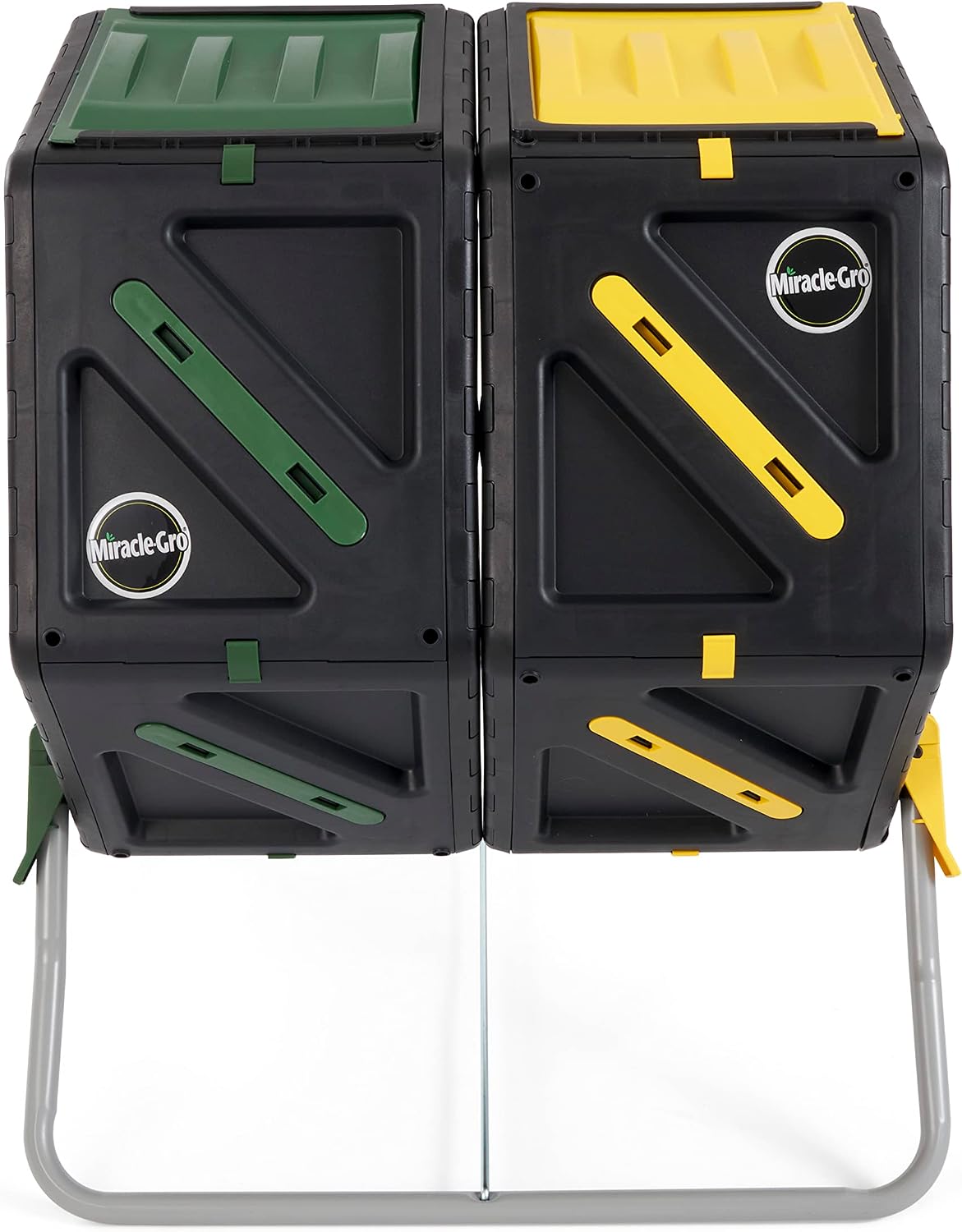
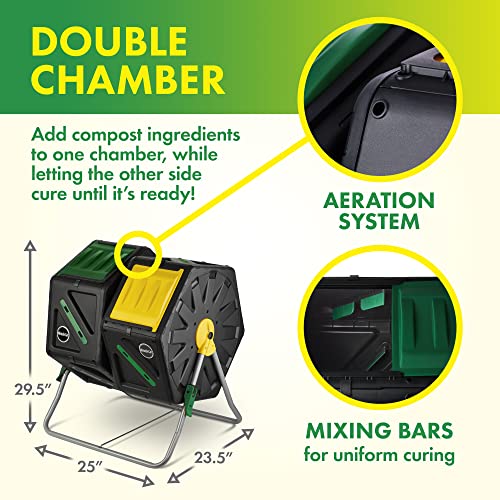
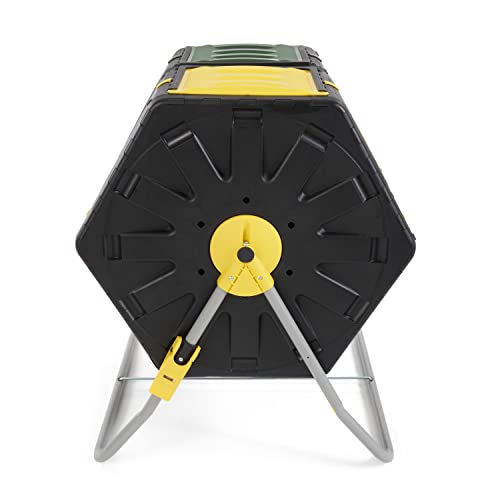
Prime Miracle-Gro Dual Chamber Compost Tumbler


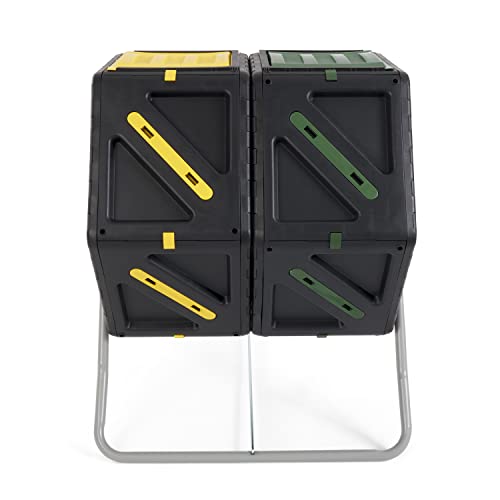
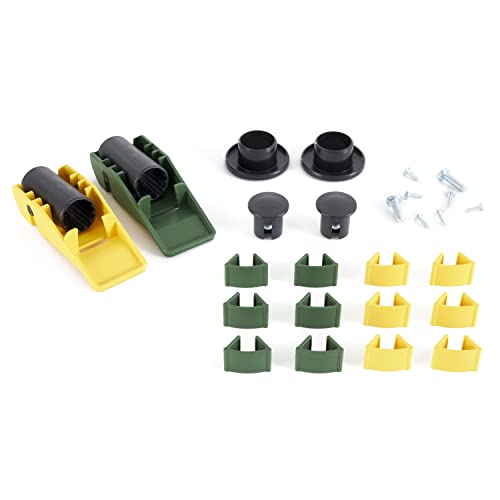
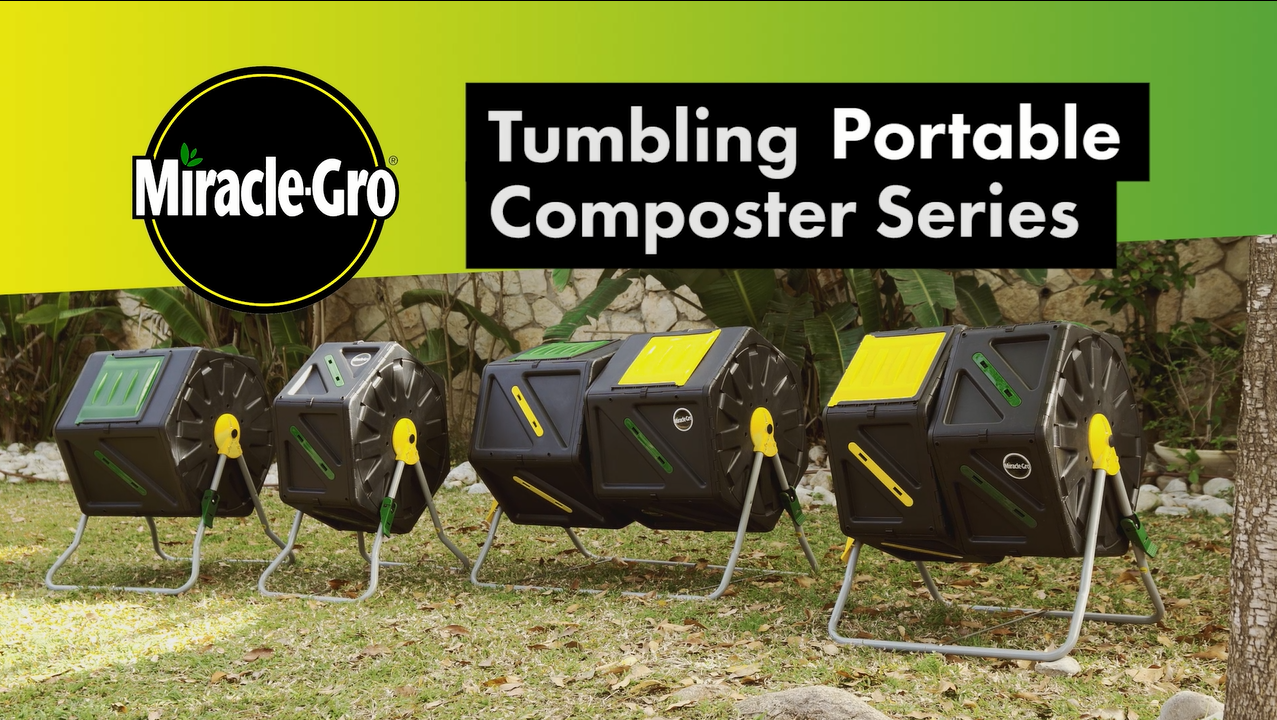
As an Amazon Associate we earn from qualifying purchases. Product prices and availability are accurate as of the date/time indicated.

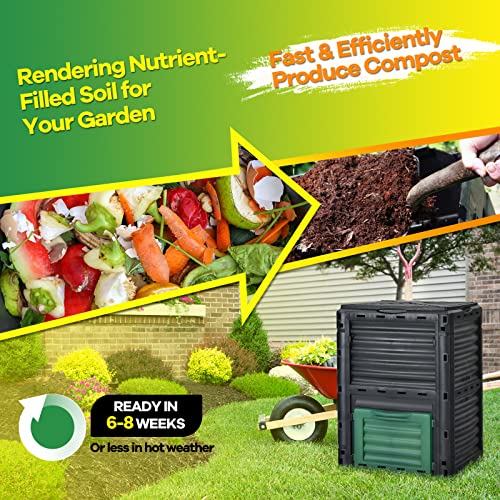
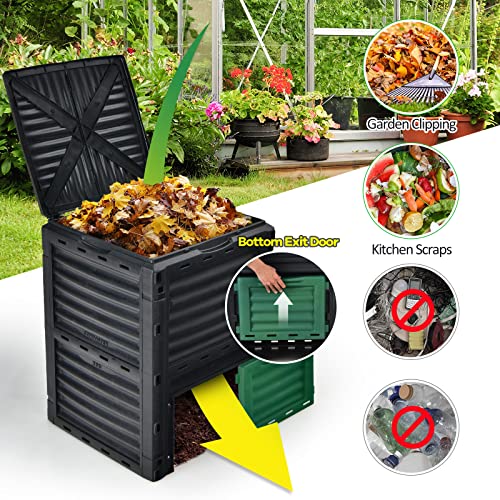
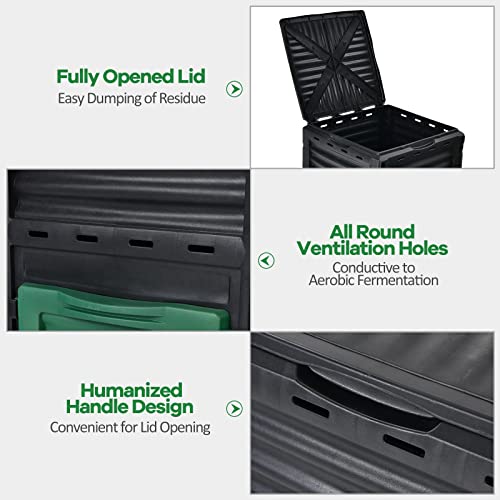
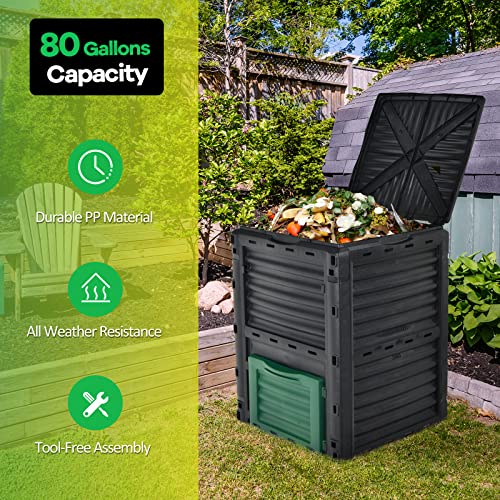
Prime Goplus Compost Bin, 80 Gallon (300 L)


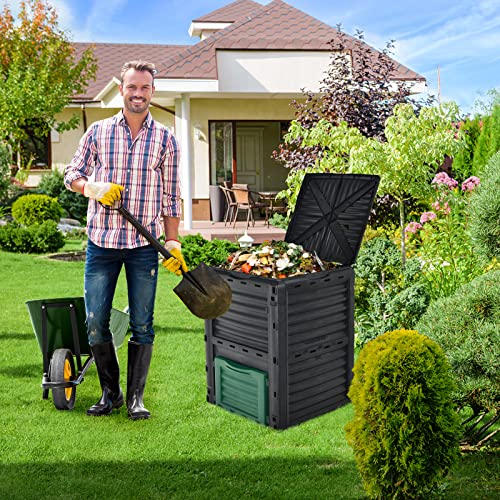
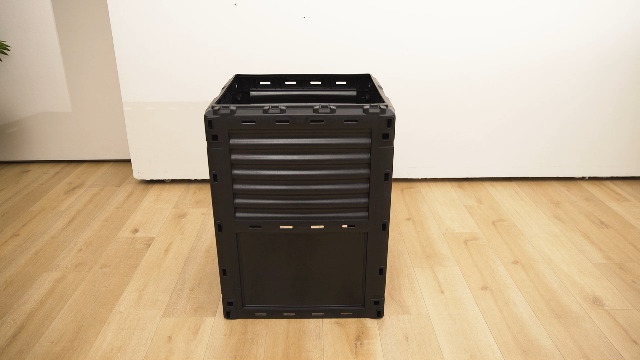
As an Amazon Associate we earn from qualifying purchases. Product prices and availability are accurate as of the date/time indicated.
Side by Side
| Listed spec | Miracle-Gro dual chamber tumbler | Goplus 80 gal bin |
|---|---|---|
| Type | Rotating, two chambers | Stationary, panels with lid |
| Capacity | 2 x 18.5 gal (37 gal, about 4.9 cu ft) | 80 gal (about 10.7 cu ft) |
| Size | 25 x 23.5 x 29.5 in | 23.5 x 23 x 32 in |
| Floor | Steel base, enclosed drum | No bottom shelf (grounding design) |
| Time to compost | 4 to 6 weeks | 6 to 8 weeks, less in summer |
| Turning | Rotate the drum | Open the lid and fork it over |
All figures come from the listings, which we could not confirm on brand sites. Gallons convert at 7.48 gal per cu ft.
Where They Differ
Turning effort and speed
Oregon State Extension says to rotate a tumbler daily or at least several times a week. The listing’s 4 to 6 weeks assumes that routine, not a guarantee. A bin takes a fork, and Oregon State’s interval for a hot pile is every 5 to 10 days. Spinning a drum is easier on the back than forking about 10.7 cu ft.
Heat and volume
Colorado State says smaller piles cool and that few home piles heat above 145°F. The tumbler holds about 18% of 27 cu ft (4.9 / 27) and the bin about 40% (10.7 / 27), so the bin has the better chance of warming. Neither is likely to meet the 131°F, 15-day windrow benchmark, so keep weed seeds and diseased plants out of both. EPA gives 130 to 160°F as the range for a well-kept pile.
Batches and access
Two chambers let one side finish while you fill the other. The listing describes the Goplus as a grounding design with no shelf at the bottom, which may also leave it open to ground-level pests. Both types follow the same EPA rule: keep meat, dairy, and fats out of a backyard pile.
Space
The tumbler needs level, firm ground and room to spin; the bin needs only a patch of soil. Read the warranty on each brand page before buying.
Choose a Tumbler If
- You make a few gallons of scraps and clippings a week.
- Forking is hard on your back or your patio is small.
- You want one chamber finishing while the other fills.
- Avoid if: you need more than about 5 cu ft of capacity.
Choose a Bin If
- You have lots of leaves and grass; 80 gal holds more than twice what 37 gal does.
- You want a pile that can heat; see hot composting.
- You want fewer moving parts. The bin guide and tumbler guide rank more models.
In an apartment, a countertop unit fits better: see indoor kitchen bins or electric composters. For timing, see how long compost takes.
FAQ
Does a tumbler finish faster?
The listing says 4 to 6 weeks, but only with frequent turning and a balanced mix. Without that, expect results closer to a bin.
Which handles leaves better?
The bin, for volume. Oregon State puts fresh leaves near 50:1 carbon to nitrogen, so pair them with greens.
Can I add kitchen scraps to either?
Plant scraps, yes. EPA says backyard piles generally do not reach high enough temperatures for meat, dairy, and fats.
Changelog: November 2026: first published.









