


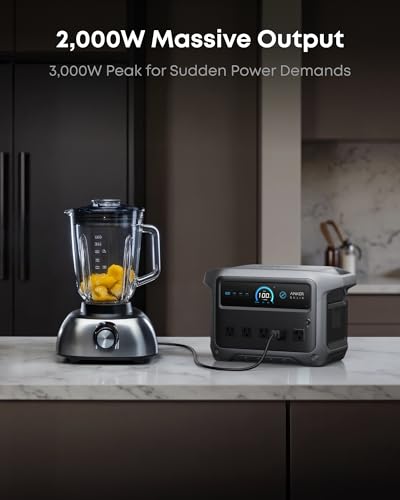
Pick the Anker SOLIX C1000 Gen 2 if you want more continuous output (2,000 W against 1,800 W), a lighter case, and a 5-year warranty that Anker’s published terms do not tie to registration; pick the EcoFlow DELTA 3 Classic if your loads include a big compressor start, because its 3,600 W surge rating clears what the Anker’s 3,000 W peak cannot. Both hold 1,024 Wh, both switch to battery in 10 ms, and neither accepts an extra battery.
A note on versions: “Delta 3” covers several EcoFlow models. This page compares the C1000 Gen 2 (model A1763) with the DELTA 3 Classic (EF-DL3-C), the two versions sold under the product links below. Where the expandable DELTA 3 Plus changes the answer, we say so.

Anker SOLIX C1000 Gen 2 Portable Power Station






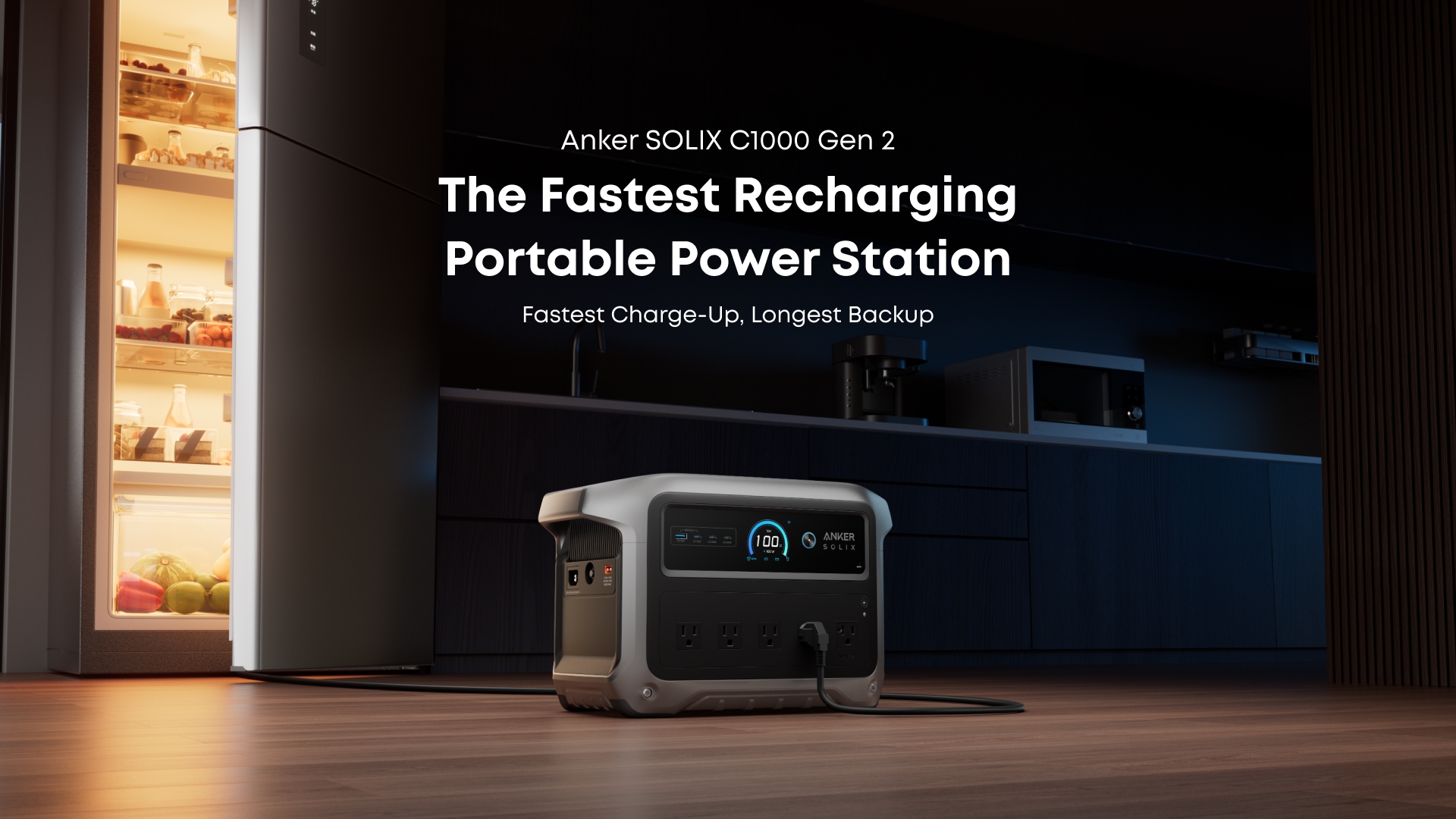
As an Amazon Associate we earn from qualifying purchases. Product prices and availability are accurate as of the date/time indicated.

EF ECOFLOW Portable Power Station Delta 3 Classic
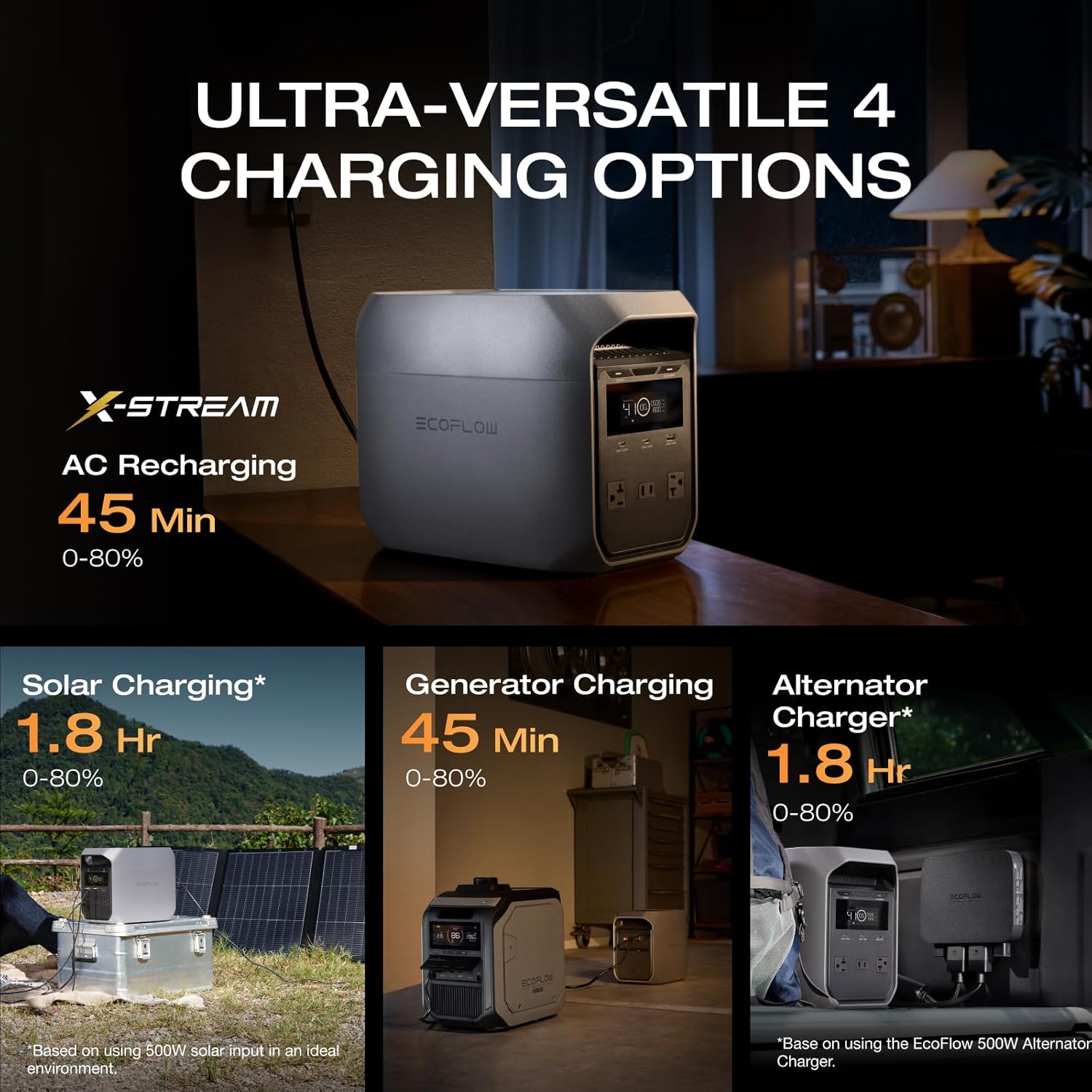
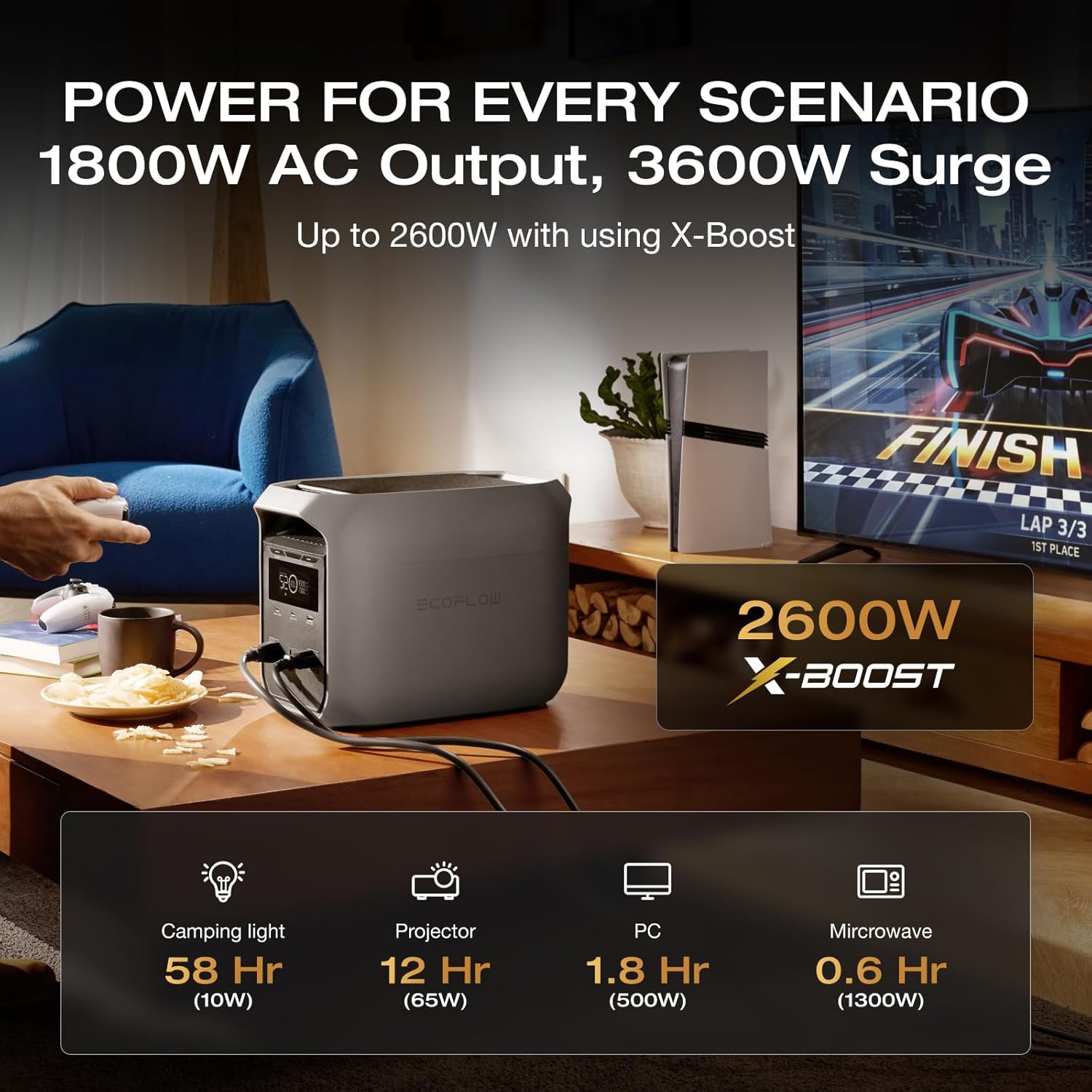
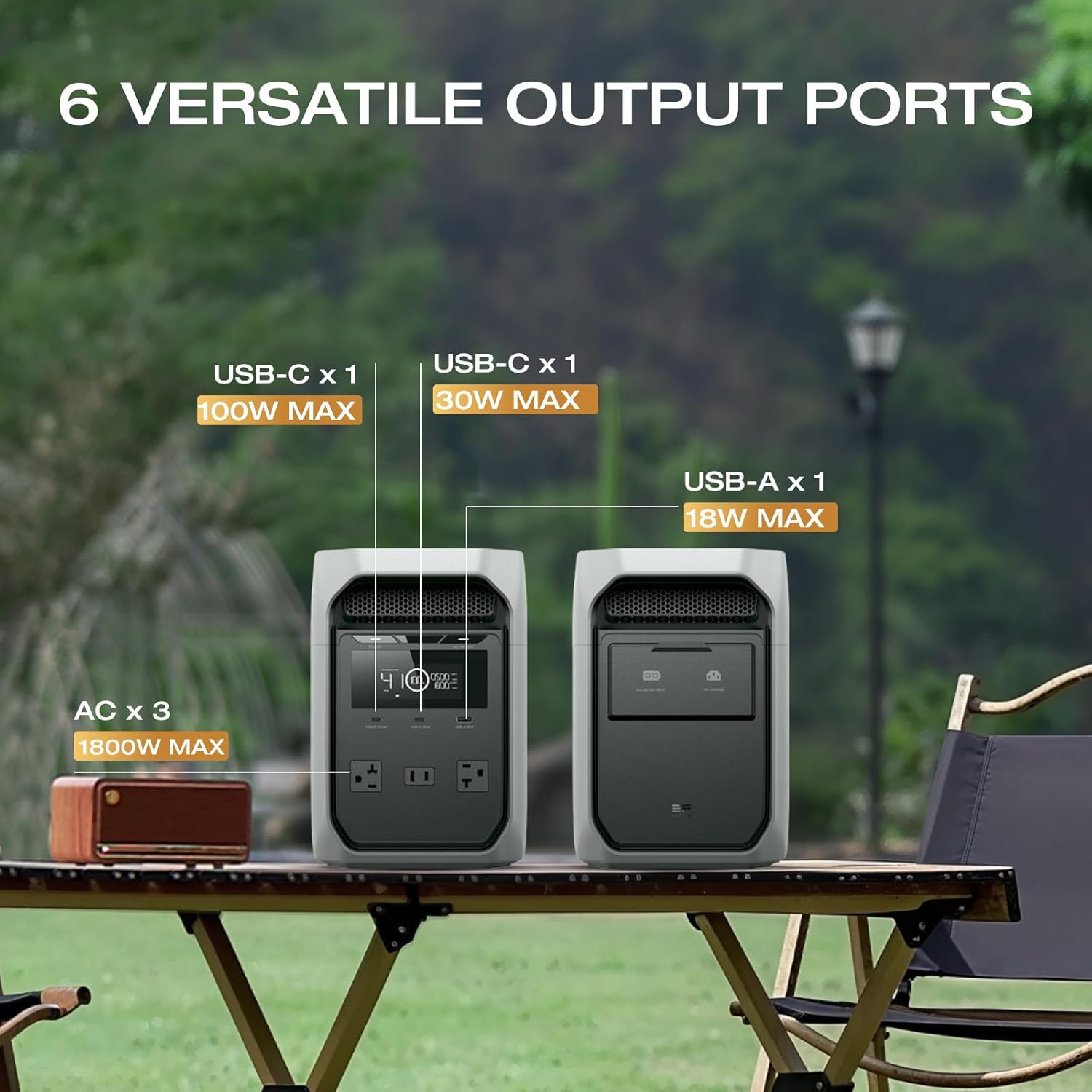


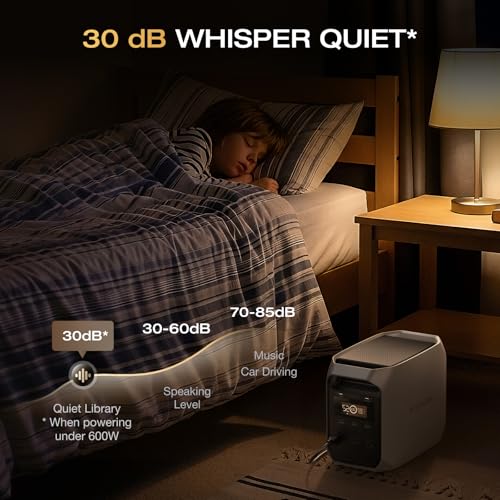
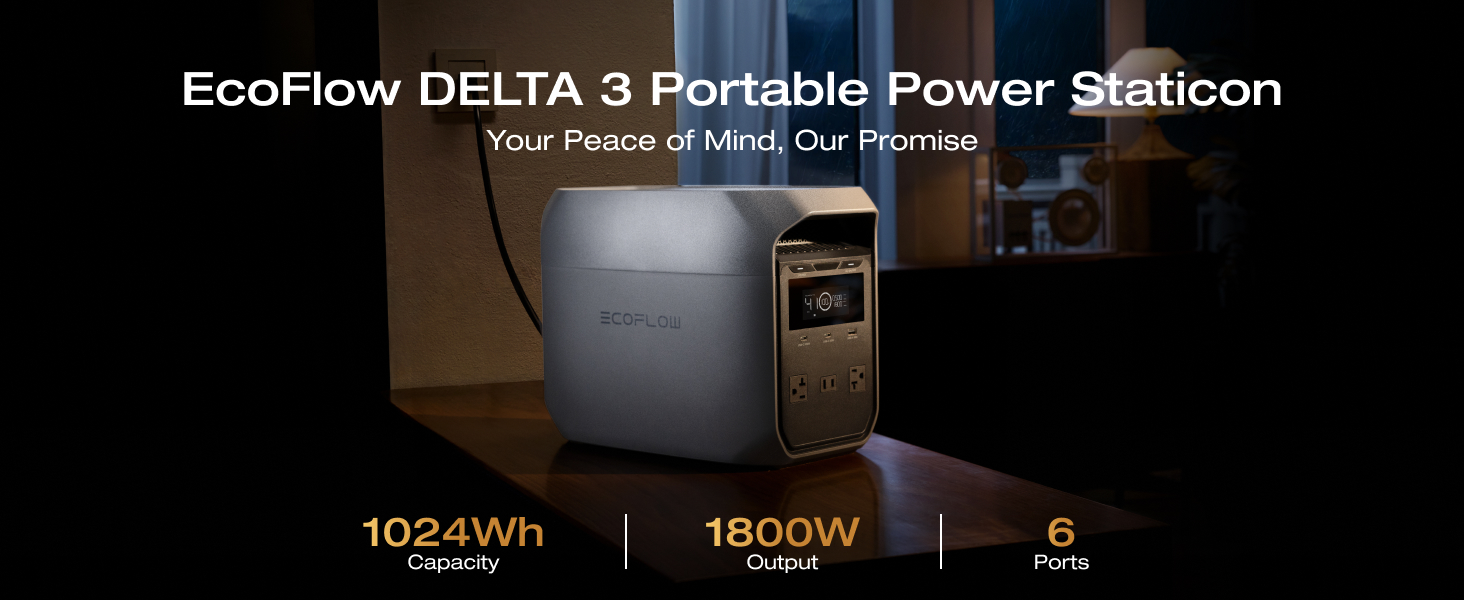
As an Amazon Associate we earn from qualifying purchases. Product prices and availability are accurate as of the date/time indicated.
Specs Side by Side
Every figure below comes from the manufacturer’s US product page unless the row says otherwise. Watt-hours (Wh) are the size of the tank; watts (W) are how fast you can pour from it.
| Spec | Anker SOLIX C1000 Gen 2 | EcoFlow DELTA 3 Classic |
|---|---|---|
| Capacity | 1,024 Wh LiFePO4 | 1,024 Wh LiFePO4 |
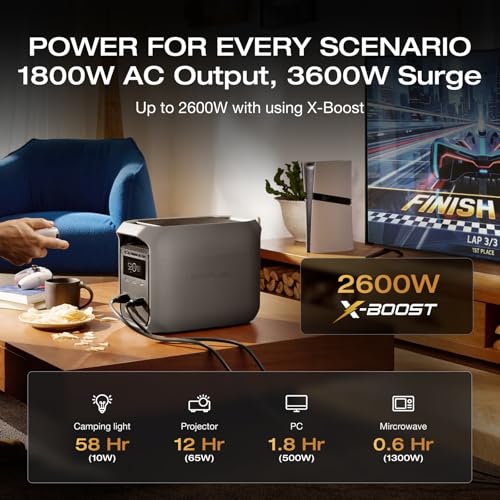
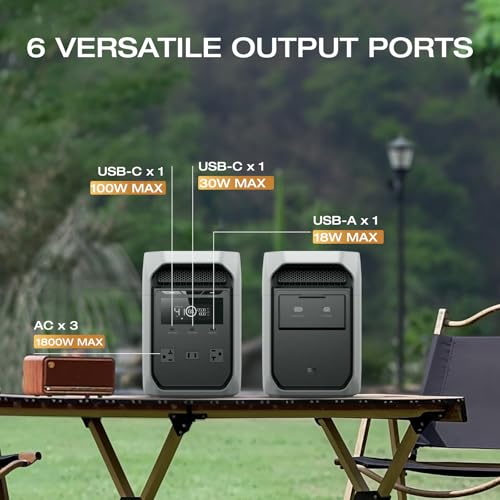
| Continuous AC output | 2,000 W | 1,800 W (X-Boost runs resistive loads up to 2,600 W) |
| Peak / surge | 3,000 W | 3,600 W |
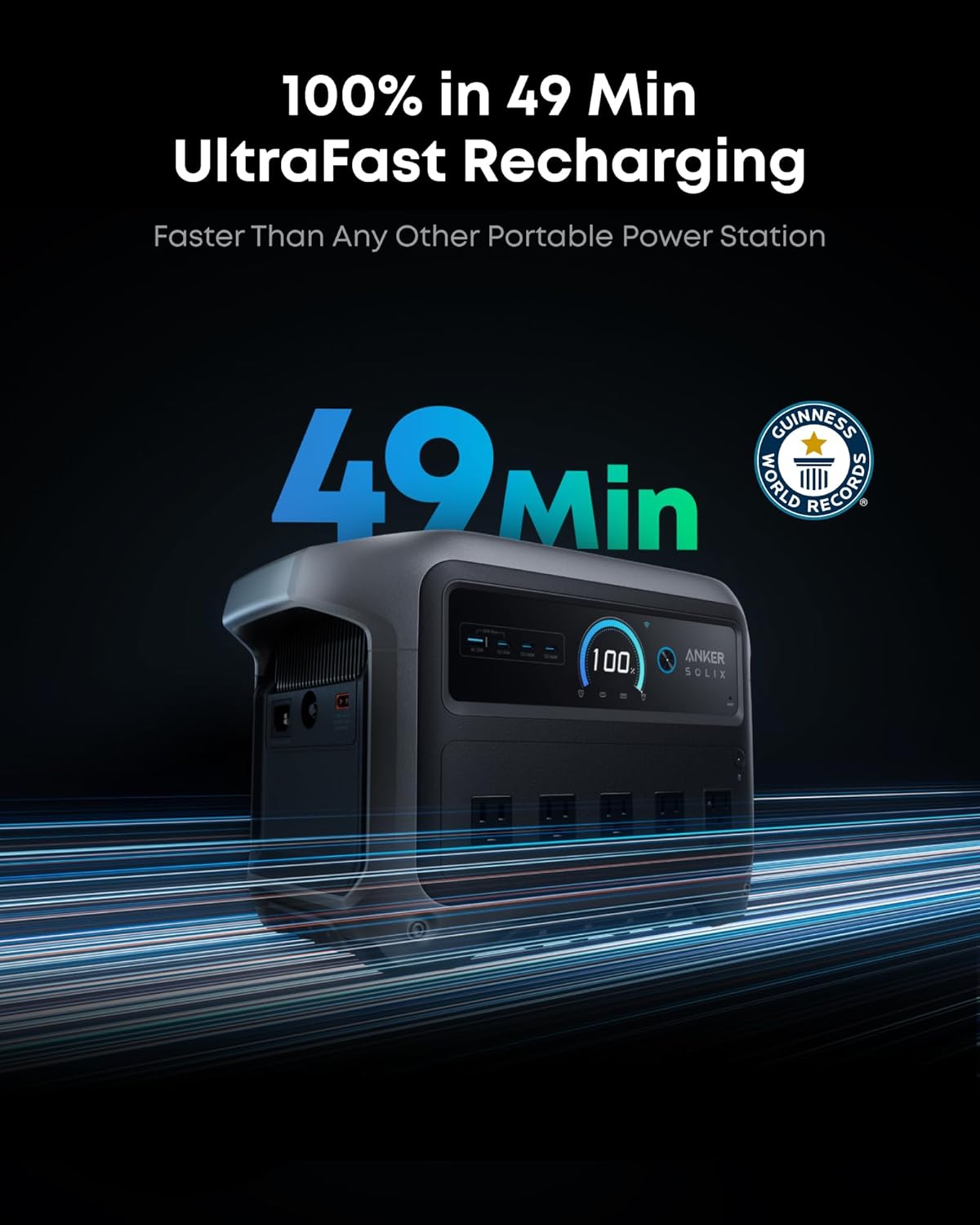
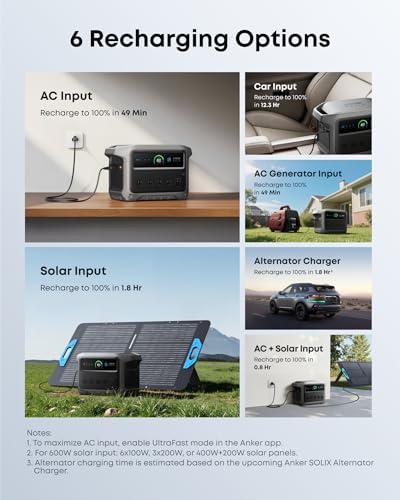
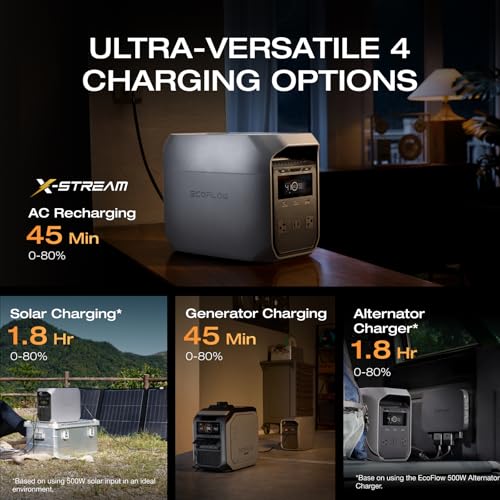
| AC recharge | About 49 min at 1,600 W (UltraFast, enabled in app, battery above 68°F); 1,200 W standard | About 60 min full, 45 min to 80% |
| Solar input | 600 W max, 11 to 60 V | 500 W max |
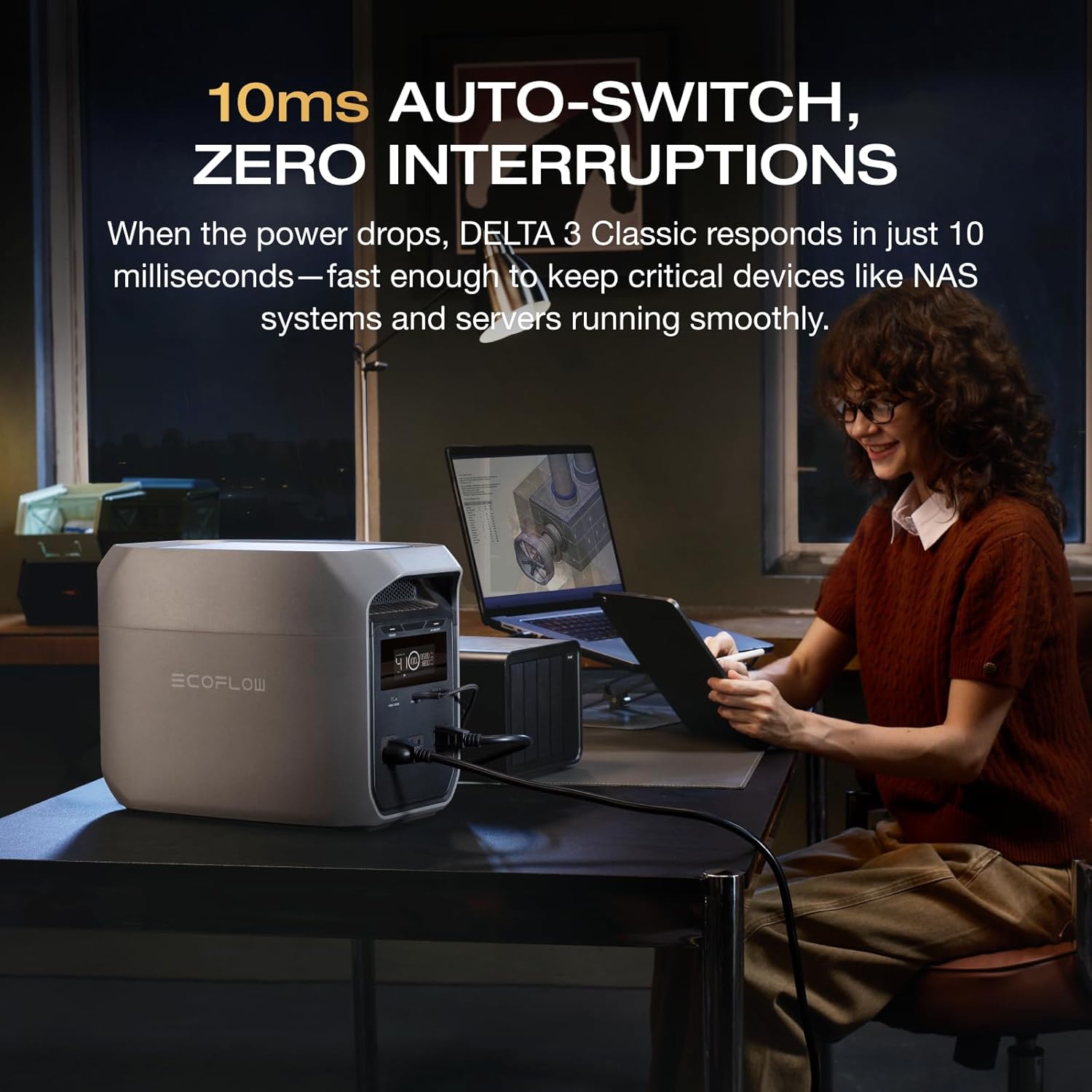
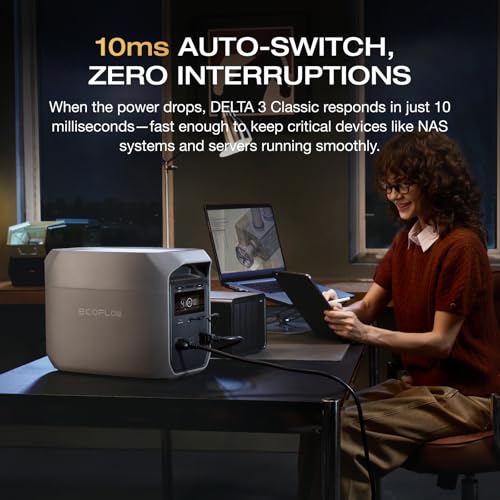
| UPS switchover | 10 ms | 10 ms |
| Expansion battery | No | No (EcoFlow’s Amazon listing) |
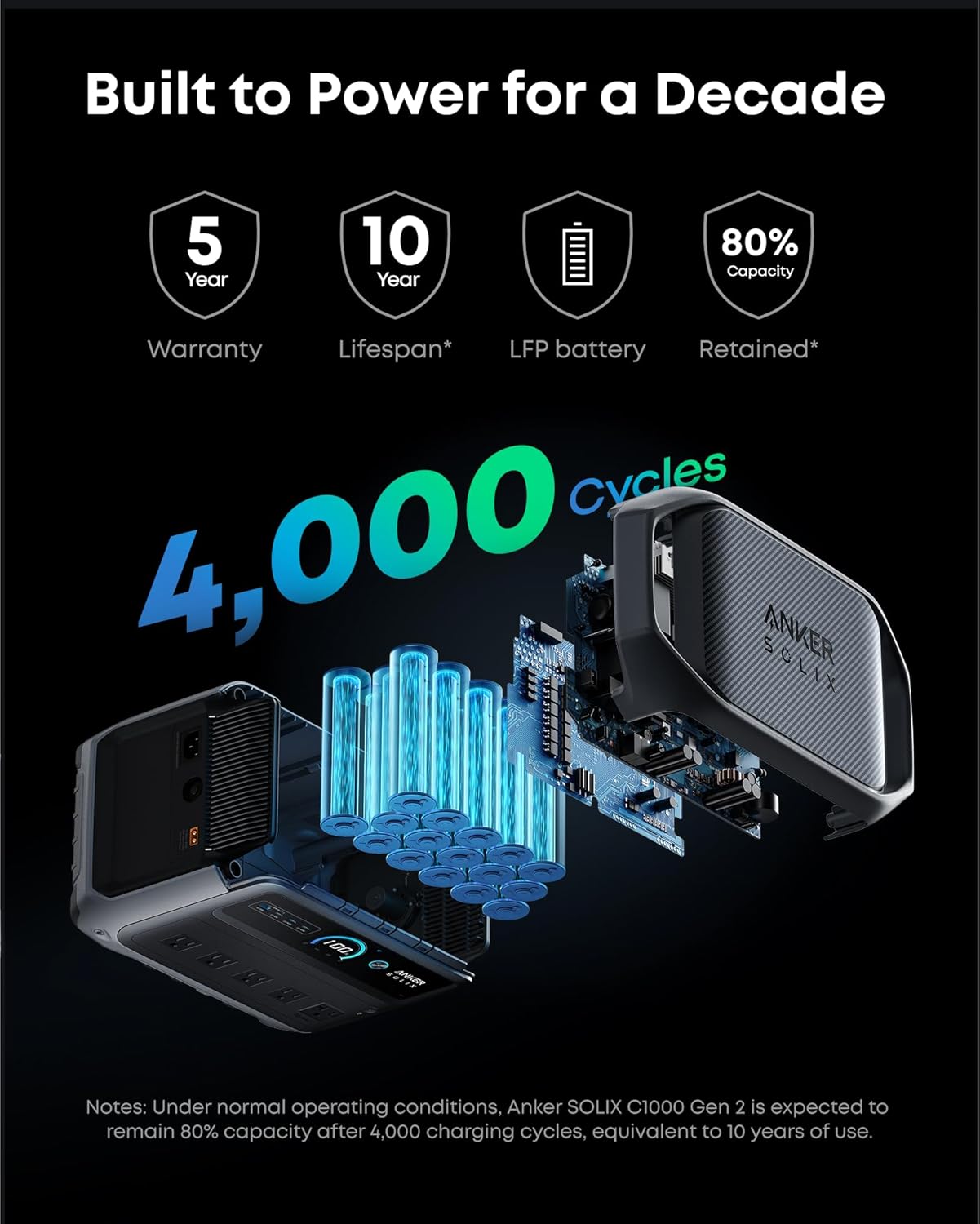
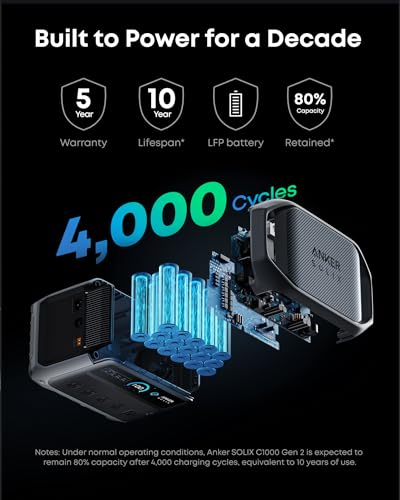
| Rated cycles | 4,000 to 80% | Not stated on US page |
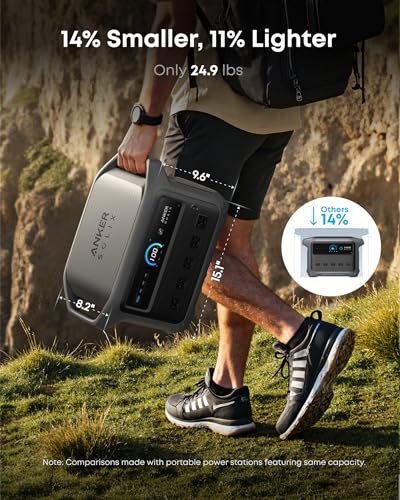
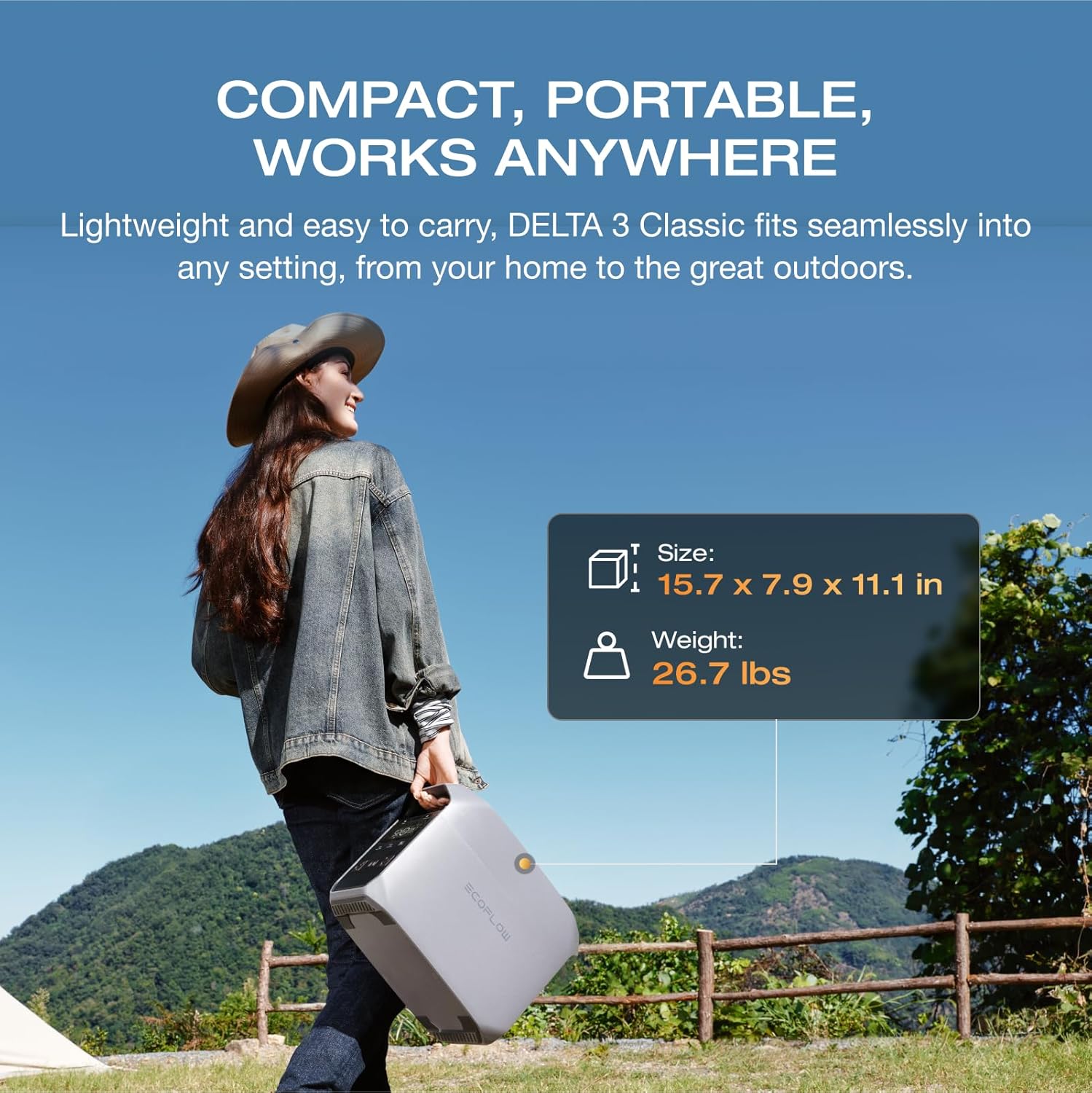
| Weight | 24.9 lb | 26.7 lb (12.1 kg) |
| Size | 15.12 x 8.19 x 9.61 in | 15.7 x 7.9 x 11.1 in (398 x 200 x 283 mm) |
| Warranty | 5 years | 3 years, plus 2 with app registration |
| Charging temperature | 32 to 104°F | 32 to 113°F |
Capacity is a tie, so runtime is a tie. A fridge that averages 150 W gets 1,024 Wh x 0.85 inverter efficiency / 150 W = about 5.8 hours from either unit (0.85 is a common planning figure for conversion loss). The differences are in how the power comes out and goes back in.
The Four Differences That Matter
1. Continuous Output vs Surge
Continuous rating decides whether a load keeps running; surge rating decides whether a motor starts. The Anker wins the first number and EcoFlow wins the second, so the right pick depends on what your heaviest moment looks like.
Take a kitchen during an outage. A 1,100 W microwave pulls about 1,500 W at the outlet (Panasonic lists 1,500 W input for its 1,100 W NN-SU656). Add a fridge running at 150 W and the steady load is 1,500 + 150 = 1,650 W, which fits under both ratings. Now let the fridge compressor cycle on while the microwave is running. Anker’s own guidance puts a French-door fridge’s startup draw at 900 to 2,000 W. At the high end, 1,500 + 2,000 = 3,500 W: under the DELTA 3 Classic’s 3,600 W surge, over the C1000 Gen 2’s 3,000 W peak.
Flip the scenario and the Anker comes out ahead. A 1,500 W space heater on high plus a fridge at the top of Champion’s published 150 to 400 W running range is 1,500 + 400 = 1,900 W. That is inside the Anker’s 2,000 W continuous rating and over the EcoFlow’s 1,800 W. Do not count on X-Boost to cover the gap with a compressor on the line: EcoFlow’s manuals describe X-Boost as best suited to heating devices, not compatible with appliances that have strict voltage requirements, and tell owners to check their own devices with it enabled.
2. Recharge Speed From the Wall and the Sun
From the wall, the two are close: 49 minutes for the Anker against 60 for the EcoFlow. The Anker’s figure has conditions. UltraFast charging has to be switched on in the Anker app, and Anker says it only engages when the battery is above 68°F; in a cold garage it charges at the slower standard rate.
From solar, the Anker accepts 600 W against 500 W. Assuming a full array at each limit and a 0.75 derate for heat, angle, and wiring loss (a common planning figure), a full refill takes:
- Anker: 1,024 Wh / (600 W x 0.75) = about 2.3 peak sun hours.
- EcoFlow: 1,024 Wh / (500 W x 0.75) = about 2.7 peak sun hours.
With a typical 5 peak sun hours, either array refills the battery in a day. The extra 100 W matters more in December, at high latitudes, or if you plan to run loads off the panels during daylight. One detail for the Anker: below 29 V its input current caps at 8.2 A, so a single 20 V panel delivers no more than about 8.2 A x 20 V = 164 W. Wire two panels in series to reach the higher band. Our solar sizing guide walks through the full array math.
3. Neither Grows, but One Sibling Does
Anker lists the C1000 Gen 2 as not expandable, and EcoFlow’s Amazon listing for the DELTA 3 Classic states it is not compatible with DELTA 2 or DELTA 3 Series extra batteries; the Classic’s US product page offers no extra battery option. What you buy is the 1,024 Wh you get.
If you think you will want more later, the DELTA 3 Plus is the version to look at. EcoFlow rates it at the same 1,800 W and 1,024 Wh, adds a second solar input for 1,000 W total, and says it expands to 5 kWh with extra batteries. That is 5,000 / 1,024 = about five times the base capacity, enough to move a fridge plan from one night to several days. Anker’s expandable model at this size class is the C2000 Gen 2, which starts at 2,048 Wh. The sizing guide helps decide whether 1 kWh is enough before you buy.
4. Warranty, Weight, and Cycle Rating
Anker covers the C1000 Gen 2 for 5 years. EcoFlow covers the DELTA 3 Classic for 3 years and adds 2 more when you register it in the EcoFlow app, so both reach 5 years, but only one requires a step you might forget.
Anker publishes 4,000 cycles to 80 percent capacity. EcoFlow’s US page for the Classic gives no cycle number, only a 10-year life claim. At one full cycle a day, 4,000 cycles is 4,000 / 365 = about 11 years; as an outage-only backup it will age out by calendar time well before cycles run out. At 24.9 lb against 26.7 lb, the Anker is also 1.8 lb lighter, which matters if you carry it up basement stairs.
What Is the Same
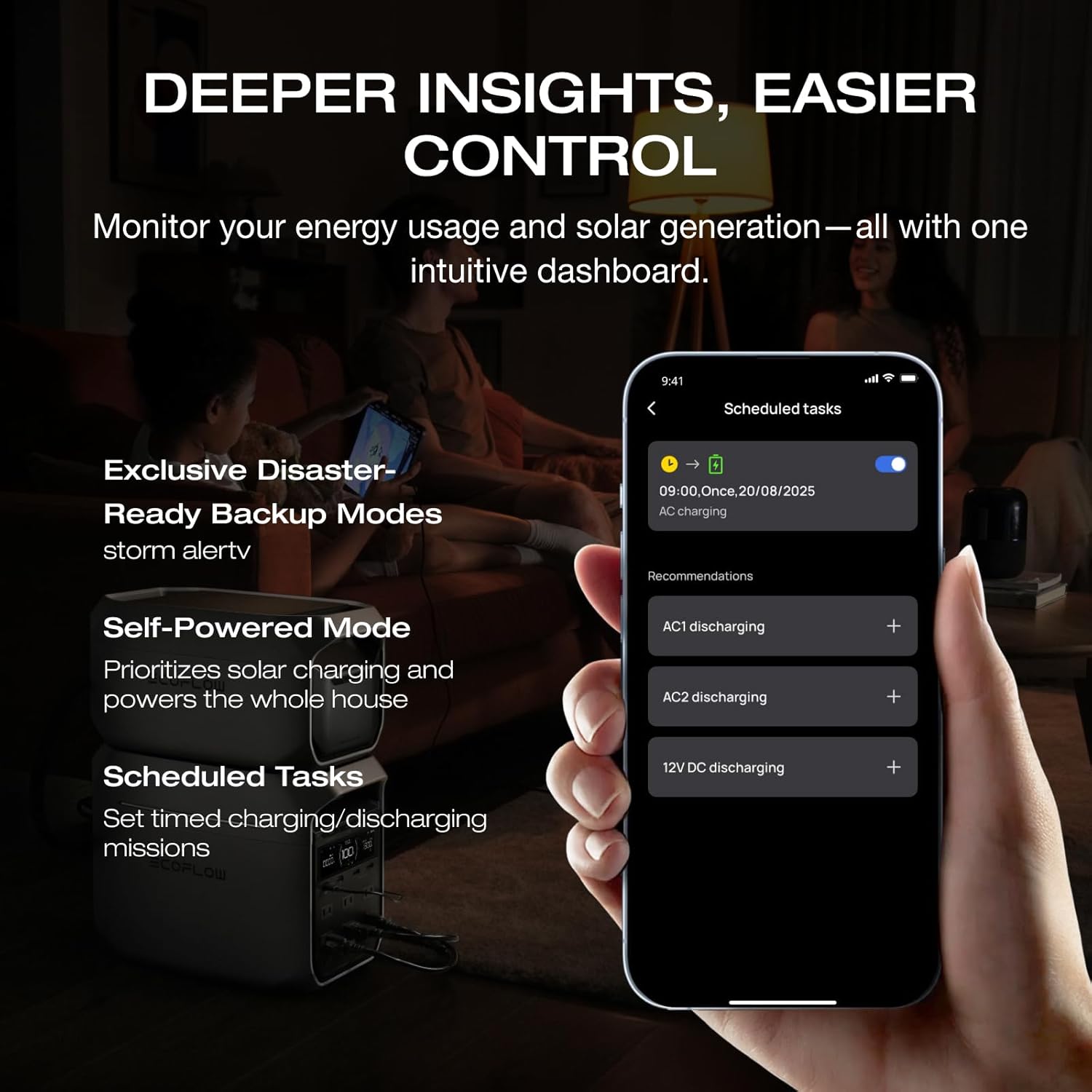
Both use LiFePO4 cells, both output 120 V AC, both have app control, and both switch to battery in 10 ms when wall power drops. That switchover is fast enough for most desktop PCs, routers, and modems. Our UPS mode explainer covers what 10 ms means for sensitive gear. If you use a CPAP, read the manufacturer’s guidance on medical devices before relying on either unit, and see our CPAP power station picks.
Choose the Anker SOLIX C1000 Gen 2 If
- Your heaviest steady load lands between 1,800 and 2,000 W, such as a space heater plus a running fridge.
- You want 600 W of solar input and a published 4,000-cycle rating.
- You want a 5-year warranty without registering in an app.
Best for: a home office, a fridge, and lights through an overnight outage, with room for one heavier appliance at a time.
Avoid if: you need to start a large fridge compressor while another 1,500 W load is already running.
Choose the EcoFlow DELTA 3 Classic If
- Your loads include motors or compressors with high startup draw.
- You run kettles or heaters that X-Boost can carry up to 2,600 W.
- You are comfortable registering in the EcoFlow app to get the full 5 years.
Best for: kitchens where the fridge, microwave, and coffee maker share one station during an outage.
Avoid if: you expect to add a battery later; buy the DELTA 3 Plus instead.
We research and compare; we do not run our own product trials. Specs come from Anker and EcoFlow, and the score on each card reflects verified buyer ratings, as explained on how we choose. For the wider field, see our home backup power station guide.
FAQ
Is the DELTA 3 Classic the same as the DELTA 3 Plus?
No. Both hold 1,024 Wh and output 1,800 W, but the Plus accepts extra batteries up to 5 kWh and has two solar inputs for up to 1,000 W. The Classic tops out at 500 W of solar and does not accept extra batteries.
Is the C1000 Gen 2 different from the original C1000?
Yes. This comparison uses the Gen 2 figures from Anker’s current product page: 2,000 W continuous, 3,000 W peak, 24.9 lb, and 600 W solar input. Check the model name on any listing, since older units still circulate.
Which one runs a fridge longer?
Neither, in practice. With the same 1,024 Wh, a fridge averaging 150 W runs about 5.8 hours on either one. The fridge runtime guide shows how to plug in your own fridge’s numbers.
Does the Anker’s 49-minute recharge work in winter?
Only when the battery is warm. Anker says UltraFast only engages when the battery is above 68°F, and it charges between 32 and 104°F at all. In a garage that sits in the 40s, bring the unit indoors to recharge, then move it back.
Changelog: November 2026: first published.









