


Pick Champion if you want a portable inverter under about 4,500 starting watts with an automatic CO shutoff built into many of its models; pick Westinghouse if you need a large dual or tri fuel unit with 240 V outlets for a well pump or a transfer switch. Both brands back their residential generators with a 3-year limited warranty, so the real split is lineup, published noise data, and which models carry CO sensing.
We compared the models from each brand that appear in our product data, using Champion’s and Westinghouse’s own spec pages first and listing text only where a maker page is missing. We research and compare; we do not run our own product trials. The ratings behind our picks are explained on How We Choose.
The Four Models in This Comparison
Each brand gets one mid-size inverter and one second option that shows where its lineup goes next.
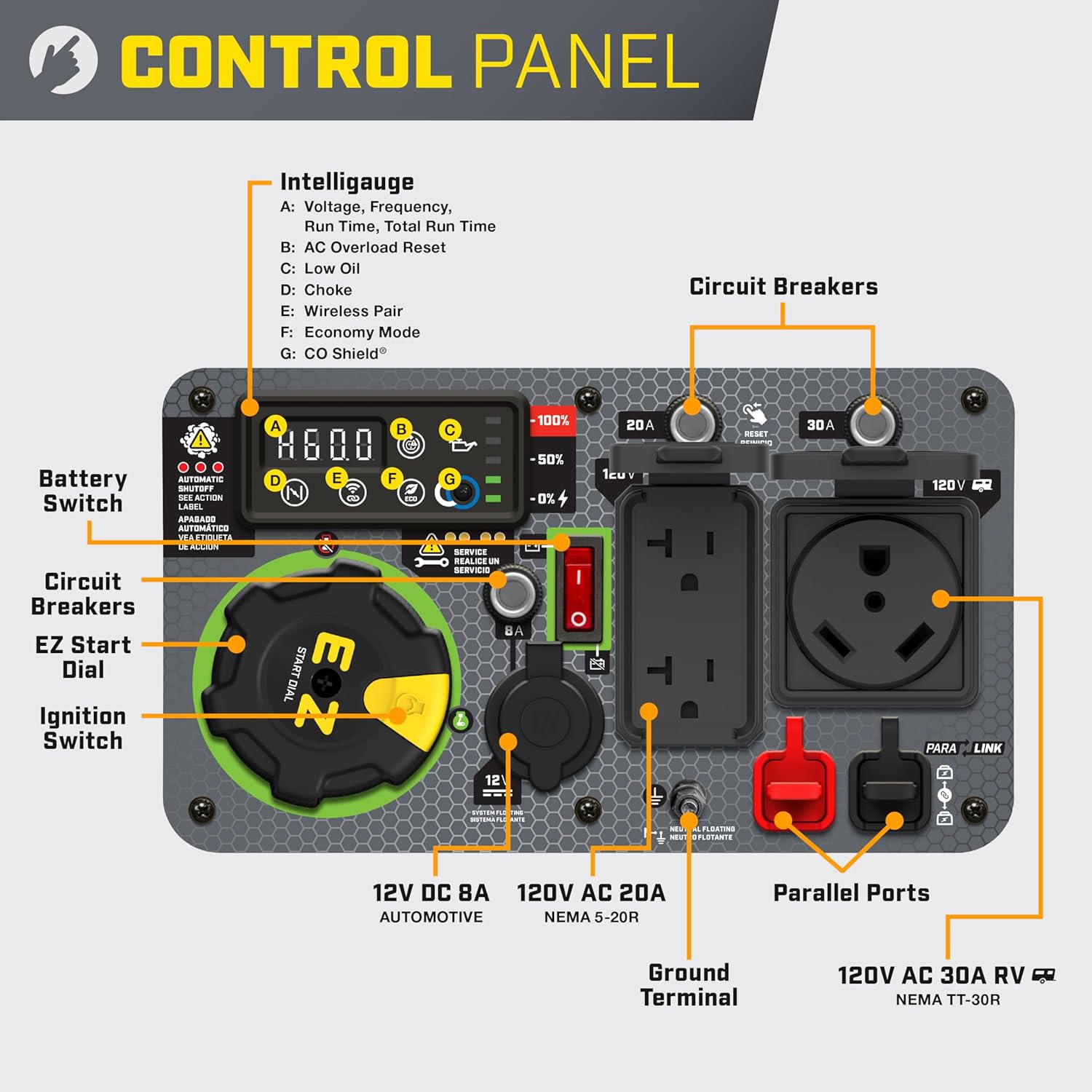
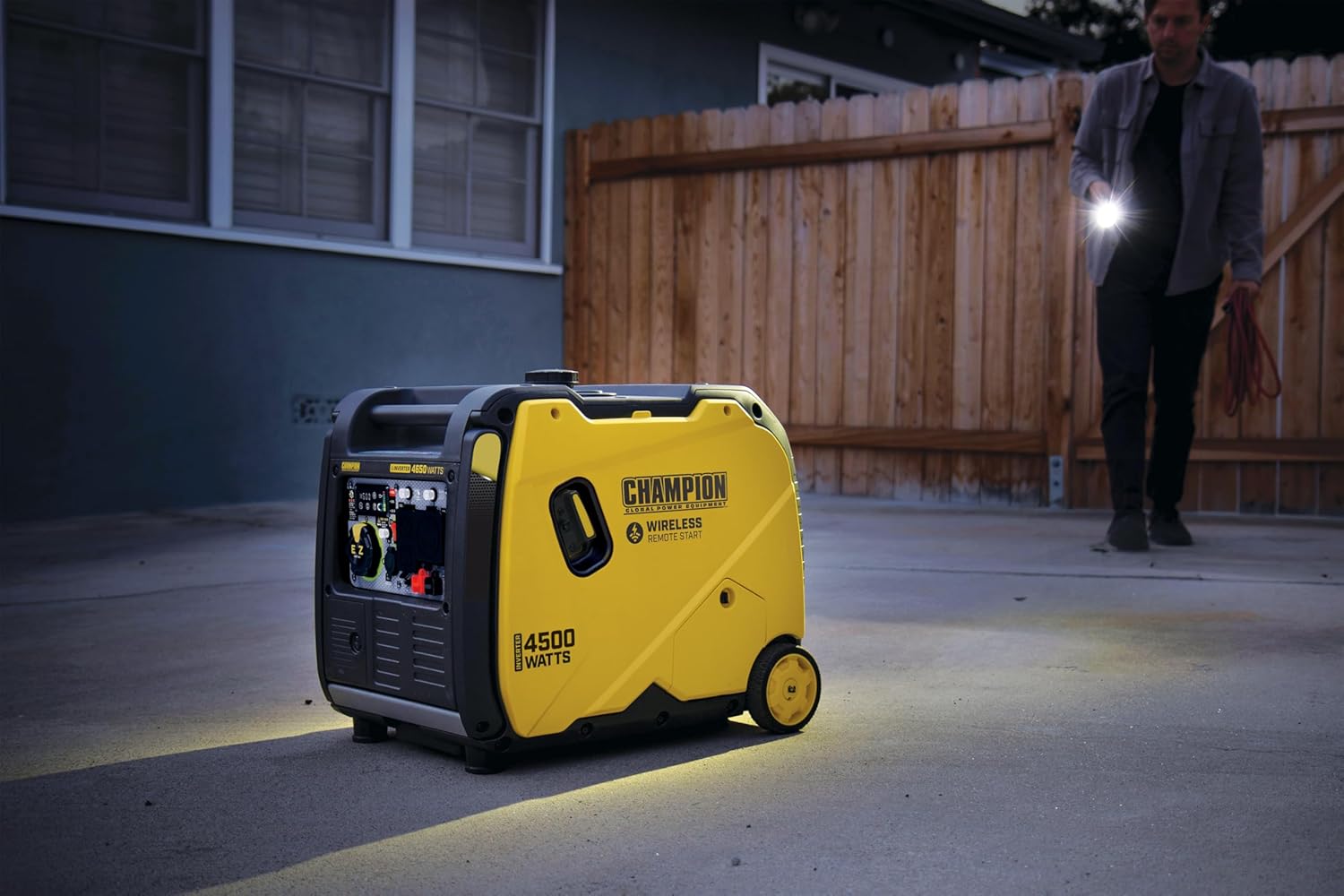
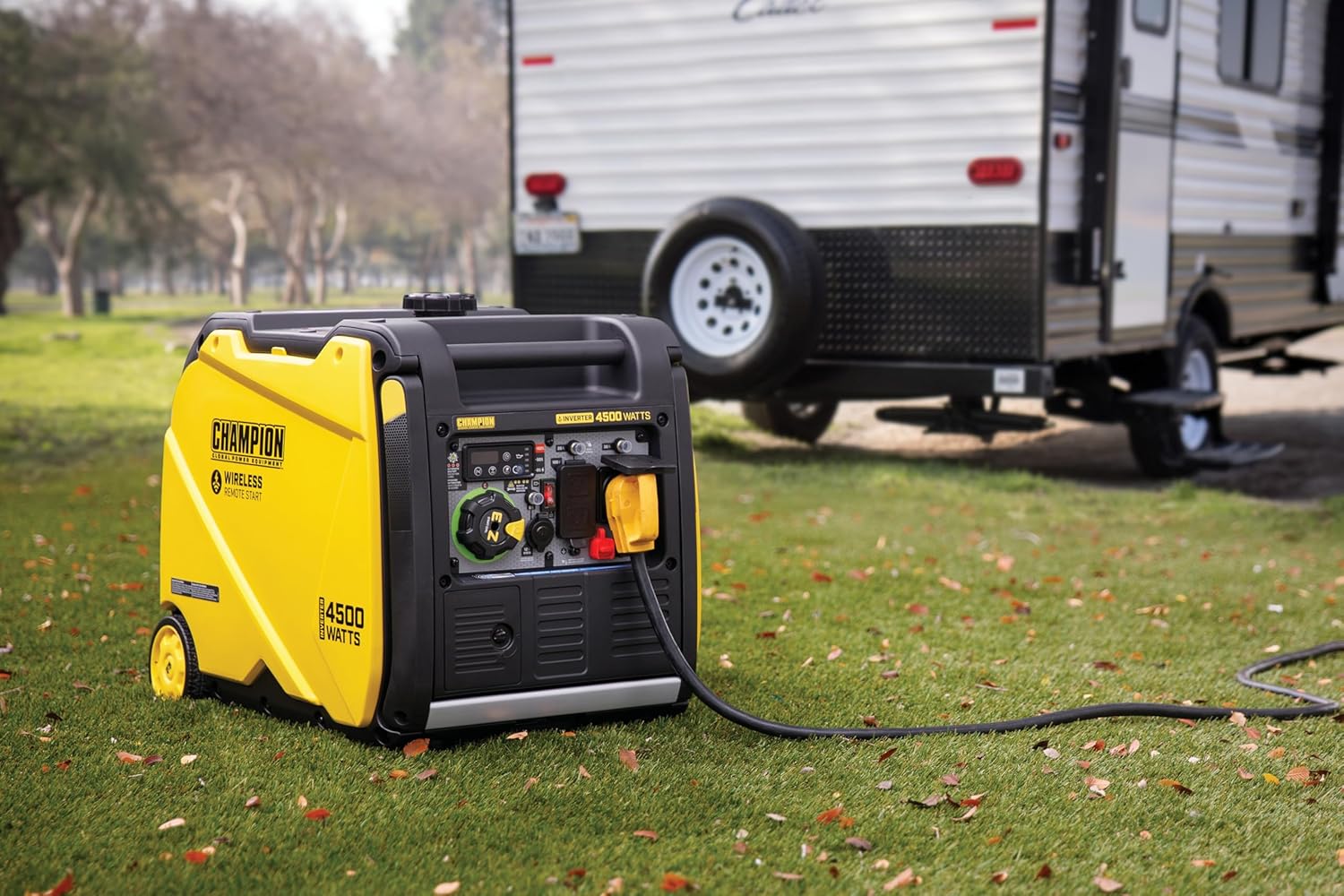
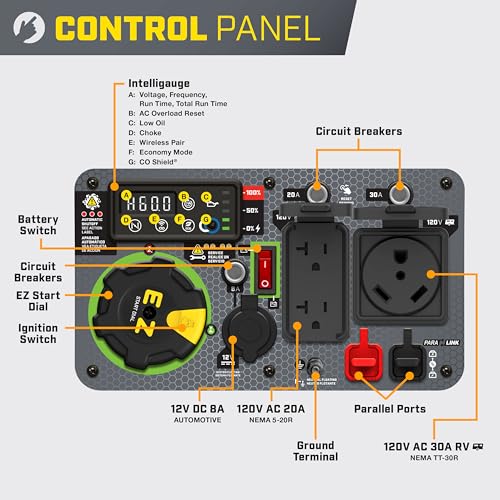
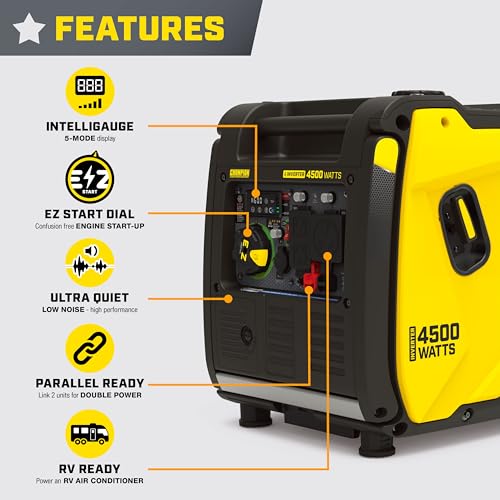
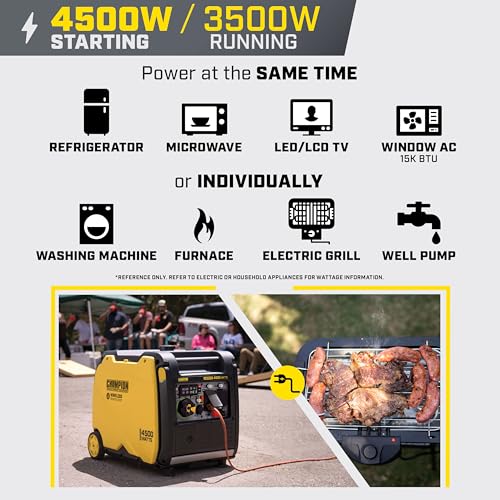
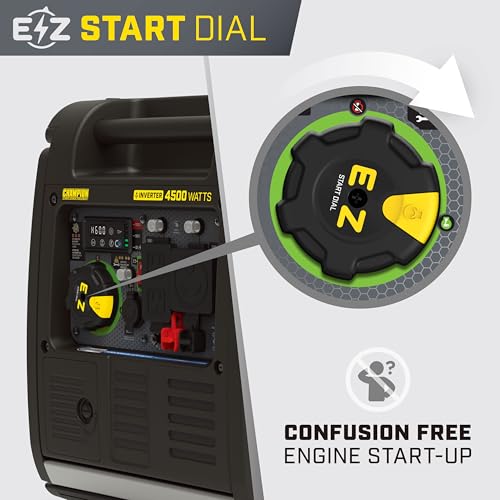
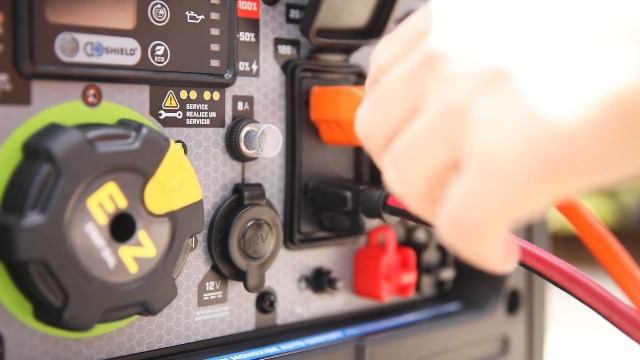
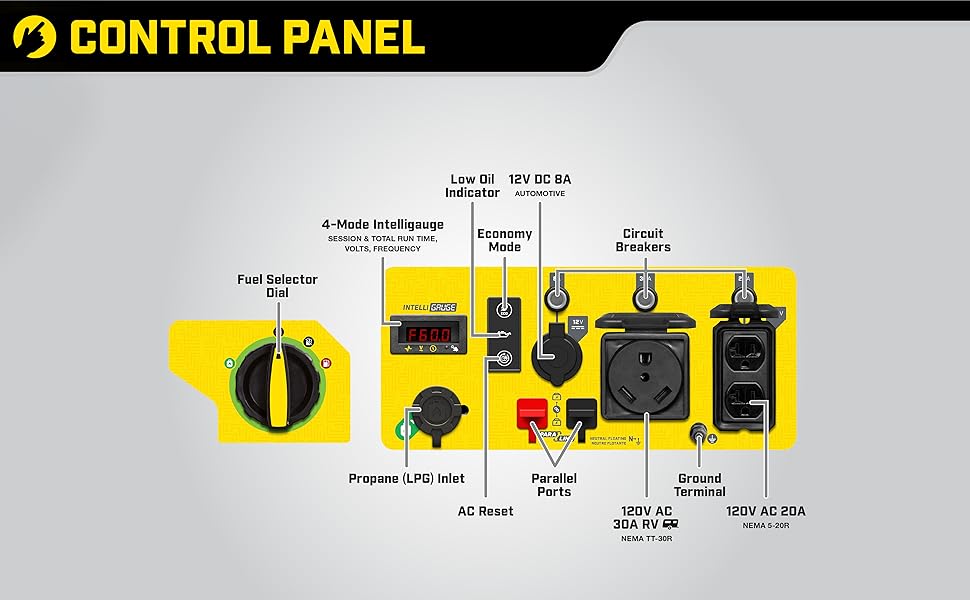
Champion 4500-Watt Wireless Remote Start Inverter (201324)
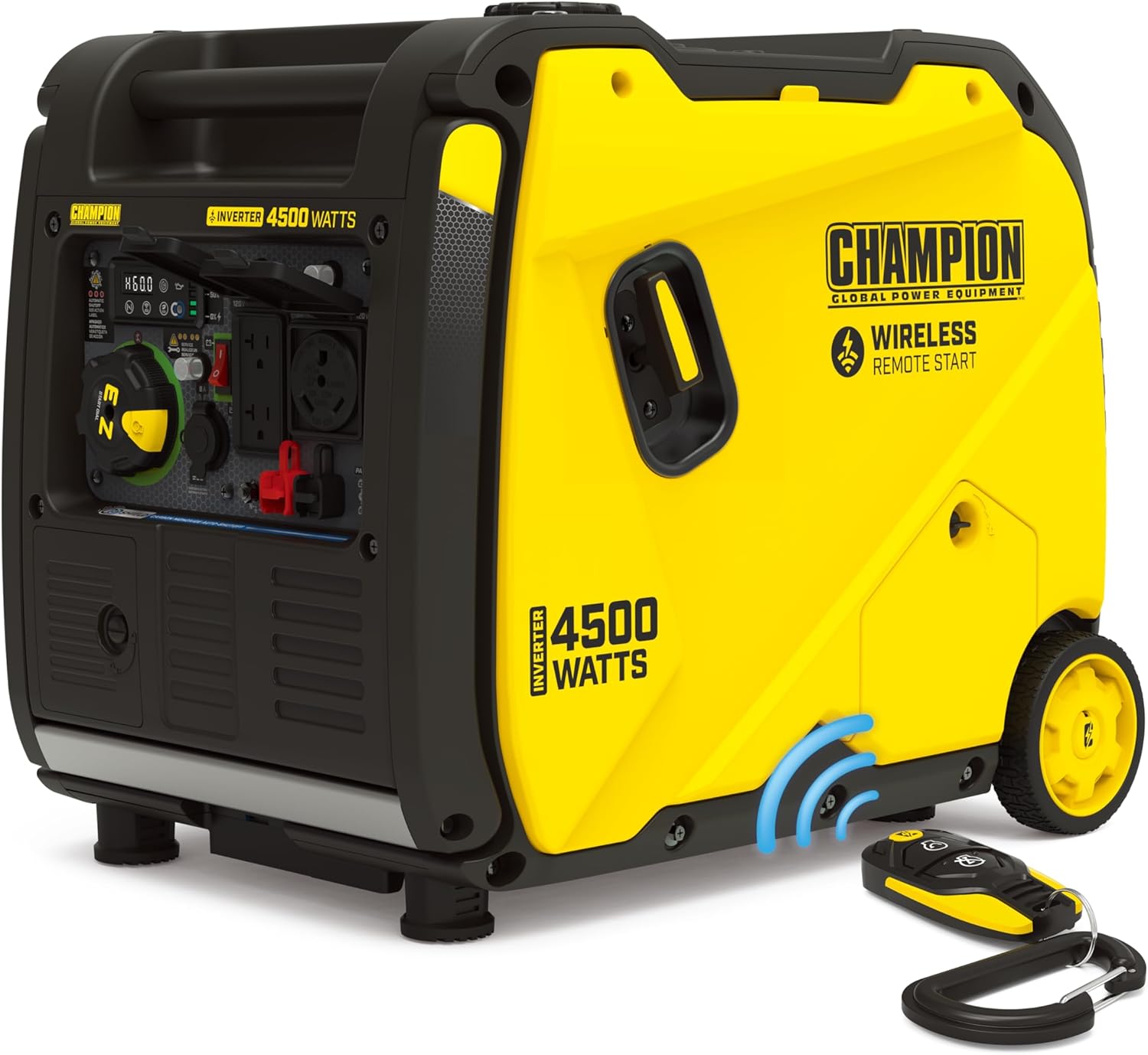
Champion 4500-Watt Wireless Remote Start





As an Amazon Associate we earn from qualifying purchases. Product prices and availability are accurate as of the date/time indicated.
Best for: an essentials load near 3,000 W peak, with CO Shield and a key fob start from up to 80 ft.
Avoid if: you need propane or 240 V; this model runs on gasoline only.
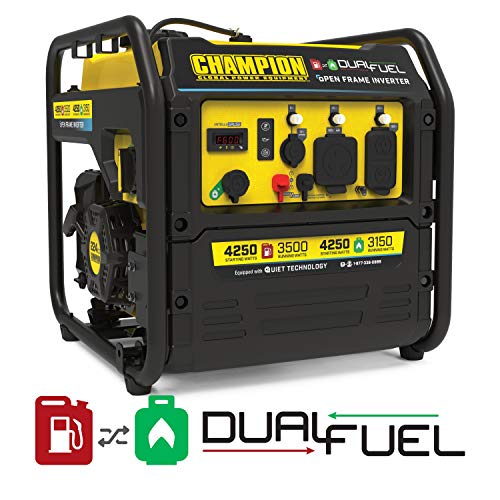
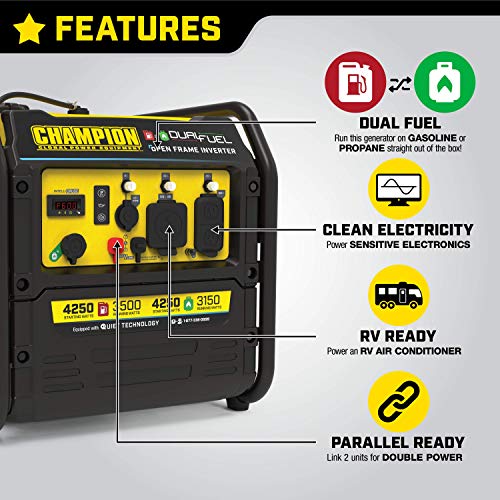
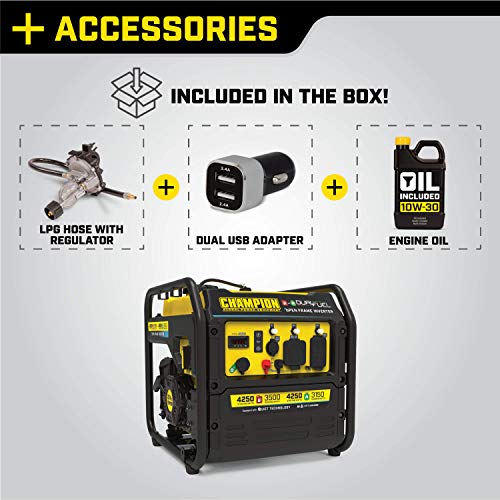
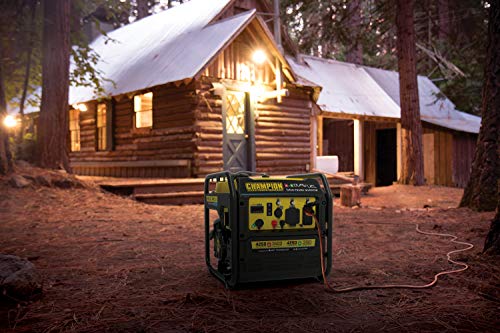
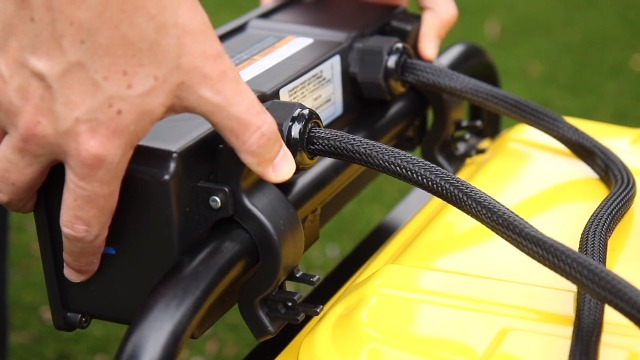
Champion 4250-Watt Dual Fuel Open Frame Inverter (200914)

Champion 4250-Watt Dual Fuel Portable Open Frame




As an Amazon Associate we earn from qualifying purchases. Product prices and availability are accurate as of the date/time indicated.
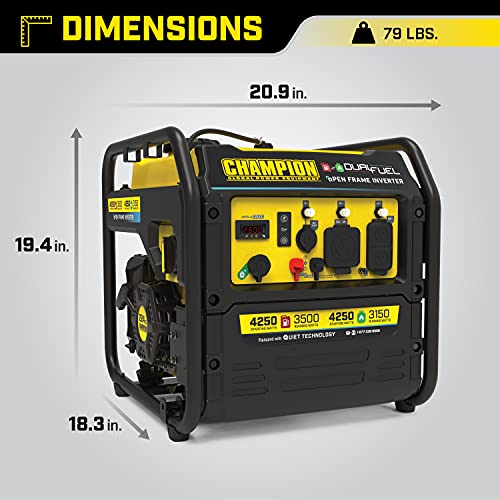
Best for: a lighter dual fuel inverter at 79 lb for the same essentials load.
Avoid if: you want an automatic CO shutoff; none is listed for this model.
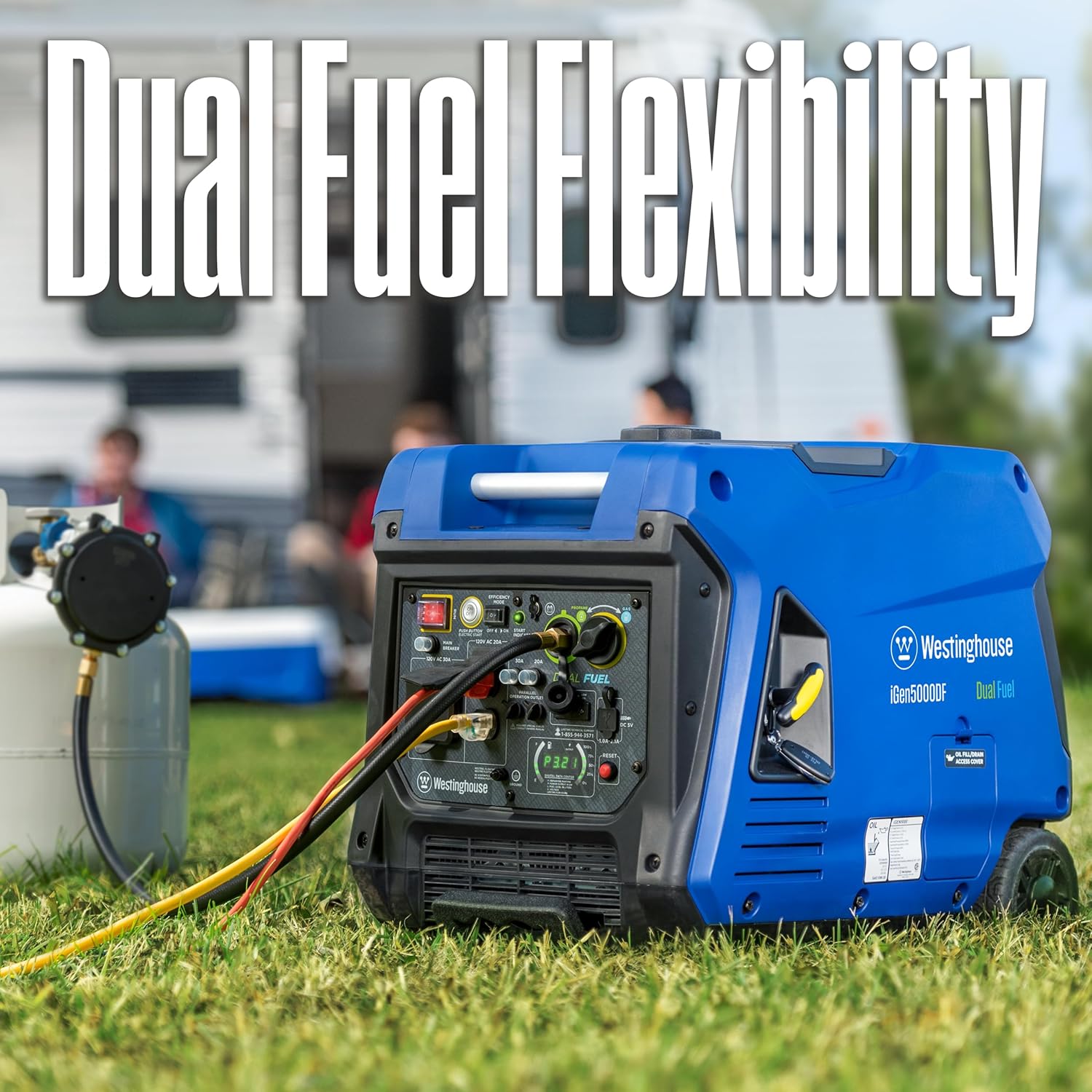
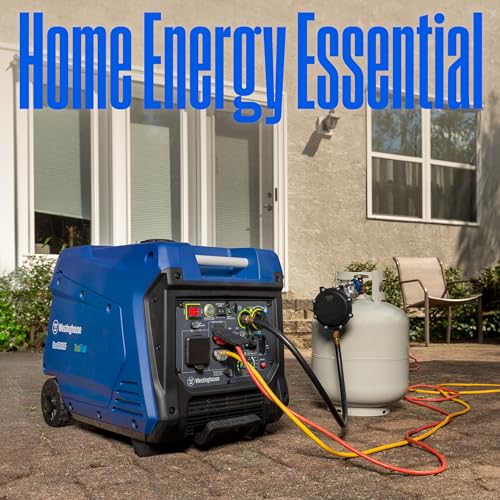
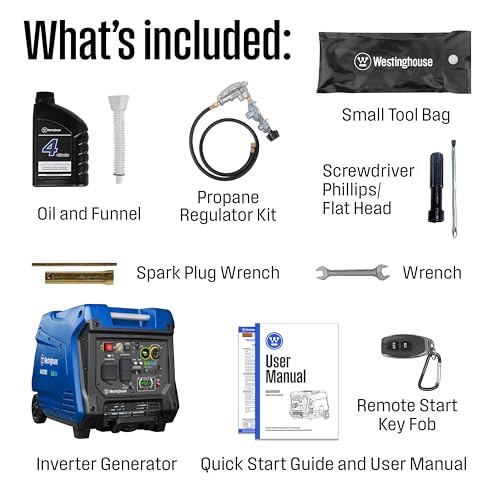
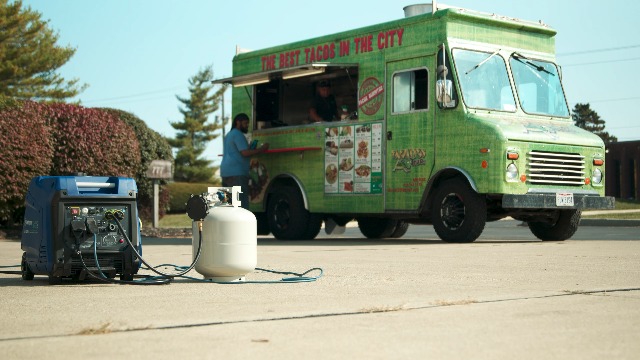
Westinghouse iGen5000DF Dual Fuel Inverter
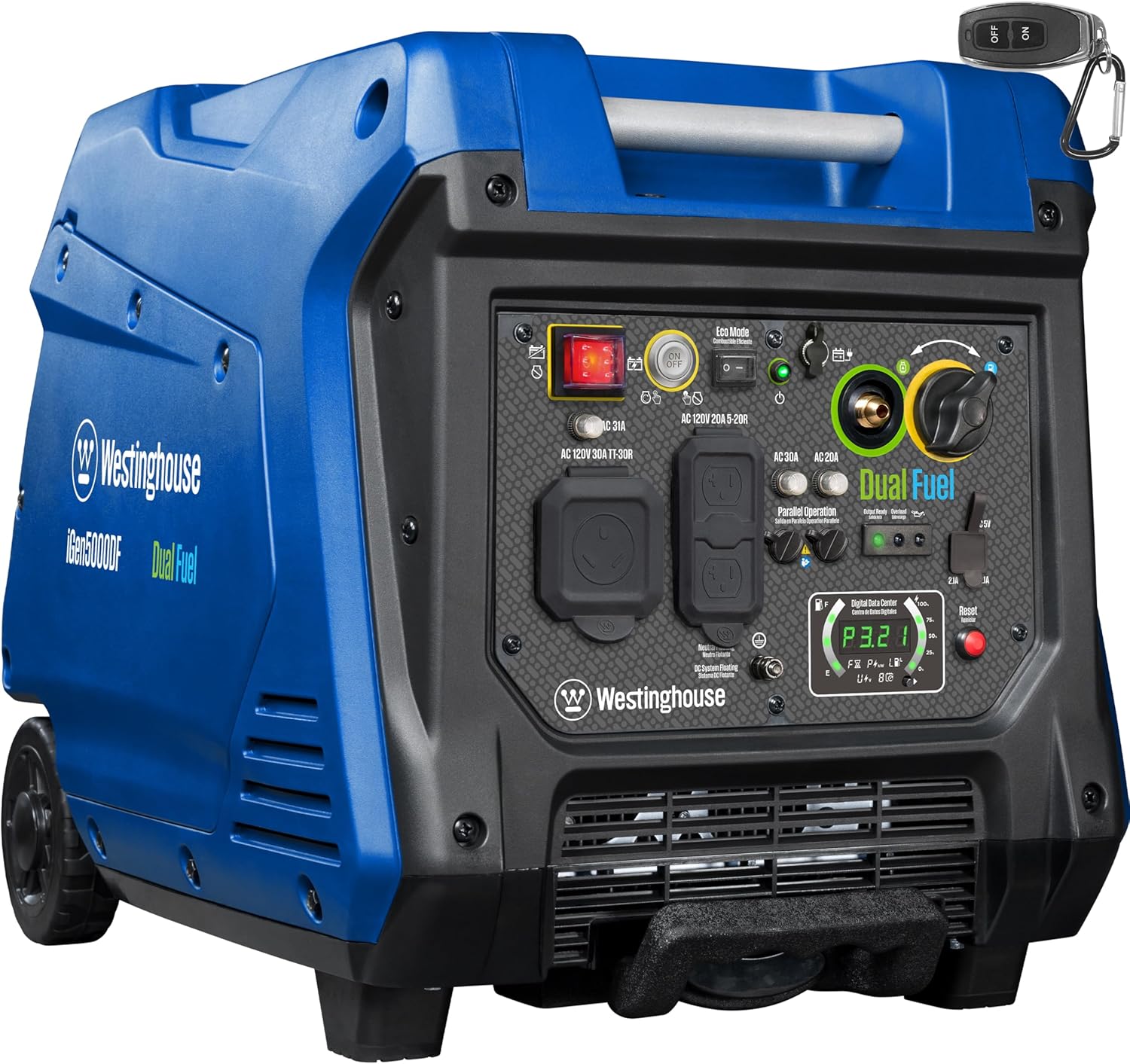
Westinghouse 5000 Peak Watt Super Quiet Dual Fuel

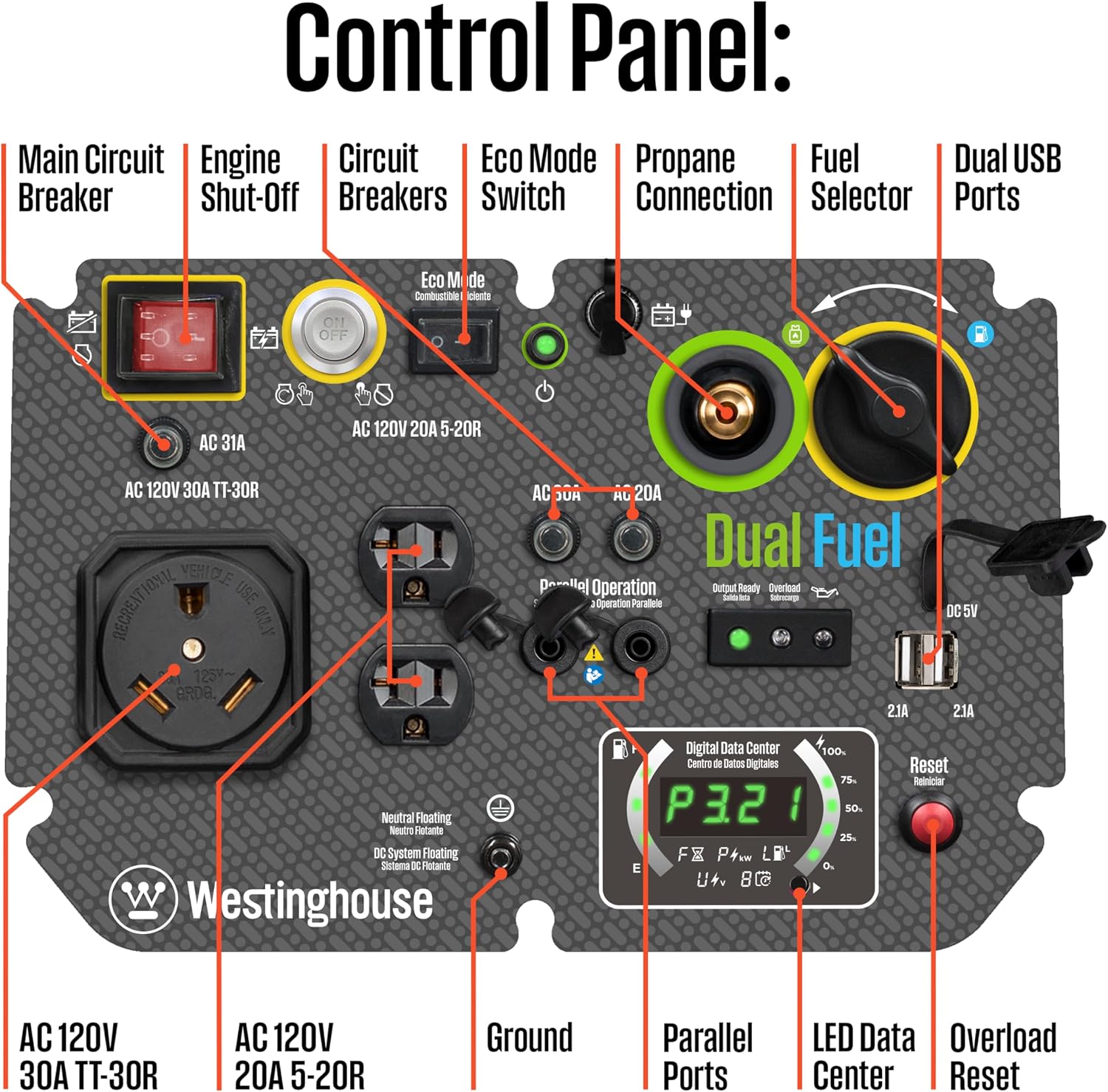
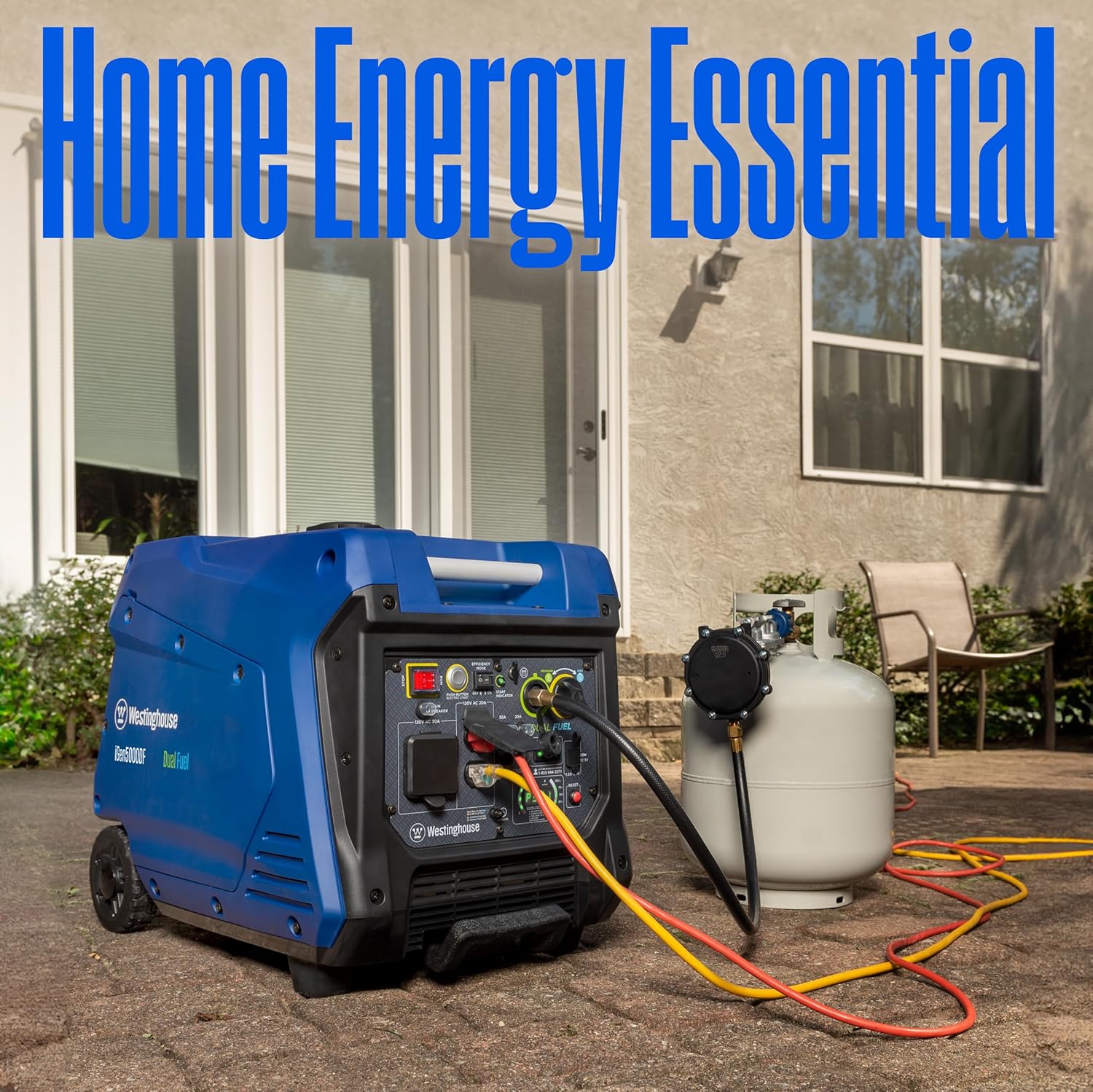


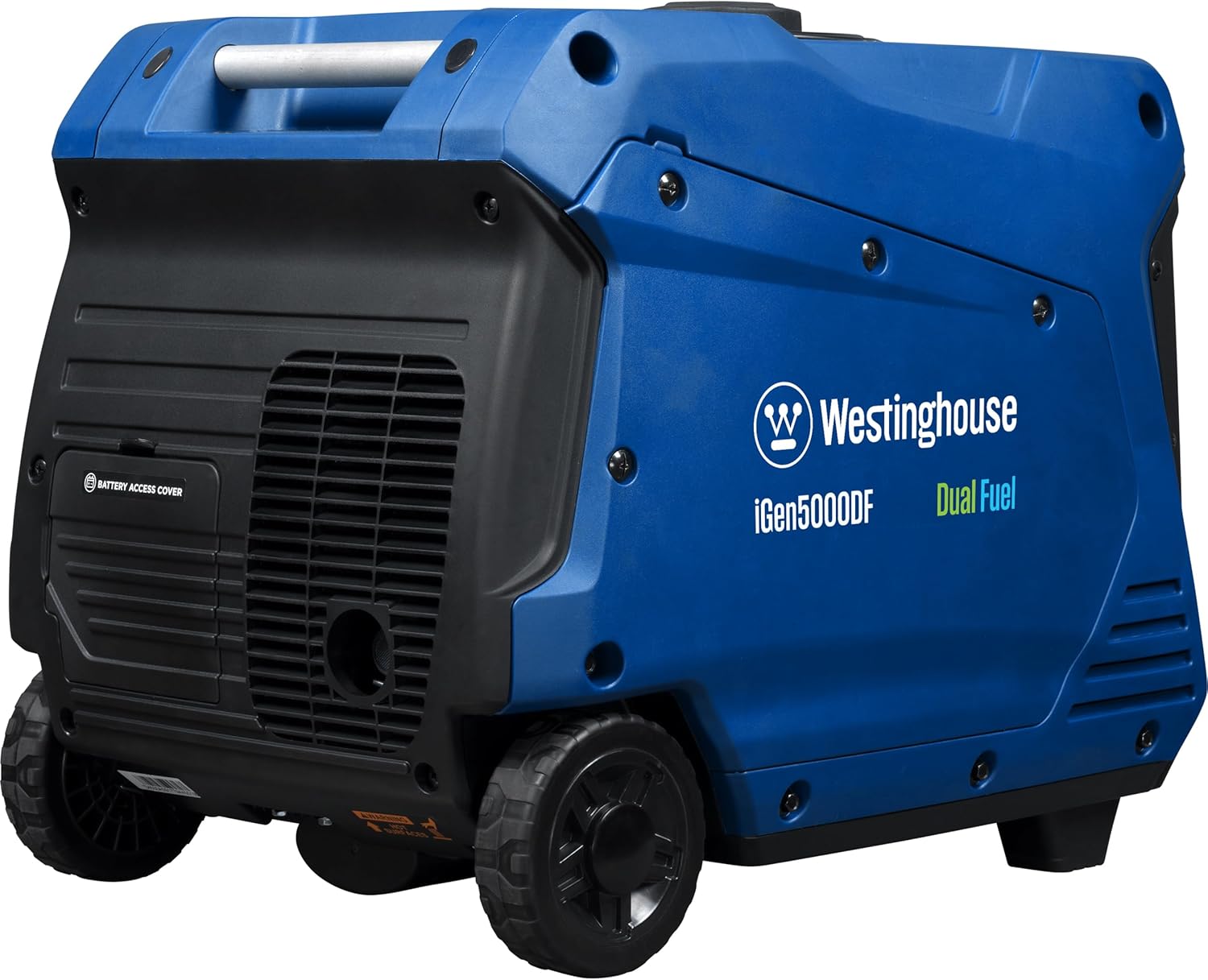
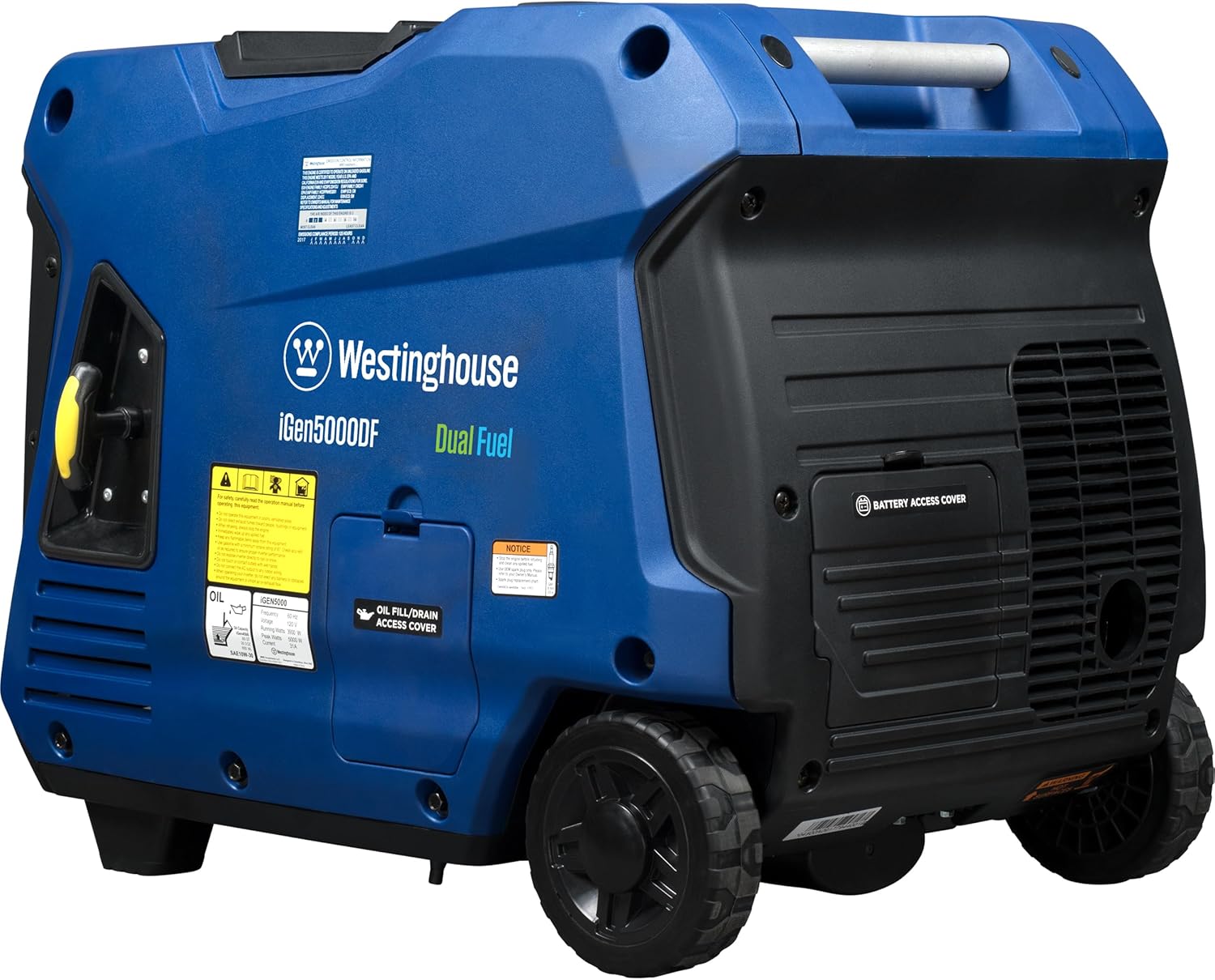
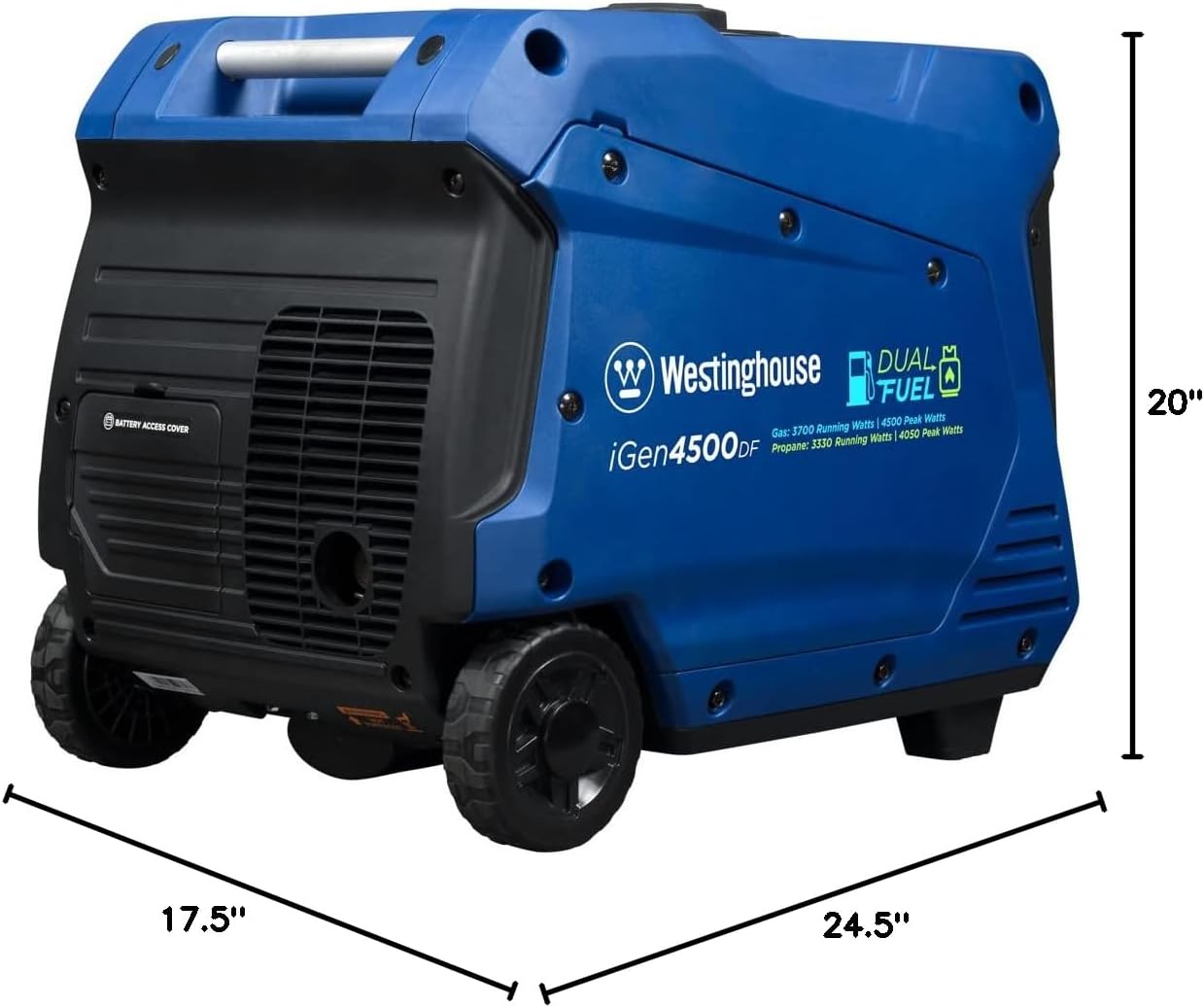


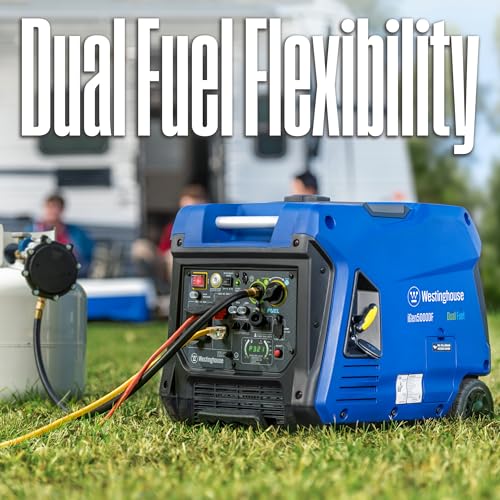
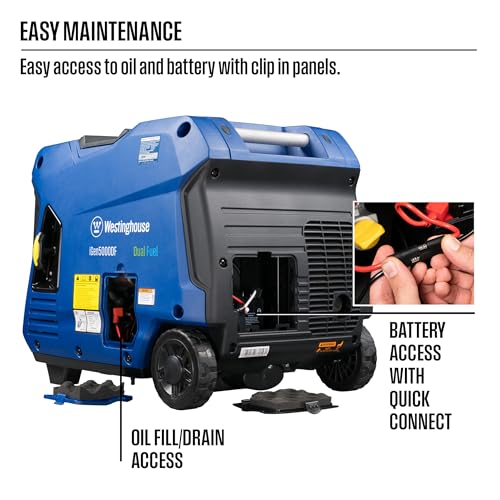
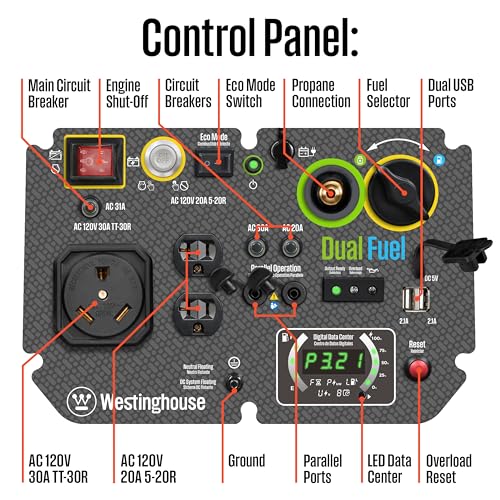
As an Amazon Associate we earn from qualifying purchases. Product prices and availability are accurate as of the date/time indicated.
Best for: the most running watts of the three inverters, 3,900 W, on gasoline or propane.
Avoid if: you want CO sensing; that is the separate iGen5000DFc.
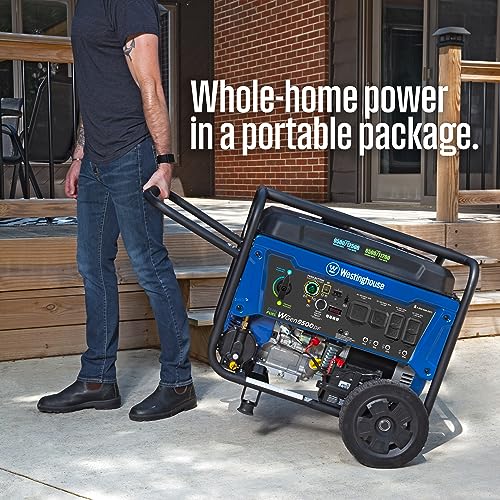
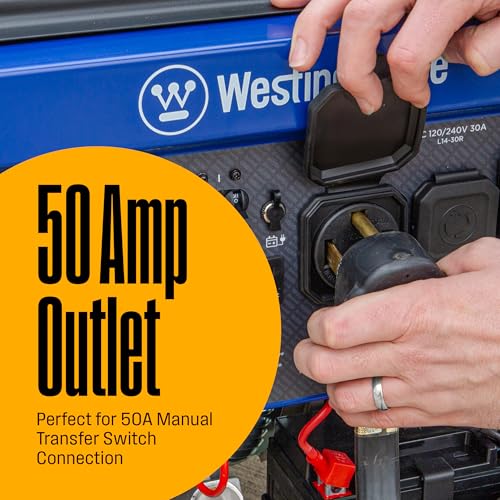
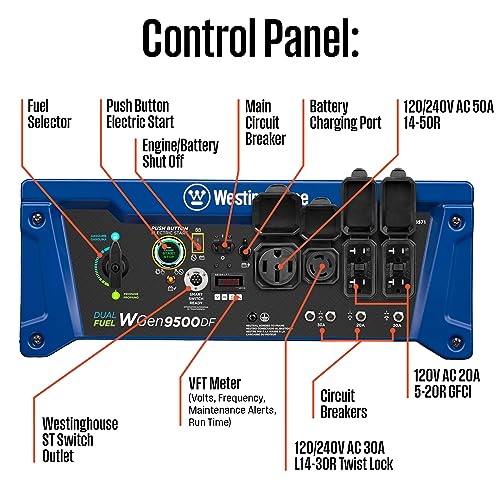
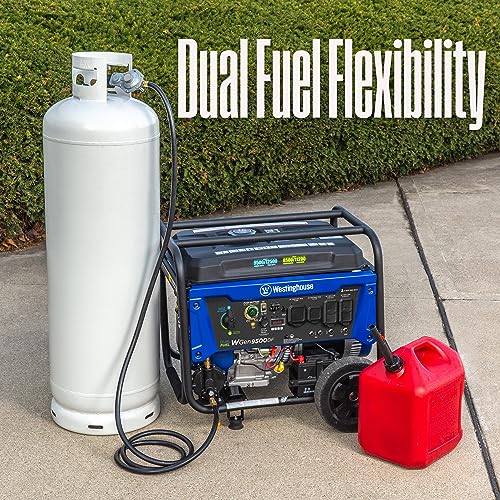
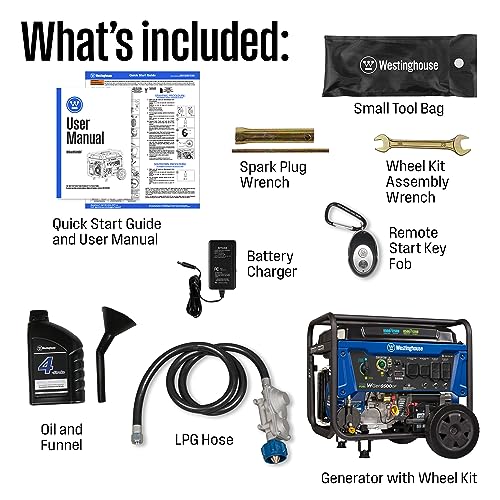
Westinghouse WGen9500DF Dual Fuel Portable Generator

Westinghouse 12500 Watt Dual Fuel Home Backup


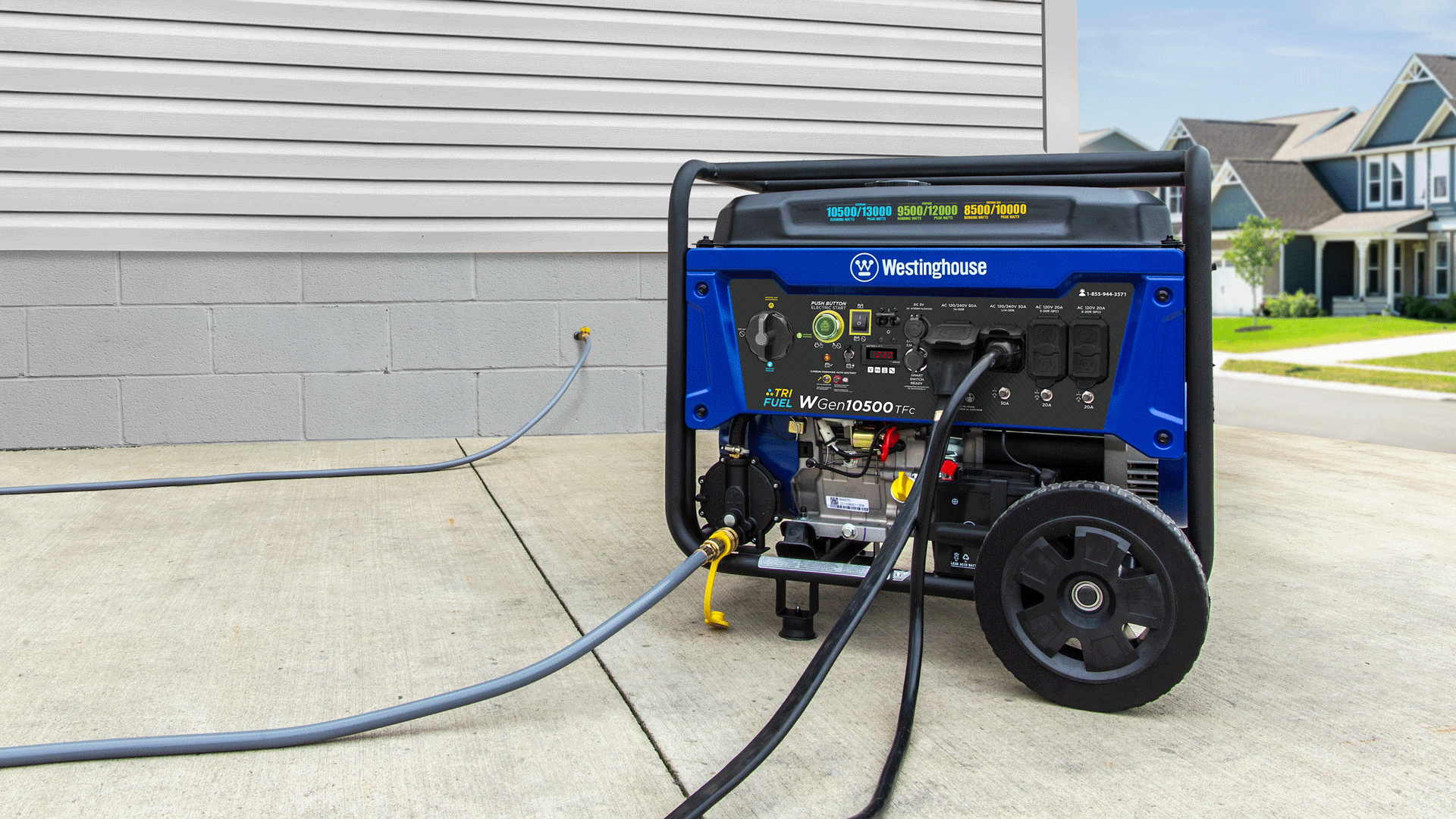
As an Amazon Associate we earn from qualifying purchases. Product prices and availability are accurate as of the date/time indicated.
Best for: a well pump plus essentials, or a 240 V feed through an electrician-installed transfer switch.
Avoid if: you need to lift it into a truck or keep noise down; it weighs 211 lb dry and lists 74 dBA.
Specs Side by Side
The three inverters are close on paper; the WGen9500DF sits in a different class. All figures are on gasoline unless marked.
| Spec | Champion 201324 | Champion 200914 | Westinghouse iGen5000DF | Westinghouse WGen9500DF |
|---|---|---|---|---|
| Type | Inverter, enclosed | Inverter, open frame | Inverter, enclosed | Conventional, open frame |
| Fuel | Gasoline | Gasoline or propane | Gasoline or propane | Gasoline or propane |
| Running / starting or peak watts | 3,500 / 4,500 W | 3,500 / 4,250 W | 3,900 / 5,000 W | 9,500 / 12,500 W |
| Propane running / peak | n/a | 3,150 / 4,250 W | 3,500 / 4,500 W | 8,500 / 11,200 W |
| Published noise | 61 dBA at 23 ft | 64 dBA at 23 ft (listing) | As low as 52 dBA, no distance stated | As low as 74 dBA, no distance stated |
| Tank and runtime | 2.25 gal, 14 h at 25% load | 4 gal, 22 h at 25% load (listing) | 3.4 gal, 18 h at 25% load | 6.6 gal, 12 h at 25% load |
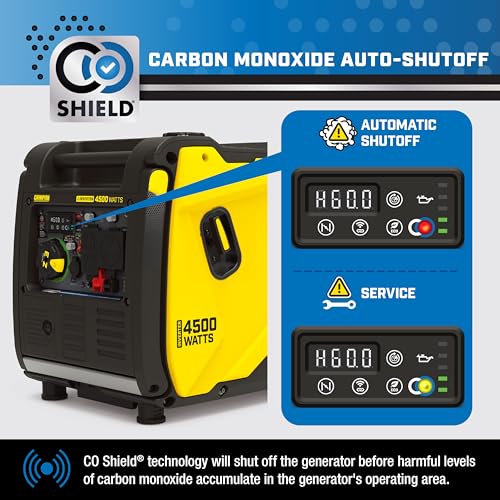
| Automatic CO shutoff | Yes (CO Shield) | Not listed | No (the iGen5000DFc version has one) | No |
| 240 V outlet | No | No | No | Yes, L14-30R and 14-50R |
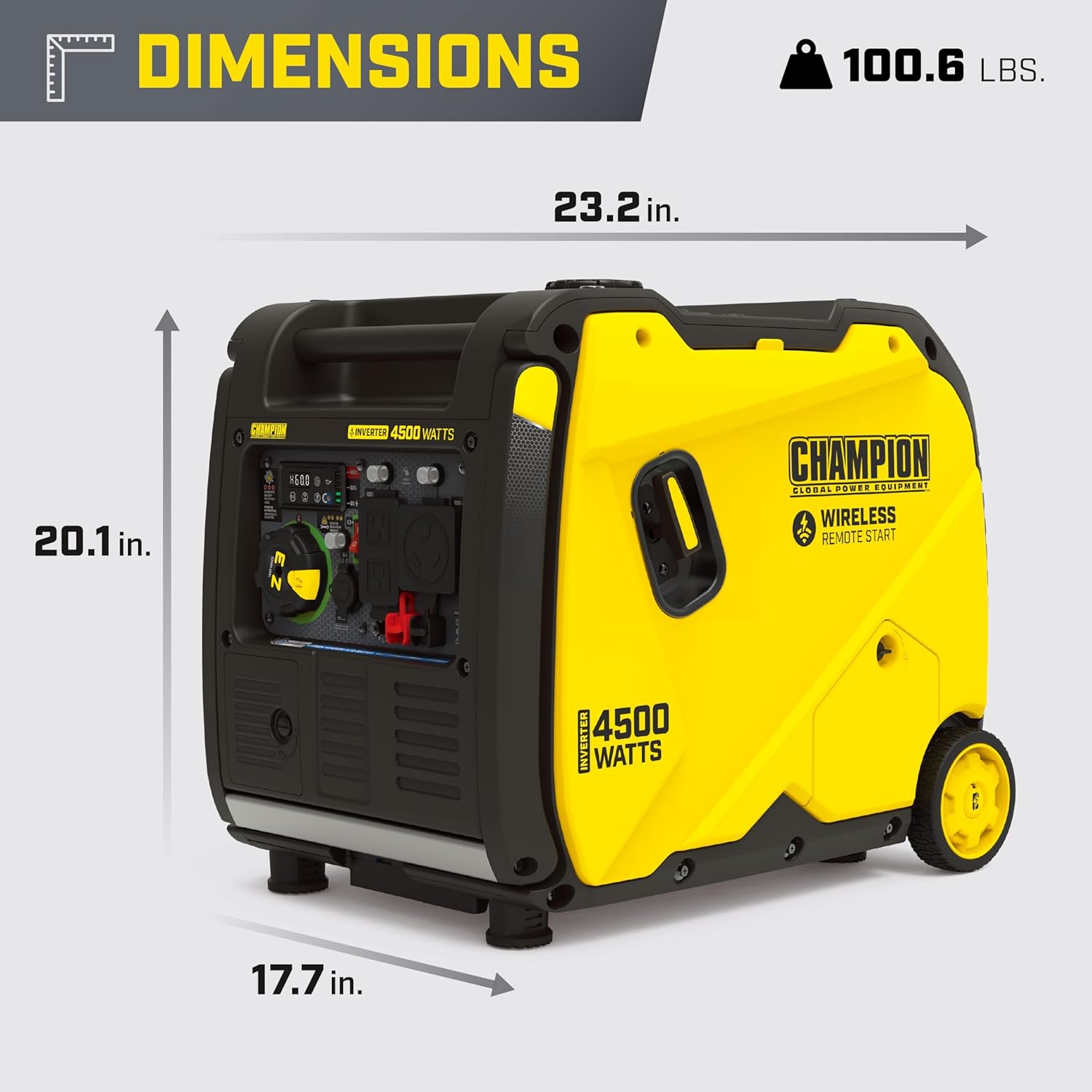
| Weight | 100.6 lb | 79 lb | 104.7 lb | 211 lb dry |
| Residential warranty | 3-year limited | 3-year limited | 3-year limited | 3-year limited |
Sources: Champion model pages and the 200914 operator’s manual, with the 200914 noise and runtime taken from its retail listing because Champion’s page for it is offline; Westinghouse product pages for both Westinghouse models.
Carbon monoxide warning for every gas and propane generator
Both brands’ generators make carbon monoxide (CO), a gas you cannot see or smell. The CPSC says to run portable generators outside only, at least 20 ft from the home, far from windows, doors, and vents, with the exhaust pointed away from the house. Never run one in a home, garage, basement, crawlspace, or shed, even with doors or windows open.
Put battery-operated or battery-backup CO alarms on every level of the home and outside sleeping areas. An automatic CO shutoff on the generator does not replace those alarms, as Champion states for its own CO Shield. Follow each owner’s manual and your local rules.
The Four Differences That Matter
1. Lineup: Where Each Brand Is Deep
Champion’s catalog runs wide in small and mid-size inverters, and it also sells tri fuel models, including tri fuel inverters, that add natural gas as a third fuel. Check the exact model page for wattage, CO Shield, and what ships in the box.
Westinghouse’s lineup reaches into larger home backup units. Its iGen8200TFc is a tri fuel inverter rated 6,600 / 8,200 W on gasoline and 5,280 / 6,560 W on natural gas, and its iGen12000DFc dual fuel inverter reaches 9,000 / 12,000 W. In our product data, every Westinghouse model is 5,000 peak watts or more, while every scored Champion is 4,500 starting watts or less. That gap decides most purchases before any spec line does.
2. How Each Brand Publishes Watts
Champion’s starting watts on an appliance chart are extra watts on top of running watts. Champion’s own sizing flyer says to add the highest single starting watt to total running watts, with the example 3,880 + 2,200 = 6,080 W. Westinghouse lists “rated” and “peak” watts for the generator, which line up with Champion’s “running” and “starting” on the machine side.
Start with the load. Using the high ends of Champion’s wattage chart, a fridge (400 W), a 1/2 HP furnace fan (800 W), LED lights (150 W), a router (20 W), and phone chargers (100 W) total 1,470 running watts. The furnace fan has the largest starting figure, 1,600 W, so peak demand is 1,470 + 1,600 = 3,070 W. Either mid-size inverter covers that with room left: 3,500 W running on the Champion 201324 and 3,900 W on the iGen5000DF.
Add a 1 HP well pump and the math changes. Its chart range tops out at 2,000 running and 4,000 starting watts, so running load becomes 1,470 + 2,000 = 3,470 W and peak becomes 3,470 + 4,000 = 7,470 W. That is past any single inverter in this comparison and inside the WGen9500DF’s 12,500 W gasoline peak, which also has the 240 V outlets many well pumps need. More load scenarios are in what size generator do I need.
3. Noise Numbers Are Not Published the Same Way
Champion states its decibel figures at a distance, usually 23 ft. Westinghouse says “as low as” a number and, on the pages for these models, gives no distance; for the iGen8200TFc it adds a 25% load condition. A dBA figure with no distance cannot be lined up against one measured at 23 ft, so the 52 dBA versus 61 dBA gap in the table is not a like-for-like result.
Distance still helps you plan. A common free-field rule drops sound by 20 x log10(d2 / d1) dB as you move away, so Champion’s 61 dBA at 23 ft becomes about 61 − 20 x log10(46 / 23) = 61 − 6 = about 55 dBA at 46 ft. Walls, fences, and hard surfaces change real results, which is why owner reports vary. For the quietest units across brands, see best quiet inverter generators.
4. CO Shield vs CO Sensor Models
Champion builds CO Shield, its automatic CO shutoff, into a large share of its lineup, including the 201324 here. Champion says CO Shield meets ANSI/PGMA G300, runs automatic self-checks, and lasts a minimum of a decade. The older 200914 open frame inverter does not list it.
Westinghouse sells CO sensing as separate model numbers, usually marked with a “c”: the iGen5000DFc, iGen5000DFcv, iGen8200TFc, and iGen12000DFc have it, while the iGen5000DF and WGen9500DF in our product data list “CO Sensor: No”. If you shop Westinghouse, check the exact model number before you buy. How these shutoffs work is covered in what is a CO shutoff sensor on a generator.
Fuel Use at Light Load
At 25% load the two mid-size inverters burn fuel at similar rates. Champion 201324: 2.25 gal / 14 h = about 0.16 gal per hour at about 875 W (25% of 3,500 W). Westinghouse iGen5000DF: 3.4 gal / 18 h = about 0.19 gal per hour at about 975 W (25% of 3,900 W). The Westinghouse runs a slightly larger load and carries a bigger tank, so it goes about 4 hours longer per fill.
Choose Champion If
- Your outage load is a fridge, a furnace fan, lights, and electronics, with peak demand near or under 4,000 W.
- You want an automatic CO shutoff without hunting for a separate model number.
- You want a noise figure stated at a distance so you can plan placement.
- You want a tri fuel model that adds natural gas; see best Champion generators.
Choose Westinghouse If
- You need 240 V for a well pump or plan to feed home circuits through a transfer switch or interlock installed by a licensed electrician.
- Your peak load runs above about 5,000 W, such as a well pump plus a fridge and furnace.
- You want a large dual or tri fuel inverter; compare options in best dual fuel generators.
- You can handle a unit of 200 lb or more, or have a fixed spot for it.
Never plug either brand into a wall outlet to power the house. The CPSC warns that backfeeding can put utility workers and neighbors at risk. The concepts behind the safe options are in transfer switch basics.
FAQ
Is Champion or Westinghouse more reliable?
Neither brand publishes failure rates, and we do not have independent long-term data, so we will not rank them on reliability. Both offer a 3-year limited residential warranty, and Westinghouse lists a 1-year limited commercial warranty on the WGen9500DF. Buyer ratings in our data are high for both brands.
Do Champion starting watts include running watts?
On Champion’s appliance chart, no. Champion’s sizing flyer treats starting watts as extra, added once for the single largest motor: total running watts + the highest starting figure = peak demand.
Can either one run a whole house?
The mid-size inverters cover essentials, not central air or an electric water heater. The WGen9500DF can carry more, but a whole-house plan still needs a load calculation and a licensed electrician to connect it through approved transfer equipment.
Changelog: November 2026: first published.









