


Pick the EcoFlow DELTA 2 Max if you want more start-up headroom, a lighter unit, and room to grow; pick the Anker SOLIX F2000 if your loads are steady and you will add at most one extra battery. Both hold 2,048 Wh of LFP battery and rate 2,400 W continuous, so a given load runs the same time on either.
Figures come from the manufacturer pages, except the F2000’s weight, which Anker’s page does not list; that comes from StorageReview’s review. We research and compare; we do not run our own product trials, and our selection method explains the rest. Only the DELTA 2 Max has a product card below; we have no card for the F2000.
Best for: DELTA 2 Max buyers who want surge headroom and 50 lb portability. Avoid if: you need a 240 V output.

EF ECOFLOW Portable Power Station DELTA 2 Max








As an Amazon Associate we earn from qualifying purchases. Product prices and availability are accurate as of the date/time indicated.
Specs Side by Side
| Spec | EcoFlow DELTA 2 Max | Anker SOLIX F2000 |
|---|---|---|
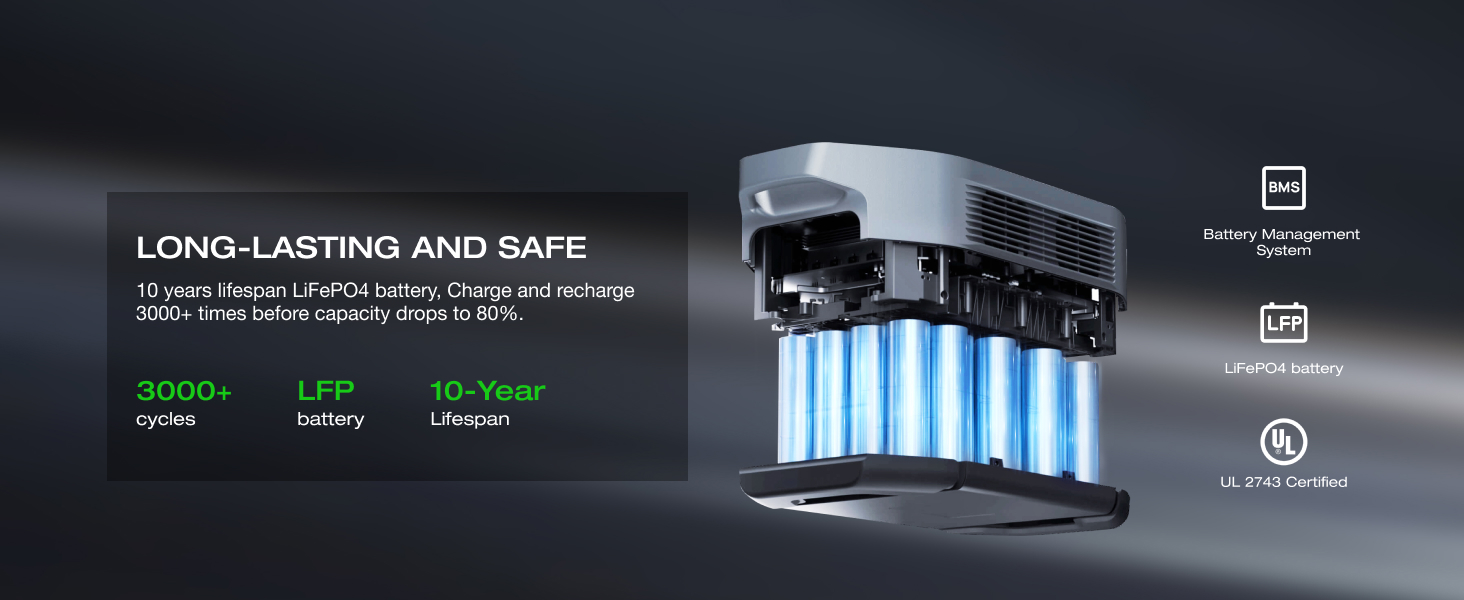
| Capacity and chemistry | 2,048 Wh LFP | 2,048 Wh LFP |
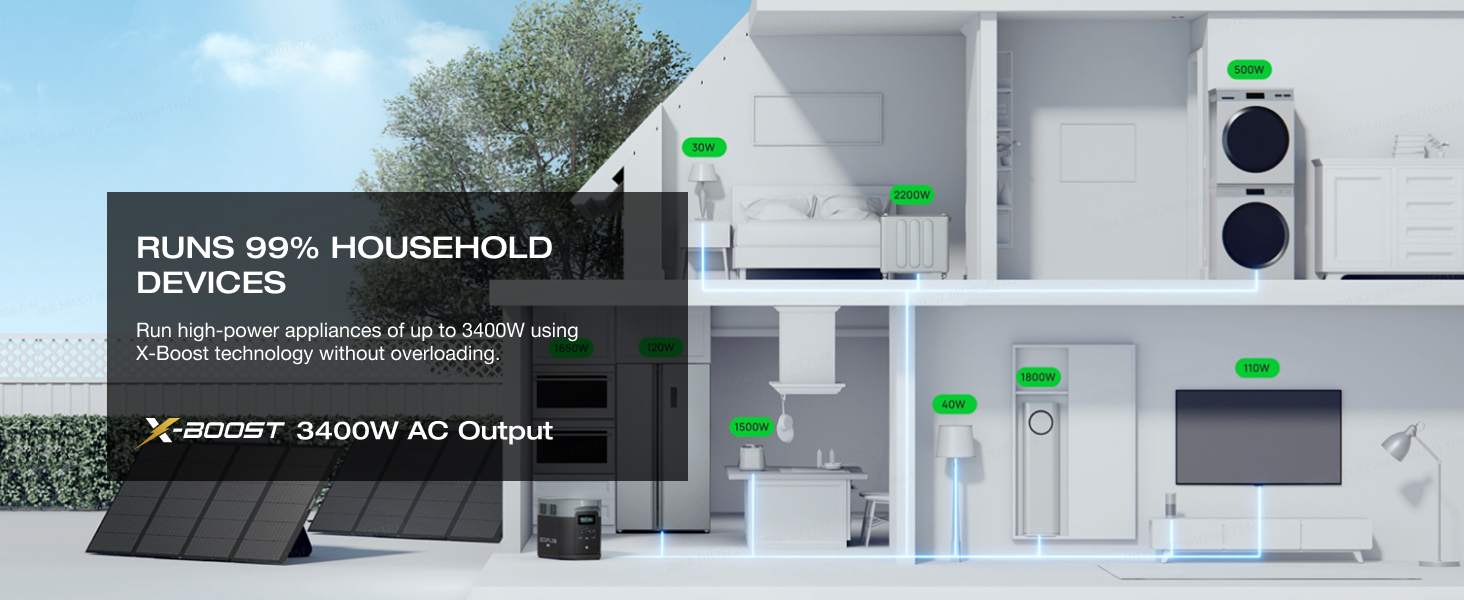
| Continuous AC output | 2,400 W (X-Boost mode up to 3,400 W) | 2,400 W |
| Surge | 4,800 W | 3,600 W |
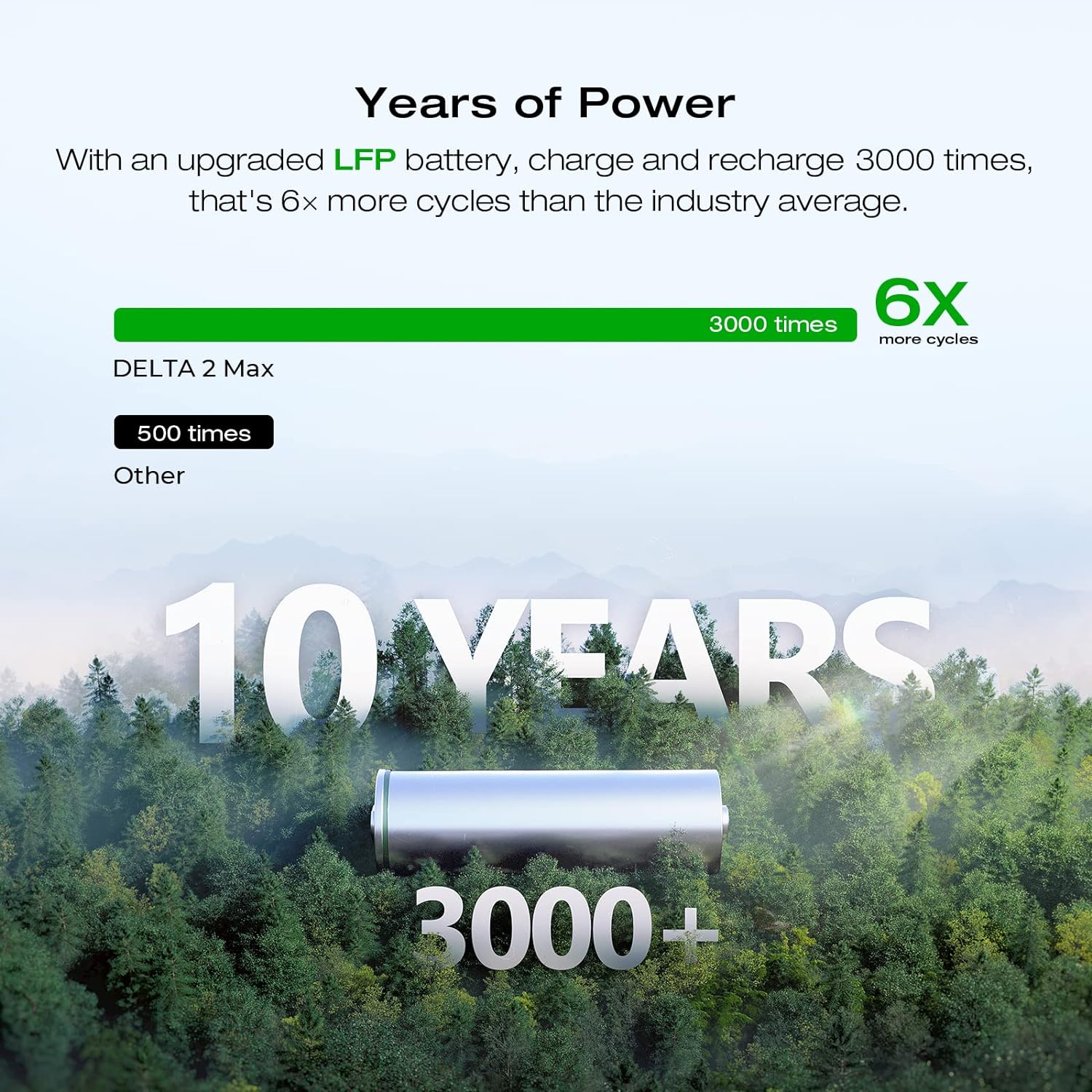
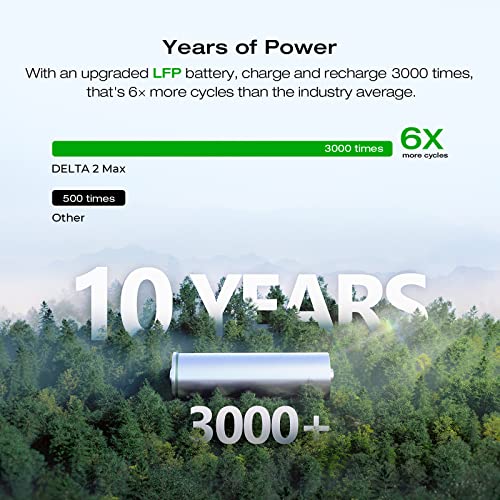
| Rated cycles | 3,000 to 80% or more | 3,000 |
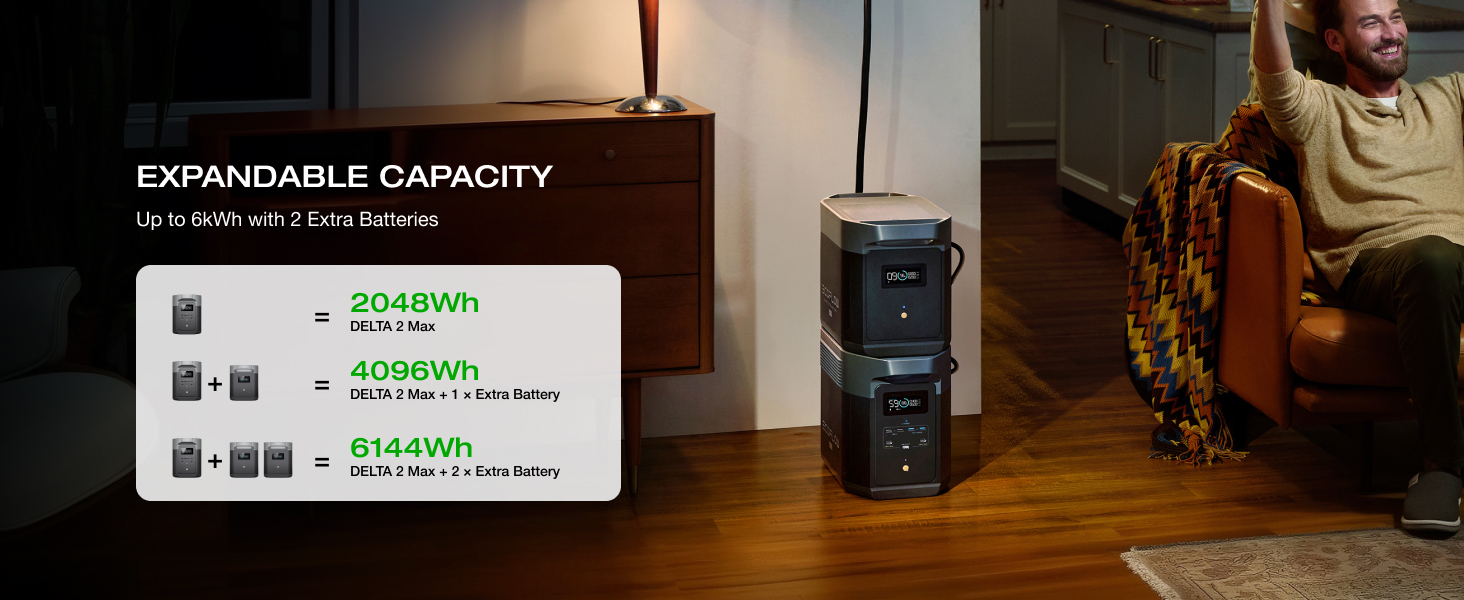
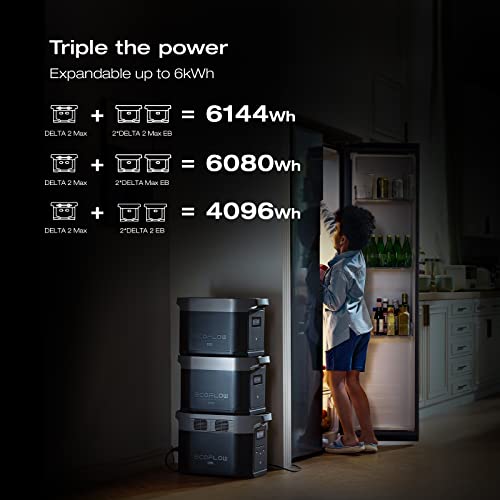
| Expansion | Up to two extra batteries, 6,144 Wh total | One extra battery, up to 4 kWh total |
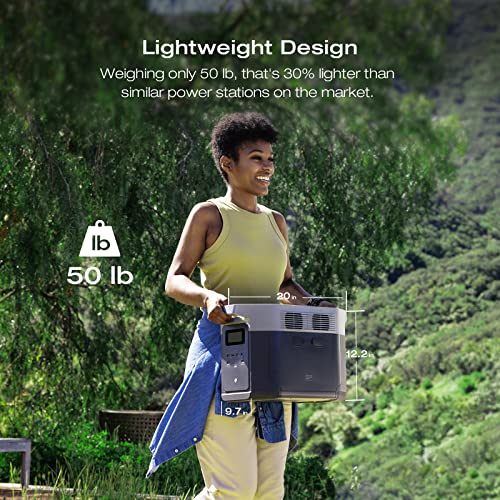
| Weight | 50 lb (23 kg) | 67.2 lb (30.5 kg) |
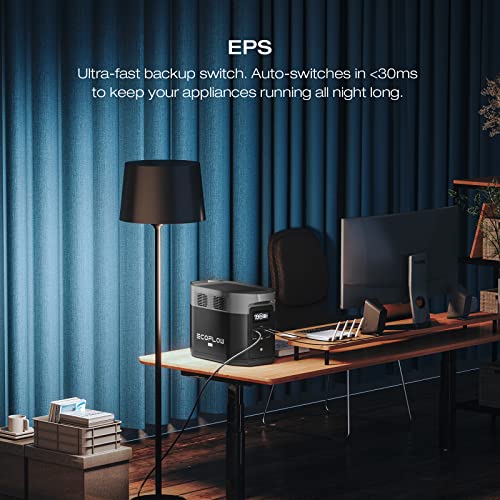
| UPS switchover | Not on the spec table | 20 ms |
| Warranty | 5 years | 5 years |
Sources: us.ecoflow.com DELTA 2 Max page and the ankersolix.com F2000 page and comparison table, plus StorageReview for the F2000’s weight. Watt-hours (Wh) are the size of the tank; watts (W) are how fast you can pour from it.
The Differences That Matter
1. Surge: 4,800 W vs 3,600 W
Continuous rating decides whether a load keeps running; surge decides whether a motor starts. The DELTA 2 Max has 4,800 W minus 3,600 W = 1,200 W more start-up headroom. Take a hypothetical sump pump that draws 1,000 W running plus a 3,000 W start-up spike: 1,000 + 3,000 = 4,000 W at the moment it kicks on. That fits under the DELTA 2 Max and exceeds the F2000. Read your own motor’s nameplate first; many never get close.
2. Expansion: 6,144 Wh vs 4,096 Wh
EcoFlow supports two extra batteries on the DELTA 2 Max; Anker lists one on the F2000. Usable energy at the outlet is capacity x 0.85 inverter efficiency, a common planning figure: 6,144 x 0.85 = about 5,200 Wh against 4,096 x 0.85 = about 3,480 Wh. If your essentials budget is 5,000 Wh a day, only the fully expanded DELTA 2 Max covers it. Our expansion battery guide covers what an extra battery does and does not add.
3. Weight: 50 lb vs 67.2 lb
The F2000 is 17.2 lb heavier. On a basement shelf that does not matter. Carried up stairs to a deck, it does.
4. Runtime Is a Tie
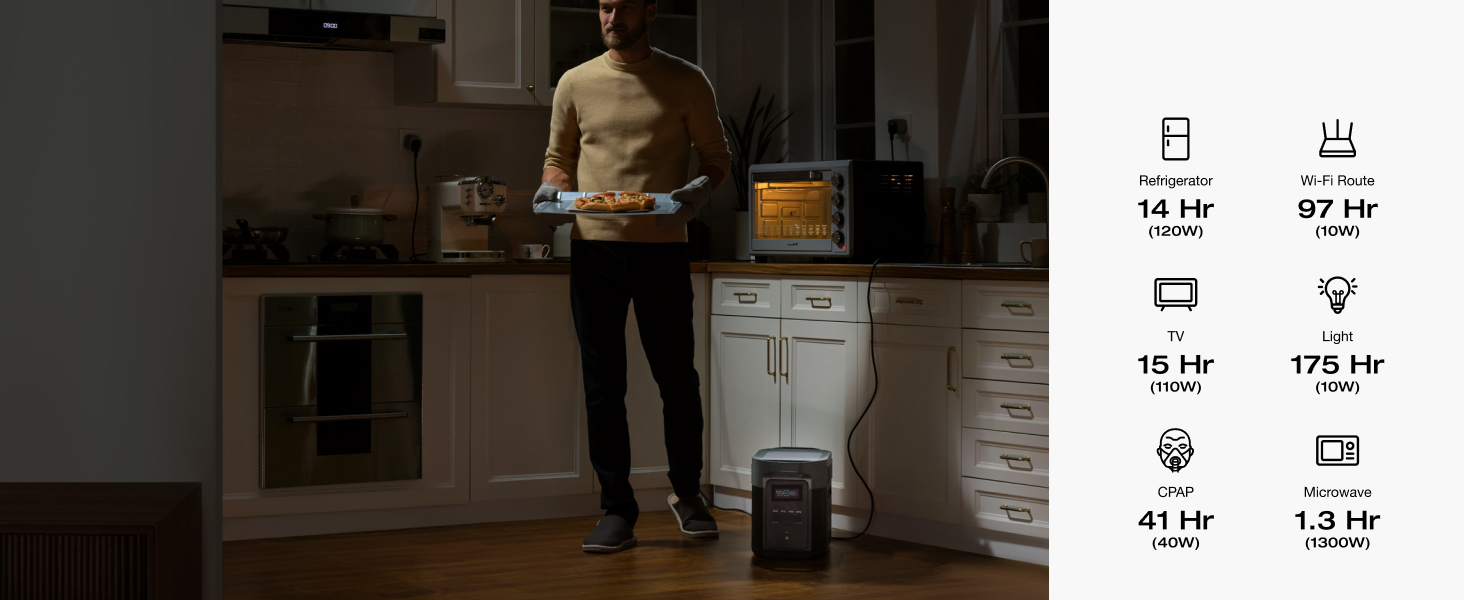
A fridge rated at 600 kWh a year averages 600,000 Wh / 8,760 h = about 68.5 W. On either unit: 2,048 Wh x 0.85 / 68.5 W = about 25 hours. For a full plan, see how to choose power station size.
Choose the DELTA 2 Max If
- You have a pump or compressor with a large start-up draw, up to the 4,800 W surge.
- You may grow to 6,144 Wh later.
- The unit will move often and 50 lb matters.
- Avoid if you need a 240 V output; the spec sources we read list none.
Choose the F2000 If
- Your loads are steady and start under 3,600 W, and one extra battery is enough.
- You already own Anker gear or prefer its app. Our brand comparison covers that side.
Both are 120 V units. Connecting either one to a home panel is a job for a licensed electrician; transfer switch basics explains the concept.
FAQ
Which has more usable capacity?
Neither. Both are 2,048 Wh, so 2,048 x 0.85 = about 1,740 Wh at the outlet on either one.
Can either run a 240 V well pump?
Neither spec source we read lists 240 V output for these units. Check the pump nameplate and the manufacturer page before you buy.
Is the DELTA 2 Max the same as the DELTA 3 Max?
No, they are different models. Our DELTA 2 vs DELTA 3 comparison shows how EcoFlow’s names line up.
Changelog: November 2026: first published.









