


Tesla’s Powerwall 3 is a permanently installed home battery with 13.5 kWh and up to 11.5 kW continuous output; the EcoFlow DELTA Pro Ultra is a modular, plug-in system with 6,144 Wh per battery and 7,200 W per inverter. Choose the Powerwall 3 for a fixed, solar-ready system that an installer wires in. Choose the DELTA Pro Ultra if you want to start small and keep gear you can move.
The Powerwall 3 is sold through Tesla, not Amazon, so only the DELTA Pro Ultra has a product card. Figures come from tesla.com and us.ecoflow.com. We research and compare; we do not run our own product trials. See how we choose.
DELTA Pro Ultra. Best for: renters and staged buyers. Avoid if: you need more than 7.2 kW from one inverter.

EF ECOFLOW DELTA Pro Ultra 6144Wh Power Station


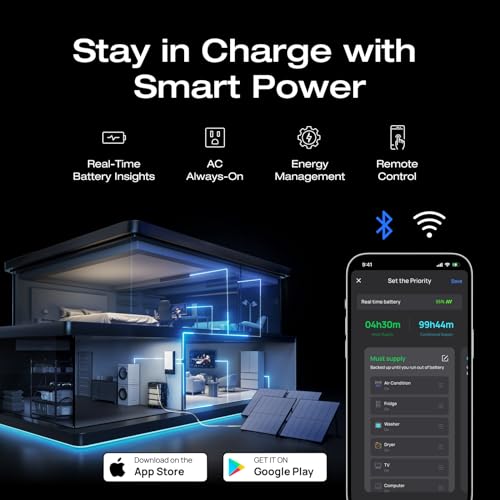

As an Amazon Associate we earn from qualifying purchases. Product prices and availability are accurate as of the date/time indicated.
Specs Side by Side
| Spec | Tesla Powerwall 3 | EcoFlow DELTA Pro Ultra |
|---|---|---|
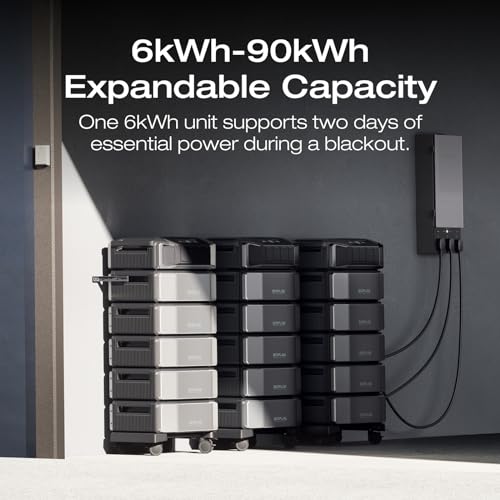
| Energy | 13.5 kWh nominal, per unit | 6,144 Wh per battery; 12,288 Wh with two |
| Continuous output | Up to 11.5 kW per unit, depending on model | 7,200 W per inverter |
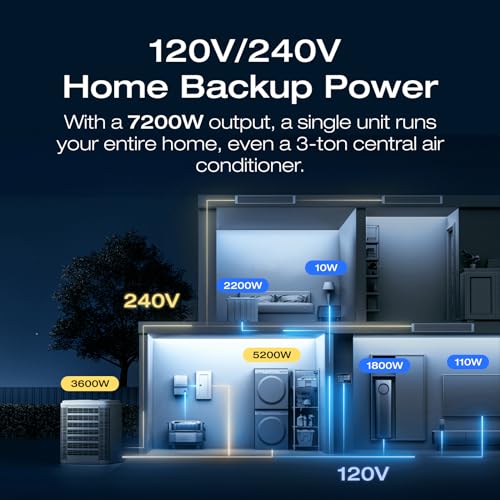
| Motor start | 185 LRA, per Tesla | 10.8 kW surge; EcoFlow ties its 3-ton central AC claim to an LRA within 120 A |
| Scaling | Up to 4 Powerwall 3 units, plus Expansion units (7 total), per Tesla | Up to 90 kWh and 21.6 kW (three inverters, 15 batteries) |
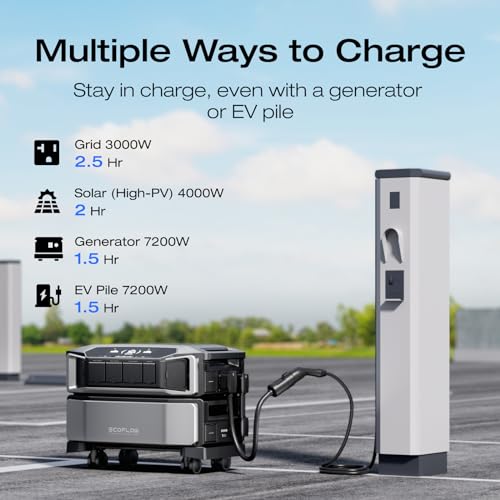
| Solar | Up to 20 kW DC (STC), built in | 5.6 kW per inverter |
| Installation | Certified installer, fixed to the home | Plug-in; panel link needs an electrician |
| Warranty | 10 years, per Tesla’s terms | 5 years |
The Differences That Matter
1. Energy at the Outlet
Tesla’s 13.5 kWh is a nominal AC figure. EcoFlow’s capacity is battery-side, so apply a planning loss of 0.85 for inverter efficiency: 2 x 6,144 Wh x 0.85 = about 10,400 Wh. That is 13,500 / 10,400 = about 1.3 times more energy in a single Powerwall 3 than in a two-battery DELTA Pro Ultra. The 0.85 is a common planning figure, not an EcoFlow number.
2. Power and Motor Starts
The top Powerwall 3 model gives 11.5 / 7.2 = about 1.6 times the continuous output. Tesla rates motor starts at 185 LRA (locked-rotor amps), a number you can match to a central AC’s compressor nameplate. EcoFlow lists a 10.8 kW surge and, for central AC, says the unit’s LRA must be within 120 A. The two companies state these limits on different bases, so do not treat 185 against 120 as a head-to-head score. Check your unit’s nameplate and ask the installer or maker before you rely on either.
3. Installation and Portability
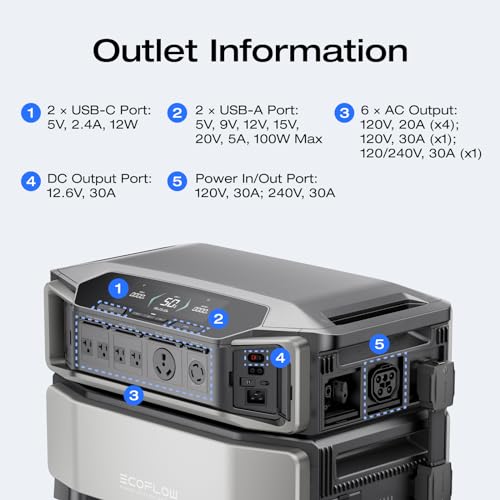
The Powerwall 3 goes through a certified installer, with a permit and utility sign-off where your area requires them. The DELTA Pro Ultra plugs into outlets on its own, but connecting it to a home panel is work for a licensed electrician. Our transfer switch basics explain the concept. The EcoFlow is far easier to take with you if you rent or relocate.
4. Solar and Warranty
Tesla supports up to 20 kW DC of solar in one unit. EcoFlow takes 5.6 kW per inverter. Tesla lists 10 years, though its Powerwall 3 owner manual says the full term needs a reliable internet connection and that the warranty may be limited to 4 years if the unit stays offline for a long time; EcoFlow lists 5. For a daily solar cycle, the longer term is worth weighing. Cost is covered in home battery backup cost.
Choose the Powerwall 3 If
- You own the home long term and want a fixed system with solar built in.
- Your simultaneous load tops one DELTA Pro Ultra inverter’s 7,200 W and you would rather not add inverters; one top-model Powerwall 3 gives up to 11.5 kW.
- You want a 10-year term and an installer handling permits.
- Avoid if you rent or may move within a few years.
Choose the DELTA Pro Ultra If
- You rent, may move, or want to buy in stages.
- You want a system you can also take to a cabin or job site.
- Avoid if you need more than 7.2 kW from a single inverter.
See whole-home battery backup options and are whole-home battery backups worth it for the wider decision.
FAQ
Is the Powerwall 3 on Amazon?
No. Tesla sells it directly through certified installers, so we do not link to a store here.
Can I move a Powerwall 3?
It is meant to be installed and stays with the home. Moving it is an installer job.
Which lasts longer in an outage?
Runtime = usable Wh / load. At 1,000 W: 13,500 / 1,000 = 13.5 hours for one Powerwall 3, and 10,400 / 1,000 = about 10 hours for two EcoFlow batteries. See how long a home battery lasts.
Changelog: November 2026: first published.









