


Choose Champion if you want a 3,000 W-class inverter you can carry with one hand: the 201050 weighs 51.8 lb against 107 lb for Generac’s iQ3800 DF at the same 3,000 running watts. Choose Generac if you want push-button electric start and a bigger tank, and step up to the GP5500E when you need 5,500 running watts. Each model below has an automatic carbon monoxide shutoff.
Maker pages come first. We research and compare; we do not run our own product trials. Ratings are explained in How We Choose.
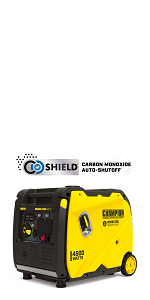
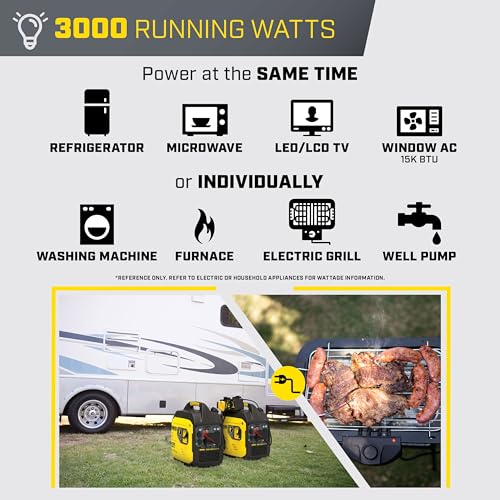
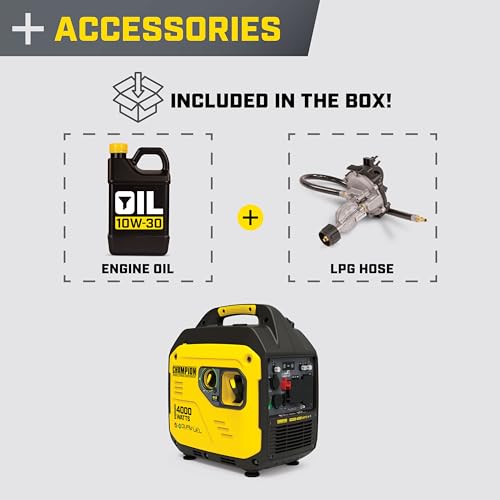
Champion 4000W Dual Fuel Inverter (201050)

Champion 4000-Watt Dual Fuel RV Ready



As an Amazon Associate we earn from qualifying purchases. Product prices and availability are accurate as of the date/time indicated.
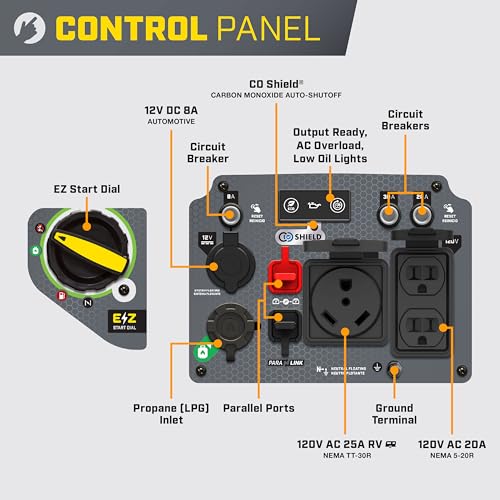
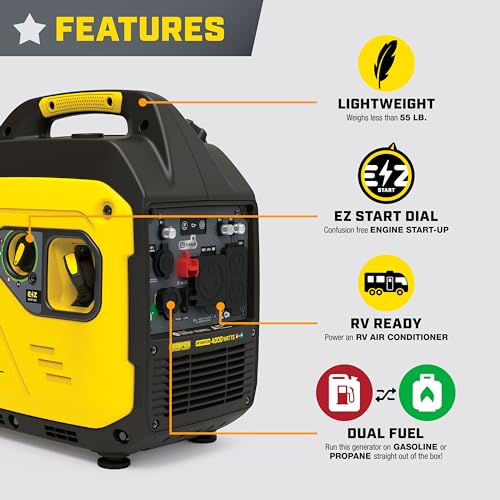
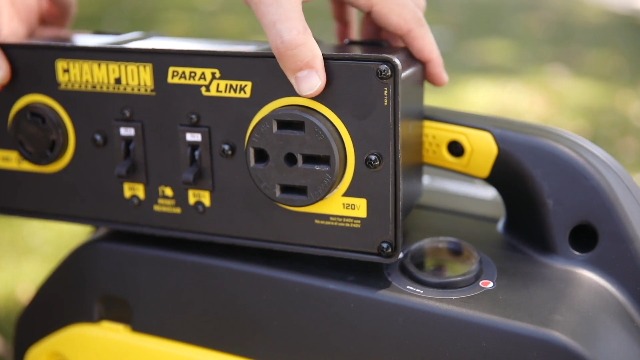
Best for: RV and camp use: a 25 A TT-30R outlet, a 12 V outlet, and 51.8 lb.
Avoid if: you want push-button start; this model uses recoil start.
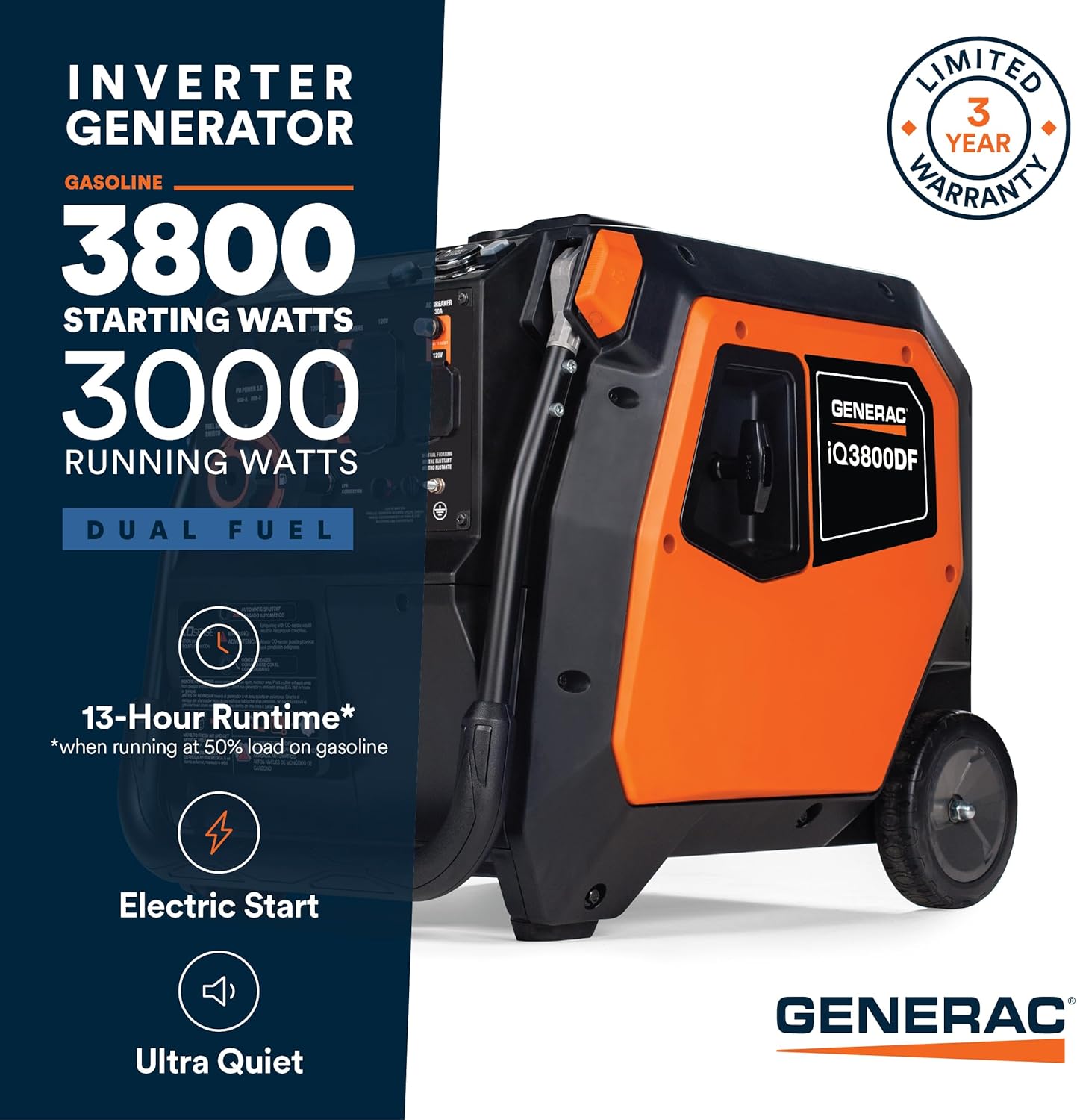
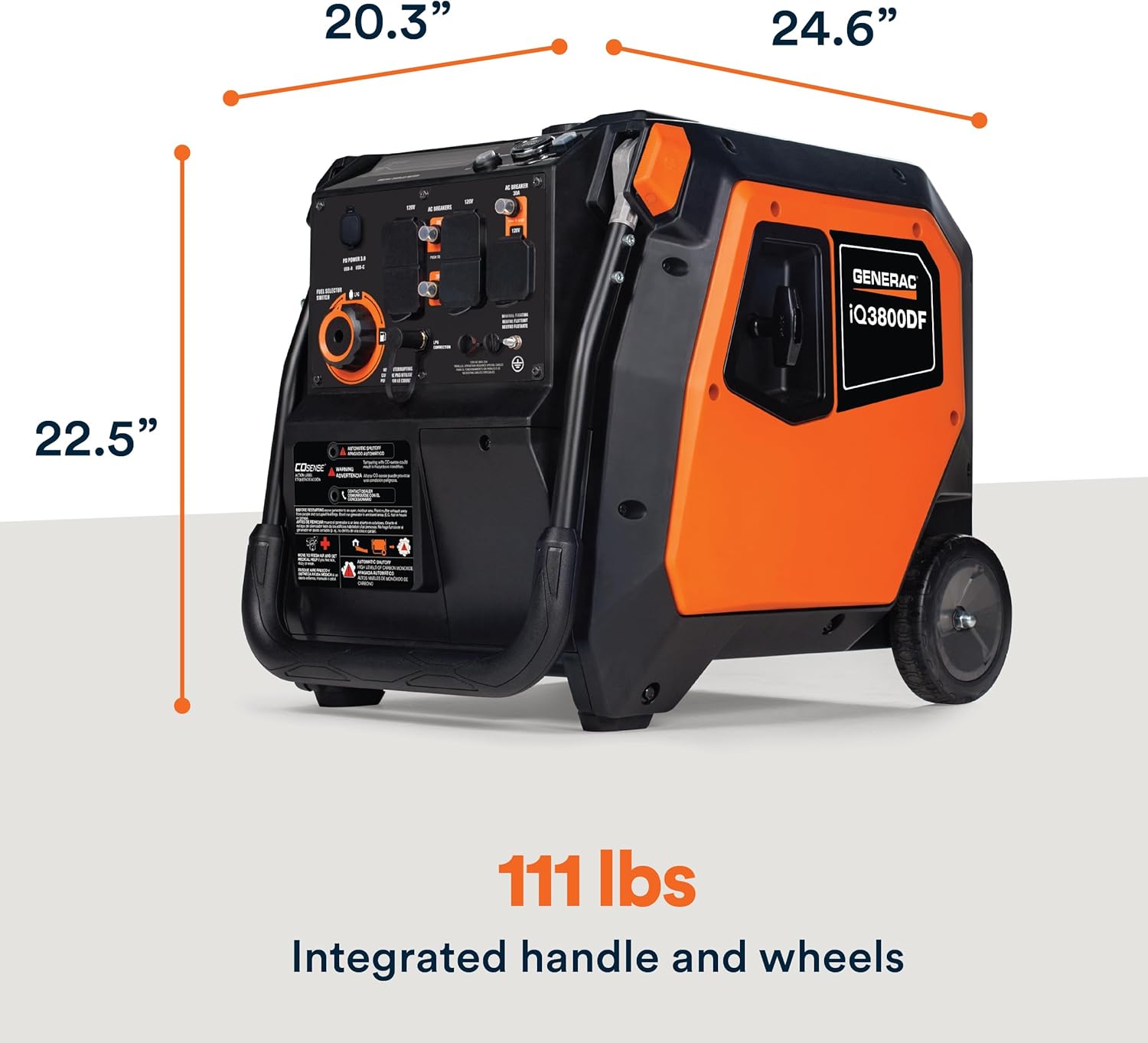
Generac iQ3800 DF Dual Fuel Inverter
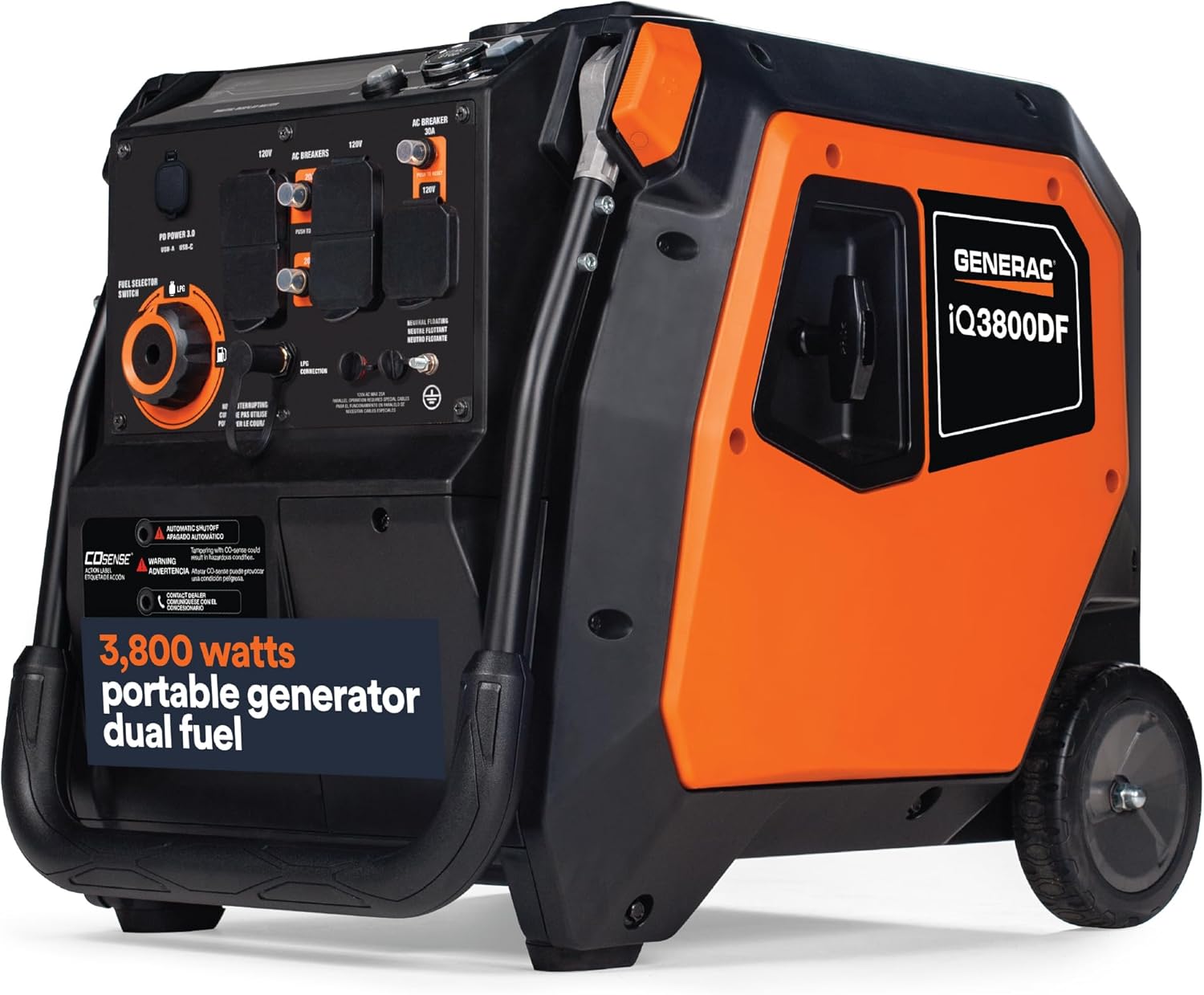
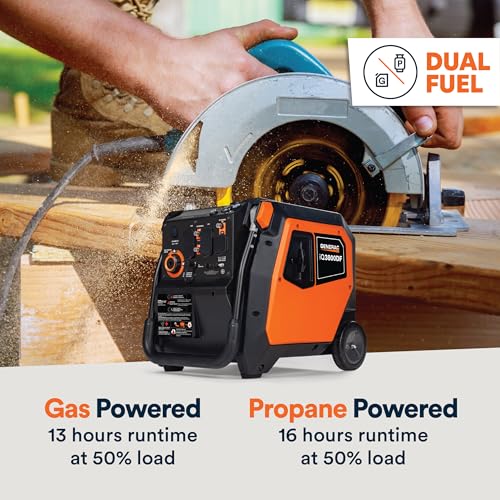
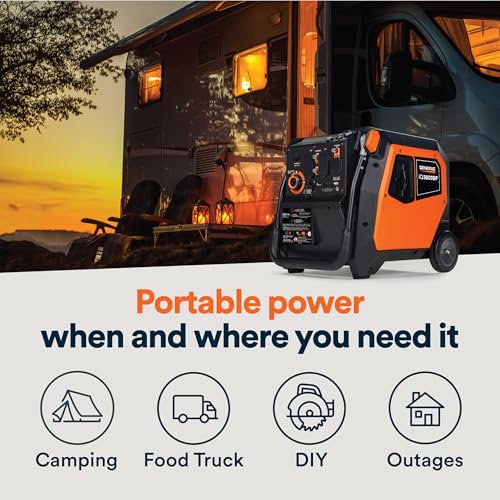
Prime Generac 3,800 Watt Dual-Fuel Portable Inverter


As an Amazon Associate we earn from qualifying purchases. Product prices and availability are accurate as of the date/time indicated.
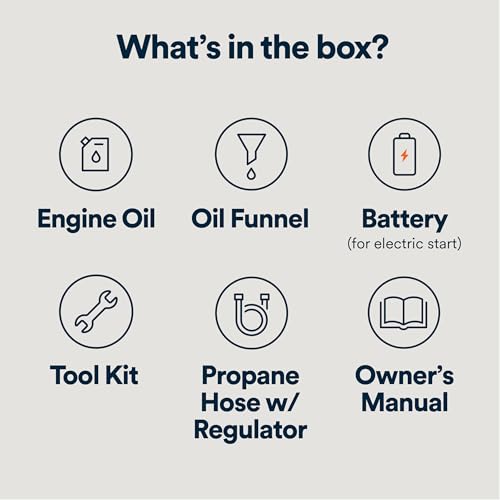
Best for: a bigger 3.28 gal tank and electric start with a battery in the box.
Avoid if: you will lift it often; Generac lists 107 lb.
Generac GP5500E

Generac 6,875 Starting Watt Portable Gas


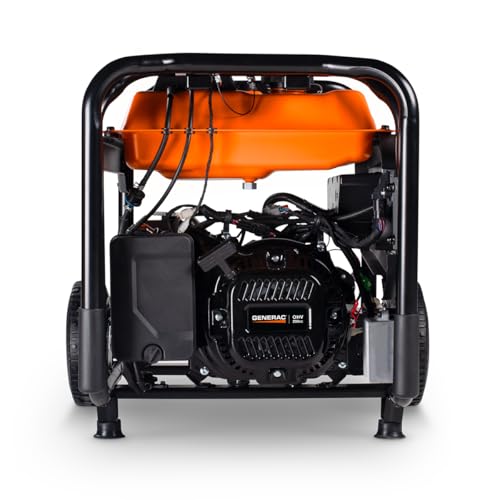
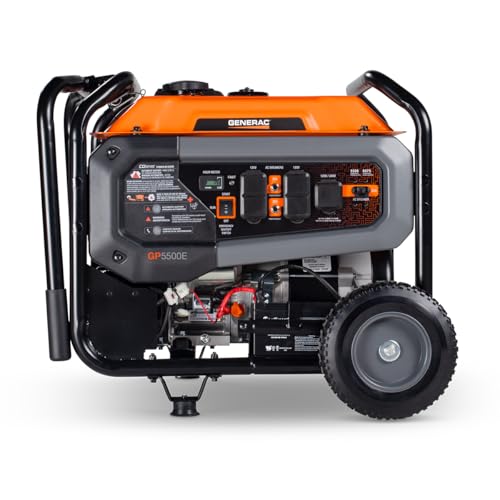
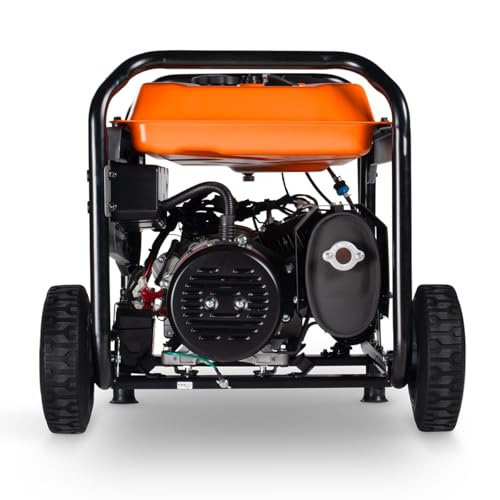
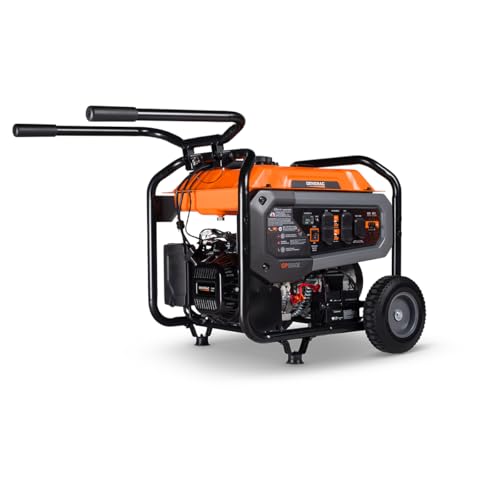
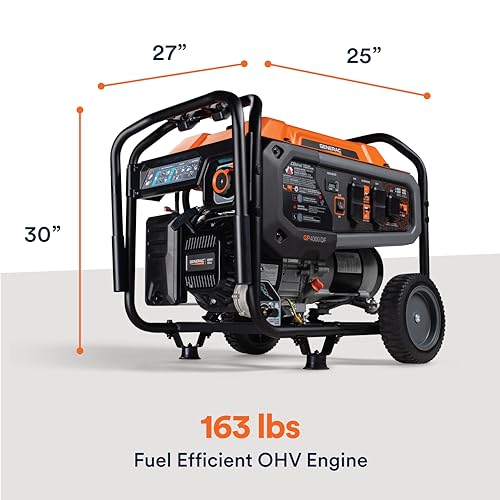
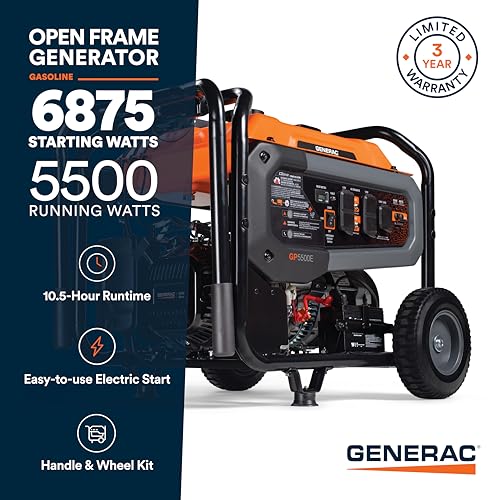
As an Amazon Associate we earn from qualifying purchases. Product prices and availability are accurate as of the date/time indicated.
Best for: an essentials load plus a 240 V item, with 5,500 running watts.
Avoid if: you need it light or quiet; Generac lists 172 lb, and this is an open-frame unit, not an inverter.
Specs Side by Side
| Spec | Champion 201050 | Generac iQ3800 DF | Generac GP5500E |
|---|---|---|---|
| Type | Inverter | Inverter | Conventional |
| Fuel | Gasoline or propane | Gasoline or propane | Gasoline |
| Running / starting watts (gasoline) | 3,000 / 4,000 W | 3,000 / 3,800 W | 5,500 / 6,875 W |
| Propane running | 2,700 W | 2,700 W (3,400 W peak) | n/a |
| Rated runtime | Gas 10 h, propane 25 h (20 lb tank), both at 25% load | Gas 13 h at 50% load, 20 h at 25%; propane 16 h at 50%, 19 h at 25% (20 lb tank) | 10.5 h at 50% load |
| Tank (gasoline) | 1.54 gal | 3.28 gal | 5.4 gal |
| Weight | 51.8 lb | 107 lb | 172 lb |
| Starting | Recoil | Electric (battery included) plus recoil | Electric, battery included |
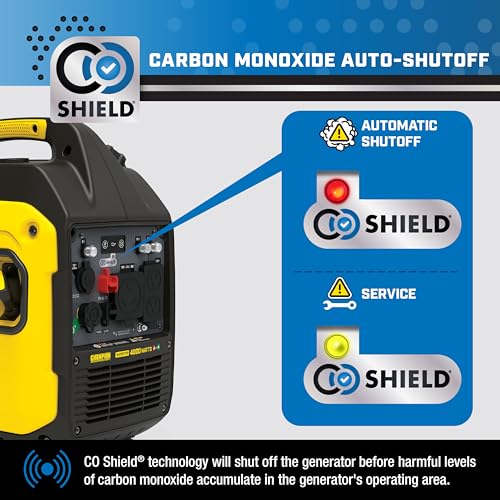
| Automatic CO shutoff | CO Shield | COsense | COsense |
| Noise | 64 dBA at 23 ft | Not stated on maker page | Not stated on maker page |
| Warranty | 3-year limited | 3-year limited residential | 3-year limited consumer |
Sources: Champion 201050 model page and manual; Generac model pages, the iQ3800 DF spec sheet, and the GP-series manual and warranty. Weight for the GP5500E varies by source: 172 lb on Generac’s page (used here), 165 lb dry in the manual, 163 lb on the listing.
Carbon monoxide warning for every gas and propane generator
Portable generators make carbon monoxide (CO), a gas you cannot see or smell. The CPSC says to run them outdoors only, at least 20 ft from the home, far from windows, doors, and vents, with the exhaust pointed away from the house and nearby buildings, and to keep CO alarms on every level and outside sleeping areas. Never run one in a garage, basement, crawlspace, shed, porch, or carport, even with doors open.
Put battery-operated or battery-backup CO alarms on every level of the home and outside sleeping areas. An automatic shutoff such as CO Shield or COsense does not replace those alarms; Champion says so for CO Shield. Follow the owner’s manual and local rules.
The Differences That Matter
1. Weight at the Same Watts
Both inverters list 3,000 running watts. Watts per pound: 3,000 / 51.8 = 58 for the Champion and 3,000 / 107 = 28 for the Generac. For a truck bed or RV bay, that gap decides it.
2. Runtime Is Not Published the Same Way
Champion publishes runtime at 25% load; Generac’s model page shows 50%, but its spec sheet also gives 25%. At the same 25% load (750 W): Champion 750 W x 10 h = 7.5 kWh from 1.54 gal, about 4.9 kWh per gal; Generac 750 W x 20 h = 15 kWh from 3.28 gal, about 4.6 kWh per gal. At 50%, Generac reaches 1,500 W x 13 h = 19.5 kWh, about 5.9 kWh per gal, but Champion gives no 50% figure. At equal load the two are close, with Champion slightly ahead.
3. Outlets and RV Use
Champion’s 201050 has a 120 V 25 A TT-30R, a 5-20R, and a 12 V outlet. Generac’s iQ3800 DF spec sheet shows 20 A GFCI 5-20R outlets and a 120 V 30 A L5-30R locking outlet; an RV’s TT-30 plug does not fit it without an adapter. For loads and cord sizing see what size generator for an RV.
4. When You Need More Than 3,000 W
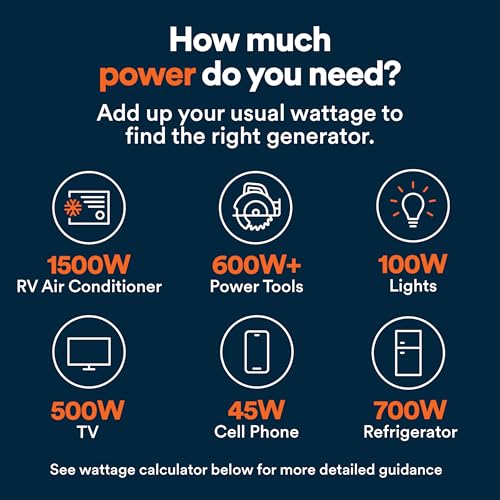
Example loads: fridge 400 W, furnace fan 800 W running (plus 1,600 W to start), lights 150 W, router 20 W, chargers 100 W. Running total 1,470 W; peak 1,470 + 1,600 = 3,070 W. Both inverters cover that. Add a 240 V item and you need the GP5500E class; Generac’s manual lists a 120/240 V 30 A L14-30R outlet. Larger Champions: best Champion generators. Never plug a generator into a wall outlet to power the house. The CPSC warns that backfeeding endangers utility workers and neighbors. A licensed electrician installs any transfer equipment; concepts are in transfer switch basics.
Choose Champion If
- You carry it often and weight matters more than tank size.
- You want a TT-30R and 12 V outlet on the unit.
- Your peak load stays near or under 4,000 W.
Choose Generac If
- You want push-button electric start.
- You want the larger tank, or a conventional 5,500 W unit.
- Your load may grow past 4,000 W, with the GP5500E as the next step.
FAQ
Which brand is more reliable?
Neither brand publishes failure rates and we have no independent long-term data, so we do not rank on reliability. Both list a 3-year limited warranty.
Can I run either one in the rain or in a garage?
Never in a garage. For wet weather, follow the manual and the CPSC: use a dry, open, canopy-like cover with the exhaust clear; see how to run a generator safely.
Does an automatic CO shutoff make indoor use safe?
No. The CPSC says never run a portable generator indoors, and the shutoff is not a substitute for CO alarms on every level and outside sleeping areas.
Changelog: November 2026: first published.









