


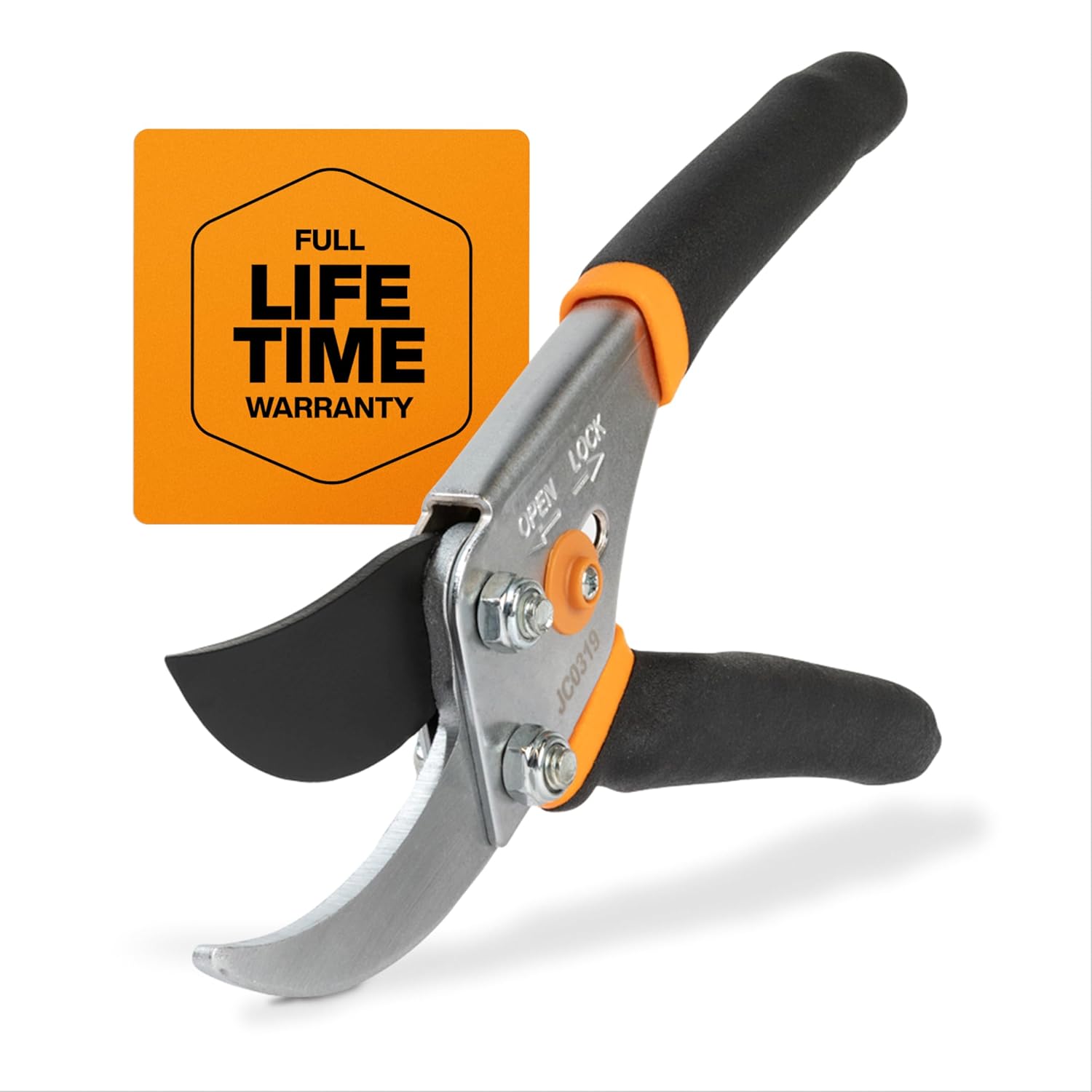
For most yards, a bypass hand pruner rated to about 5/8 inch handles roses, tomato suckers, perennials and shrub tips, and the Fiskars Bypass Pruning Shears fit that job at the lowest cost of entry. Step up to the Felco F2 if you want a 1 inch listed capacity and replaceable parts.


Quick Comparison
| Pruner | Blade | Listed capacity | Listed weight | Best for |
|---|---|---|---|---|
| Fiskars Bypass Pruning Shears | Bypass | 5/8 in | Not listed | General yard use |
| Felco F2 | Bypass (title); spec field says anvil | 1 in | 8.8 oz | Frequent pruning, repairable tool |
| Craft911 SK5 Pruning Shears | Bypass | 3/4 in in title; 1.58 cm in spec field | 0.33 kg (about 11.6 oz) | Budget second pair |
| Craft911 2-Pack (shears and snip) | Bypass | Not stated | 0.17 kg for the pack | Light cuts and flower stems |
How We Chose
We compared listed cut capacity, blade type, weight, warranty wording and public owner ratings from the product data, then checked the capacity ranges against extension guidance. We research and compare; we do not use or review the products ourselves. Our how we choose page explains the Yard & Grid Score. Capacity numbers below are “per the listing” unless a brand page is named, because the brand pages for these models were not reachable when we looked.
Pick the Pruner by Stem Diameter
Extension guidance puts hand pruners at the small end of the cutting tools: Iowa State lists pruners up to 3/4 inch and lopping shears from 3/4 to 1-1/2 inches, while NC State says pruners typically handle stems under 1/2 inch. Past that, switch to loppers (see pruners, loppers and shears, or our loppers guide) or a saw. On live stems, UF/IFAS Extension notes that a bypass blade slices all the way through the stem, which is why bypass is the default here; our bypass vs anvil article covers the trade-offs.
A planning formula: stem diameter divided by rated capacity. A 3/8 inch rose cane on a 5/8 inch pruner is 0.375 / 0.625 = 60 percent of capacity; on a 1 inch pruner it is 37.5 percent. Jaws working near their limit need more hand force, so if most of your cuts land above about 75 percent of the rating, size up. That 75 percent line is our own planning margin, not a manufacturer or extension figure.
The Picks
Fiskars Bypass Pruning Shears
- Listed capacity is 5/8 inch, with a bypass blade, a sap groove and a low-friction coating, per the listing.
- Lifetime warranty per the listing, and the largest owner pool in this set at 52,611 ratings averaging 4.6.
- Ambidextrous per the listing, which helps if the pair is shared.
Best for: most beds, borders and a vegetable garden. Avoid if: your regular cuts run past 5/8 inch.
Felco F2
- Listed capacity is 1 inch, with a 2 inch blade, 9.25 inch length and 8.8 oz weight, per the listing.
- The listing says every part can be replaced or sharpened. It also says “lifetime guarantee” for the handles in one place and “1 year” in the warranty field, so confirm with Felco before relying on either.
- The title says bypass blade but the spec field says anvil. We treat it as bypass from the title; Felco should settle it.
Best for: someone who prunes weekly and wants to service one pair for years. Avoid if: you want a low-cost spare to leave in the shed.
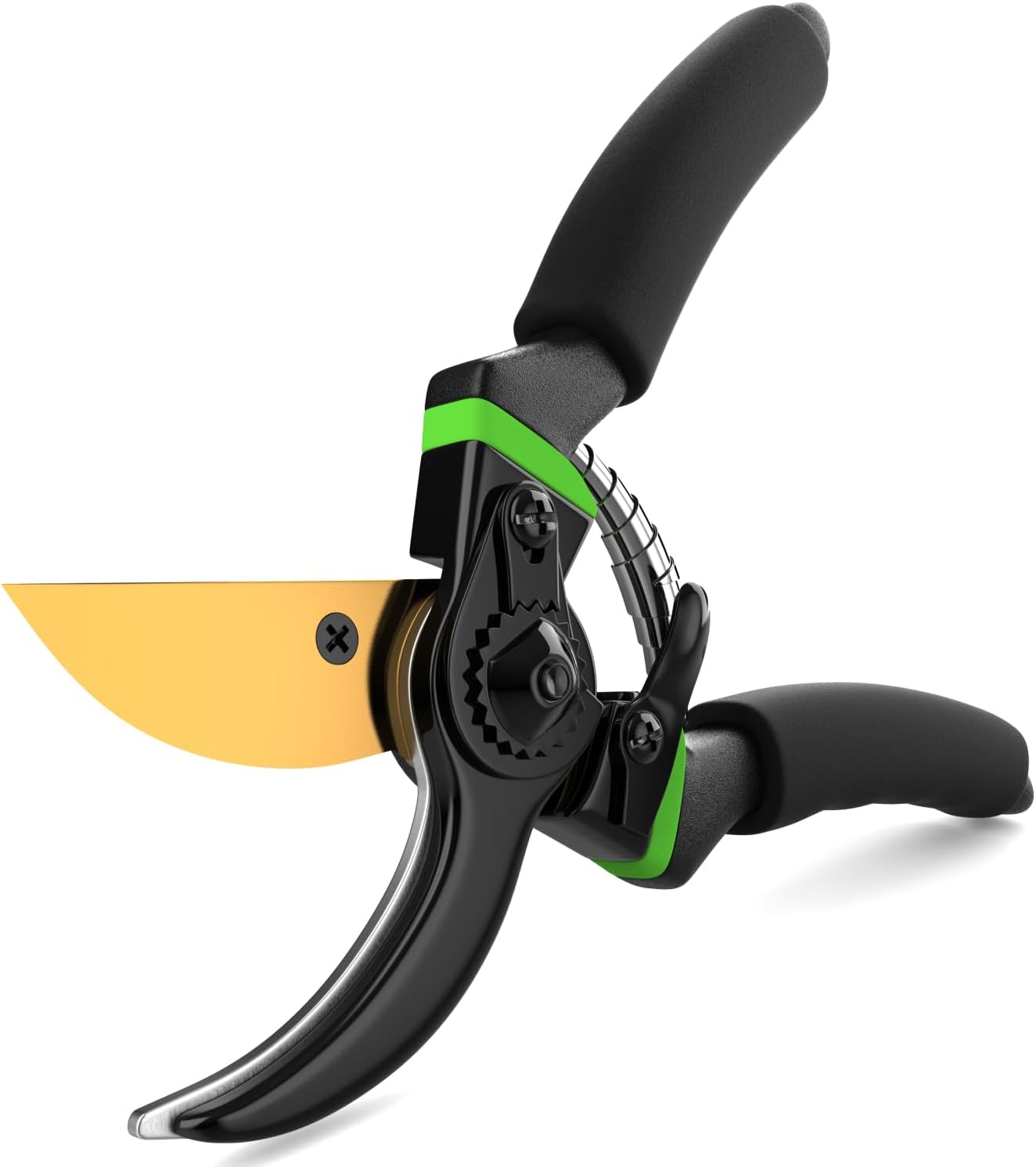
Craft911 SK5 Pruning Shears
- Listed as SK5 steel with a titanium coating and a built-in safety lock.
- Capacity is contradictory: the title says 3/4 inch, the spec field says 1.58 cm (about 0.6 inch). Plan on the lower figure.
- Marketed for weak hands in the listing; that is a seller claim, and we make no health claim.
Best for: a second pair for a different bed. Avoid if: you need a documented, confirmed capacity.
Craft911 2-Pack
- Pairs a pruning shear with a snip, both listed as stainless steel, bypass.
- No cut capacity is stated, so treat it as a flower and herb tool.
- Weight is listed as 0.17 kg for the pack, so the pieces are light.
Best for: deadheading and herb harvests. Avoid if: you will cut woody stems.
Care, Safety and Disinfecting
Engage the safety lock when you carry or store a pruner, and keep your free hand clear of the jaws. Disinfect when it matters, such as after cutting diseased growth. Iowa State Extension says alcohol needs no prolonged soak; University of Minnesota Extension cites the CDC on 70 percent or higher isopropyl alcohol, and warns it might not be enough for tools used on fire-blight apple trees. Illinois Extension warns that bleach is very corrosive to metal. After wiping, dry and oil; the steps are in cleaning and oiling garden tools, and a dulled edge is covered in sharpening garden tools.
Ownership Costs
Expect no consumables. The costs are a sharpening stone or file, a little oil, and possibly a replacement blade or spring. Only the Felco listing mentions replaceable parts. Starting a garden from scratch? The beginner tool sets guide shows what else you need.
Choosing
- What is your thickest regular cut? Run it through the diameter formula above.
- Will you cut live stems or dead wood? Live favors bypass.
- How many hours a week do you prune? Heavy use favors a serviceable pair.
- Do the listings give a clear capacity? Prefer the ones that do.
FAQ
Are bypass pruners better than anvil?
For live stems, extension sources lean bypass because the blade slices through cleanly; anvil suits dead wood. The bypass vs anvil article covers a 2026 UF/IFAS small-cut study.
What if a pruner is too small for the branch?
Switch to loppers or a saw. Forcing a pruner past its rated capacity strains the jaws and your hand.
Do I need to disinfect pruners between plants?
Not for routine cuts. Do it after cutting diseased growth, using the extension methods above, then dry and oil the blades.
Changelog: November 2026: first published.









