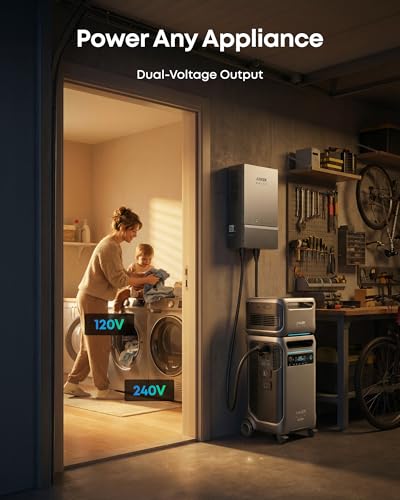
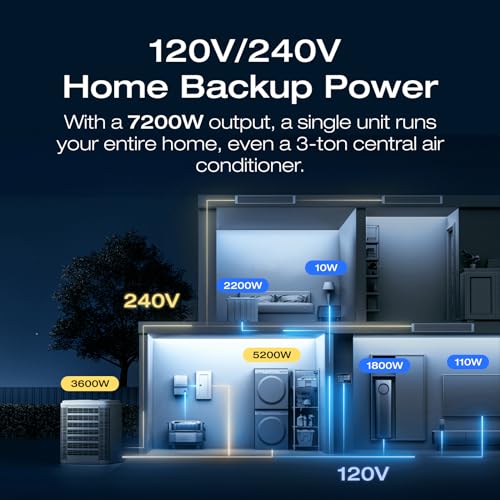
The EcoFlow DELTA Pro Ultra is the larger system: 7,200 W continuous and 6,144 Wh per battery, against 6,000 W and 3,840 Wh for the Anker SOLIX F3800 Plus. The Anker packs inverter and battery in one 136.7 lb unit; the EcoFlow splits them into a 70 lb inverter and 111.8 lb batteries. Both are 120/240 V, and both need a licensed electrician if you want them tied to a home panel.
All figures come from ankersolix.com and us.ecoflow.com. We research and compare; we do not run our own product trials. See how we choose. Anker also sells an original F3800 without generator bypass; the figures below are for the F3800 Plus.
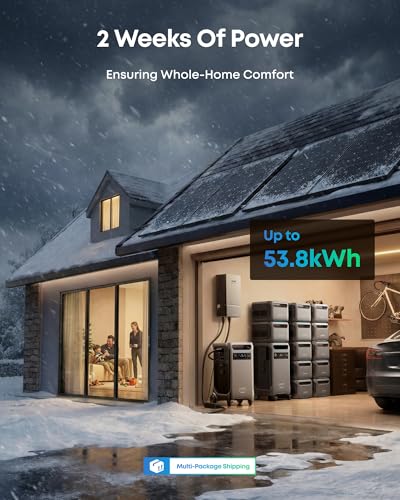
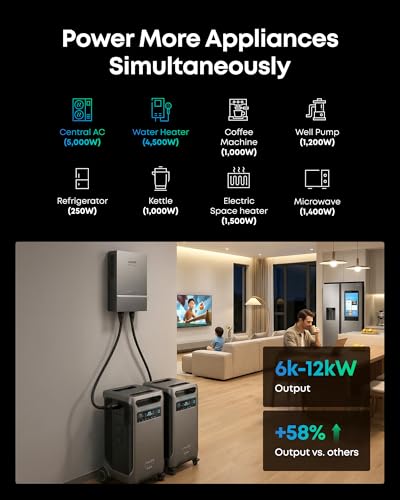
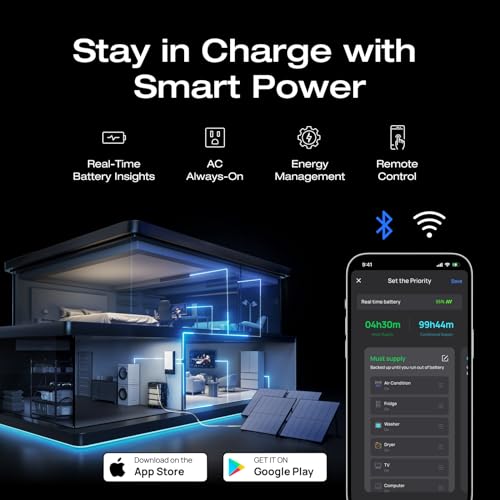
Anker SOLIX F3800 Plus. Best for: one-case setups where 6,000 W is enough. Avoid if: your simultaneous load tops 6,000 W and you do not want a second unit.

Anker SOLIX F3800 Plus Portable Power Station


As an Amazon Associate we earn from qualifying purchases. Product prices and availability are accurate as of the date/time indicated.
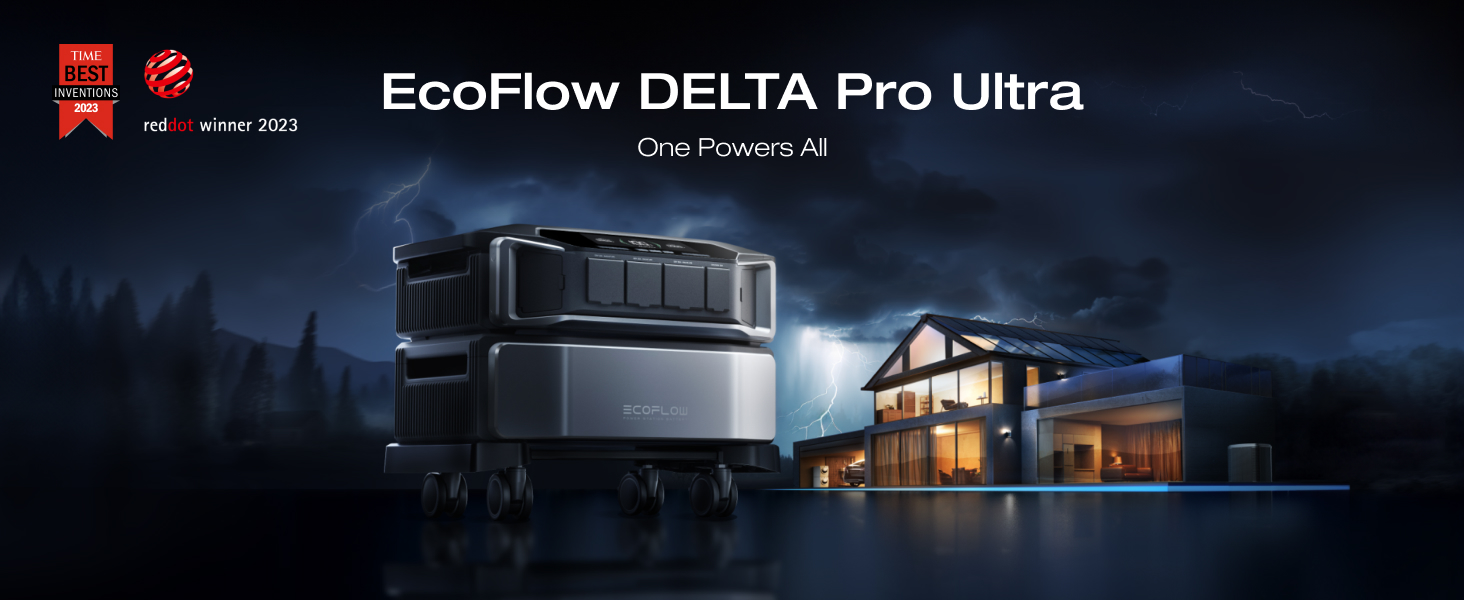
EcoFlow DELTA Pro Ultra. Best for: loads above 6,000 W and large solar. Avoid if: you cannot place 111.8 lb batteries.

EF ECOFLOW DELTA Pro Ultra 6144Wh Power Station


As an Amazon Associate we earn from qualifying purchases. Product prices and availability are accurate as of the date/time indicated.
Specs Side by Side
| Spec | Anker SOLIX F3800 Plus | EcoFlow DELTA Pro Ultra |
|---|---|---|
| Battery per unit | 3,840 Wh LFP, in the same case as the inverter | 6,144 Wh LFP, separate battery |
| Continuous AC output | 6,000 W, 120/240 V | 7,200 W, 120/240 V |
| Surge | Not on the page we read | 10.8 kW |
| Rated cycles | 3,000 or more | 3,500 to 80% |
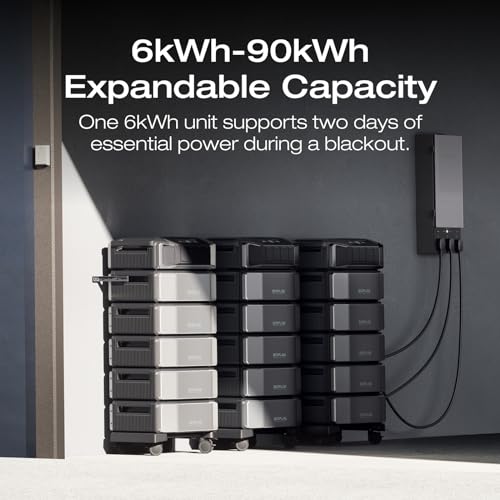
| Expansion | Up to 6 batteries of 3,840 Wh per unit | Up to 5 batteries, 30 kWh per inverter |
| Maximum system | 53.8 kWh, 12 kW (two units) | 90 kWh, 21.6 kW (three inverters) |
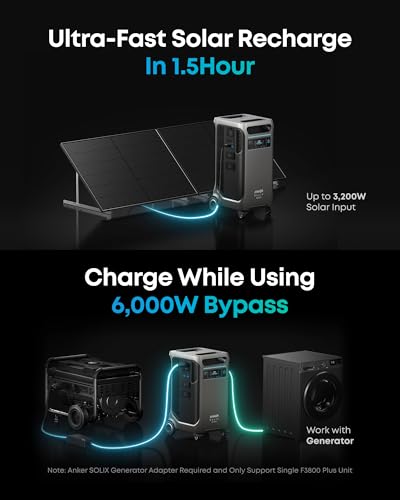
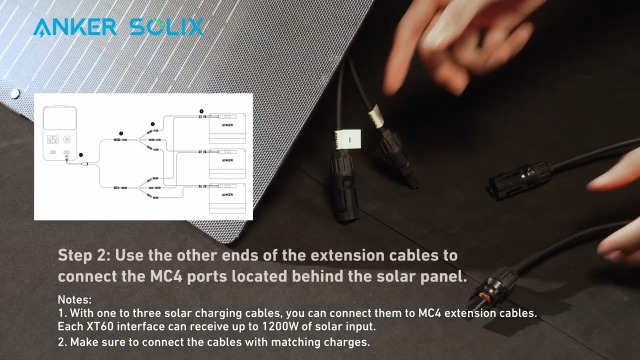
| Solar input | 3,200 W, 11 to 165 V | 5.6 kW per inverter |
| Weight | 136.7 lb unit; 72.8 lb per extra battery | 70 lb inverter; 111.8 lb battery |
| Warranty | 5 years | 5 years |
The Differences That Matter
1. Power: 6,000 W vs 7,200 W
A single DELTA Pro Ultra inverter gives 7,200 / 6,000 = 1.2 times the continuous output. Add up the running watts of everything you want on at once. If the total is 5,500 W, either fits; if it is 6,500 W, only the EcoFlow does without a second Anker unit. Anker’s page notes the 240 V output cannot be used while the unit charges from 120 V AC.
2. Energy: 3,840 Wh vs 6,144 Wh per Battery
Take an essentials budget of 8,000 Wh a day. Usable energy per Anker block is 3,840 x 0.85 inverter efficiency = about 3,260 Wh, so 8,000 / 3,260 = 2.5, rounded up to 3 blocks (one F3800 Plus and two extra batteries, 11,520 Wh). For the EcoFlow, 6,144 x 0.85 = about 5,220 Wh, so 8,000 / 5,220 = 1.5, rounded up to 2 batteries (12,288 Wh). The 0.85 is a common planning figure, not a manufacturer number.
3. Footprint and Moving
The Anker unit is one case, so a single-battery setup is simpler. The EcoFlow system is two pieces, and a 111.8 lb battery is a two-person lift. Expanding either system means more heavy units; plan the floor space before you buy.
4. Home Panel Integration
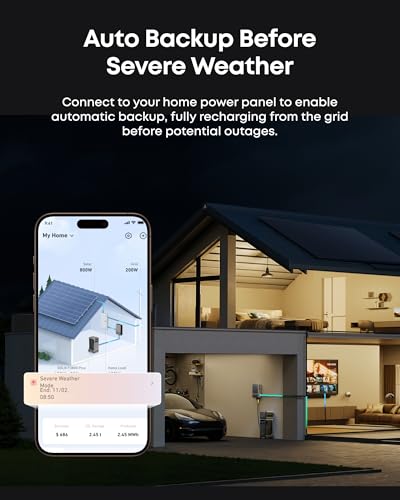
Anker’s page lists its Home Power Panel, a transfer switch, or an inlet box for connecting a home, and says its Storm Guard and Local Energy Saver features need the Home Power Panel; EcoFlow pairs the DELTA Pro Ultra with its Smart Home Panel 2 for automatic switchover. Both are panel work for a licensed electrician. Our smart home panel guide and transfer switch basics explain the concepts.
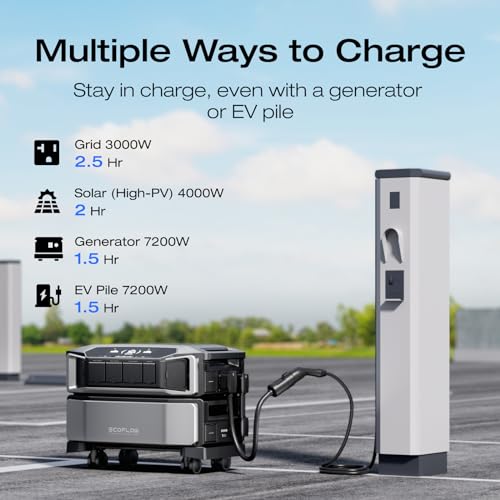
Anker’s F3800 Plus can pass up to 6,000 W from a 240 V generator through bypass, using Anker’s generator adapter, which Anker says supports a single F3800 Plus unit. Anker’s page also lists generator input of 3,300 W for a single unit and 6,000 W when working with one or more expansion batteries. If you run a gas generator, keep it outdoors at least 20 ft from the home, far from windows, doors, and vents, with the exhaust pointed away from the home, keep working CO alarms on every level and outside sleeping areas, and follow the generator maker’s manual and local rules, as the CPSC advises.
Choose the F3800 Plus If
- You want one-case simplicity and 6,000 W per unit is enough.
- You plan 3 to 4 blocks of storage, not 90 kWh.
- Avoid if your simultaneous load is above 6,000 W and you do not want a second unit.
Choose the DELTA Pro Ultra If
- Your simultaneous load exceeds 6,000 W and you want it from one inverter, or you plan 20 kW class output.
- You want large solar input, up to 5.6 kW per inverter.
- You can handle 111.8 lb battery units.
- Avoid if you cannot lift or place 111.8 lb batteries.
For the wider picture, read whole-home battery backup options and how many batteries to power a house.
FAQ
Can either run central air conditioning?
Both brands say so for suitable units, but check the AC nameplate for running and start-up amps against each unit’s published output and surge ratings (Anker’s F3800 Plus page lists no surge figure) before you rely on it.
Do I need an electrician?
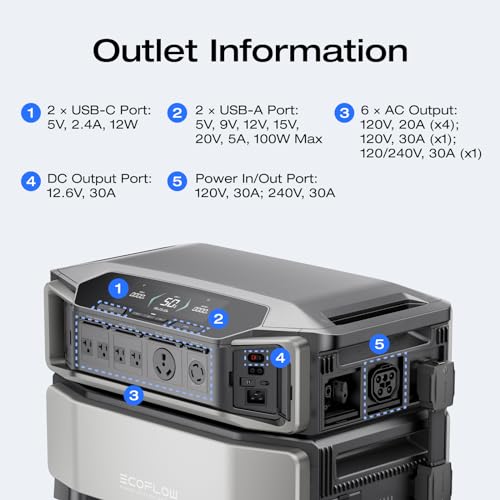
For plug-in use at the unit’s outlets, no. For feeding a home panel, yes: a licensed electrician should do that work.
Is there a cheaper step down?
See best large power stations for home backup for smaller 120 V options.
Changelog: November 2026: first published.