Pick the BLUETTI AC180 if you want the extra capacity (1,152 Wh against 1,024 Wh) and are fine with a heavier case; pick the Anker SOLIX C1000 Gen 2 if you want 2,000 W of continuous output, 10 ms switchover, and a unit that is 10 lb or more lighter. The capacity edge is 1,152 / 1,024 = 12.5 percent, which buys about 45 extra minutes on a fridge. The output and weight edges decide more kitchens.
Both are LiFePO4 (lithium iron phosphate) stations with a 5-year warranty. This page compares the AC180 (1,152 Wh), not the AC180P (1,440 Wh), against the C1000 Gen 2, not the original C1000.

BLUETTI Portable Power Station AC180


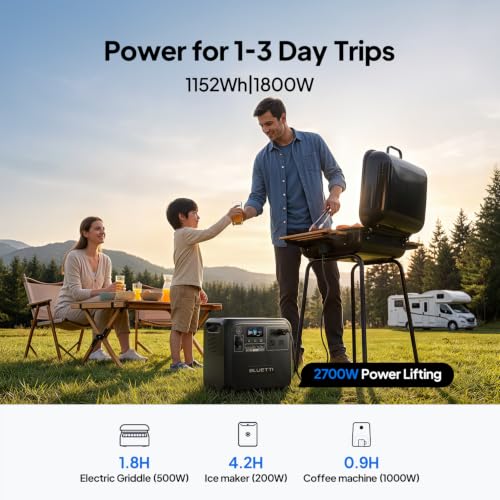
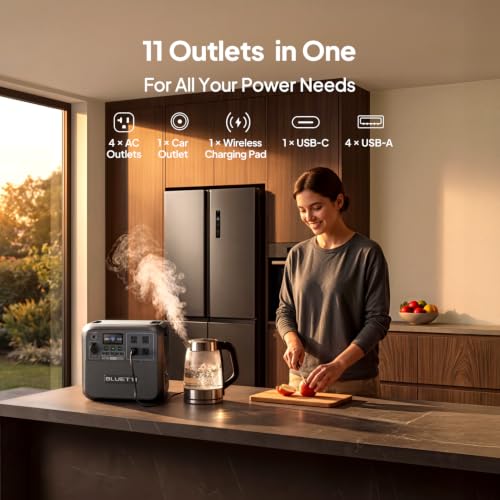

As an Amazon Associate we earn from qualifying purchases. Product prices and availability are accurate as of the date/time indicated.

Anker SOLIX C1000 Gen 2 Portable Power Station






As an Amazon Associate we earn from qualifying purchases. Product prices and availability are accurate as of the date/time indicated.
Specs Side by Side
Figures come from BLUETTI and Anker product pages and the AC180 user manual unless a row says otherwise. Watt-hours (Wh) are the size of the tank; watts (W) are how fast you can pour from it.
| Spec | BLUETTI AC180 | Anker SOLIX C1000 Gen 2 |
|---|---|---|
| Capacity | 1,152 Wh LiFePO4 | 1,024 Wh LiFePO4 |
| Continuous AC output | 1,800 W, 4 AC outlets | 2,000 W, 5 AC outlets |
| Peak or boost | 2,700 W surge (BLUETTI spec table and manual); Power Lifting mode runs heating devices up to 2,700 W | 3,000 W peak |
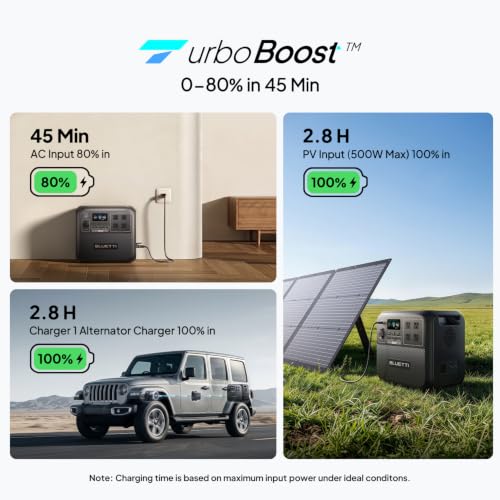
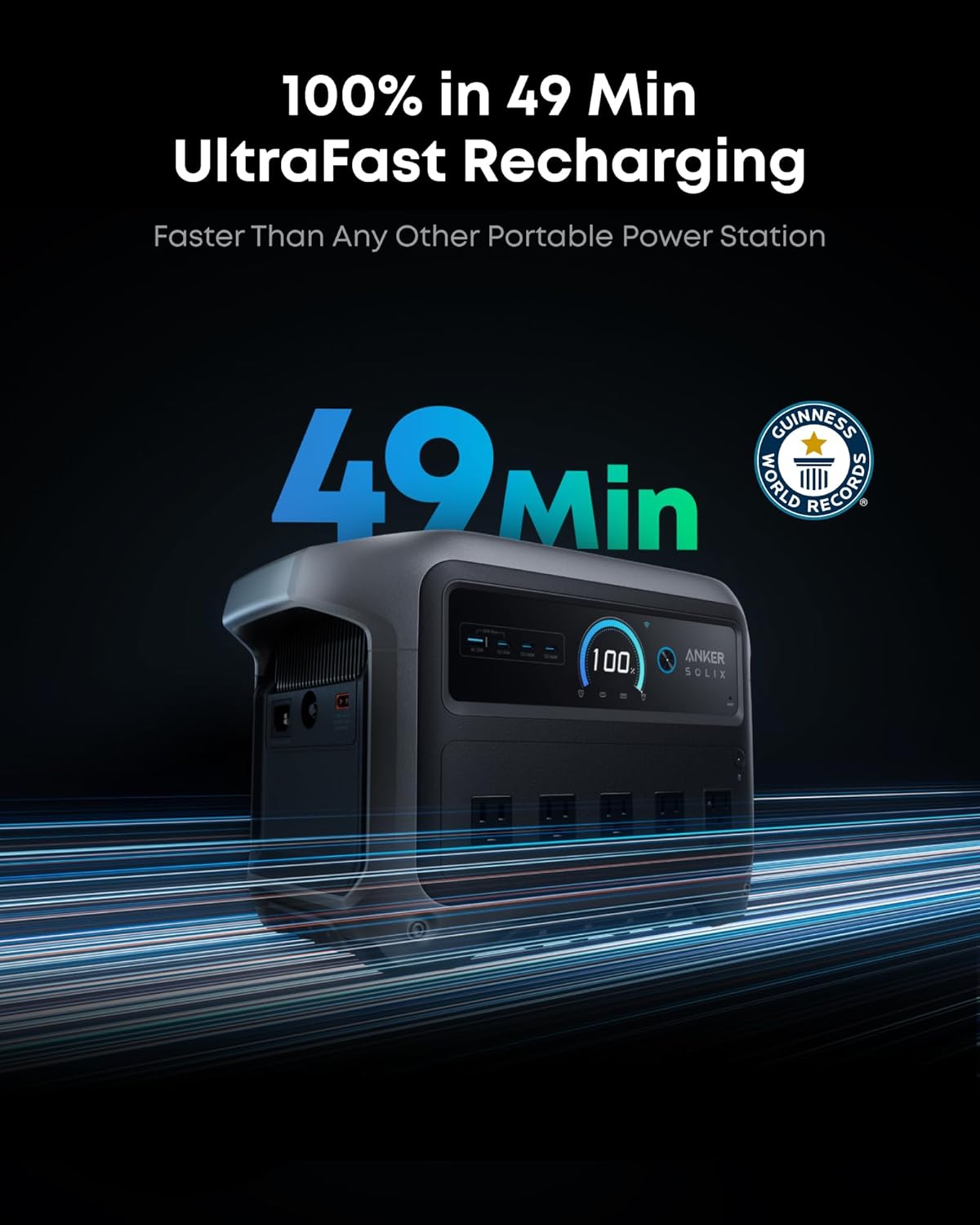
| AC recharge | 0 to 80% in 45 min at 1,440 W | About 49 min full at 1,600 W (UltraFast, app, battery above 68°F); 1,200 W standard |
| Solar input | 500 W max, 12 to 60 V, 10 A (manual) | 600 W max; 11 to 28 V at 8.2 A, 29 to 60 V at 14.5 A |
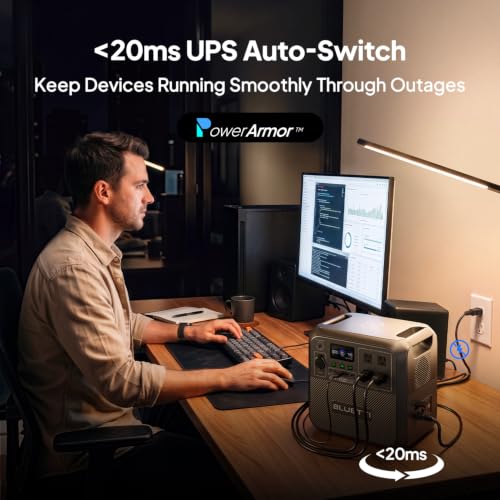
| UPS switchover | 20 ms or less (manual) | 10 ms |
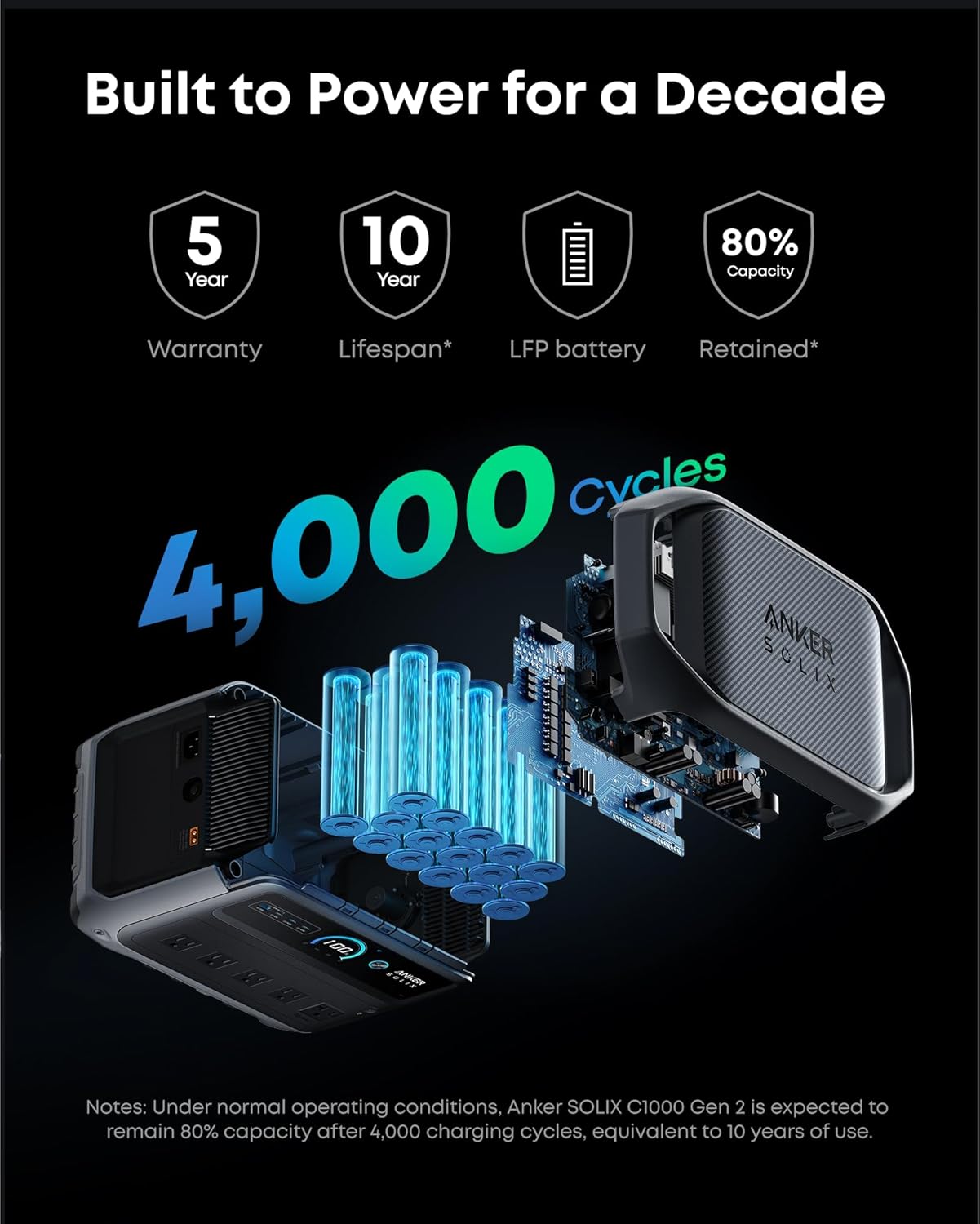
| Rated cycles | 3,500 or more | 4,000 to 80% capacity |
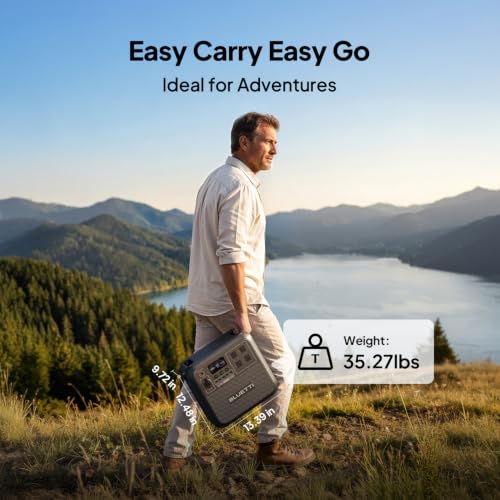
| Weight | 35.3 lb on the BLUETTI page; manual lists about 17 kg (37.5 lb) | 24.9 lb |
| Expansion | Not expandable per BLUETTI FAQ (battery packs only charge it) | No |
| Warranty | 5 years | 5 years |
Runtime at the outlet, using 0.85 as a common planning figure for inverter conversion loss: AC180: 1,152 Wh x 0.85 = about 980 Wh. C1000 Gen 2: 1,024 Wh x 0.85 = about 870 Wh. A fridge that averages 150 W then runs 980 / 150 = about 6.5 hours on the AC180 and 870 / 150 = about 5.8 hours on the Anker.
The Four Differences That Matter
1. Capacity Against Carrying Weight
Energy per pound favors the Anker. 1,024 Wh / 24.9 lb = about 41 Wh per lb, against 1,152 Wh / 35.3 lb = about 33 Wh per lb for the AC180. If the manual’s 17 kg is right, the AC180 drops to 1,152 / 37.5 = about 31. The AC180 carries 128 Wh more (1,152 minus 1,024) but adds 10.4 lb, which is about 10.4 / 128 x 100 = 8 lb for every 100 Wh of extra energy.
That trade matters if the station lives in a basement and gets carried upstairs for an outage. It matters less if it sits on a kitchen counter or a garage shelf. Our apartment backup guide ranks stations partly on this ratio.
2. Output, Outlets, and Switchover
The Anker is rated 200 W higher continuous (2,000 W against 1,800 W) and has one more AC outlet. Take a 1,500 W space heater plus a fridge at the top of Champion’s 150 to 400 W running range: 1,500 + 400 = 1,900 W. That fits inside the Anker’s 2,000 W and over the AC180’s 1,800 W. BLUETTI lists 2,700 W surge power, and its Power Lifting mode runs heating devices up to 2,700 W, but BLUETTI does not say how the AC180 handles a compressor start and its FAQ warns against running an air conditioner or washing machine on it, so check before relying on it.
Switchover is the second gap. BLUETTI’s manual lists 20 ms or less; Anker lists 10 ms. If the station will feed a PC or network gear that must not blink, compare each switchover time with the device maker’s hold-up time. The UPS mode explainer covers what the number means. If you use a CPAP, follow the CPAP maker’s guidance on backup power.
3. Solar Input: Watts Against Amps
On paper it is 600 W against 500 W. Assuming a full array at each limit and a 0.75 derate for heat, angle, and wiring loss (a common planning figure), a full refill takes: AC180: 1,152 / (500 x 0.75) = about 3.1 peak sun hours. C1000 Gen 2: 1,024 / (600 x 0.75) = about 2.3 peak sun hours. At 5 peak sun hours, either one refills in a day.
The amp limits shape the real number. Two 200 W Renogy portable panels (Vmp 18.8 V, Imp 10.6 A each, per Renogy) in series give 37.6 V at 10.6 A. The AC180’s 10 A cap holds that to 10 A x 37.6 V = about 376 W. The Anker’s 29 to 60 V band allows 14.5 A, so the same array delivers about 400 W. A single 20 V class panel in the Anker’s low band is capped at 8.2 A x 20 V = about 164 W. See the solar sizing guide and panel picks before buying panels.
4. Expansion and Cycle Rating
Anker states the C1000 Gen 2 is not expandable. BLUETTI’s AC180 page copy mentions charging it from B80, B230, and B300 batteries, but its FAQ says the AC180 does not support capacity expansion with them and that they can only charge it in Power Bank Mode. We size the AC180 as a fixed 1,152 Wh. The expansion battery explainer shows what to check.
Cycle ratings differ slightly: 3,500 or more for the AC180 against 4,000 to 80 percent for the Anker. At one full cycle a day, that is 3,500 / 365 = about 9.6 years against 4,000 / 365 = about 11 years. For an outage-only backup, the calendar will age either one before cycles do.
What Is the Same
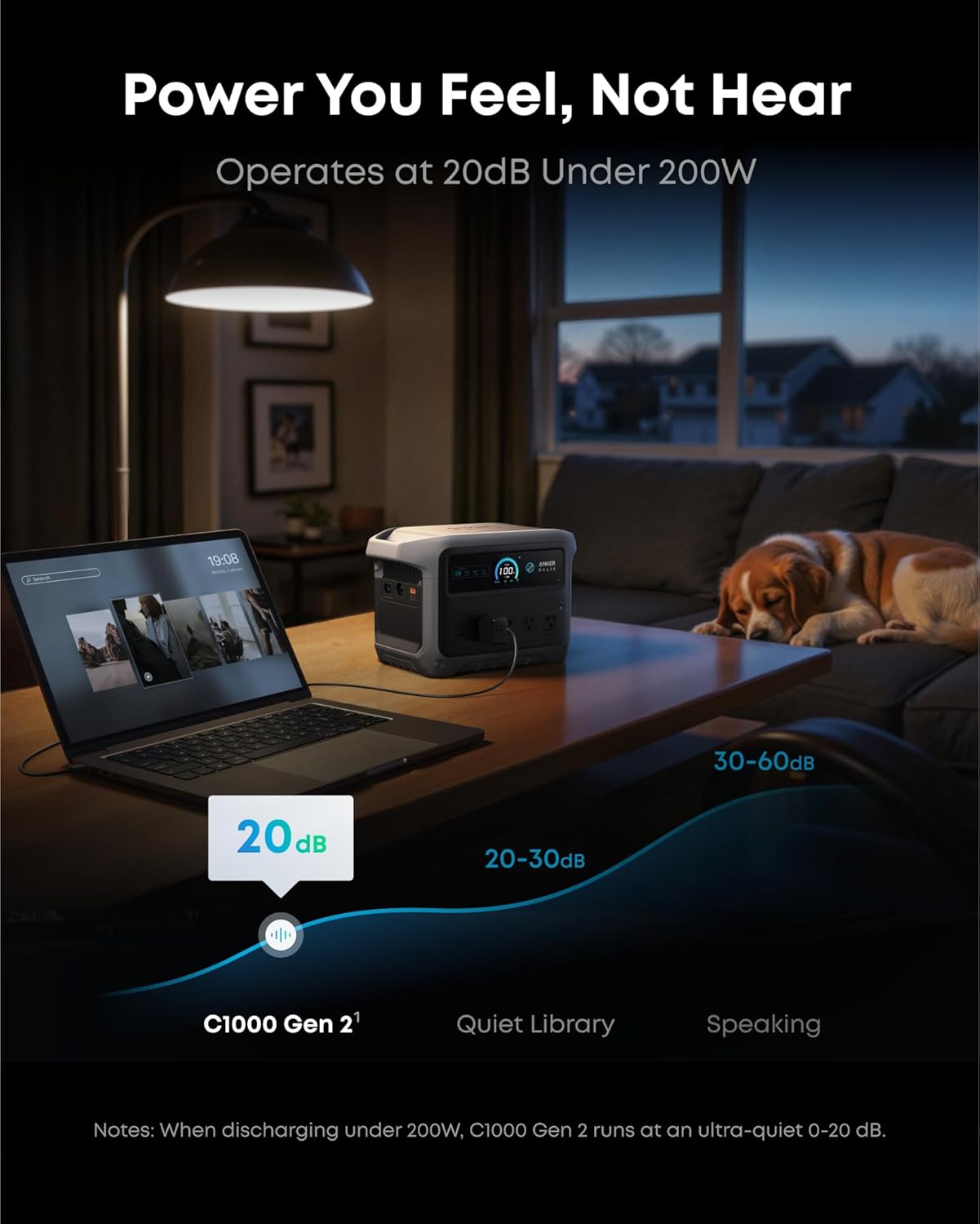
Both use LiFePO4 cells, 120 V AC output, a phone app, and a 5-year warranty. Both charge from a wall outlet or solar. The LiFePO4 against NMC comparison explains why that chemistry is the default in this size class. We leave fan noise out of the decision because the two makers do not publish comparable decibel figures.
Choose the BLUETTI AC180 If
- You want the larger tank and your loads stay under 1,800 W.
- You value a 500 W solar input with a published 10 A limit that you can match to panel specs.
- The station stays put and weight does not matter.
Best for: a fridge, router, and lights through an overnight outage, with about 980 Wh at the outlet.
Avoid if: your heaviest steady load runs between 1,800 and 2,000 W, or you must carry it up stairs often.
Choose the Anker SOLIX C1000 Gen 2 If
- You run a 1,900 W combination such as a heater plus a fridge.
- You need a 10 ms switchover for a PC or network gear.
- You want 600 W of solar input and a lighter case.
Best for: apartments and small homes where the station moves between rooms and one heavier appliance runs at a time.
Avoid if: you want about 12 percent more capacity.
We research and compare; we do not run our own product trials. Specs come from BLUETTI and Anker, and the score on each card reflects verified buyer ratings, as explained on how we choose. For the wider field, see our home backup power station guide.
FAQ
Is the AC180 the same as the AC180P?
No. The AC180 holds 1,152 Wh and the AC180P holds 1,440 Wh. Both are rated 1,800 W continuous. This page uses the AC180 figures from BLUETTI’s product page and manual.
Which one runs a fridge longer?
The AC180, by about 45 minutes. With a fridge averaging 150 W, 980 / 150 = about 6.5 hours against 870 / 150 = about 5.8 hours. Your own fridge’s average draw sets the real answer; see the fridge runtime guide.
Why does the Anker UltraFast charge need a warm battery?
Anker says UltraFast engages only when the battery is above 68°F, and the unit charges between 32 and 104°F at all. In a cold garage it falls back to the standard 1,200 W rate. Bring it indoors to recharge.
Can I compare the AC180 with the Jackery Explorer 1000 v2 instead?
Yes, the trade is similar: a bit more capacity on the BLUETTI, a lighter case on the Jackery. Start with our home backup guide for the full lineup.
Changelog: November 2026: first published.