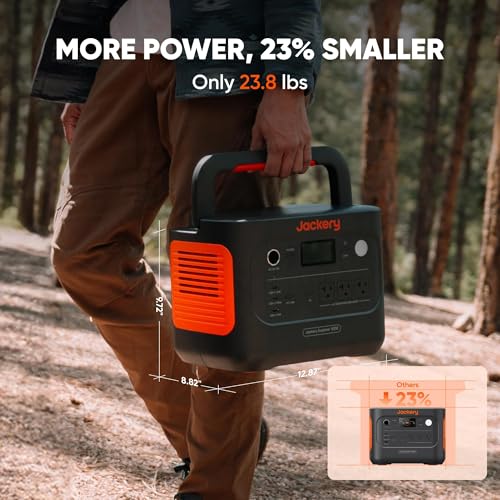
Choose EcoFlow if you want room to grow or the fastest UPS switchover: more of its lineup accepts extra batteries, and its current DELTA models switch in 10 ms against 20 ms or less on Jackery’s Explorer models. Choose Jackery if you want a simple, lighter box at the 1 kWh size, where the Explorer 1000 v2 carries 1,070 Wh at 23.8 lb. Both brands now build their main lines on LiFePO4 cells and offer 5 years of coverage, with conditions.
Start with the size of the load, then pick the brand. The two companies line up closely tier by tier, so most of the decision comes down to expansion, solar input, and switchover speed at the size you need. Below, each brand gets one representative unit at the 1 kWh tier, the size most households buy first.

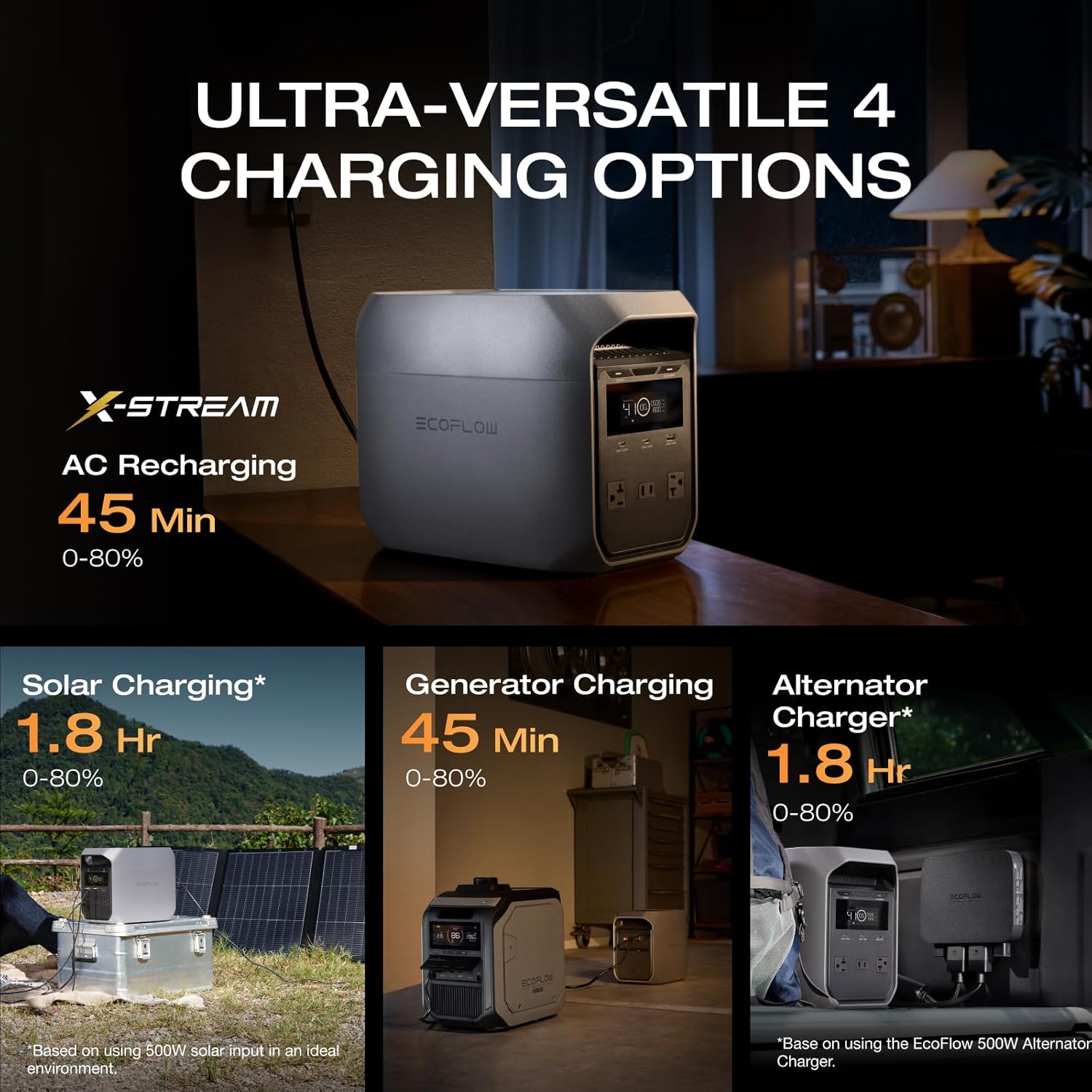
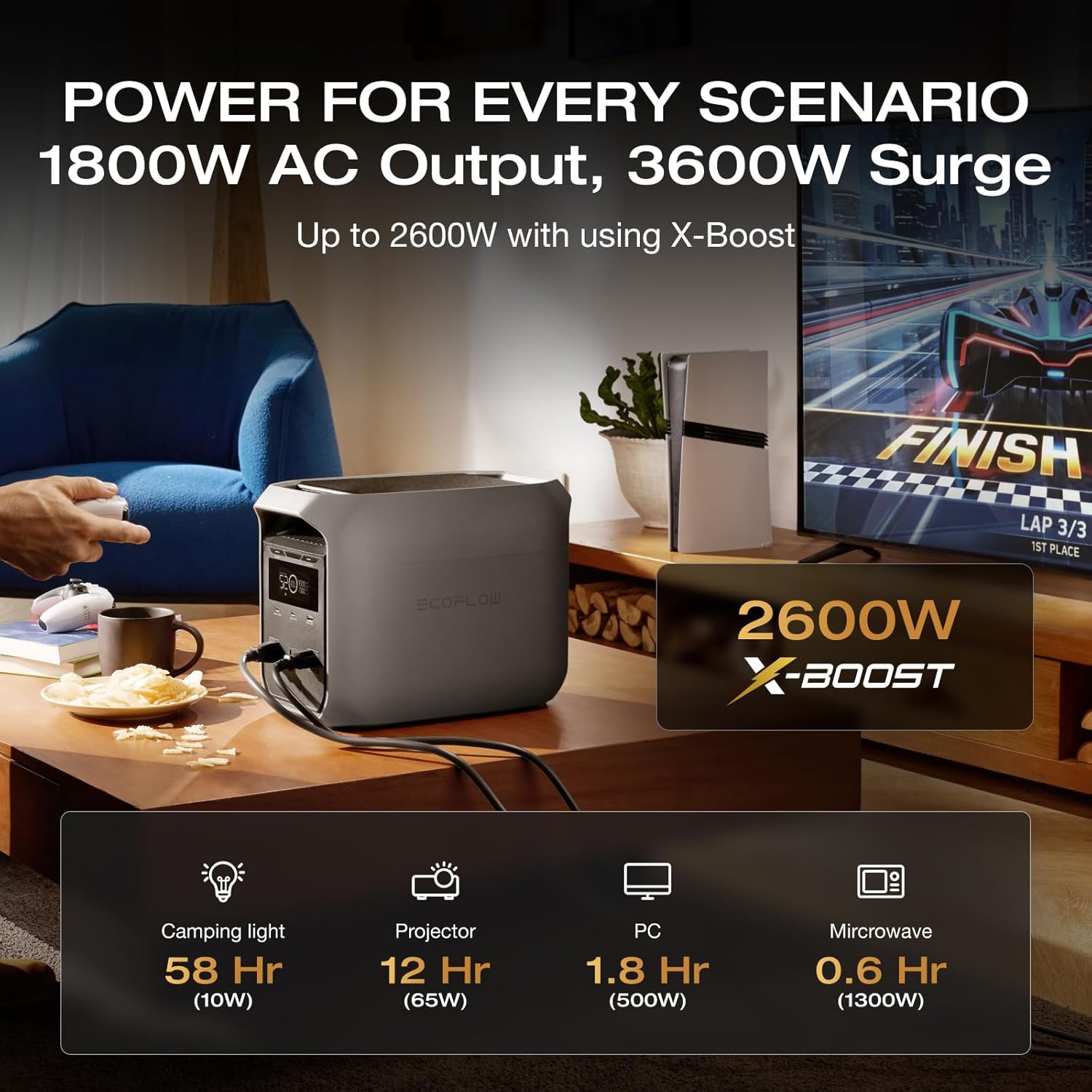
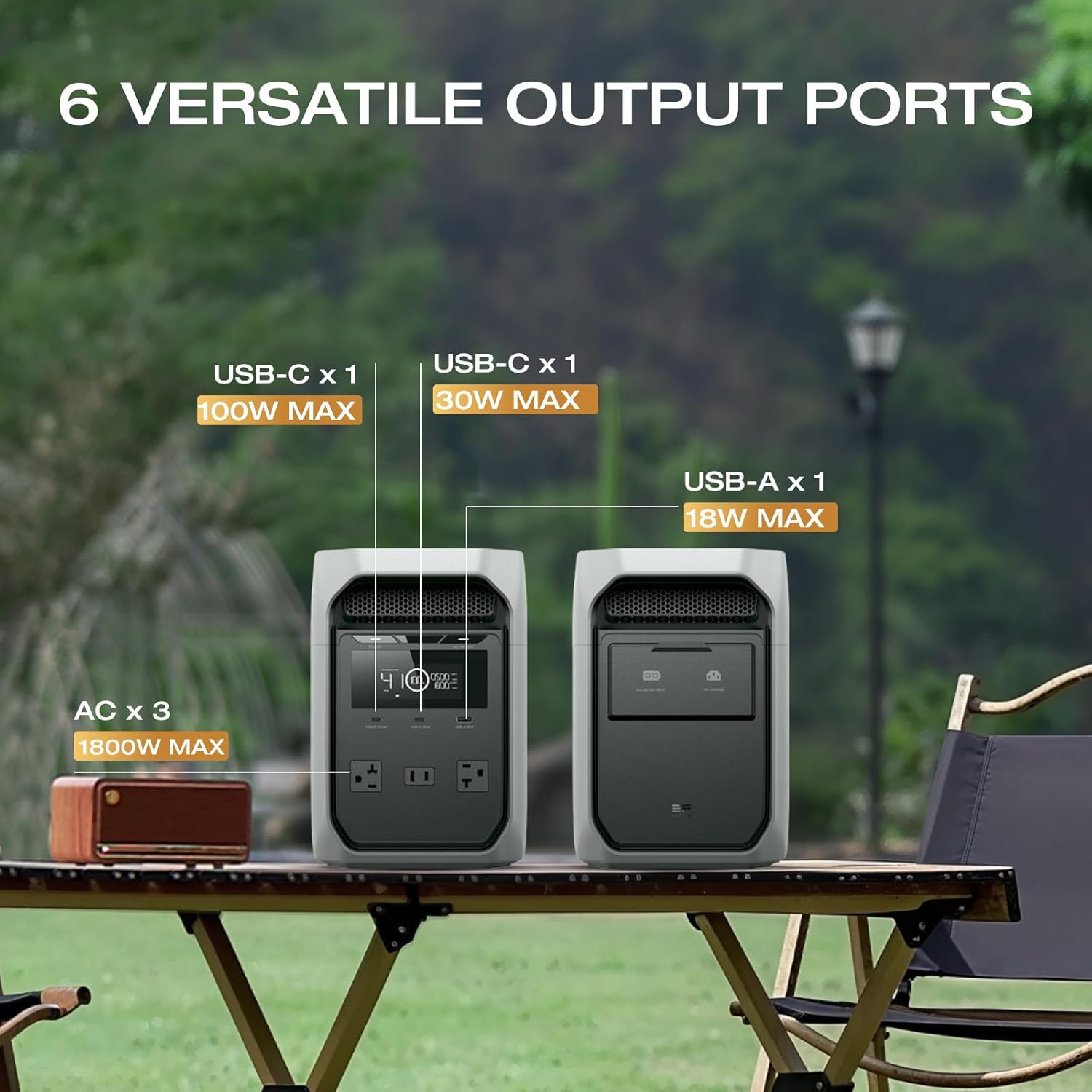
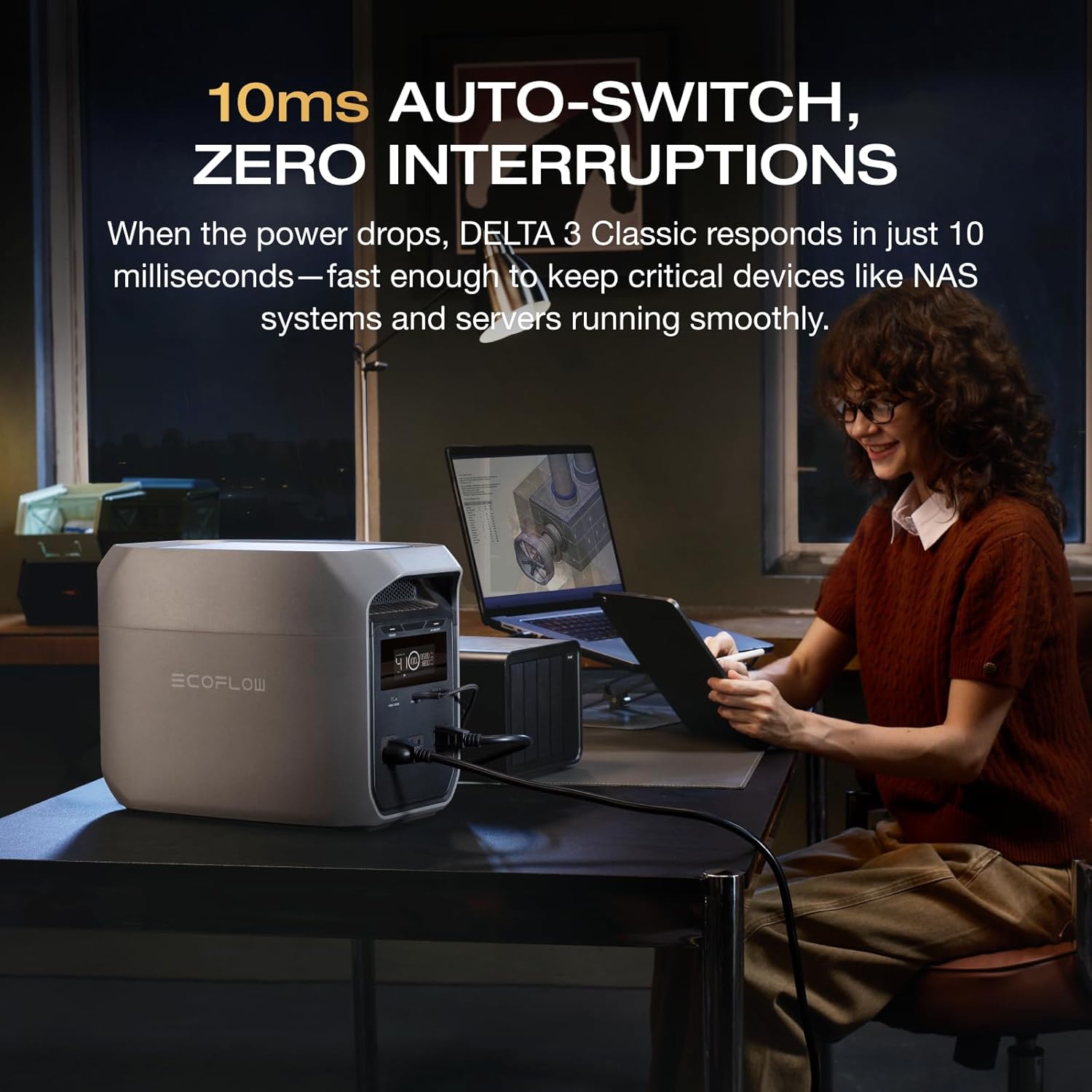
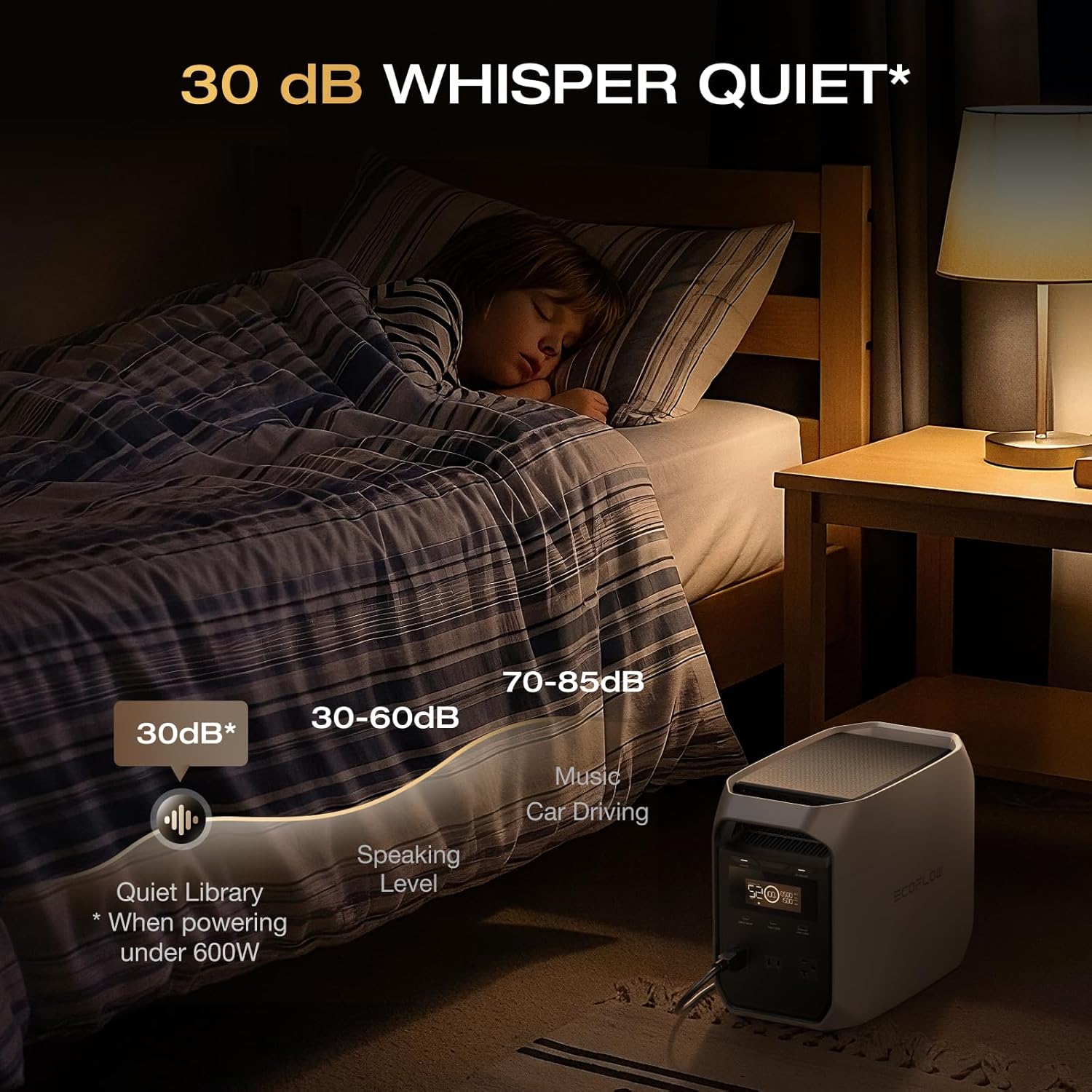
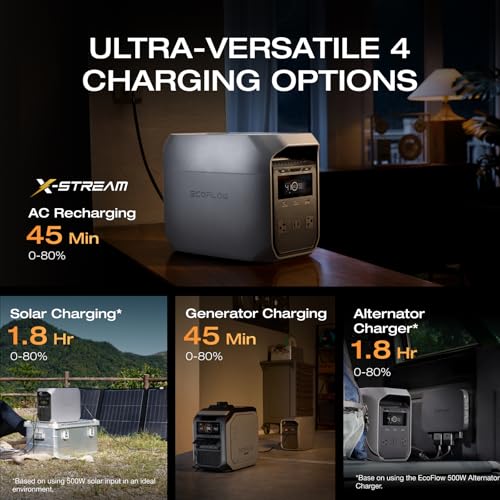
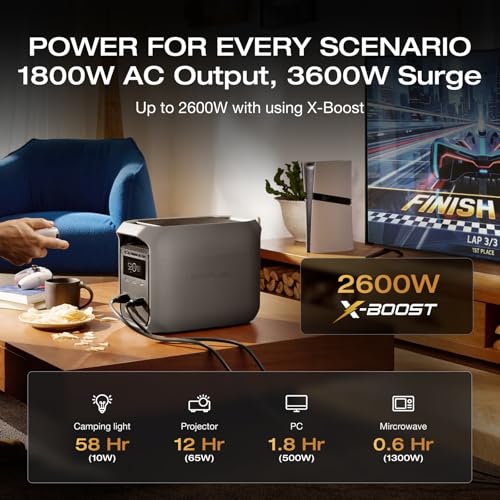
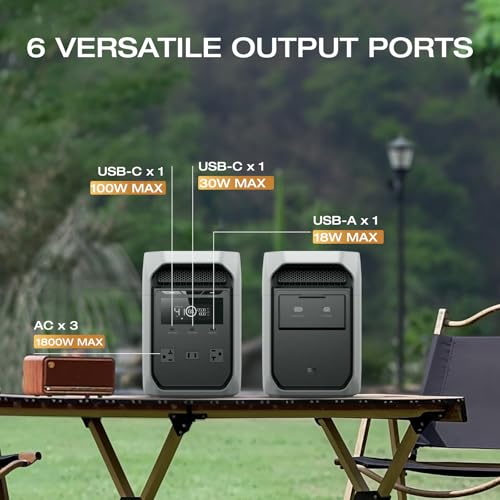
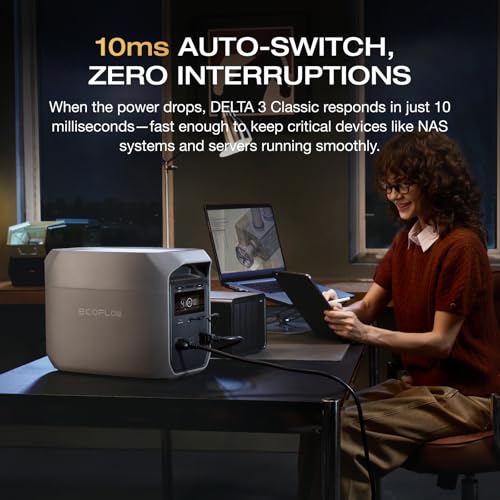
EF ECOFLOW Portable Power Station Delta 3 Classic


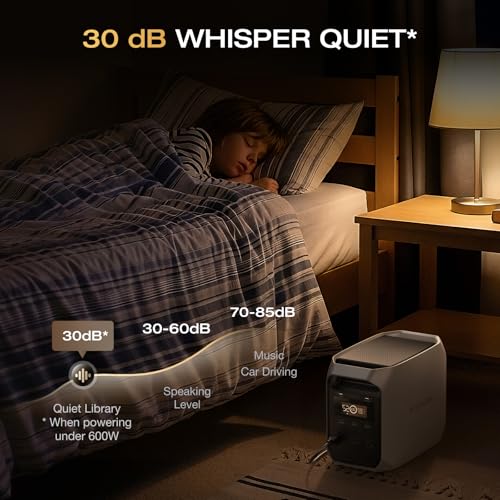
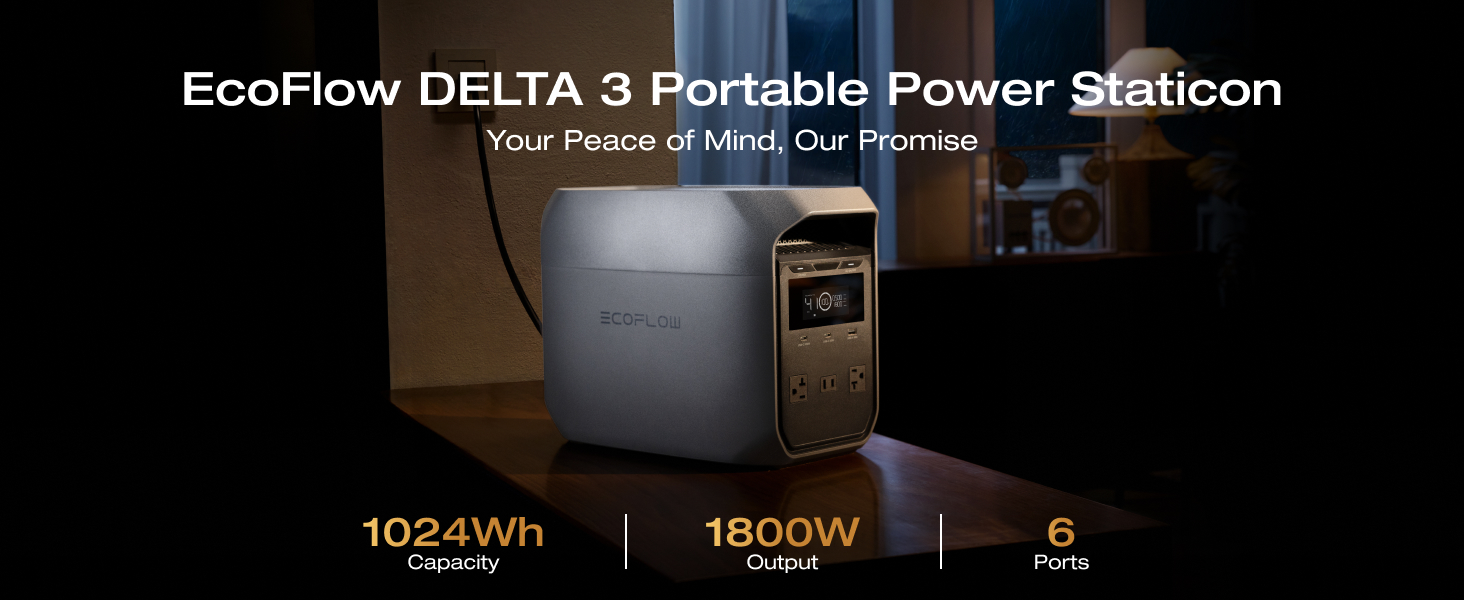
As an Amazon Associate we earn from qualifying purchases. Product prices and availability are accurate as of the date/time indicated.

Jackery Explorer 1000 v2 Portable Power
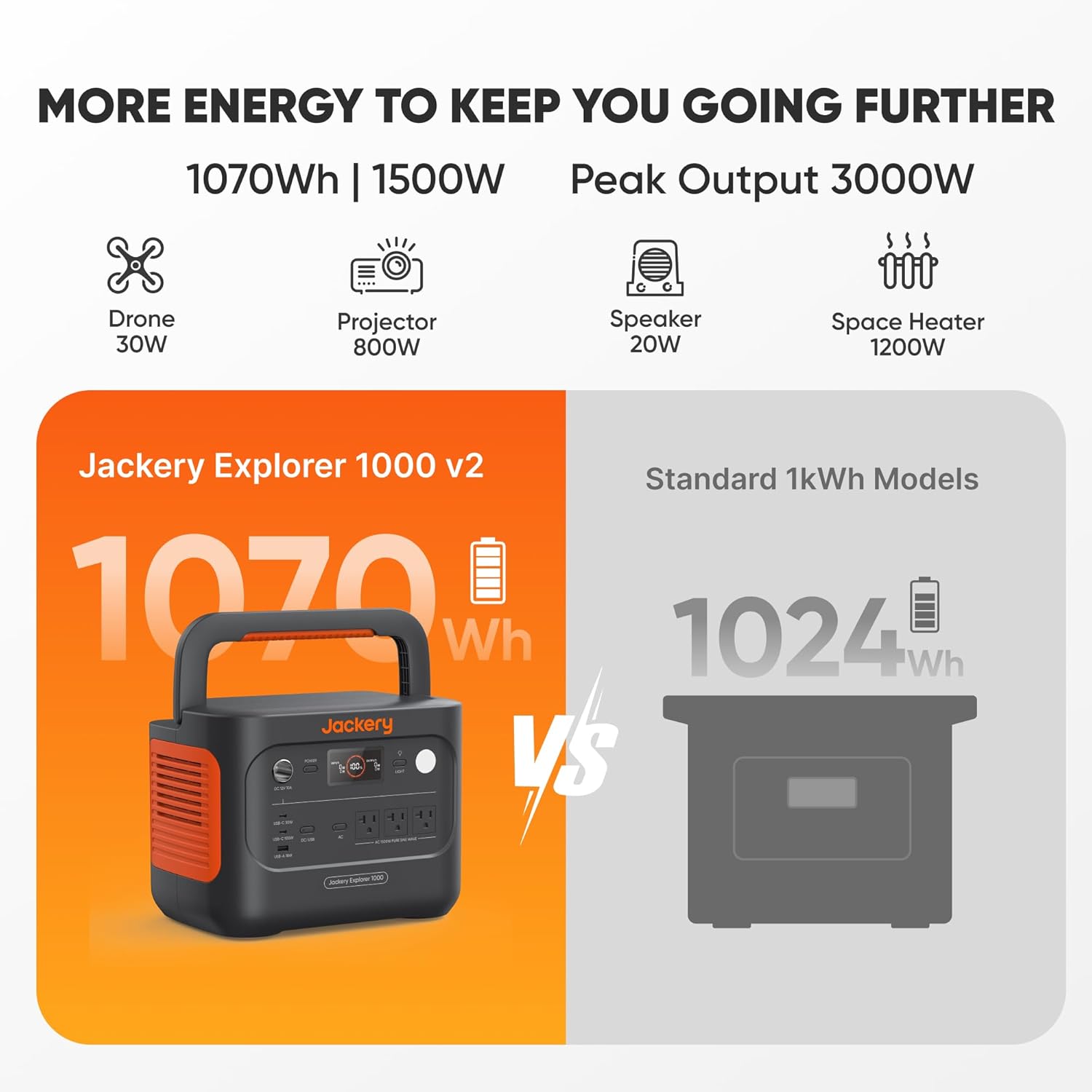




As an Amazon Associate we earn from qualifying purchases. Product prices and availability are accurate as of the date/time indicated.
How the Product Lines Map
EcoFlow sorts its stations by family name; Jackery sorts by family and a “Plus” suffix for expandable models.
- EcoFlow: RIVER for small units, DELTA for 1 to 3 kWh home backup (Classic, Plus, Max, Ultra), DELTA Pro for whole-home scale, and TRAIL for DC-only camping units.
- Jackery: Explorer for portable units (the standard v2 models are fixed capacity, the Plus models expand), and HomePower for the large home backup class. “Solar Generator” is Jackery’s name for a station sold with panels.
Side by Side by Capacity Tier
Figures come from each maker’s product pages unless marked. Watt-hours (Wh) are stored energy; watts (W) are how much the station can deliver at once.
| Tier | Model | Capacity | Output (rated / surge) | Solar max | UPS | Expands to |
|---|---|---|---|---|---|---|
| About 300 Wh | EcoFlow RIVER 3 Plus | 286 Wh | 600 W / 1,200 W | 220 W | Under 10 ms | 858 Wh |
| Jackery Explorer 300 | 292 Wh | 300 W | Not on spec list | Not listed | No | |
| About 1 kWh | EcoFlow DELTA 3 Classic | 1,024 Wh | 1,800 W / 3,600 W | 500 W | 10 ms | No |
| EcoFlow DELTA 3 Plus | 1,024 Wh | 1,800 W / 3,600 W | 1,000 W (2 x 500 W) | 10 ms | 5 kWh | |
| Jackery Explorer 1000 v2 | 1,070 Wh | 1,500 W / 3,000 W | 400 W | 20 ms or less | No | |
| About 2 kWh | EcoFlow DELTA 3 Max | 2,048 Wh | 2,400 W / 4,800 W | Not on spec list | 10 ms | Max Plus version only |
| Jackery Explorer 2000 v2 | 2,042 Wh | 2,200 W / 4,400 W | 400 W | Under 20 ms | No | |
| 3 kWh and up | EcoFlow DELTA 3 Ultra | 3,072 Wh | 3,600 W / 7,200 W | 800 W | Under 10 ms | 11 kWh |
| Jackery HomePower 3600 Plus | 3,584 Wh | 3,600 W | Not on spec list | Within 10 ms | 21 kWh |
“Not on spec list” means we could not confirm the figure on the maker’s page; it does not mean the feature is missing.
The Four Differences That Matter
1. Expansion: EcoFlow Offers It at More Sizes
An expansion battery is a second pack that plugs into the station and adds capacity without adding a second inverter. EcoFlow offers one at nearly every tier: the RIVER 3 Plus reaches 858 Wh, the DELTA 3 Plus 5 kWh, and the DELTA 3 Ultra 11 kWh. Jackery’s standard v2 Explorers, including the 1000 v2 and 2000 v2, cannot take extra batteries; for that you move to an Explorer Plus or HomePower model.
The math shows why this matters. A fridge averaging 150 W uses 150 W x 24 h = 3,600 Wh a day. A DELTA 3 Plus at its 5 kWh ceiling delivers about 5,000 Wh x 0.85 inverter efficiency / 3,600 Wh = about 1.2 days of fridge, versus 1,070 x 0.85 / 3,600 = about 0.25 days, or 6 hours, from an Explorer 1000 v2 that stays at 1,070 Wh. The 0.85 is a common planning figure for conversion loss. If you might want multi-day coverage later, buy into an expandable model now.
2. UPS Switchover: 10 ms vs 20 ms
UPS mode keeps devices plugged into the station running when wall power drops, switching to the battery in a set number of milliseconds (ms). EcoFlow rates its current DELTA models at 10 ms; Jackery rates the Explorer 1000 v2 at 20 ms or less and the 2000 v2 at under 20 ms.
For a fridge, a router, or lamps, either figure is fine. For a desktop PC, a NAS, or a home server, a shorter gap is the safer choice, and a dedicated UPS still beats any power station for that job. Our UPS mode explainer covers the details. On medical equipment, Jackery states its power stations are not recommended for medical devices; check the maker’s guidance before planning a CPAP around either brand, and see our CPAP power station guide.
3. Solar Input: EcoFlow Takes More Panels
At the 1 kWh tier, EcoFlow accepts 500 W of solar on the Classic and 1,000 W on the Plus (EcoFlow’s 2 x 500 W figure; the manual’s 15 A total Isc limit across both inputs can keep a real array lower); Jackery accepts 400 W on the Explorer 1000 v2, across a wide 12 to 60 V window. With a 0.75 derate for heat, angle, and wiring loss (a common planning figure), the hours of full sun needed for a full refill are:
- Jackery Explorer 1000 v2: 1,070 Wh / (400 W x 0.75) = about 3.6 peak sun hours.
- EcoFlow DELTA 3 Classic: 1,024 Wh / (500 W x 0.75) = about 2.7 peak sun hours.
- EcoFlow DELTA 3 Plus: 1,024 Wh / (1,000 W x 0.75) = about 1.4 peak sun hours.
With 5 peak sun hours, all three refill in a day if you buy panels up to the limit. The gap matters in winter, when peak sun hours fall, or when you run the fridge off the panels during the day. The solar sizing guide shows how to size an array for your location. Jackery’s “compatible only with Jackery panels” line appears in a retail listing, not on jackery.com, and Jackery sells adapters for other connectors.
4. Warranty and the App
Both reach 5 years, by different paths. EcoFlow gives 3 years standard and adds 2 when you register the unit in the EcoFlow app, on the DELTA 3 Classic, Max, and Ultra pages. Jackery lists 3 years plus 2 extended on the Explorer 1000 v2 and 2000 v2; its US product page says the extra 2 years activate automatically only on purchases from jackery.com, so confirm the terms for your store before you buy. Smaller units differ: Jackery lists 2 plus 1 years for the Explorer 300.
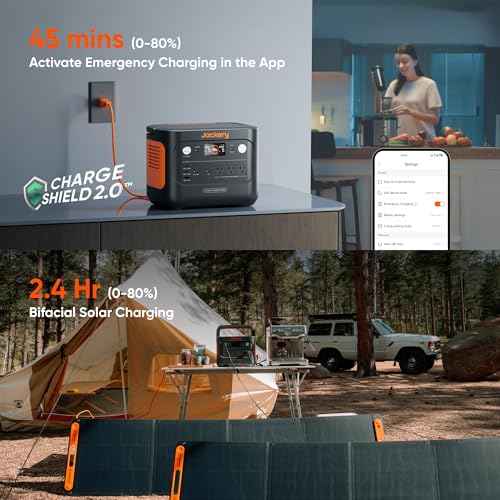
Both brands run their stations through a phone app for monitoring and settings. Jackery uses its app to switch on the Explorer 1000 v2’s 1-hour emergency charge; at the default speed, jackery.com lists about 1.58 hours for a full AC recharge. The DELTA 3 Classic reaches full in about 60 minutes, per EcoFlow.
The 1 kWh Matchup in Numbers
Most first purchases land here, so the two cards above are worth a direct check. Runtime is nearly even: a fridge averaging 150 W gets 1,070 x 0.85 / 150 = about 6.1 hours from the Jackery and 1,024 x 0.85 / 150 = about 5.8 hours from the EcoFlow. Output is not even. The DELTA 3 Classic runs 1,800 W steady against 1,500 W, so a 1,500 W space heater plus a 150 W fridge, 1,650 W in total, fits the EcoFlow but not the Jackery. The Jackery is 23.8 lb against 26.7 lb.
Choose EcoFlow If
- You may add capacity later, at any tier from RIVER to DELTA 3 Ultra.
- Your desk setup needs the 10 ms switchover.
- You want more solar input per kWh of battery.
Best for: homes that start with a fridge-and-lights plan and expect to grow toward multi-day backup.
Avoid if: you will not register the unit in an app, since the last 2 warranty years on models such as the DELTA 3 Classic depend on it.
Choose Jackery If
- You want a fixed-size station that stays light at the 1 kWh tier.
- You plan to buy direct from Jackery and want the 3 plus 2 year coverage.
- Your loads stay under 1,500 W at a time on the 1 kWh model.
Best for: an apartment or a single-room plan: fridge, router, phones, and lights overnight.
Avoid if: you need to add a battery later to the Explorer 1000 v2 or 2000 v2, which cannot accept one.
We research and compare; we do not run our own product trials. The figures here come from EcoFlow and Jackery pages, and the card scores reflect verified buyer ratings, as described on how we choose. For ranked picks across brands, see our home backup power station guide.
FAQ
How does the EcoFlow DELTA 2 compare with Jackery?
The DELTA 2 is the previous generation: 1,024 Wh, 1,800 W continuous with a 2,700 W surge, 27 lb, and 3,000 cycles to 80 percent, per EcoFlow. Its US product page now redirects to the DELTA 3, so compare current Jackery models against the DELTA 3 family above.
Do both brands use LiFePO4 batteries?
Their current models do. Older units such as the original Explorer 1000 (lithium-ion, per Jackery) and the first DELTA (NCM, per EcoFlow) used cells with far lower cycle ratings, so check the model generation on a used or clearance listing. Our LiFePO4 vs NMC comparison explains the trade.
Which brand has longer cycle ratings?
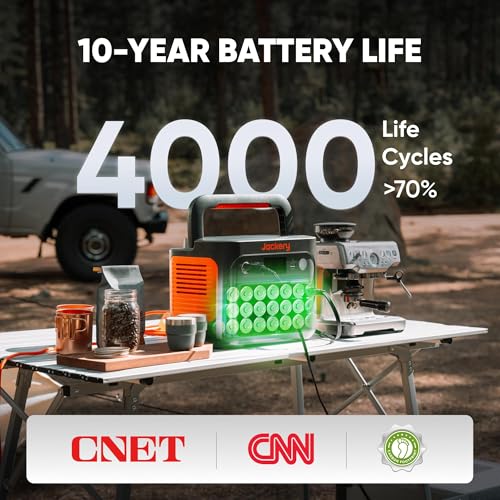
They measure differently. Jackery rates the Explorer 1000 v2 and 2000 v2 at 4,000 cycles to 70 percent capacity; EcoFlow rates the DELTA 3 Plus at 4,000 cycles to 80 percent. The EcoFlow threshold is the stricter one.
Can either one power a whole house?
Only the large tiers come close, and connecting any station to home circuits requires a transfer switch or similar equipment installed by a licensed electrician. See our large power station guide for the 3 kWh class.
Changelog: November 2026: first published.