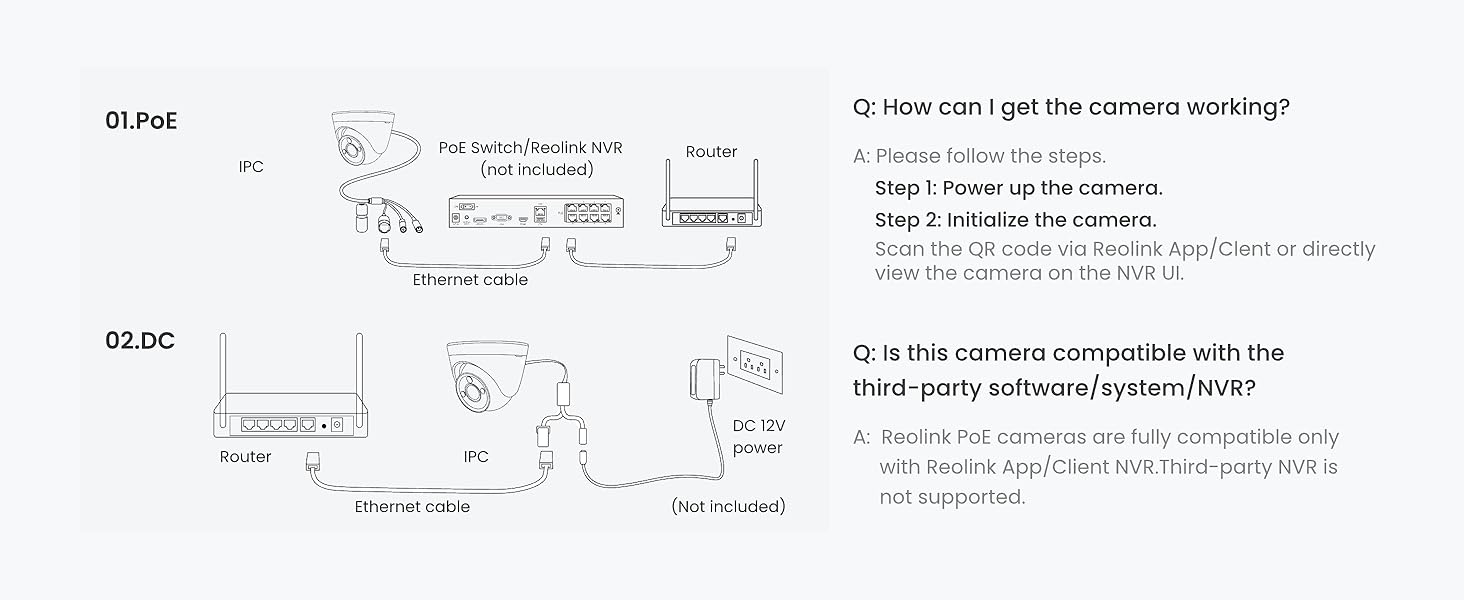
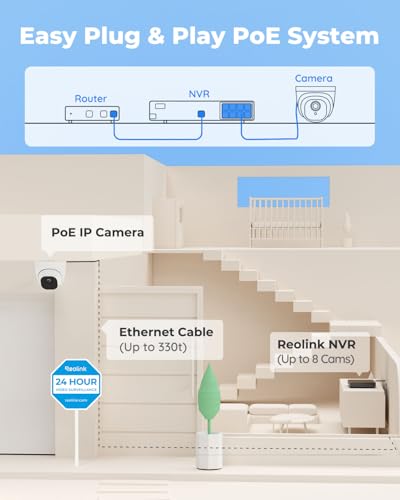
Pick PoE if you can run Ethernet cable to where the cameras will sit and want recording that does not depend on your Wi-Fi. Pick Wi-Fi if running cable is not practical, such as a rental or a detached shed. PoE means Power over Ethernet: one network cable carries both data and power to the camera.
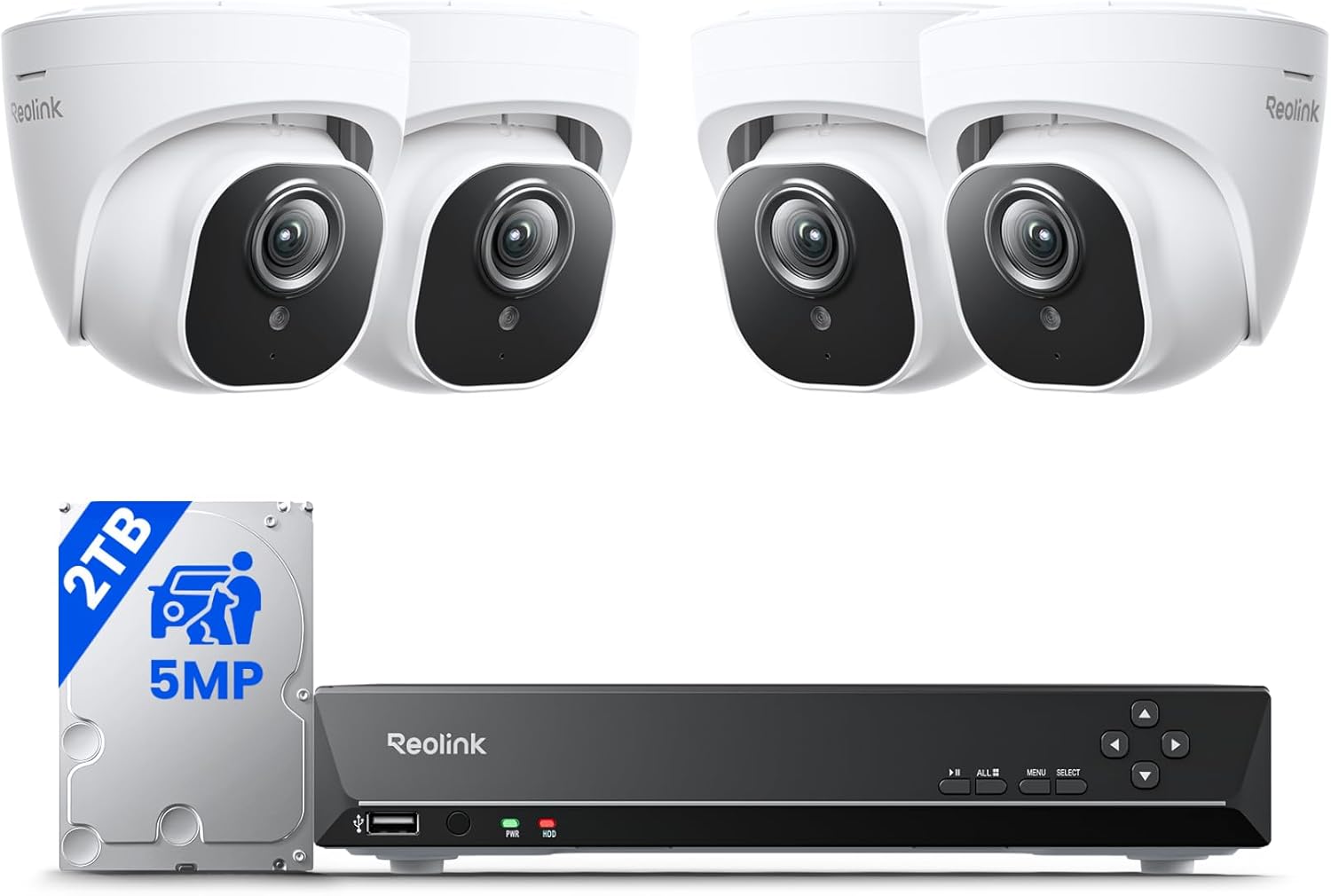
REOLINK 5MP 8CH Home Security Camera System










As an Amazon Associate we earn from qualifying purchases. Product prices and availability are accurate as of the date/time indicated.
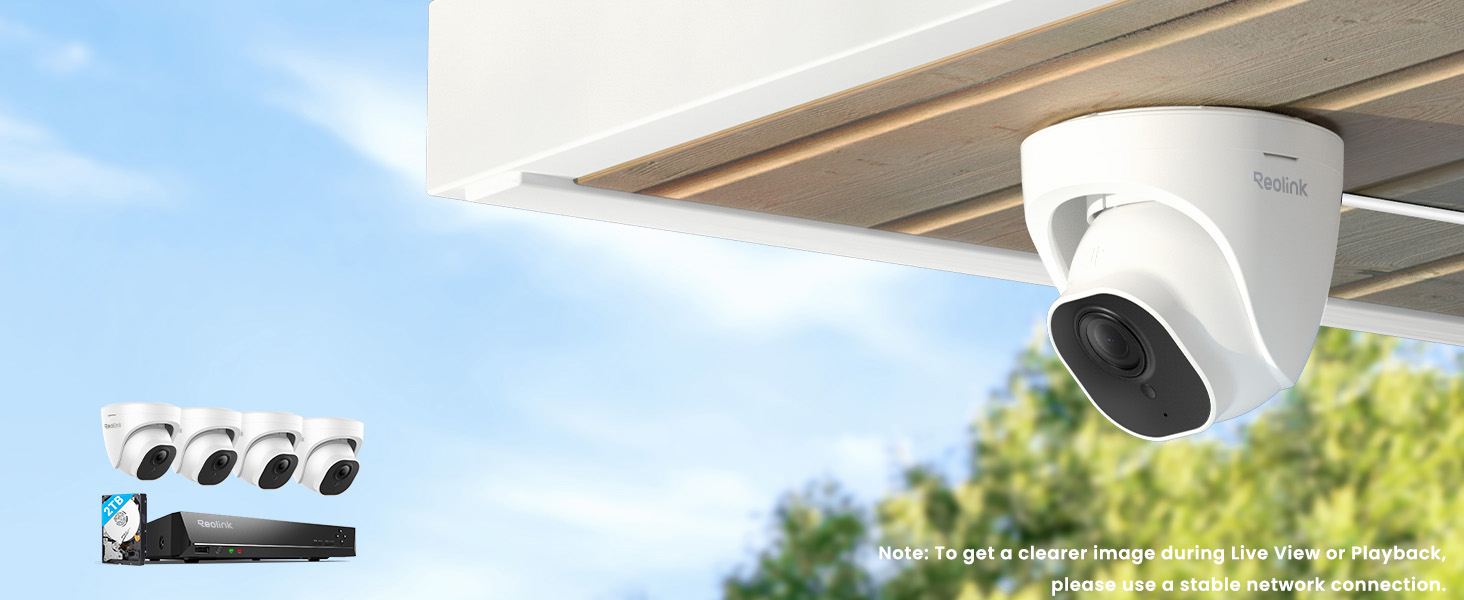
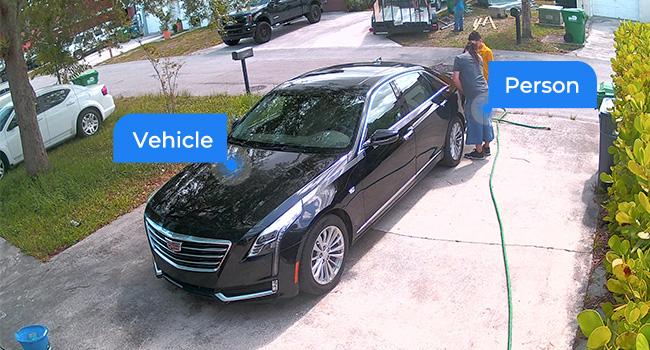
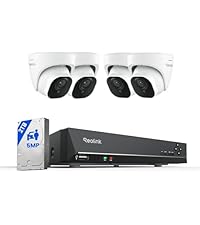
The card is a four-camera PoE kit from Reolink, shown as the PoE example. Its specs below come from Reolink’s product page. We research and compare; we do not use or review the products ourselves (see how we choose).
Side by Side
| Factor | PoE | Wi-Fi |
|---|---|---|
| Power | Through the Ethernet cable | Wall adapter, battery or solar panel |
| Data link | Cable to a recorder or switch | Your router’s wireless signal |
| Cable run limit | 100 m (328 ft) per Ethernet run | No cable, but range depends on signal |
| Install effort | Higher: cable through walls or attic | Lower: mount and join the network |
| Placement | Limited to where cable reaches | Flexible |
| Storage | Usually a recorder with a hard drive | microSD, hub or cloud plan |
Four Differences That Matter
Reliability on a busy network
A PoE camera sends video over a cable to the recorder, so a weak signal or a crowded 2.4 GHz band does not interrupt recording. A Wi-Fi camera shares the router with phones and TVs, and distance or walls can drop the link. The farther the camera is from the router, the more this matters.
Power and outages
PoE puts all the power at one spot: the recorder or switch. Put that one box and your router on a battery backup and every camera stays up. Runtime in hours = battery watt-hours x 0.85 / load watts. A 100 Wh backup running a 25 W recorder gives about 100 x 0.85 / 25 = 3.4 hours. The 0.85 is a common planning figure for inverter losses, and 25 W is an example load. Wi-Fi cameras on wall adapters each need their own backup; battery and solar models avoid that but still need the router. See how to keep security cameras running during a power outage and best UPS for modem and router.
Distance and cable budget
Cisco’s PoE documentation describes a typical Ethernet run limit of 100 m (328 ft), and Reolink says its kit supports up to 100 m with longer cable. The kit ships with four 18 m cables, so the starting reach is 18 x 3.28 = about 59 ft of cable per camera. A garage corner with an 80 ft cable path needs a longer cable, not a new system. PoE standards also differ in power: Cisco lists 802.3af at 15.4 W per switch port and 802.3at at 30 W, so cameras with heaters or motors may need the higher class. Check each camera’s listed power draw.
Storage math
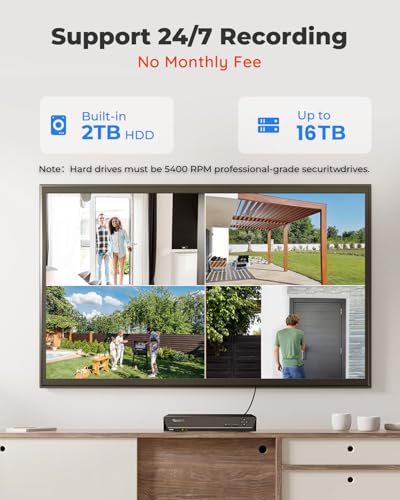
Reolink says the preinstalled 2 TB drive holds about 8 days from four cameras at 6,144 kbps. Check it: 4 x 6.144 Mbps = 24.6 Mbps, divided by 8 is 3.07 MB/s, times 3,600 is about 11 GB per hour, or 265 GB per day. 2,000 GB / 265 is about 7.5 days. Reolink says storage expands to 16 TB, 8 TB per drive. Wi-Fi cameras on microSD cards hold far less per camera; see best outdoor security cameras without subscription.
Choose PoE If
- You own the house and can run cable through an attic, crawl space or conduit.
- You want 24/7 recording without a monthly plan.
- You have three or more cameras, where one backup box beats many.
Choose Wi-Fi If
- You rent or cannot drill, or the camera goes on a detached building.
- You want one or two cameras up in an afternoon.
- Battery or solar models suit the spot; see best battery-powered security cameras and best solar security cameras.
Avoid if: you cannot route cable or lack a spot for a recorder; Wi-Fi is the better fit there.
FAQ
Does a PoE camera need Wi-Fi?
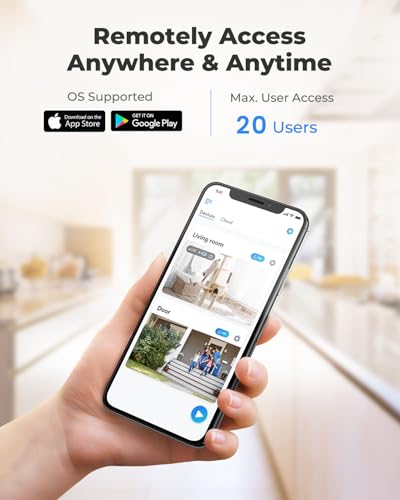
Not to record. The cable and recorder handle that. Viewing from your phone away from home needs the recorder on your internet connection.
Can a PoE camera work without its recorder?
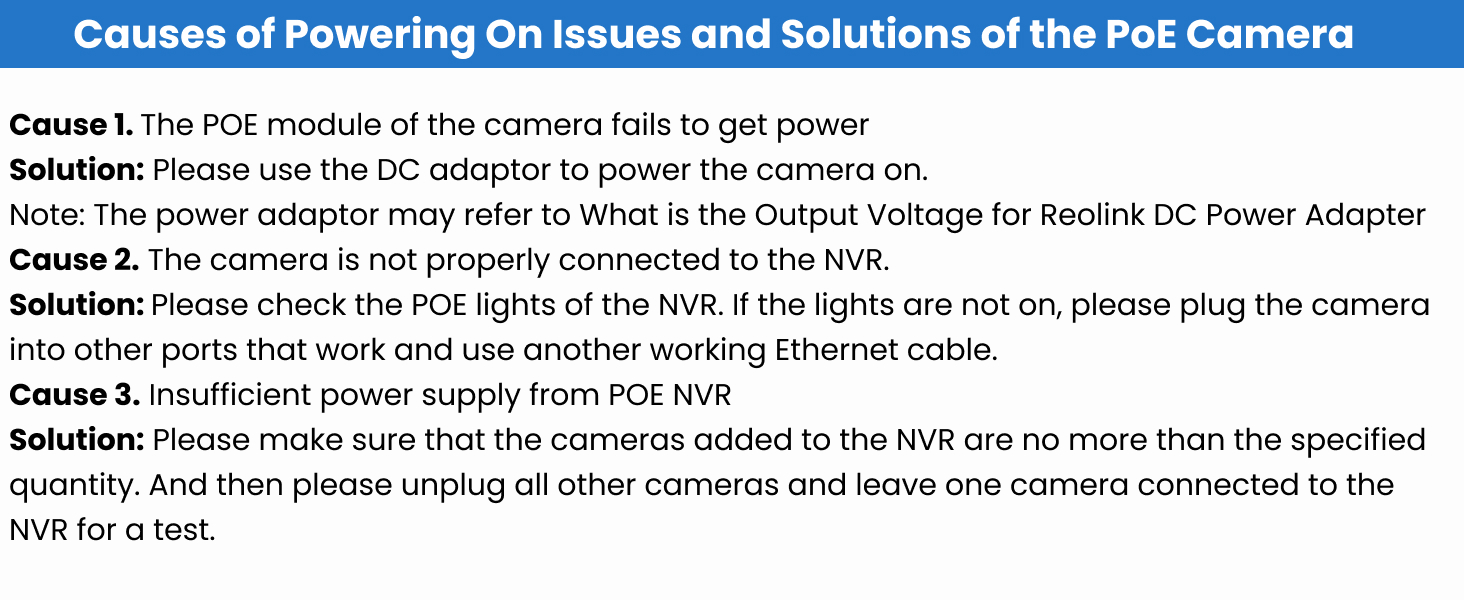
It depends on the model. Reolink says the cameras in this kit cannot operate without the NVR, so check before buying single cameras.
Is PoE harder to install?
Yes, because of the cable run. Plan the path first; an installer can pull cable if the attic or walls are hard to reach.
Changelog: November 2026: first published.