


A 30-day supply for one adult is 30 days x 2,000 calories = 60,000 calories, plus about 30 gallons of water at the Ready.gov figure of 1 gallon per person per day. Build it in four weekly steps of 15,000 calories each, buy what your household already eats, and leave the freeze-dried buckets for the last layer.
Step 1: Set the target
Multiply people x 30 x 2,000. The 2,000 figure is a planning number, not a dietary recommendation, so raise it for teenagers and heavy outdoor work and add infant or special-diet foods separately. Our food per person guide has the full table.
| Household | 30-day calories | Per weekly step | Water |
|---|---|---|---|
| 1 adult | 60,000 | 15,000 | 30 gal |
| 2 adults | 120,000 | 30,000 | 60 gal |
| Family of 4 | 240,000 | 60,000 | 120 gal |
Step 2: Convert calories into cans and boxes
Read the Nutrition Facts label: calories per serving x servings per container. Example with made-up label values: 250 calories x 3.5 servings = 875 calories per can. One weekly step for two adults is 30,000 calories, and 30,000 / 875 is about 34 cans. Mix several foods, because a week of one item wears out a household fast.
Ready.gov points to foods that need no refrigeration, cooking, water, or special preparation, and asks you to include a manual can opener and eating utensils. Start there for week 1, then add foods that need water or heat in later weeks.
Step 3: Layer it over four weeks
- Week 1, no-cook foods: canned meats, fish, fruit and vegetables, peanut butter, bars, dry cereal. Why: they work when the power is out and you have no fuel. See no-cook emergency foods.
- Week 2, dry staples: rice, pasta, beans, oats, shelf-stable milk. Why: they are calorie-dense and shelf-stable, but need water and a heat source.
- Week 3, comfort and variety: sauces, spices, coffee or tea, sweets. Why: a month of bland food is hard to stick with.
- Week 4, long-life backup: freeze-dried meals or a pre-packed bucket for the days you want zero cooking effort.
Where buckets fit
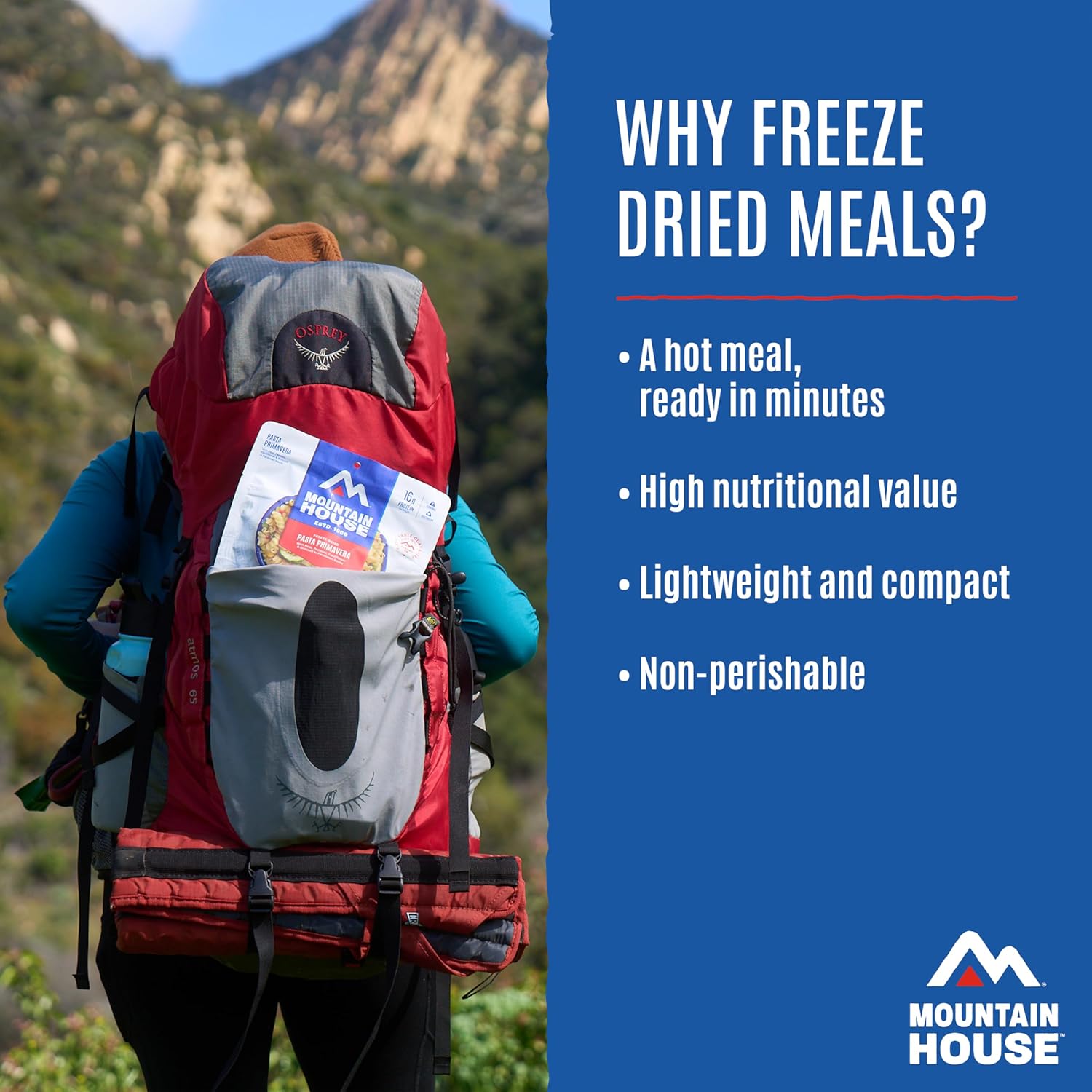
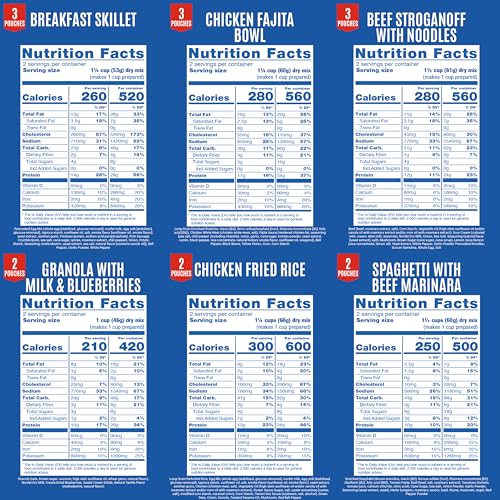
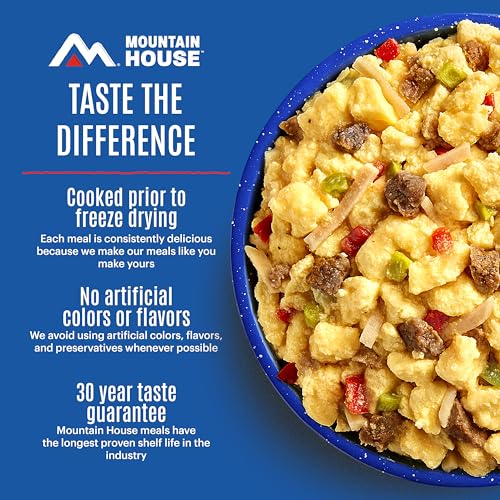
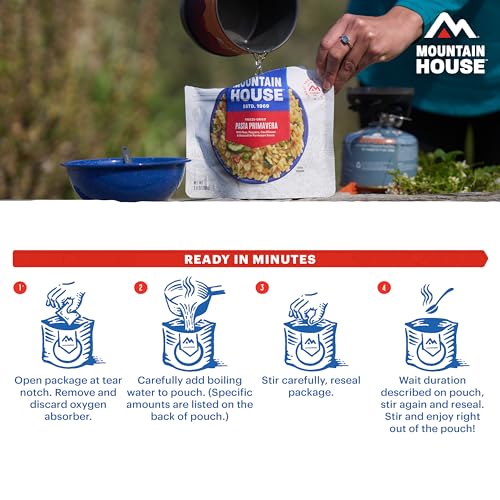
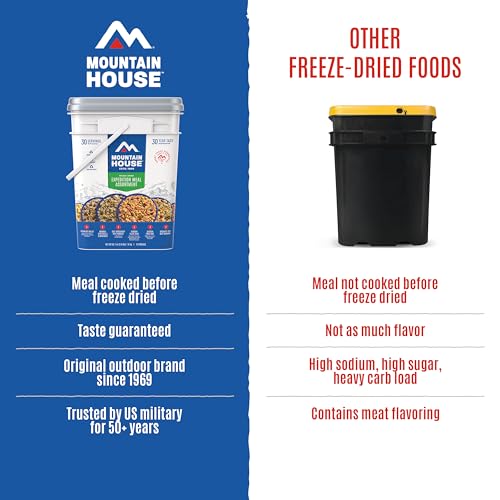
Check the label before you count a bucket toward your 60,000. Listings often give servings, not calories, and the two can differ. The Mountain House bucket below lists 15 pouches (30 servings) and about 21 cups of water, with a 30-year taste guarantee. The maker says the guarantee covers purchases from its site or an authorized reseller and advises avoiding prolonged exposure above 75°F.

Prime Mountain House Emergency Meal Assortment Kits




As an Amazon Associate we earn from qualifying purchases. Product prices and availability are accurate as of the date/time indicated.
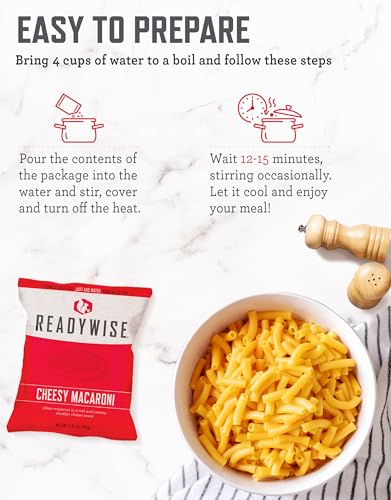
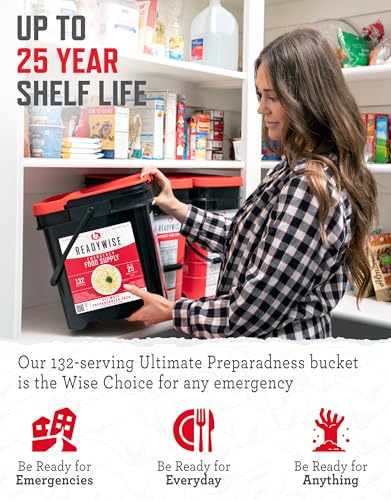
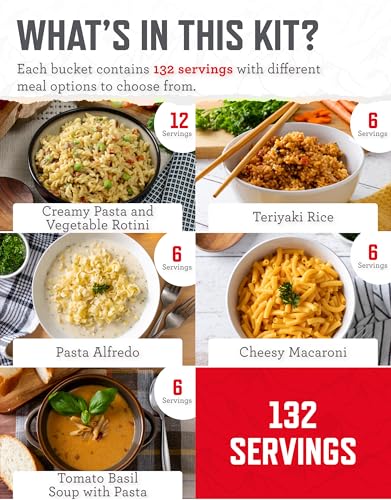
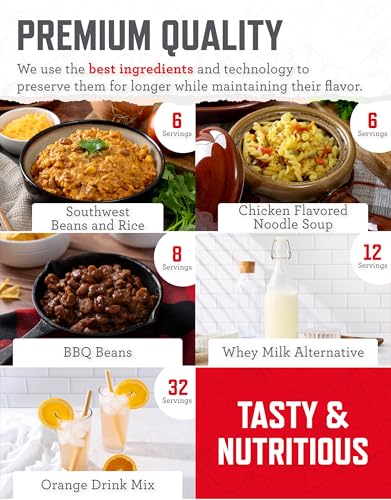
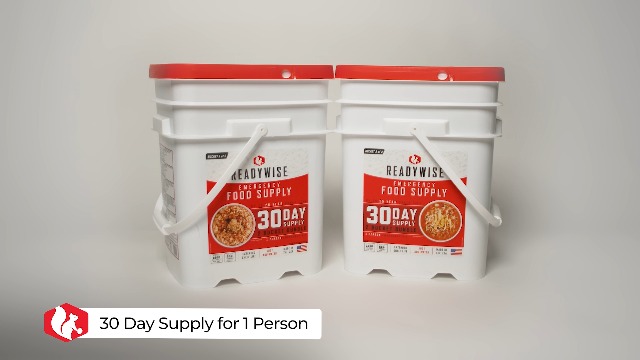
The ReadyWise bucket is listed on Amazon as 132 servings, while some retailers list 124, and we found no calorie total from the maker. Divide any calorie total you find on the label by 2,000 to get adult-days.

Prime READYWISE Emergency Food Supply Survival Bucket



As an Amazon Associate we earn from qualifying purchases. Product prices and availability are accurate as of the date/time indicated.
Storage and safety
- Keep food in a cool, dry place, not a hot garage. Ready.gov’s kit page says cool, dry storage, and Mountain House advises avoiding prolonged exposure above 75°F.
- Washington State University Extension, citing USDA FSIS, says high-acid canned foods such as tomatoes and many fruits may be stored up to 18 months, and low-acid foods such as meat and vegetables for several years. Ready.gov says not to eat from swollen, dented, or corroded cans. See how long canned food lasts.
- Eat what you store and replace the oldest first. Ready.gov says to replace expired items as needed.
- If you plan to heat food, cook outdoors only. CPSC warns: never use a grill indoors or in a garage, breezeway, carport, porch or under a surface that will burn. Carbon monoxide has no smell.
- For the fridge and freezer during an outage, follow the USDA and FDA time limits.
Common mistakes
- Counting servings instead of calories.
- Buying a month of food and no water plan. See how much water to store.
- Forgetting the can opener and a way to heat.
- Skipping allergies and medical diets. Check ingredient lists; the Mountain House listing names eggs, milk, tree nuts and wheat.
For ready-made options, compare the picks in our emergency food kit guide, and use the home emergency kit checklist for the non-food items. We do not use or review the products ourselves; the details above come from listings, maker pages, and agency guidance.
Changelog: November 2026: first published.









