


For most driveways and walks, buy a pusher-style shovel with a bent or adjustable handle and, as our suggestion, a blade around 24 to 30 inches wide, then keep a smaller scoop for the heavy stuff at the end of the driveway. Pushing moves the same snow with less lifting, and lifting is where the weight is: at the common 10 to 1 snow-to-water rule of thumb a cubic foot of snow weighs about 6 lb, and very wet snow can run about twice that.
Quick Comparison
| Type | Typical job | Lifting | Best for |
|---|---|---|---|
| Pusher (wide blade) | Light to moderate snow, flat concrete or asphalt | Low (push and shove) | Driveways, wide walks |
| Ergonomic scoop (bent or adjustable shaft) | Moderate snow, mixed lifting and pushing | Medium | Walks, steps, general use |
| Combination (pusher with a scoop curve) | Most storms, one tool | Low to medium | One-shovel households |
| Sled or wheeled shovel | Long hauls, deep piles | Low (slide, then tip) | Long driveways with a clear drop-off |
How We Chose
We research and compare; we do not run our own product trials. This guide ranks shovel types by blade width, handle geometry, material, and the way public owner reviews describe wear. This page ranks shovel types. The cards show catalog models that fit a type, and the Yard & Grid Score comes from their verified buyer ratings. Our approach to scoring is on that page.
Shovel Types, Ranked for a Typical Driveway
1. Combination pusher-scoop
- A wide blade with a slight scoop curve handles a push first and a short lift second, so one tool covers most storms.
- Look for a polyethylene or steel blade with a wear strip on the lower edge; the strip is the part that wears out first on concrete.
- A bent or adjustable handle keeps your back straighter while you push.
Best for: households that want a single shovel for a two-car driveway and a front walk.
Avoid if: your snow is regularly deeper than the blade is tall, because the snow rolls over the top.
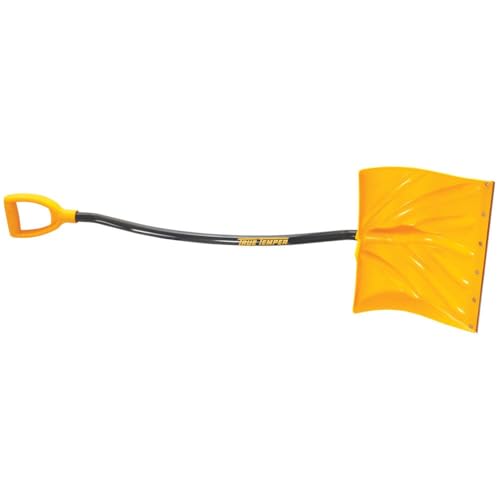
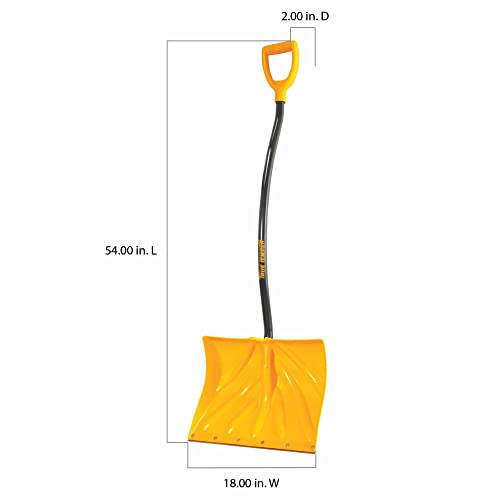
Catalog example: an 18 in combination blade with a nylon wear strip and a D-grip handle, per its listing.

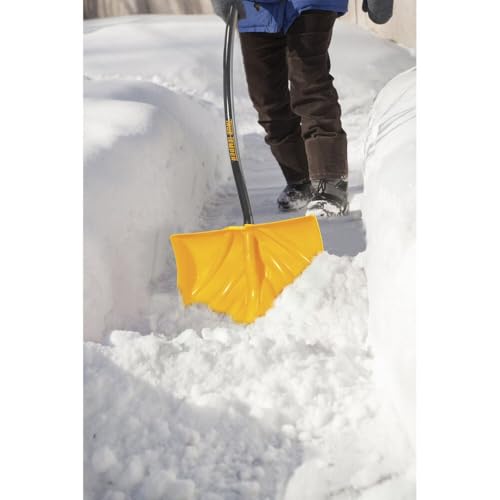
Prime TRUE TEMPER 1603400 Poly Snow Shovel/Pusher



As an Amazon Associate we earn from qualifying purchases. Product prices and availability are accurate as of the date/time indicated.
2. Wide pusher
- A blade of 30 inches or more clears a path in fewer passes; on a 20 ft wide driveway, a 30 in blade needs 8 passes where a 20 in blade needs 12.
- It works on light to moderate snow on flat, smooth surfaces and does little on packed snow or ice.
Best for: flat, smooth driveways and decks cleared soon after the snow stops.
Avoid if: your driveway is gravel or has a steep pitch, since the wide blade catches and is hard to control.
3. Ergonomic scoop
- The bent shaft is meant to reduce bending, but a full scoop still has to be lifted.
- A smaller blade holds less per lift, which keeps each load lighter in wet snow.
Best for: steps, narrow walks, and clearing around cars.
Avoid if: you have a wide driveway; the trips add up.
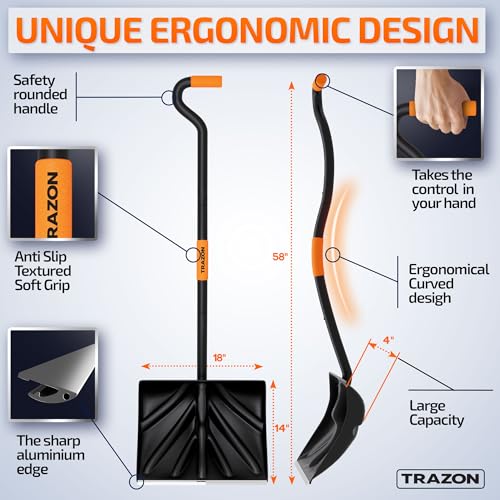
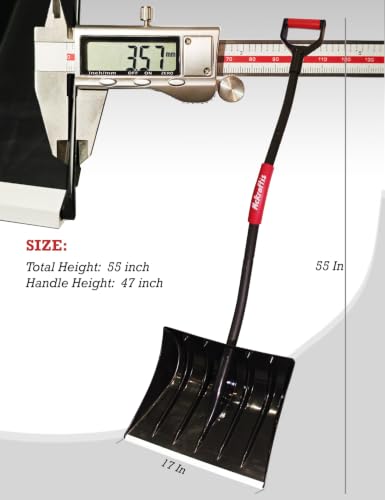
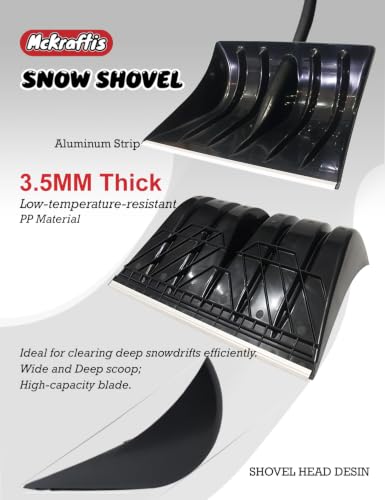
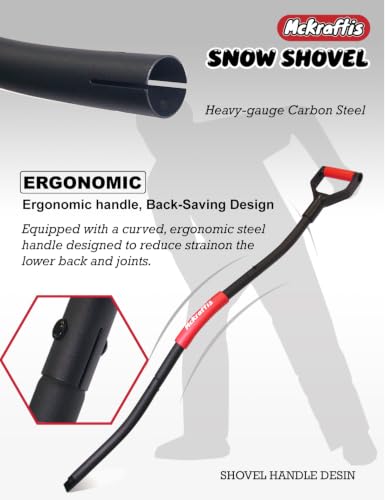
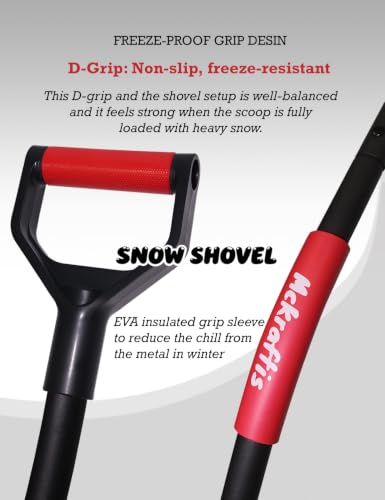
Two catalog examples with curved handles: the Trazon has an 18 in poly scoop on a 58 in aluminum handle, and the McKraftis pairs a curved steel handle with an aluminum-reinforced plastic blade, per their listings.

Prime Snow Shovel Heavy Duty for Driveway with Ergonomic







As an Amazon Associate we earn from qualifying purchases. Product prices and availability are accurate as of the date/time indicated.

Prime Ergonomic Snow Shovel for Driveway Home Garage



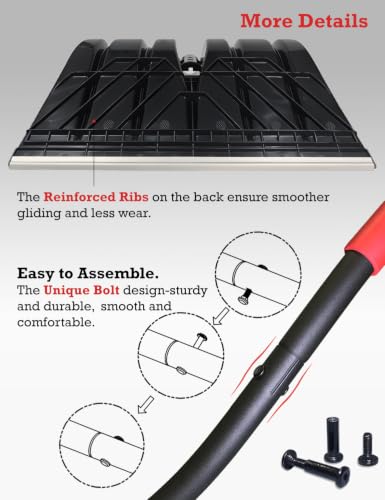
As an Amazon Associate we earn from qualifying purchases. Product prices and availability are accurate as of the date/time indicated.
4. Sled or wheeled shovel
- You load the bowl and slide or roll it to the dump spot, which swaps lifting for pulling.
- It needs a place to tip the load, so it fits long, open driveways better than narrow side yards.
Best for: long driveways with open space to dump snow.
Avoid if: you have steps, a tight lot, or uneven pavement.
How Much Snow You Are Actually Moving
Water weighs 62.4 lb per cu ft. Snow at a common 10 to 1 snow-to-water ratio weighs about 62.4 / 10 = 6.2 lb per cu ft; very wet, heavy snow near 5 to 1 weighs about 12.5 lb per cu ft. Both ratios are rules of thumb, and actual snow varies by storm.
Worked example, a 20 ft by 40 ft driveway with 6 inches of snow: 20 x 40 x 0.5 ft = 400 cu ft. At 6.2 lb per cu ft, that is about 2,500 lb. If the snow is very wet (5 to 1), it is about 5,000 lb. With a 10 lb shovelful, 2,500 lb is 250 lifts. Pushing avoids most of those lifts, which is the case for a wide blade.
The American Heart Association publishes general guidance on shoveling exertion, including pacing yourself and pushing rather than lifting where you can. We point to it rather than give medical advice. If you have health concerns, ask your doctor, or hire the job out.
Cost of Ownership
A shovel has no fuel or battery. The recurring cost is the blade edge: a plastic wear strip or blade guard on concrete wears down with use and is the first part to wear out. Metal edges last longer but can scratch pavers and wood decks. Pair the shovel with ice melt for glaze ice; see our ice melt guide.
How to Choose
- First, measure the surface. Flat concrete favors a pusher; gravel or pavers favor a plastic-edge scoop.
- Next, estimate your usual depth. As a rough guide of ours, push under 6 inches; over 8 inches, plan to lift in layers or move to a snow blower.
- Then compare blade width. Passes = driveway width divided by blade width, rounded up.
- Last, check shaft length against your height: you want to stand straight with the blade flat.
FAQ
What size snow shovel should I get?
We suggest a 24 to 30 inch pusher for flat driveways, and an 18 inch or smaller scoop for steps and heavy snow. Wider blades mean fewer passes but heavier loads.
Plastic or metal blade?
Plastic is lighter and gentler on surfaces. Metal edges last longer and cut packed snow but can scratch. A plastic blade with a metal wear strip is the common compromise.
When is a shovel not enough?
When the weight math above lands in the thousands of pounds every storm, as it does for the 800 sq ft example, a blower saves real time. Compare options in snow blower vs electric snow shovel.
Changelog: November 2026: first published.









