


For most concrete driveways and walks, plain rock salt (sodium chloride) is the lowest-risk ice melt, because the Concrete Masonry & Hardscapes Association, in its deicer guidance for concrete pavers, calls it “the least damaging to concrete materials.” Pick it when the forecast low stays above about 15°F, and switch to calcium chloride only when it drops below that.
One rule comes before any product choice. The Pennsylvania Aggregates and Concrete Association (PACA) says to keep deicers off concrete during its first year, so a slab poured this fall gets a shovel and sand, not a bag of melt. This guide ranks ice melt types, not brands; the two cards below are examples of the types they sit under.
Quick Comparison
Temperatures are the lowest practical melting temperatures from the Minnesota Pollution Control Agency (MPCA). Concrete notes come from the Concrete Masonry & Hardscapes Association (CMHA), whose guidance is written for concrete pavers, and PACA guidance cited below.
| Type | Lowest practical temp | Concrete | Plants | Best for |
|---|---|---|---|---|
| Rock salt (sodium chloride) | 15°F | Least damaging of the chlorides (CMHA); corrodes rebar (MPCA) | Harms plants (MPCA) | Mild freezes on sound, aged concrete |
| Calcium chloride | -20°F | Acceptable on dense, good-quality concrete (PACA); use in moderation (CMHA) | Harms plants (MPCA) | Deep cold, fast action |
| Magnesium chloride | -10°F | Not recommended (CMHA); greatest chloride degradation (MPCA) | Harms plants (MPCA) | Asphalt or gravel paths, not slabs |
| Calcium magnesium acetate (CMA) | 20°F | Not recommended (CMHA); higher deterioration (PACA) | Safer for plants than chlorides (MPCA) | Plant beds beside non-concrete paths |
| Urea | Not listed by MPCA | Linked to higher deterioration (PACA) | Not covered here | Little; mostly a pet-label ingredient |
| Ammonium nitrate or sulfate | Not listed by MPCA | Avoid entirely (PACA) | Not covered here | Nothing on concrete |
How We Chose
We rank by what hurts concrete first, then cold performance, then yard impact. Sources are MPCA, CMHA, PACA, the ASPCA, and EPA Safer Choice. We research and compare; we do not run our own product trials, and manufacturers label “pet safe” or “concrete safe” in ways that vary, so we rank ingredients, not slogans. See how we choose.
Ice Melt Types, Ranked for Concrete
1. Rock salt (sodium chloride)
- CMHA: “least damaging to concrete materials and should be used whenever possible.” A 2013 review prepared for the Utah DOT, which it cites, found “only minor, if any, adverse effects” from sodium chloride.
- MPCA: it corrodes reinforcing steel, which matters for older slabs and steps with rebar.
- Stops working near 15°F (MPCA).
Best for: Aged, dense driveways and walks where lows stay above 15°F.
Avoid if: Your slab is under a year old, or the nearby lawn borders the walk.
2. Calcium chloride
- Works to -20°F (MPCA) and acts fast; CMHA says to consider it in moderation when a quicker-acting deicer is needed.
- PACA treats sodium and calcium chloride as generally acceptable on good-quality dense concrete.
- ASPCA: products with calcium chloride may cause ulceration in a pet’s mouth.
Best for: Steps and short walks where a 10°F morning needs a fast result.
Avoid if: Dogs lick the pavement, or you cannot spread it lightly.
3. Magnesium chloride
- CMHA does not recommend it because it “can chemically degrade all types of concrete.” MPCA says it causes the greatest degradation among the chlorides.
- ASPCA lists it, with urea, as a typical “pet-friendly” ingredient that is safer but can still upset the stomach.
Best for: Asphalt or gravel paths where concrete is not the concern.
Avoid if: The surface is a concrete slab, paver patio, or stoop.
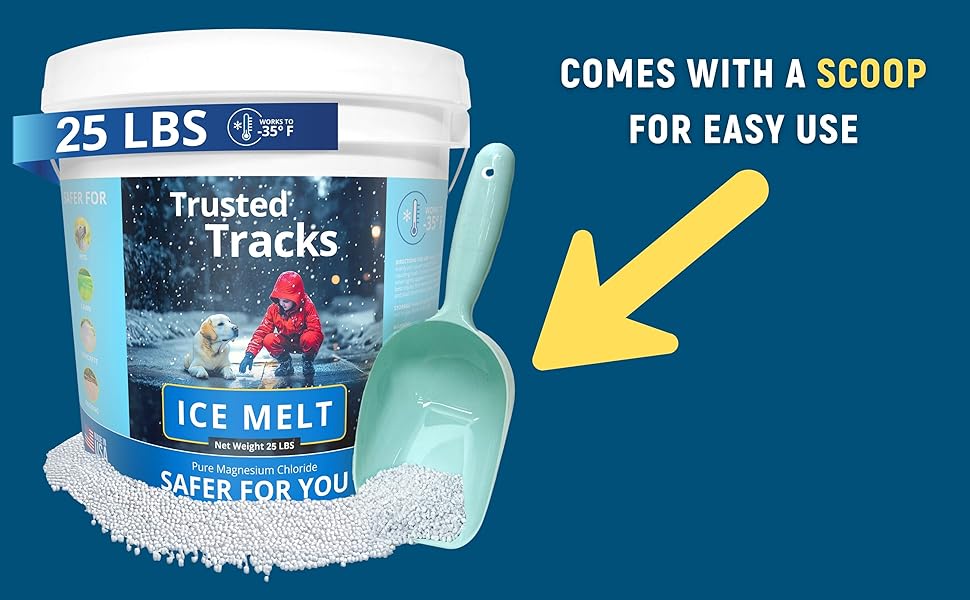
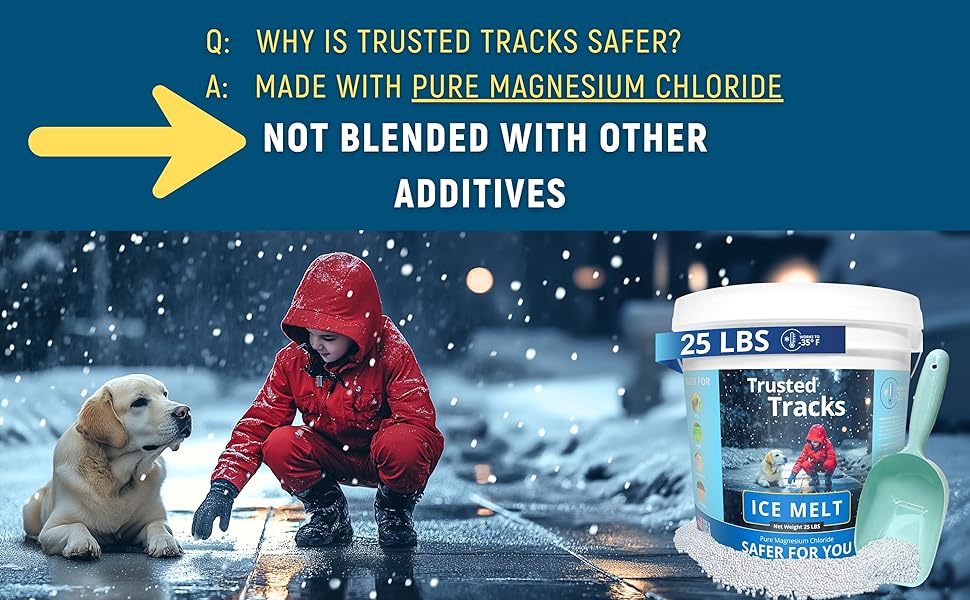
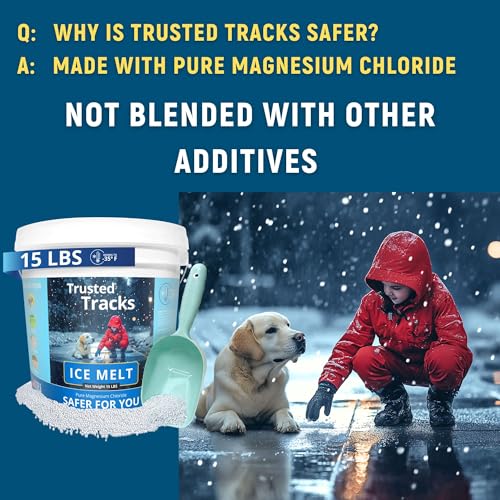
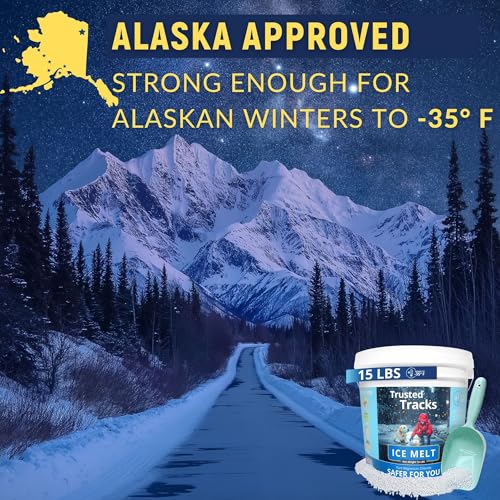
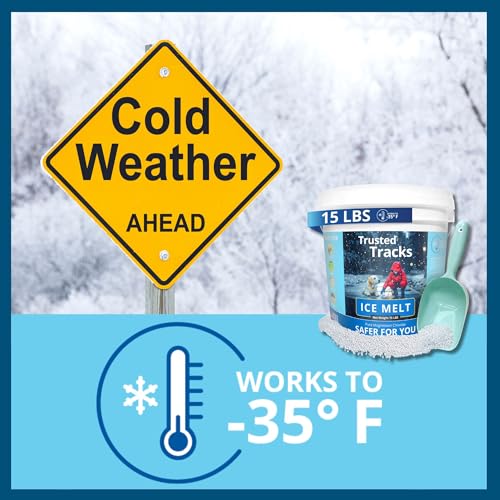
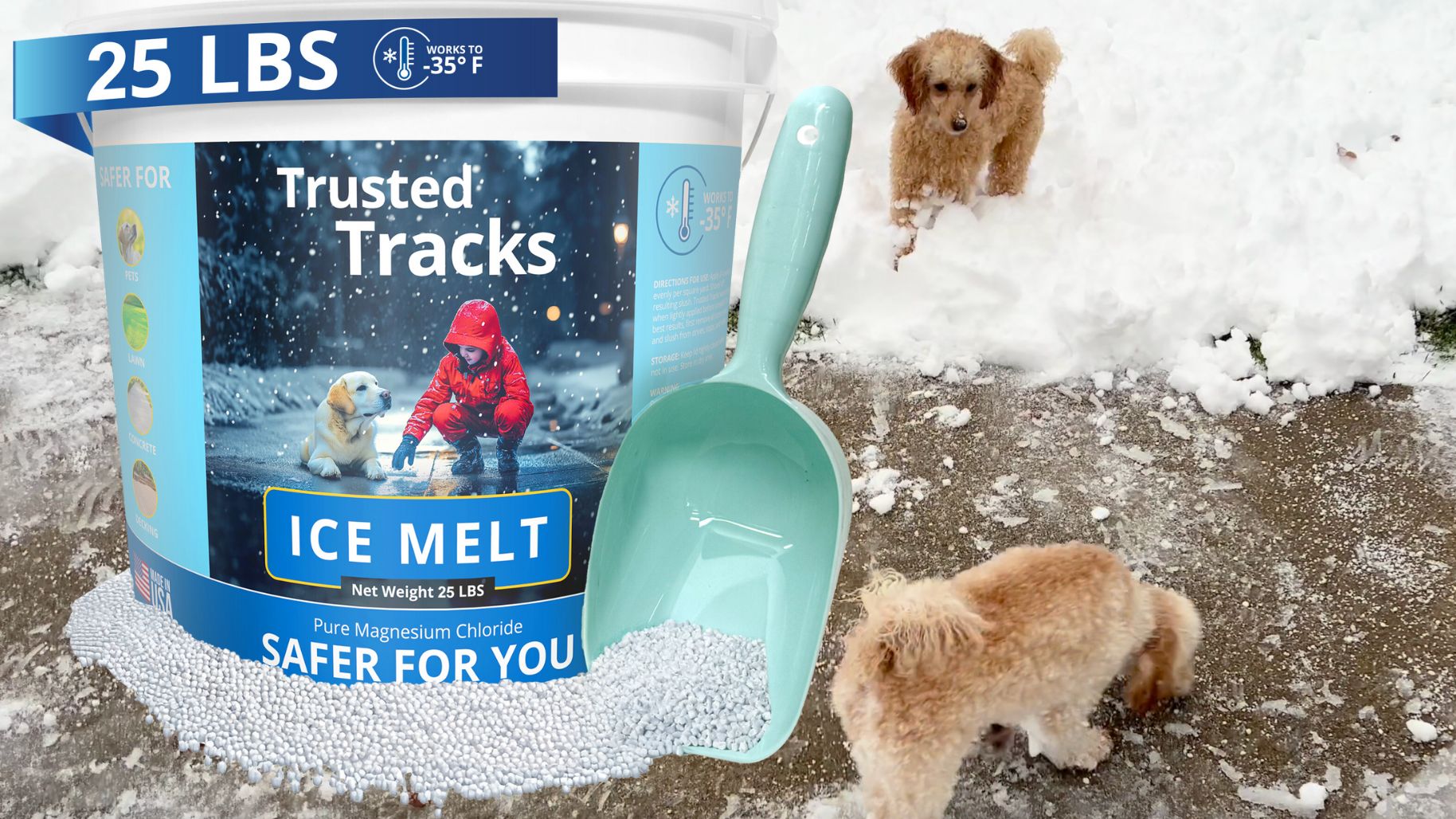
Example of a straight magnesium chloride melt. Its listing calls it safe for concrete, but the CMHA guidance above says otherwise, so keep it to asphalt and gravel.

Prime Ice Melt, Pet Safe Ice Melt






As an Amazon Associate we earn from qualifying purchases. Product prices and availability are accurate as of the date/time indicated.
4. CMA, urea, ammonium salts
- CMA is safer for plants than the chlorides (MPCA), but CMHA advises against it on concrete.
- PACA groups urea and CMA with the products linked to much higher deterioration.
- PACA says never to use ammonium nitrate or ammonium sulfate: “too aggressive and will easily destroy a concrete surface.”
Best for: CMA: beds beside a hard-surface path that is not concrete.
Avoid if: Anything poured concrete.
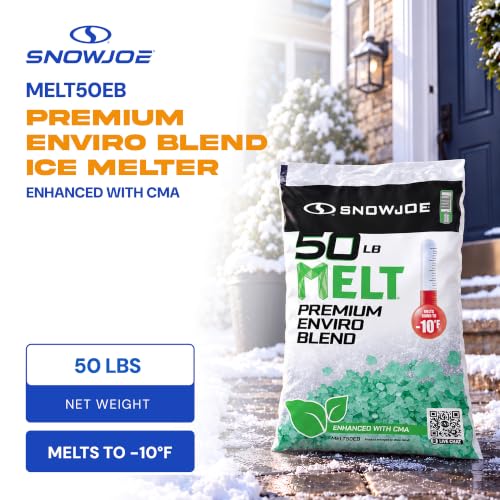
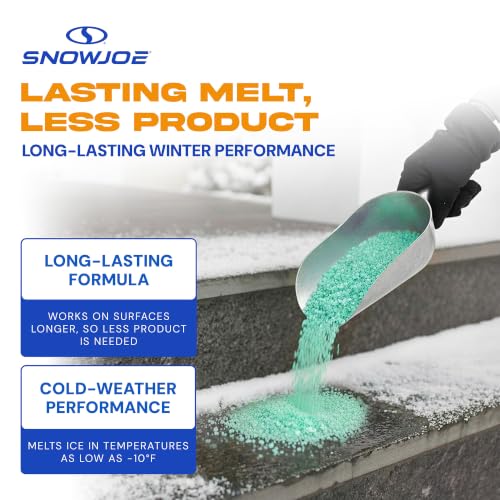
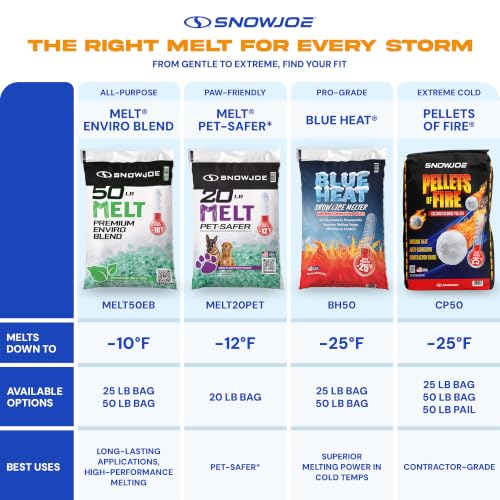
Example of a blend sold as CMA-enhanced, not straight CMA: a 2015 Snow Joe safety data sheet for its Enviro-Blend melter lists sodium chloride at 15 to 40 percent. Its listing says the CMA makes it gentler on concrete; CMHA still advises against CMA there, so read the bag before using it on a slab.

Prime Snow Joe Premium Enviro Blend Ice Melt & Deicer




As an Amazon Associate we earn from qualifying purchases. Product prices and availability are accurate as of the date/time indicated.
Pets, Plants, and the Label
The ASPCA says a couple of licks of treated ground will not usually cause serious problems, but a bag left within reach can lead to vomiting, diarrhea, and dehydration. It advises wiping paws with a damp cloth after walks and keeping packaging out of reach. If a pet eats a lot, call a vet or the ASPCA Animal Poison Control Center at (888) 426-4435.
No ice melt is harmless to pets or plants. MPCA says deicing salt spray and runoff can damage or kill plants. For the label, EPA Safer Choice set ice melt criteria that required at least 30% less sodium and chloride use plus steel-corrosion and performance limits, but those criteria do not address concrete, and EPA says it will no longer certify ice melt products because use, especially overuse, “can be problematic for the environment and for pets.” Read the ingredient list, not the front of the bag.
Cost of Ownership
The real cost is repair, not the bag. Surface scaling (flaking) is less dependent on the deicer type than on the slab itself, per MPCA, and CMHA notes over-finished or re-tempered concrete can scale. Three habits cut the cost: shovel first, spread the label rate and no more, and seal the slab. PACA says silane or siloxane penetrating sealers give the highest resistance to deicer damage. A good shovel or an electric snow blower removes the snow that would otherwise need more melt.
How to Choose
- How old is the slab? Under 12 months: no deicer (PACA).
- What is the forecast low? Pick a type whose lowest practical temperature is below it. At 5°F, rock salt (15°F) will barely work; calcium chloride (-20°F) will.
- Do pets or kids use the walk? Wipe paws, store the bag high, and use the least amount that works.
- Is a lawn or bed within a few feet? Chlorides harm plants (MPCA); use less and sweep up the excess.
Sample quantity, using a hypothetical label rate of 4 oz per square yard (read your bag for the real rate). A 4 ft x 20 ft walk is 4 x 20 = 80 sq ft; 80 / 9 = about 8.9 sq yd; 8.9 x 4 oz = about 36 oz, or roughly 2.2 lb per application.
FAQ
Is a “pet safe” ice melt safe for concrete?
Not automatically. The ASPCA says pet-friendly melts typically contain urea or magnesium chloride, and CMHA does not recommend magnesium chloride on concrete while PACA links urea to higher deterioration. Check the ingredient list against your slab.
Can I use ice melt on new concrete?
PACA says to avoid deicers during the first year and to let concrete reach sufficient strength (it cites at least 4,000 psi as a research value). Use shoveling and sand instead.
Does sealing the concrete help?
PACA says silane or siloxane penetrating sealers provide the highest resistance to deicer damage and freeze-thaw effects. Ask the sealer maker about reapplication, and see our winterizing checklist for other pre-freeze jobs.
Changelog: November 2026: first published.









