


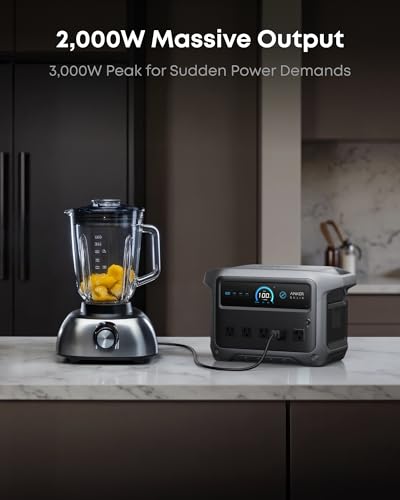
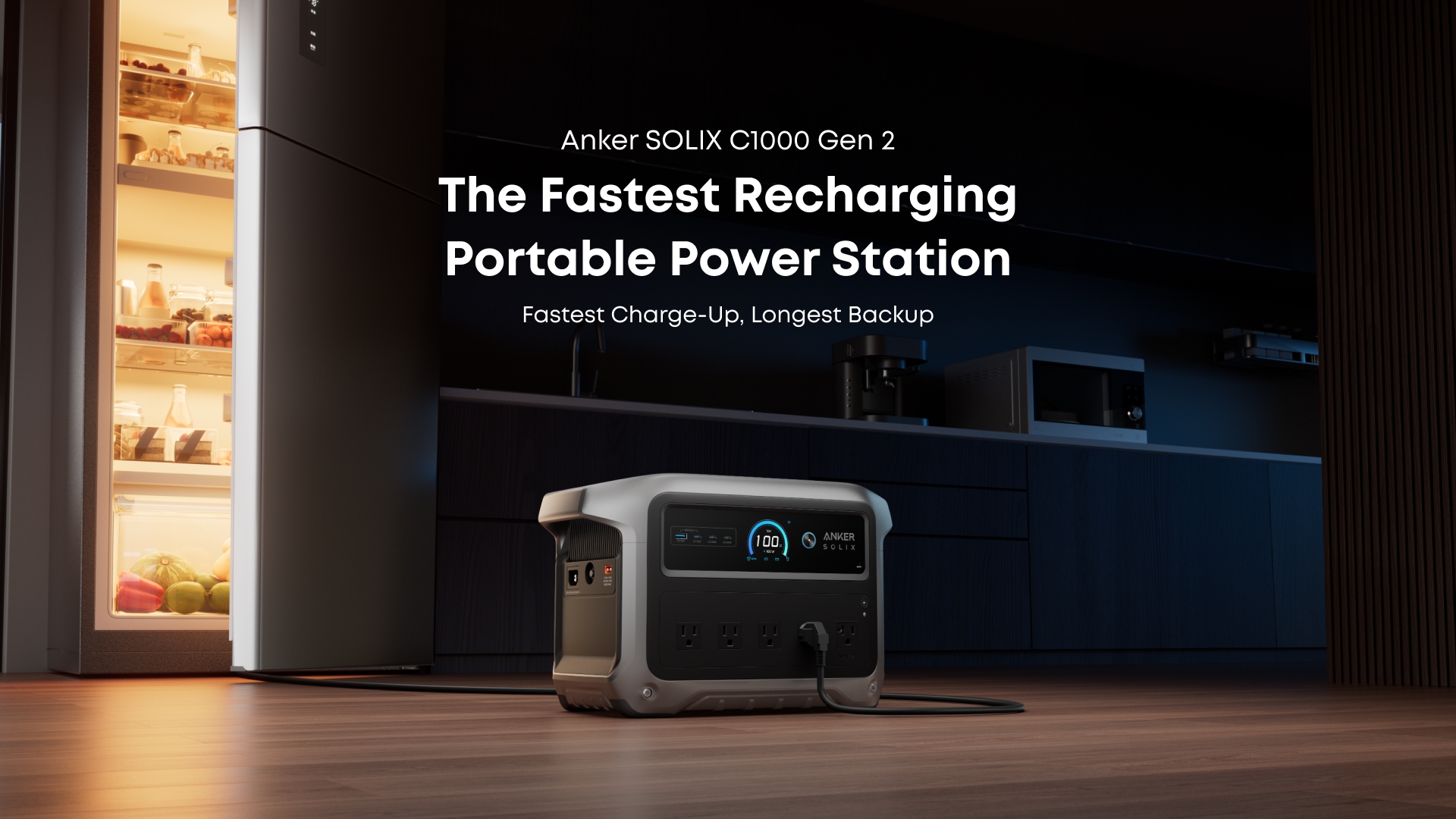
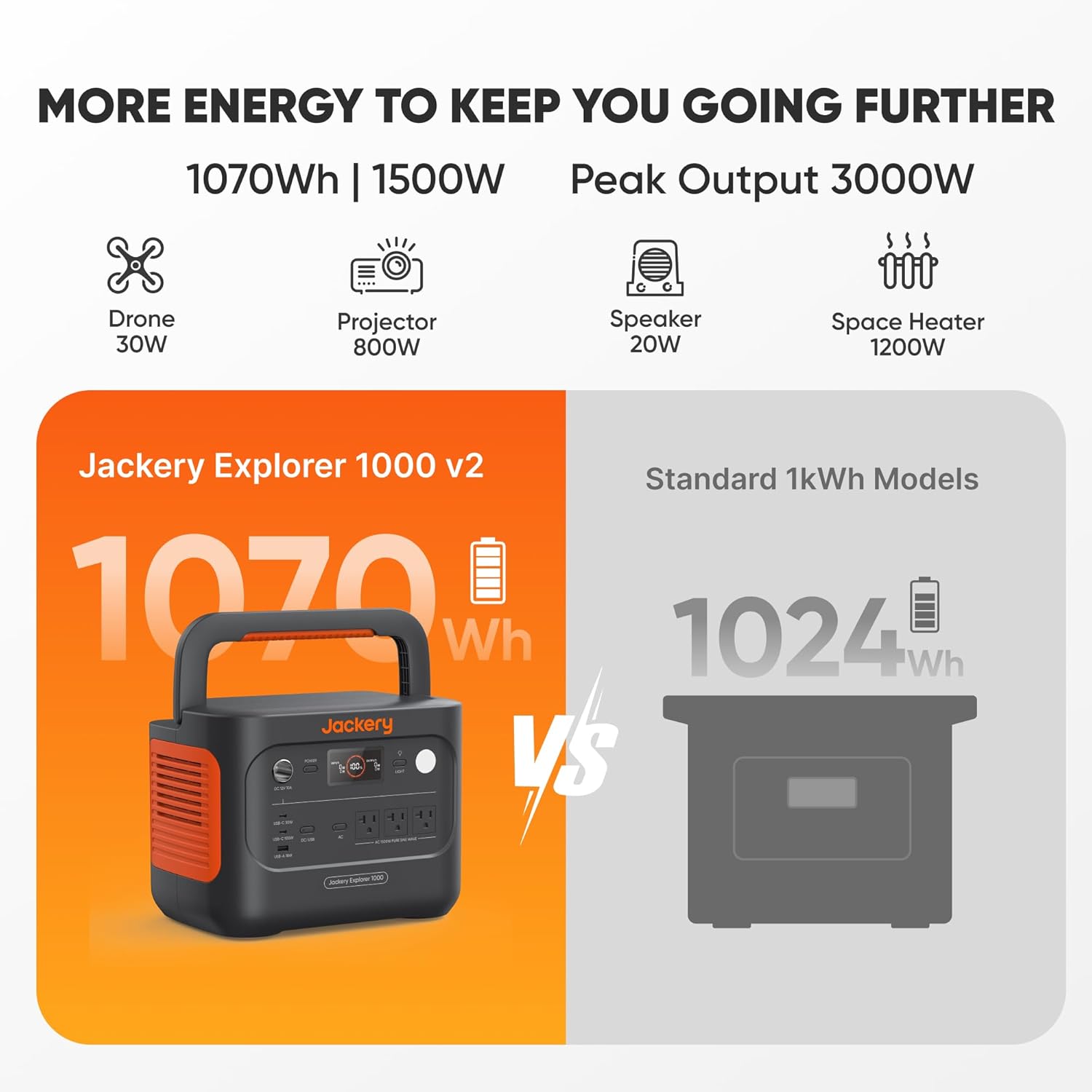
The Anker SOLIX C1000 Gen 2 is the stronger pick for most homes because it pushes 2,000 W of continuous output to the Jackery Explorer 1000 v2’s 1,500 W and accepts 600 W of solar to Jackery’s 400 W; the Jackery wins on weight, at 23.8 lb against 24.9 lb, on a slightly larger battery, 1,070 Wh against 1,024 Wh, and on heat tolerance and box size.
A note on names: Anker’s current listing is the C1000 Gen 2, the successor to the original SOLIX C1000. Every Anker figure below is for Gen 2, so check the model name on the box or listing before you compare.

Anker SOLIX C1000 Gen 2 Portable Power Station






As an Amazon Associate we earn from qualifying purchases. Product prices and availability are accurate as of the date/time indicated.

Jackery Explorer 1000 v2 Portable Power




As an Amazon Associate we earn from qualifying purchases. Product prices and availability are accurate as of the date/time indicated.
Specs Side by Side
| Spec | Anker SOLIX C1000 Gen 2 | Jackery Explorer 1000 v2 |
|---|---|---|
| Capacity | 1,024 Wh, LFP | 1,070 Wh, LFP |
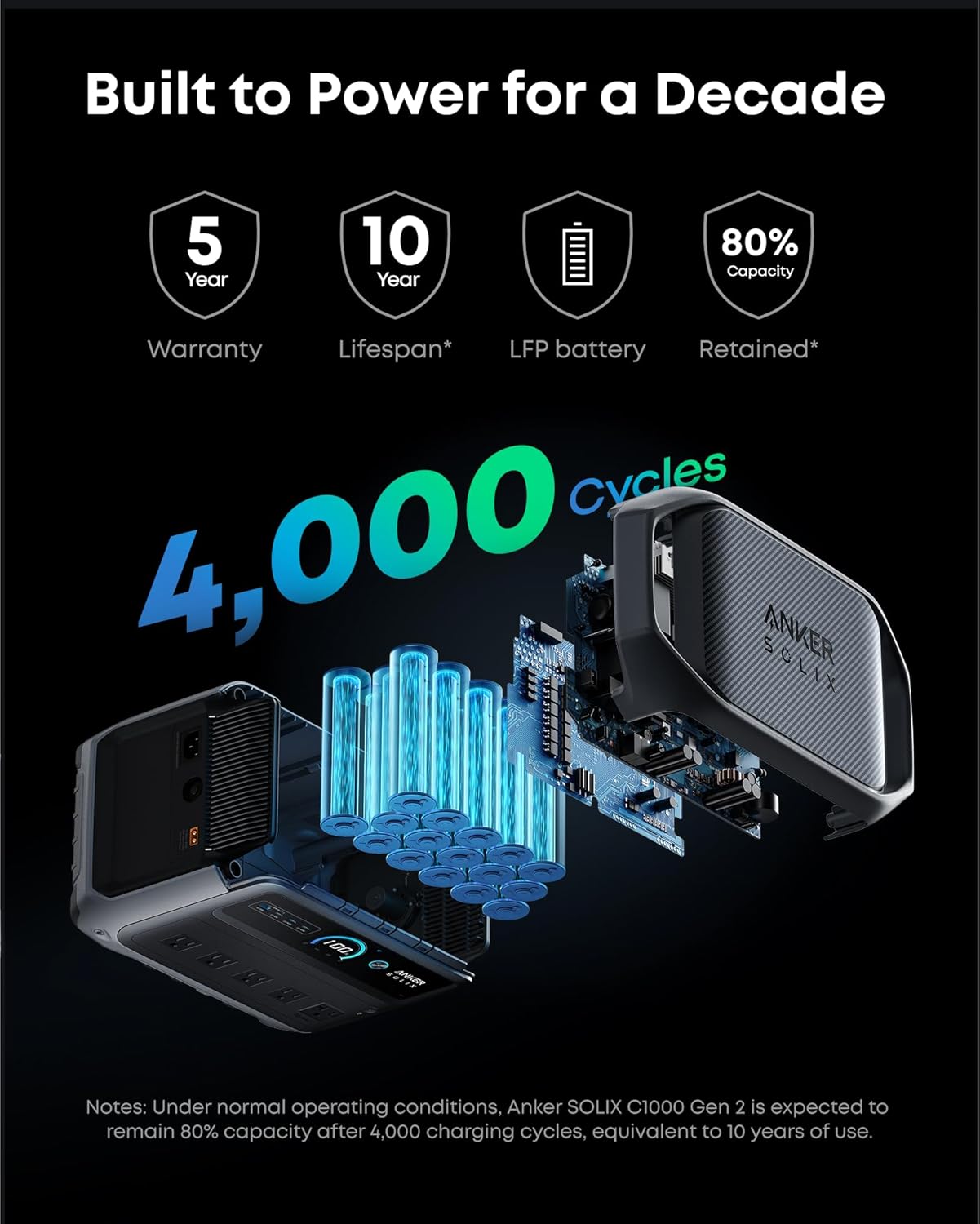
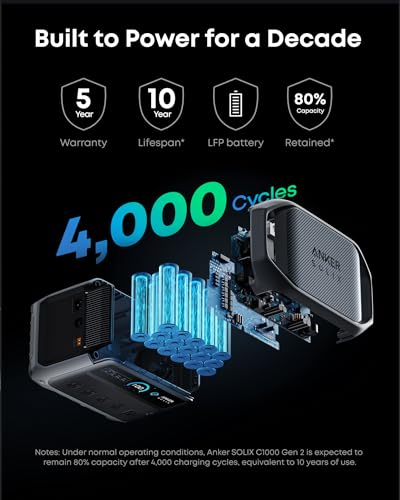
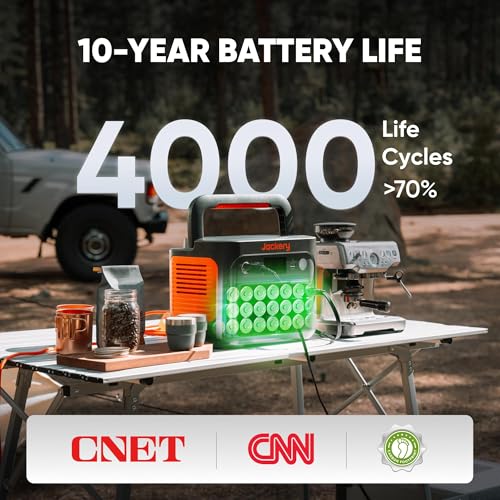
| Cycle rating | 4,000 cycles to 80% | 4,000 cycles to 70% |
| AC output, continuous / peak | 2,000 W / 3,000 W | 1,500 W / 3,000 W |
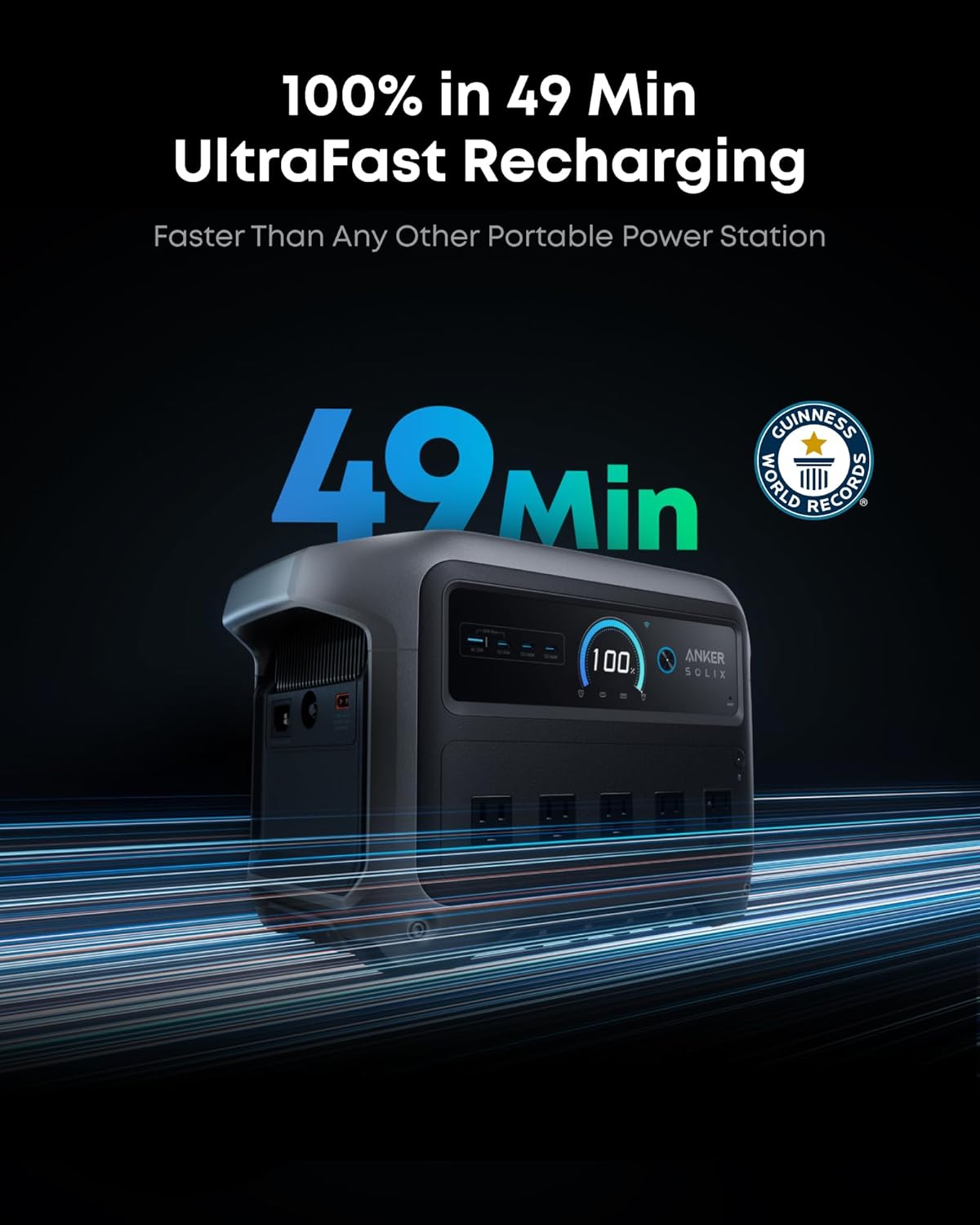
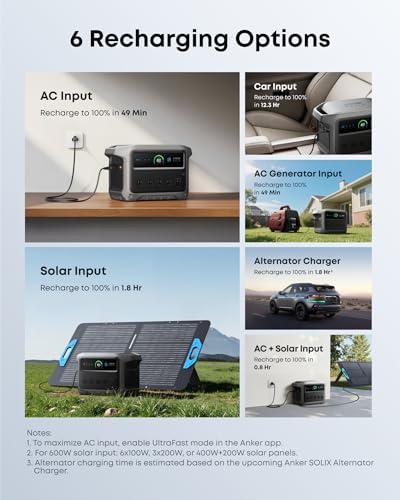
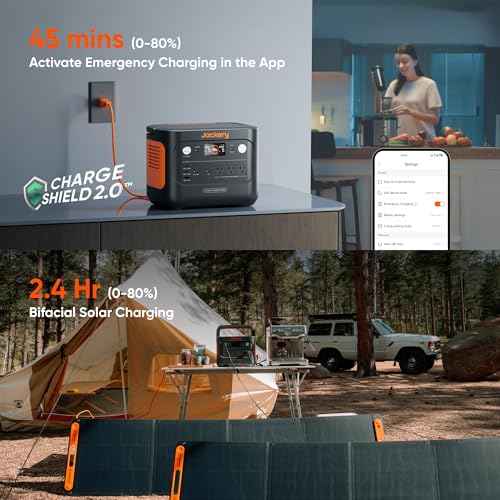
| AC charging | 1,200 W standard; 1,600 W UltraFast, full in 49 min | 1.58 h default, 1 h with emergency mode in the app |
| Solar input | 600 W, 60 V max (11 to 28 V at 8.2 A, 29 to 60 V at 14.5 A) | 400 W, 12 to 60 V over 2 DC8mm inputs |
| UPS switchover | 10 ms | 20 ms or less (Jackery AU page) |
| Expansion | None | None listed |
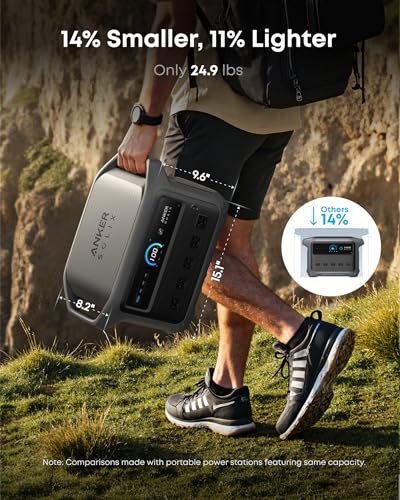
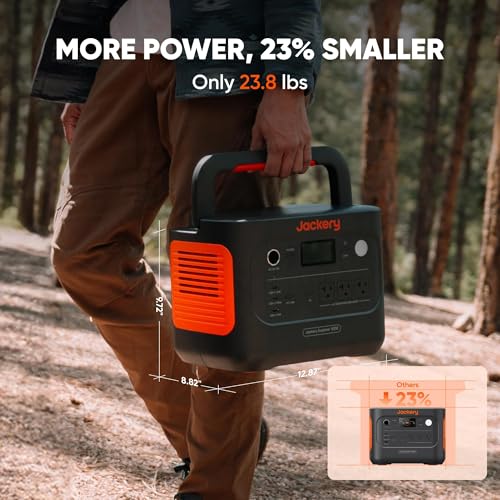
| Weight | 24.9 lb | 23.8 lb |
| Size | 15.12 x 8.19 x 9.61 in | 12.87 x 8.82 x 9.72 in |
| Charging temperature | 32 to 104°F | 32 to 113°F |
| Discharging temperature | -4 to 104°F | 14 to 113°F |
| Warranty | 5 years | 3 years plus 2 when bought on jackery.com |
Neither one expands, so the battery you buy is the battery you keep. At a 0.85 inverter-efficiency planning figure, the Anker delivers about 1,024 x 0.85 = 870 Wh at the outlet and the Jackery about 1,070 x 0.85 = 910 Wh.
The Four Differences That Matter
1. Continuous output: 2,000 W vs 1,500 W
Continuous rating decides whether a heating appliance keeps running. A 1,500 W space heater or a microwave that draws 1,500 W, such as Panasonic’s 1,100 W NN-SU656WAWH by Panasonic’s own figure, uses 100 percent of the Jackery’s rating and 1,500 / 2,000 = 75 percent of the Anker’s. That leaves the Anker 500 W for a fridge and a router at the same time.
Battery size still limits the job. A 1,500 W load empties either unit in about 870 / 1,500 = 0.6 hours on the Anker and 910 / 1,500 = 0.6 hours on the Jackery, roughly 35 minutes. Both list the same 3,000 W peak for motor starts. Details are in running watts vs starting watts.
2. Solar: 600 W vs 400 W, and the voltage catch
Hours of full sun to refill = rated Wh / (maximum solar watts x 0.75), with 0.75 as a planning derate for heat, angle, and wiring. The Anker needs 1,024 / (600 x 0.75) = about 2.3 hours; the Jackery needs 1,070 / (400 x 0.75) = about 3.6 hours.
The Anker reaches 600 W only with a higher-voltage array. Below 29 V, its input caps at 8.2 A, so one panel at 20.16 V gives at most 8.2 x 20.16 = about 165 W. Wire two such panels in series and the voltage doubles into the 29 to 60 V band, where the cap is 14.5 A; stay under 60 V open-circuit in cold weather. The Jackery accepts 10.5 A per input from 16 to 60 V, so at the same 20 V the port allows up to 10.5 x 20.16 = about 210 W, above a 200 W panel’s rating. Panel choices are in how many watts of solar to charge a power station.
3. Temperature: cold garage vs hot garage
Both stop charging below 32°F, but they differ at the ends. The Anker can discharge down to -4°F, against 14°F for the Jackery, which matters for a station kept in an unheated garage in a northern winter. The Jackery charges and discharges up to 113°F, against 104°F for the Anker, which matters in a southern garage in August.
Anker’s 49 minute UltraFast charge has its own condition: it turns on only in the app and only with the battery above 68°F, so a cold unit charges at the standard 1,200 W rate. More on winter storage in using a power station in cold weather.
4. Battery wear and UPS speed
Both list 4,000 cycles, to different floors. After 4,000 cycles the Anker would hold 1,024 x 0.80 = about 820 Wh and the Jackery 1,070 x 0.70 = about 750 Wh, so the smaller battery ends up larger by about 70 Wh. Both carry 5 years of coverage, with Jackery’s last 2 years tied to buying on jackery.com.
For UPS use, Anker lists a 10 ms switchover and Jackery 20 ms or less. A modem or laptop rides through either; a desktop PC gets more margin from the shorter gap. Jackery’s support page says its stations are not recommended for medical devices or life-support equipment, and Anker’s F1500 user manual carries similar wording, so check the manual for your model. See what UPS mode on a power station means.
Which One to Choose
Choose the Anker SOLIX C1000 Gen 2 if
- You run 1,500 W appliances and want 500 W left for other loads.
- You plan a 400 W to 600 W solar array wired to land between 29 and 60 V.
- The station lives in a garage that drops into the single digits in winter.
Best for: a fridge, router, and an occasional microwave or kettle in an overnight outage, with fast recharging between storms.
Avoid if: you only own a single 20 V panel, since the low-voltage band caps it at about 165 W.
Choose the Jackery Explorer 1000 v2 if
- Your combined load stays under about 1,500 x 0.8 = 1,200 W, keeping 20 percent of the rating as headroom.
- The station sits in a hot garage or a car through summer, where 113°F limits help.
- You want the more compact box: about 12.87 x 8.82 x 9.72 = 1,100 cubic inches against 15.12 x 8.19 x 9.61 = about 1,190 for the Anker.
Best for: overnight fridge and lights backup, about 910 / 68 = 13 hours for a fridge with a 600 kWh per year EnergyGuide label (600,000 Wh / 365 / 24 = about 68 W average).
Avoid if: you need a 1,500 W heater or microwave with anything else running at the same time.
FAQ
Is the Anker SOLIX C1000 the same as the C1000 Gen 2?
No. Gen 2 is the newer model that Anker sells now, with 2,000 W of output and a 49 minute UltraFast charge. If a listing does not say Gen 2, confirm the specs before you rely on the numbers here.
Can either be expanded with an extra battery?
No. Anker lists the C1000 Gen 2 as not expandable, and Jackery lists no expansion pack for the Explorer 1000 v2. If you want to add capacity later, the EcoFlow DELTA 3 Plus vs Jackery Explorer 1000 v2 comparison covers a 1 kWh unit that expands.
Which runs a fridge longer?
The Jackery, by about 40 Wh at the outlet. For a 68 W average fridge that is 910 / 68 = about 13.4 hours against 870 / 68 = about 12.8 hours on the Anker. For longer outages, see the best portable power stations for home backup.
Changelog: November 2026: first published.









