


Keep a jump starter for the morning the engine will not turn over and no outlet is nearby; use a battery charger to bring a run-down battery back at home. One delivers a short, hard burst of current. The other refills the battery slowly over hours, so neither replaces the other.

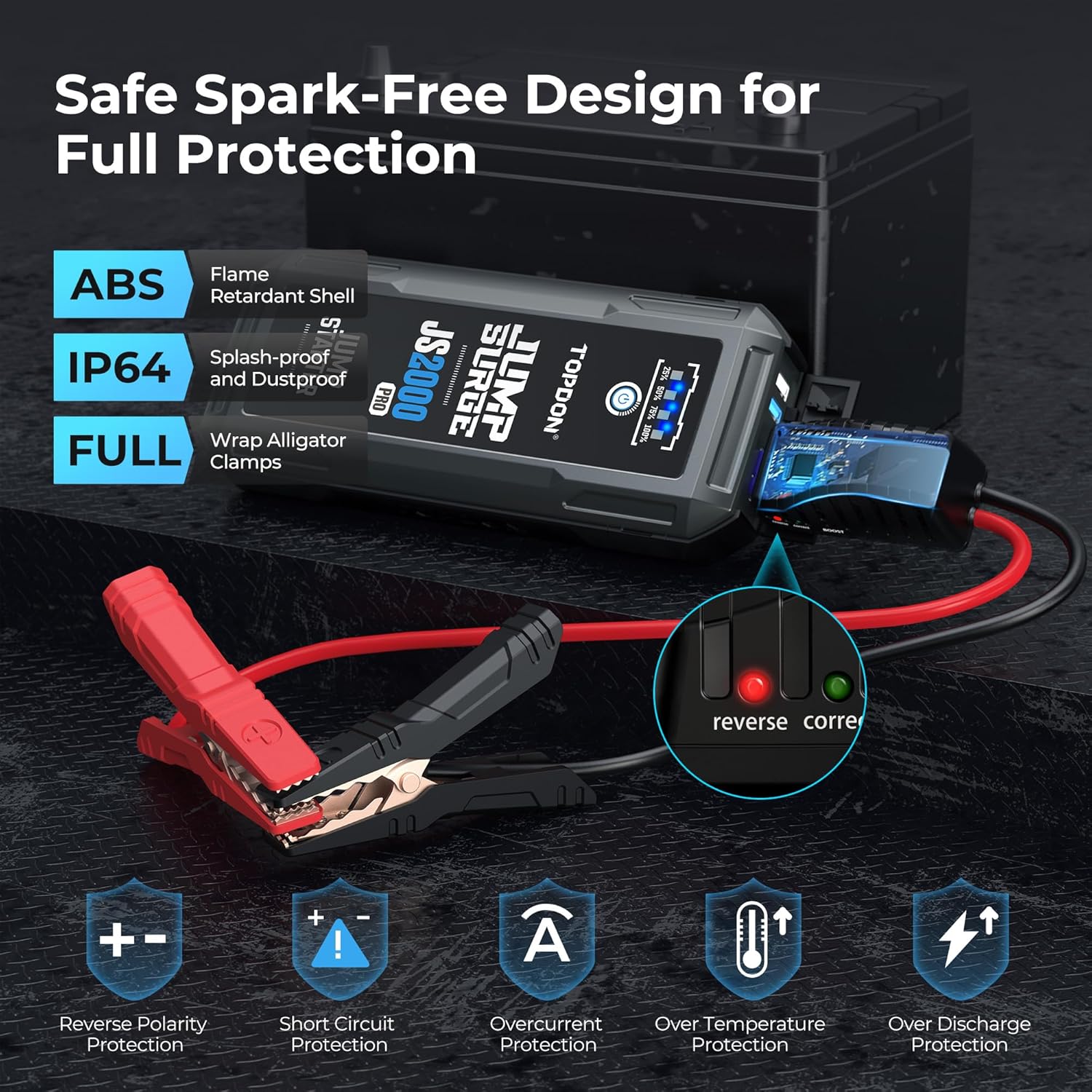
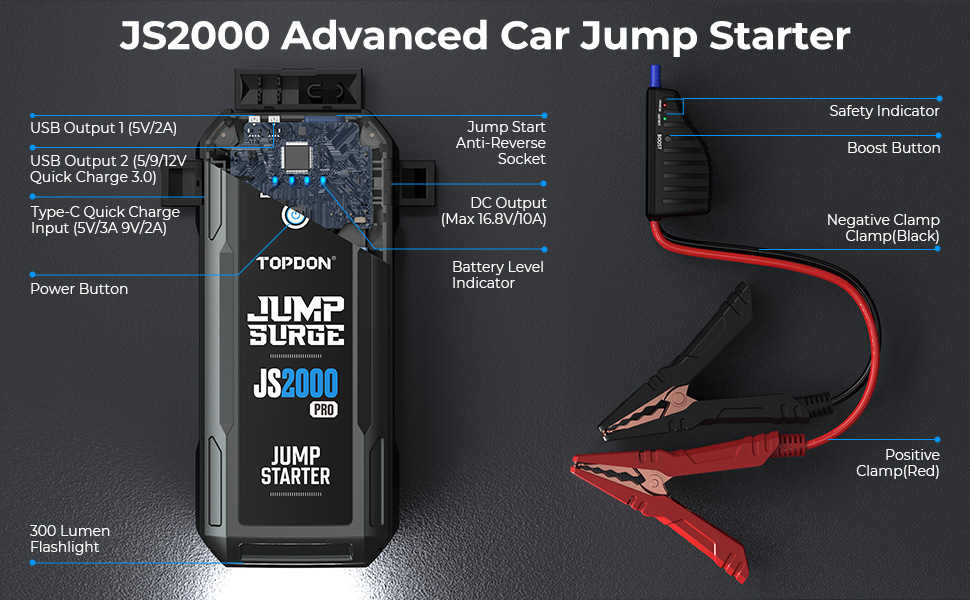
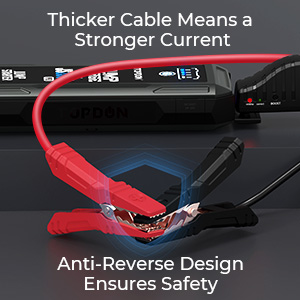
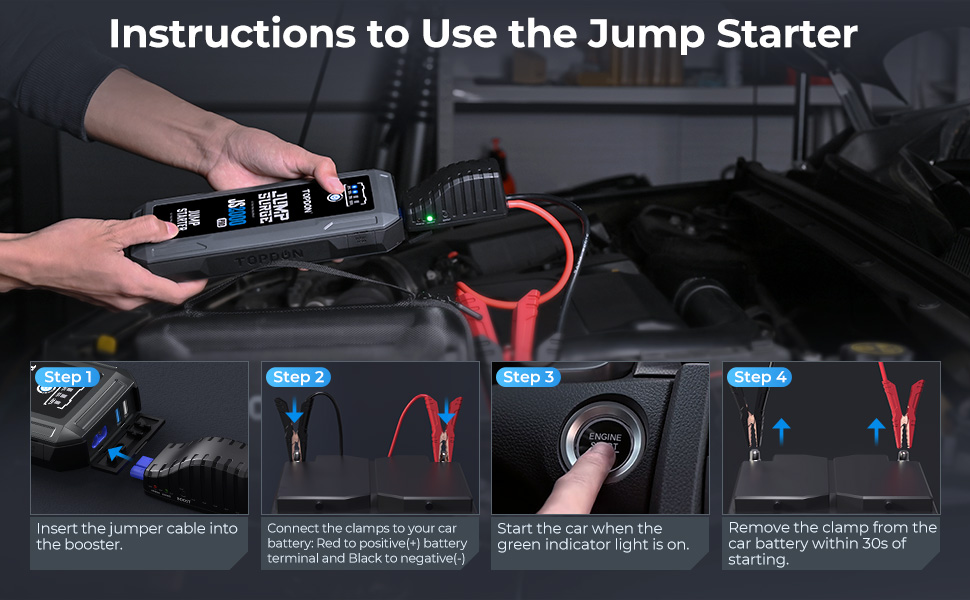
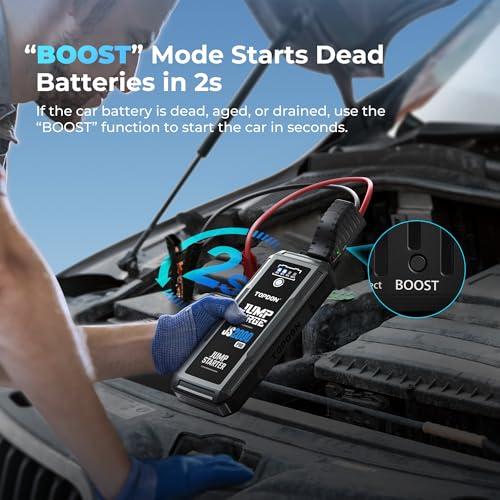
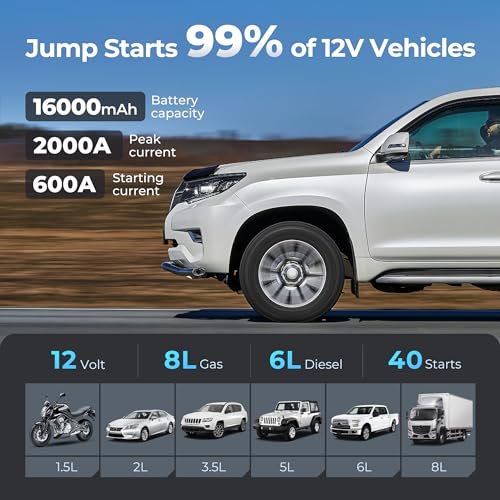
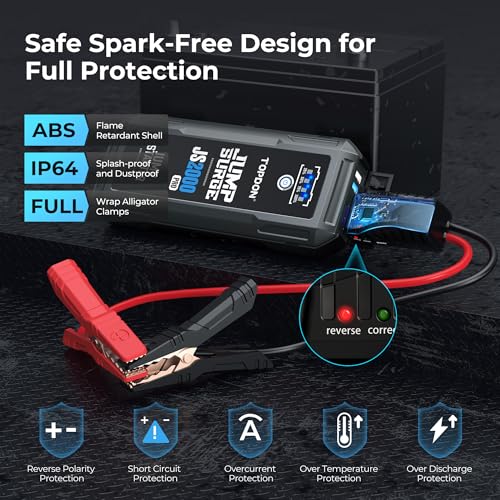
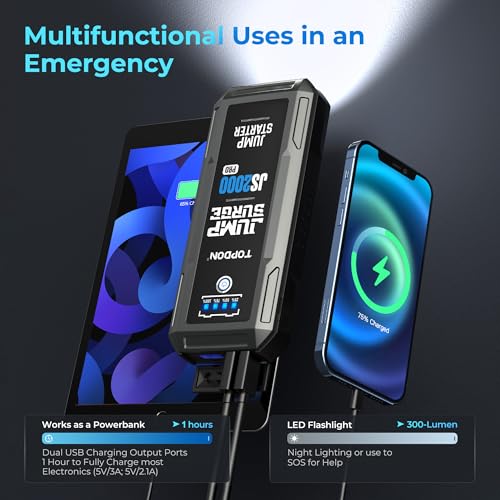
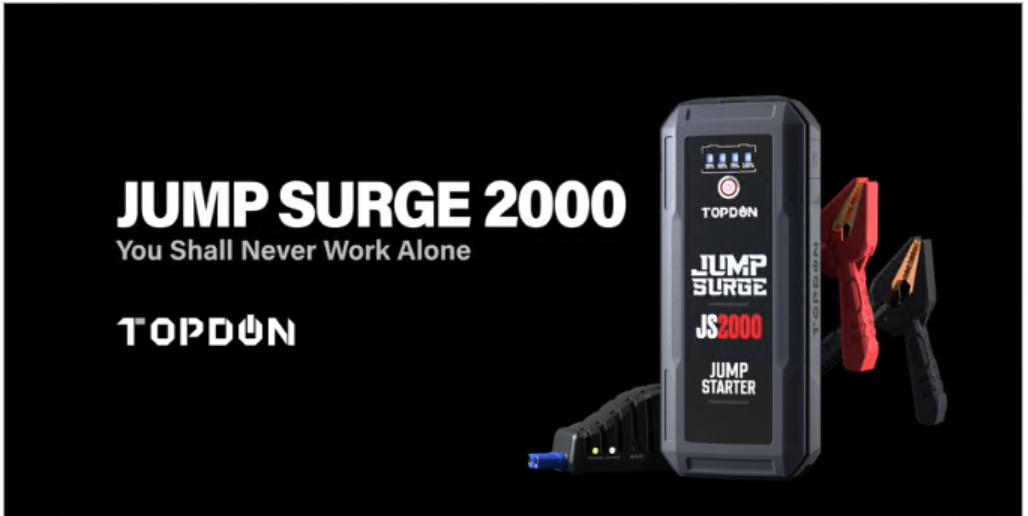
TOPDON JS2000Pro Jump Starter, 2000A, Boost Mode












As an Amazon Associate we earn from qualifying purchases. Product prices and availability are accurate as of the date/time indicated.
Side by Side
| Jump starter | Battery charger | |
|---|---|---|
| What it does | Starts the engine with a brief high-current burst | Refills the battery in stages |
| Power source | Its own lithium pack | Wall outlet |
| Time to act | Seconds, once the clamps are on | Hours |
| Where you use it | Parking lot, roadside, driveway | Garage or shed with an outlet |
| Upkeep | Recharge the pack every few months | Nothing, other than choosing the right battery type |
| Fixes a drained battery | No, it only gets you started | Yes, if the battery can still hold a charge |
Where They Differ
How much energy each one holds
The TOPDON listing gives a 16,000 mAh pack. Wh = mAh x 3.7 V / 1000, so 16,000 x 3.7 / 1000 = 59.2 Wh. As an example, a 60 Ah car battery at 12 V holds 60 x 12 = 720 Wh. The pack is about 8% of that (59.2 / 720). It can start an engine because it releases current fast, not because it carries much energy, which is why it cannot refill the battery.
How long each one takes
The listing says the TOPDON restarts an engine in 3 seconds. A charger works on a different clock. Take a 60 Ah battery missing half, 30 Ah. Hours = Ah missing / (amps x 0.8), where 0.8 is our efficiency assumption. At 2 A: 30 / 1.6 = about 19 hours. At 6 A: 30 / 4.8 = about 6 hours. Battery Tender’s guide gives a simpler rule of thumb, Ah divided by amps, for a fully discharged battery. Details are in how long it takes to charge a car battery.
What each one needs from you
A jump starter sits in the trunk and loses charge on its own. The listings behind our jump starter picks give 2 to 3 months (GOOLOO) and 3 months (Hulkman) as recharge intervals, so a calendar reminder is part of owning one. The TOPDON listing gives an operating range of 14°F to 104°F, so a hot cabin in summer is a poor place to leave it. A charger or maintainer stays in the garage; Battery Tender describes smart maintainers as safe for year-round, unattended use, a claim from a maintainer maker. See maintainer vs trickle charger vs charger.
Safety on both
NOCO’s charger user guide says batteries generate explosive gases during normal operation, so charge in a well-ventilated area, not a closed-in space, and connect and disconnect in the order your charger’s guide gives. NFPA says to stop using a lithium-ion device that shows an unusual odor, excessive heat, popping sounds, swelling, or a color change.
Choose a Jump Starter If
- You park away from outlets or drive alone, and a dead battery means waiting for someone.
- You want one device that also charges a phone, which the TOPDON listing includes.
- Skip it if you will not recharge it every few months.
Choose a Battery Charger If
- A car, boat, or mower sits for weeks and the battery keeps running down.
- You have a garage outlet and can wait hours.
- Skip it if you need the engine running in the next few minutes, away from power.
Many households end up with both, because they solve different problems. For connection steps, read how to use a battery maintainer. We research and compare published specs; we do not use or review the products ourselves. See how we choose.
FAQ
Can a jump starter charge my car battery?
Not in a useful way. Its pack holds roughly 8% of a 60 Ah battery’s energy by the math above, and it is built to start an engine. A charger restores the battery.
If the car starts, is the battery fine?
Not necessarily. A battery that needed a jump may be drained or worn out. Recharge it, and if it keeps dying, have it checked at a shop.
Which is better for a car I drive daily?
A jump starter, as roadside insurance. A charger matters more for vehicles that sit unused.
Changelog: November 2026: first published.









