


Most homes are well served by the First Aid Only 298-piece Family kit: a soft zippered case, two layers of compartments, and a 9.25 by 3 by 7 inch size that fits a drawer or closet shelf. If you want a hard case, the Be Smart Get Prepared 180-piece kit has a listing that spells out every item. A kit handles minor cuts, scrapes, and burns. For anything serious, call 911.


Piece counts are a poor yardstick, because a count includes every cotton swab and alcohol wipe. What matters is whether the kit covers the basics and whether you can find them fast. This page sticks to supplies and sizing and gives no medical advice beyond general first aid. For training, take a Red Cross first aid course.
Quick Comparison
| Pick | Pieces (listing) | Case | Size | Best for |
|---|---|---|---|---|
| First Aid Only Family 298 | 298 | Soft zippered | 9.25 x 3 x 7 in | Hall closet, general use |
| Be Smart Get Prepared 180 | 180 | Hard plastic | 10 x 8 x 3 in | Readers who want a full item list |
| First Aid Only Family 260 | 260 | Hard plastic, latches | 9.75 x 7.75 x 2.88 in | Larger households |
| M2 Basics 300 | 300 | Not stated | 9 x 3.5 x 6.5 in | Only after you confirm the contents |
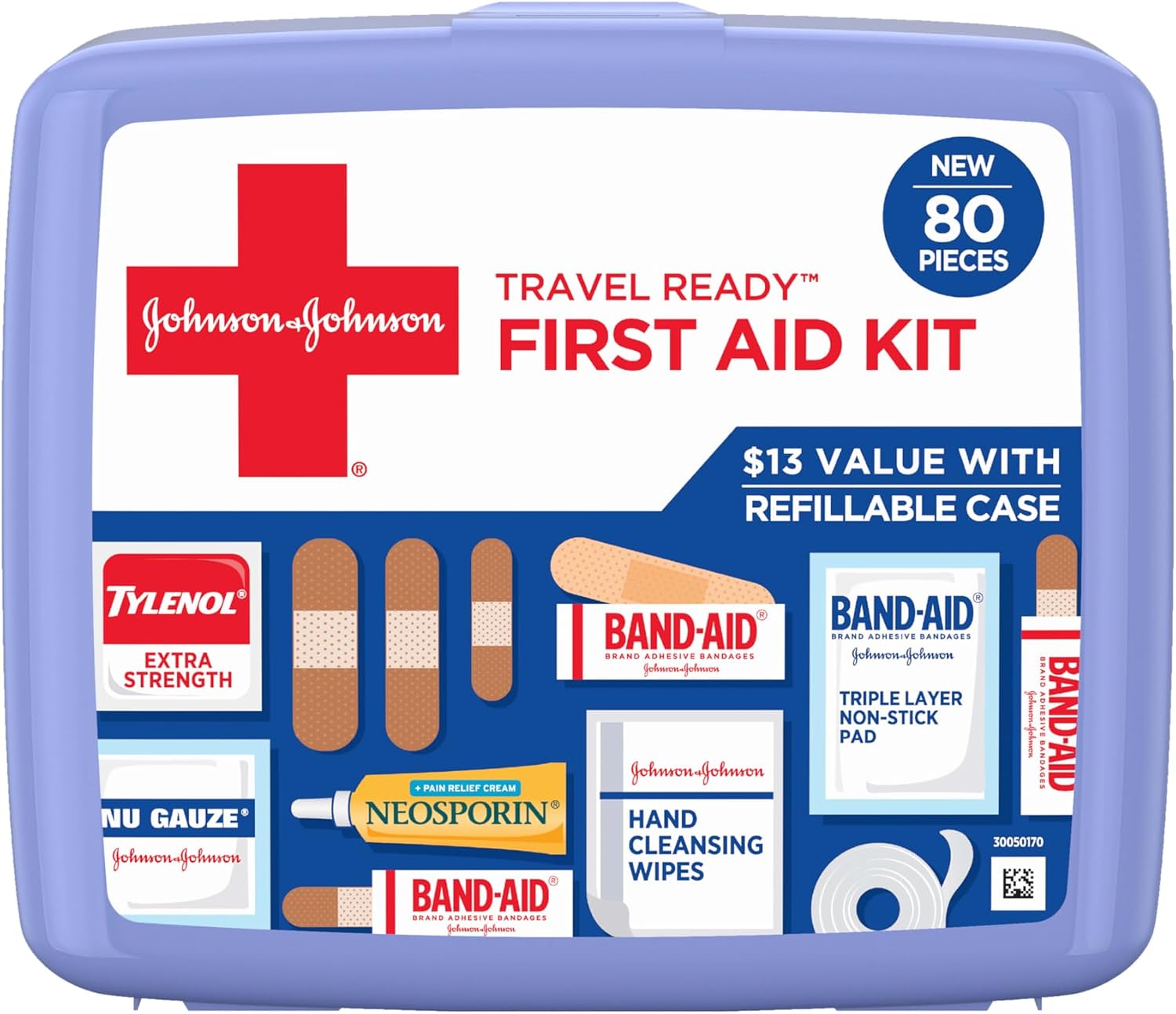
| BAND-AID Travel Ready 80 | 80 | Portable case | 6.25 x 5.5 x 1.6 in | Second kit for a car or bag |
How We Chose
We compared contents lists and dimensions in the listings against the Red Cross family kit list that Ready.gov publishes: a first aid guide, absorbent compress dressings, assorted adhesive bandages, adhesive cloth tape, antibiotic ointment, antiseptic wipes, aspirin, an emergency blanket, a breathing barrier, an instant cold compress, nonlatex gloves, hydrocortisone ointment, roller bandages, sterile gauze pads, a non-mercury thermometer, triangular bandages, and tweezers. None of the five listings shows all of those, so treat any kit as a starting point. We also weighed the Yard & Grid Score from verified buyer ratings. We research and compare; we do not run product trials. See how we choose.
What ANSI/ISEA Z308.1 Means
ANSI/ISEA Z308.1 is a workplace standard. It sets minimum supplies for Class A kits (general workplaces) and Class B kits (higher risk, with a splint and tourniquet). It does not certify a household kit, so read a home kit’s “meets ANSI” or “OSHA compliant” claim as the seller’s wording. The First Aid Only 260 listing, for example, calls itself OSHA-compliant, which tells you about workplace use, not about fit for your family.
1. First Aid Only Family 298
- The listing title says 298 pieces and its description says 299, so treat the count as approximate.
- Soft zippered case, two layers, clear pockets, and a size small enough for a drawer.
- Adhesive bandages, antibiotic ointment, antiseptic towelettes, and burn cream per the listing.
Best for: a first kit in a family home. Avoid if: you want a rigid case that survives being dropped in a garage.
2. Be Smart Get Prepared 180
- Full item list in the listing, including 81 sheer bandages in four sizes, 10 butterfly closures, 10 gauze pads, a trauma pad, 2 nitrile gloves (1 pair), tweezers, and an instant cold compress.
- It also includes tablets such as aspirin and non-aspirin; ask a pharmacist or doctor about what suits your household.
- Impact-resistant plastic case, 10 by 8 by 3 inches.
Best for: people who like to check contents against a list. Avoid if: you want a thermometer or breathing barrier, which the list does not show.
3. First Aid Only Family 260
- The listing says it holds adhesive bandages, burn cream, gauze rolls and pads, gloves, and tweezers, and is meant for up to 50 people, a workplace-style claim.
- Hard plastic case with slide latches, a handle, and a clear cover with compartments.
- Roomier than a soft pouch, at 9.75 by 7.75 by 2.88 inches.
Best for: a shelf or cabinet in a larger household. Avoid if: storage space is tight.
4. M2 Basics 300
- The listing shows only the title (300 pieces, 40 unique items) and dimensions of 9 by 3.5 by 6.5 inches at 1.5 pounds.
- The listing does not give a contents list, so confirm what is inside before relying on it.
Best for: a buyer who will confirm the contents with the seller first. Avoid if: you want to compare items before buying.
5. BAND-AID Travel Ready 80
- 80 pieces in a kit that weighs 6.88 ounces, with cleansing wipes, gauze pads, antibiotic cream, pain relief caplets, and assorted adhesive bandages per the listing.
- Described as refillable.
Best for: a car, bag, or desk. Avoid if: it would be your only kit for a family.
Cost of Ownership
The kit is the cheap part. Expect to restock bandages, gloves, and ointment as you use them, and to replace expired items. Ready.gov says to check expiration dates and re-think your needs every year, and to customize the kit to fit your family’s needs. Keep prescriptions apart; see how to store medications for an emergency.
How to Choose
- How many places need one? The Red Cross recommends one kit in the home and one in the vehicle.
- Does the kit hold the Red Cross basics above? Add what is missing.
- Where will it live? A hall closet or kitchen shelf, not a hot garage.
Example gap check: the Red Cross list on Ready.gov has 19 line items. If a kit covers 12 of them, you add the remaining 7 (19 minus 12), which is a short shopping list instead of a second kit. The wider plan is in the home emergency kit checklist and emergency kits for home.
FAQ
Does a kit replace calling 911?
No. For severe bleeding, trouble breathing, burns that cover a large area, or any life-threatening problem, call 911 first and follow the dispatcher.
Is a bigger piece count better?
Not by itself. Count categories, not pieces: dressings, tape, wipes, gloves, tweezers, and a guide.
Where should I keep it?
Ready.gov lists a first aid kit as a core item in a basic emergency kit, so store it with your other supplies. See what is a 72-hour kit.
Changelog: November 2026: first published.









