For a kitchen, buy a multipurpose extinguisher rated at least 1-A:10-B:C, such as the Kidde Basic 110, and mount it by the exit, not beside the stove. A cooking-oil fire is a Class K hazard in commercial kitchens, but USFA says a multipurpose home unit can be used on most types of home fires, and a pan lid is still the first tool.


This page is about the kitchen. For the whole house, see best fire extinguishers for home; for rating letters, fire extinguisher types explained.
Quick Comparison
| Pick | Rating | Agent | Weight | Rechargeable | Best for |
|---|---|---|---|---|---|
| Kidde Basic 110 | 1-A:10-B:C | Dry chemical | 3.9 lb (Kidde) | No, single-use | Small kitchens, easy handling |
| First Alert HOME2PRO | 2-A:10-B:C | Mono ammonium phosphate | 9.6 lb (listing) | Yes, by a certified pro | Larger kitchens, open plans |
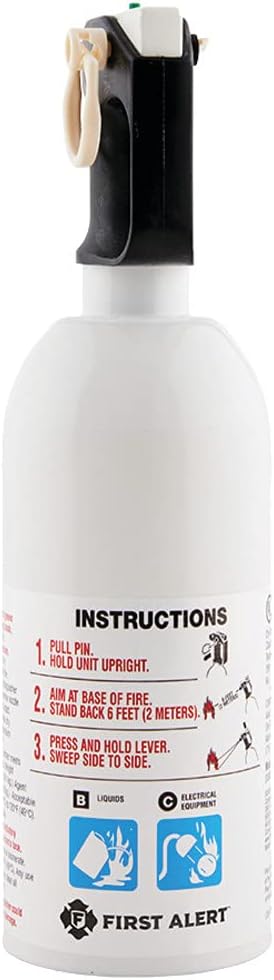
| First Alert KITCHEN5 | 5-B:C | Sodium bicarbonate | 2.7 lb (listing) | Not stated | Cabinet storage, grease and electrical |
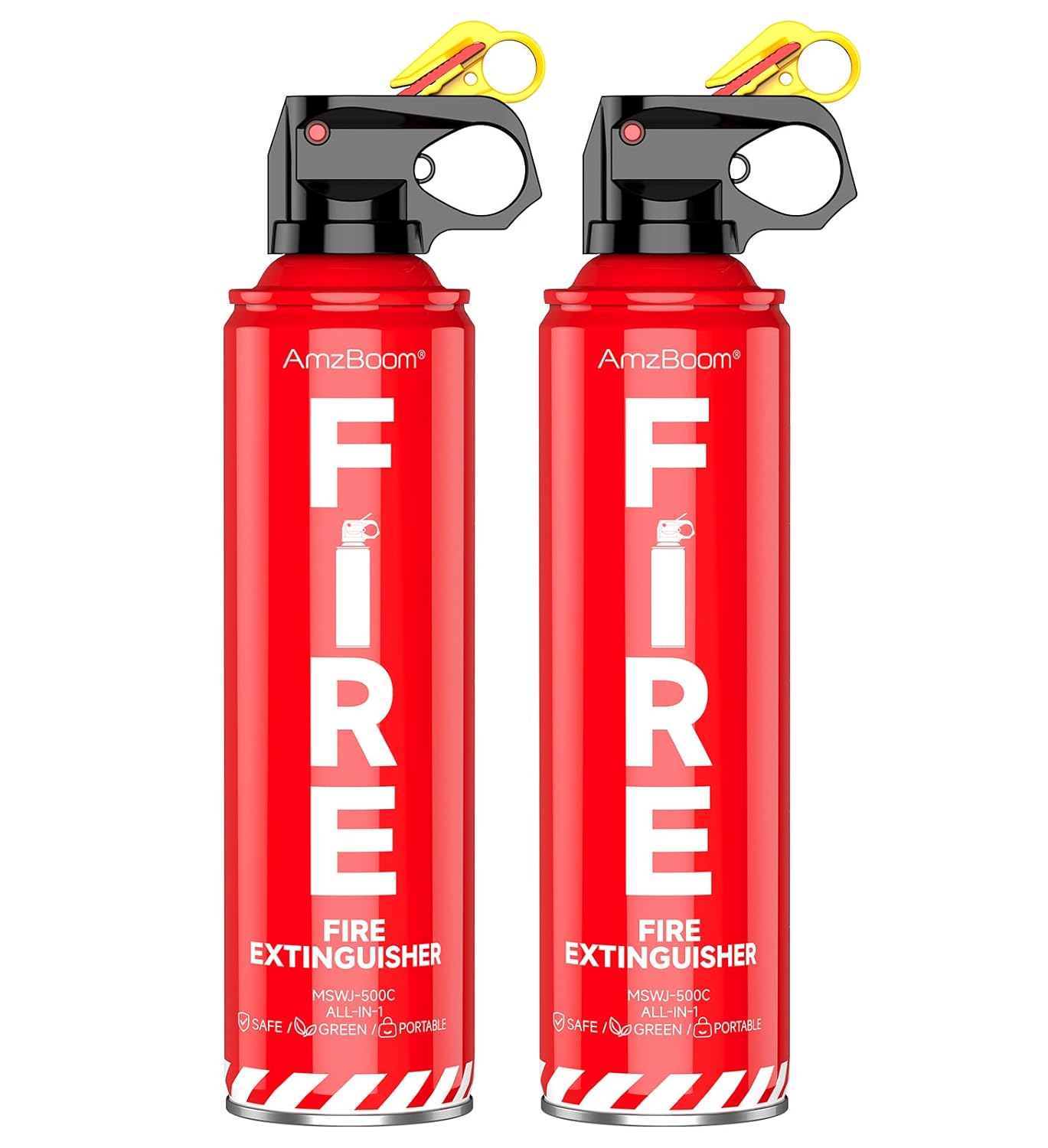
| AmzBoom 2-pack | Listing claims A, B, C, K | Water-based spray | 1 lb each (listing) | Not stated | Backup spray, not the main unit |
How We Chose
We screened for a UL rating that covers cooking fires (B and C at minimum), then compared weight, agent, and recharge policy. Sources are USFA and NFPA pages, maker pages, and listings. We research and compare; we do not run product trials or discharge extinguishers. Only four extinguishers in the catalog fit this job, so this is a short list. See how we choose.
1. Kidde Basic 110 (FA110G)
- Kidde lists 1-A:10-B:C, a 6-year limited warranty, and a 12-year service-free design.
- Light at about 3.9 lb with the bracket, per Kidde.
- Kidde sells it as residential, single-use only, so plan to replace it after any discharge.
Best for: apartments and compact kitchens. Avoid if: you want a unit a shop can refill.
2. First Alert HOME2PRO
- The listing says 2-A:10-B:C with a metal valve and trigger, plus a color-coded gauge.
- Rechargeable by a certified professional, per the listing.
- At roughly 9.6 lb on the listing, it is heavy for some people. USFA says to choose the largest unit you can safely and comfortably operate.
Best for: a larger kitchen or a garage-side door. Avoid if: anyone who may need it has trouble lifting that weight.
3. First Alert KITCHEN5
- UL rated 5-B:C with sodium bicarbonate, built for flammable-liquid and electrical fires, per First Alert.
- It has no A rating, so it does not cover paper, wood, or fabric. That makes it a narrow tool.
- Compact enough for a cabinet or the included bracket.
Best for: a second unit aimed at grease and appliances. Avoid if: it would be your only extinguisher.
4. AmzBoom 2-pack
- The listing calls it a water-based spray that handles A, B, C, and K fires and prevents reignition. We found no maker spec sheet to confirm those claims.
- The listing does not state a UL listing, so look for the rating on the label before relying on it.
- Two small units suit the kitchen and a car, but treat them as a supplement.
Best for: an extra within arm’s reach. Avoid if: you need a UL-rated primary unit.
Class K vs ABC and BC
USFA describes Class K as vegetable and animal oils and fats in cooking appliances, often found in commercial kitchens. OSHA, citing NFPA 10, says locations with combustible cooking media (vegetable or animal oils and fats) must install Class K extinguishers within a 30 ft maximum travel distance; that workplace rule is not a home requirement. At home, USFA says a multipurpose unit labeled B-C or A-B-C can be used on most types of home fires. More on K in what is a Class K fire extinguisher.
Use It, or Leave
- Pan fire: USFA says keep a lid or baking sheet nearby and cover the pan. NFPA says turn off the burner and never throw water on the fire; leave the cover on.
- PASS: Pull the pin, Aim at the base, Squeeze the handle, Sweep side to side, with your back to an exit.
- Leave and call 911 from outside if the fire is not small and contained to one object, if smoke is spreading, or if you are unsure. NFPA’s advice is “just get out,” close the door behind you, and call 911 after you leave.
- USFA says young children and older adults should not use extinguishers.
For the pan-fire steps, see how to put out a grease fire. A blanket is another option; compare in fire blanket vs fire extinguisher.
Where to Mount and When to Replace
NFPA’s extinguisher page lists installation near an exit. Mount it on the room’s exit side so the fire is never between you and the door. Kidde says to put a 2-A:10-B:C unit on every level, no more than 40 ft apart, and to check the gauge monthly. Rating math: USFA says 1-A equals 1.25 gal of water, so 2-A covers 1.25 x 2 = 2.5 gal. Replace or recharge any extinguisher after use or if the gauge leaves the green, and follow the label’s service date. Alarms matter too: see best smoke and CO detectors.
FAQ
Do I need Class K in a home?
The Class K rule we found is OSHA’s workplace requirement citing NFPA 10, and USFA says Class K units are often found in commercial kitchens. For homes, USFA says a multipurpose B-C or A-B-C unit covers most fires; keep a pan lid nearby too.
Can I use water on a grease fire?
No. NFPA says never throw water on it. Cover the pan and turn off the heat.
Where should I keep it?
Near an exit, in sight, with nothing blocking it. Do not store it directly beside the stove.
Changelog: November 2026: first published.