Choose propane if your emergency cooking could happen near or below freezing, and butane if you want a compact stove for mild weather, but cook outdoors with either one. Propane boils at about minus 44°F and butane at about 32°F, which is the whole cold-weather story, and the CDC says never to use a portable gas camp stove indoors whichever fuel it burns. We research and compare maker pages, manuals, and agency guidance; we do not run product trials of our own, and our how we choose page explains the method.
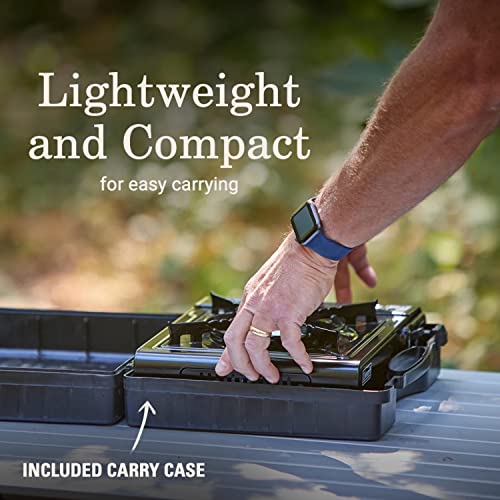
The butane example is the Coleman Classic 1-Burner, a single-burner stove that runs on an 8.8 oz butane cylinder.

Coleman Classic 1-Burner Butane Stove




As an Amazon Associate we earn from qualifying purchases. Product prices and availability are accurate as of the date/time indicated.
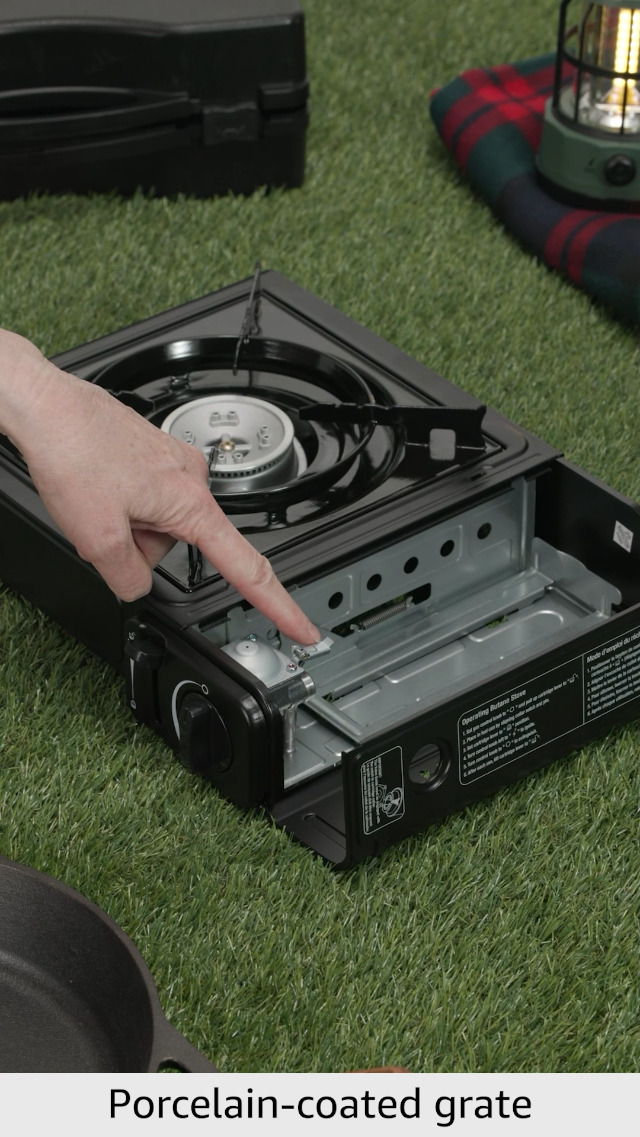
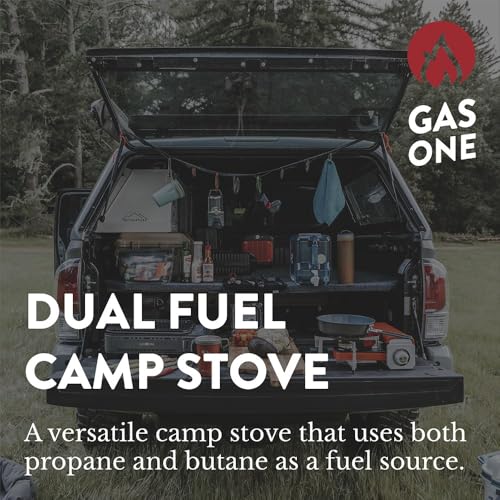
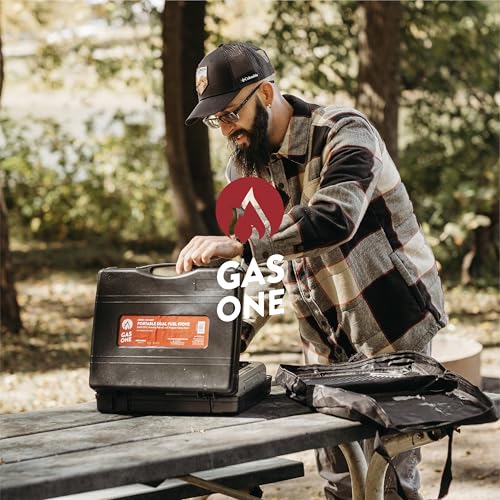
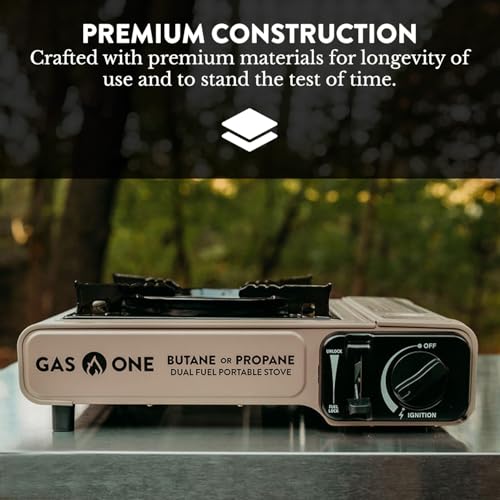
The propane example is the Gas One GS-3400P, which Gas One lists as taking either an 8 oz butane canister or a 16.4 oz propane cylinder.

Prime Gas One GS-3400P Propane or Butane Stove Dual Fuel


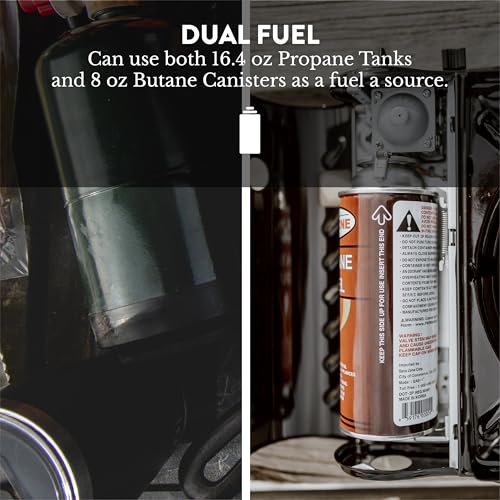
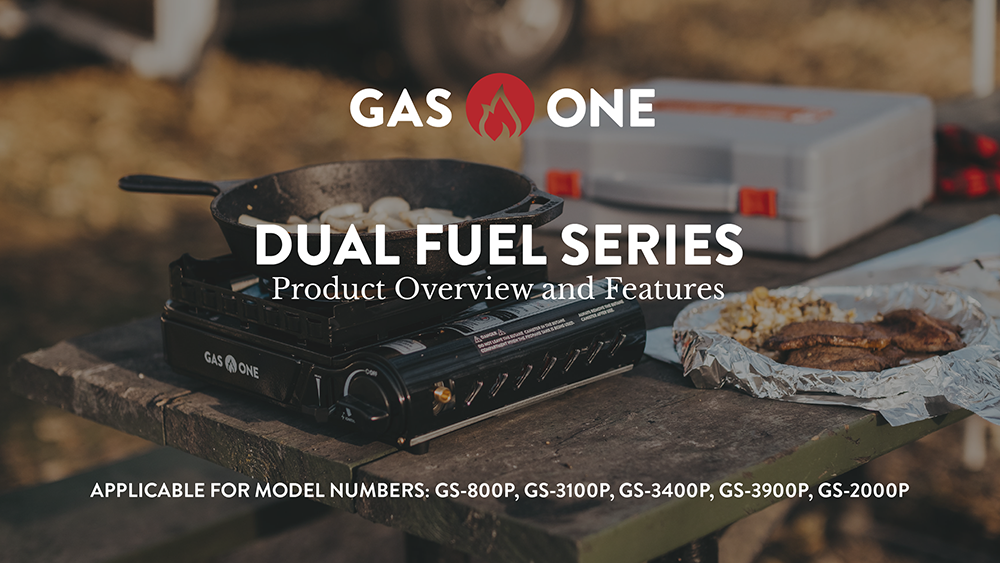
As an Amazon Associate we earn from qualifying purchases. Product prices and availability are accurate as of the date/time indicated.
Side by Side
The first two rows are physics that apply to any stove on that fuel. The rest are the makers’ own numbers for these two models, with gaps marked where a maker does not say.
| Butane (Coleman Classic example) | Propane (Gas One GS-3400P example) | |
|---|---|---|
| Boiling point at sea level (NIST) | 273 K, about 32°F | 231.1 K, about minus 44°F |
| Margin above boiling in 32°F air | 32 minus 31.7 = about 0.3°F | 32 minus (minus 43.7) = about 76°F |
| Fuel container | 8.8 oz butane cylinder (Coleman) | 16.4 oz propane cylinder, or an 8 oz butane canister (Gas One) |
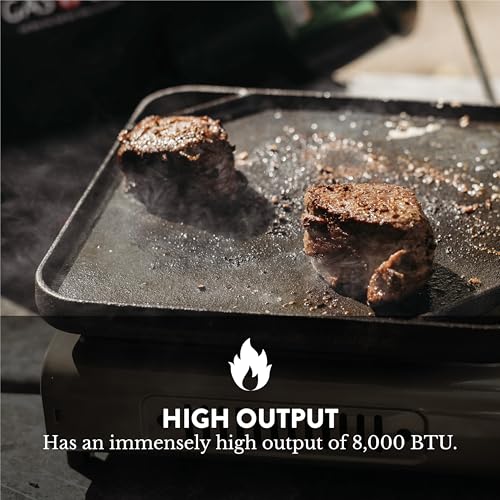
| Rated output | 7,650 Btu per hour (Coleman) | 8,000 Btu per hour (Gas One) |
| Published burn time | Up to 1.25 hours on high per cylinder (Coleman) | Not published by Gas One |
| Maker’s cold limit | None found for this model | Manual: do not operate below freezing, 32°F |
| Maker’s word on use | Sold for camping and outdoor cooking; no home approval found | “For Outdoor Use Only” (gasone.com) |
Neither Fuel Makes a Camp Stove an Indoor Stove
Settle where you will cook before you compare fuels, because no fuel choice moves a camp stove indoors. The CDC says “Never use a portable gas camp stove indoors,” and Ready.gov lists camp stoves among the devices to use outdoors only during an outage. Burning any fuel makes carbon monoxide (CO), a gas you cannot see or smell.
- Gas One’s product pages for both the GS-3400P and the butane-only GS-1000G say “For Outdoor Use Only.”
- Iwatani’s page for the 35FW calls it a stove “for outdoor use and indoor commercial use.” Its US manual for a sister model, the ZA-3HP, says never to use it “in an enclosed space such as a camper, tent, car or home” and allows indoor use only in a restaurant with a properly equipped ventilation hood.
- The CPSC’s camping guidance says to place stoves away from the tent and never to bring a stove, lantern, or candles inside it (release dated October 2011).
An open window does not change a label. Keep a battery-powered or battery-backup CO alarm on every level of the home and outside sleeping areas, as the CPSC advises. If it sounds, get everyone outside, call 911 from there, and stay out until responders say it is safe. Apartment dwellers with no safe outdoor spot should plan on an electric stove instead; our guide to indoor safe emergency stoves compares those.
The Four Differences That Matter
1. Cold weather
A canister stove burns vapor, so the liquid fuel in the container has to boil. At its boiling point a liquid’s vapor pressure only equals the air pressure around it, and boiling also draws heat out of the container, so the canister runs colder than the air. The margin is the air temperature minus the boiling point.
- Butane: NIST lists 273 K, which is 273 minus 273.15 = minus 0.15°C, or about 31.7°F. In 32°F air the margin is about 0.3°F.
- Isobutane (the other butane isomer, the main gas in many screw-on backpacking canister blends): NIST lists 262 K, plus or minus 2 K, about 11.9°F.
- Propane: NIST lists 231.1 K, about minus 43.7°F. In 32°F air the margin is about 76°F.
That is why butane stove makers put their limit at freezing: Iwatani’s ZA-3HP manual says not to use it below 32°F. Check your own manual before assuming propane extends the range, though. Gas One’s manual for the dual-fuel GS-3400P also says not to operate below 32°F. If the forecast is below freezing, plan a no-cook meal or an electric option rather than coaxing a canister. Our how to cook without power guide covers both.
2. Storage and handling
Propane cylinders stay outdoors. Mr. Heater’s manual for its 1 lb cylinder heaters says to store cylinders outside and not in a building, garage, or enclosed area, and the CPSC’s generator safety guidance likewise says to store generator fuel outside living areas. Butane canisters are smaller, and makers tell you to keep them cool, dry, and away from heat and direct sun; Iwatani’s ZA-3HP manual puts the ceiling at 104°F. Use only the fuel the maker names, since that manual also calls for Iwatani-brand fuel.
3. Burn time
Fuel needed = days x meals per day x minutes per meal / burn time per container. For 3 days, 2 meals a day, and 20 minutes a meal, you need 3 x 2 x 20 = 120 minutes of flame.
- Coleman Classic: 1.25 hours is 75 minutes, so 120 / 75 = 1.6, which rounds up to 2 cylinders.
- Iwatani 35FW: about 55 minutes per canister at its full 15,000 Btu per hour, so 120 / 55 = 2.2, which rounds up to 3 canisters.
- Gas One on propane: Gas One publishes no burn time, so work out a ceiling. The EIA lists 91,452 Btu per gallon of propane. At 4.2 lb per gallon, a common planning figure, that is 91,452 / 4.2 = about 21,800 Btu per pound. A 16.4 oz cylinder holds about 1.025 lb, or about 22,300 Btu, and 22,300 / 8,000 Btu per hour = about 2.8 hours if every drop burned at full output.
That 2.8 hours is a ceiling, not a rating, so one cylinder covers the 2 hours of cooking on paper and a second is the sensible plan. Whatever the stove, keep at least 2 spare containers beyond what the math says.
4. Fit with the rest of your kit
The Gas One GS-3400P is the only stove here that takes either fuel, so a household can stock one size of container for the stove and top up from whichever is easier to find. A 1 lb propane cylinder is also what Mr. Heater’s Buddy-series heaters burn, so a home that already owns one can share a single cylinder size across both. The cylinders still live outdoors, and our Buddy vs Big Buddy comparison covers the heater side. A butane cassette stove needs its own canister type and nothing else in the kit uses it.
Choose Butane If
- You have a patio or driveway spot away from windows, doors, and vents, and you expect mild weather when you cook.
- You want a small stove with a published burn time, so you can count canisters from the maker’s number.
- You want the compact cassette format Iwatani, Coleman, and Gas One all sell.
Avoid butane if: your region sees freezing days during storm season, since the margin above butane’s boiling point is about 0.3°F at 32°F. Our butane stove indoors guide explains how to read a stove’s label.
Choose Propane If
- You cook outdoors in cool weather and your stove’s manual allows it, since propane keeps a margin of about 76°F at 32°F.
- You want one cylinder size for a stove and a Buddy-series heater.
- You want to count fuel by the pound and by Btu rather than rely on a canister’s printed minutes.
Avoid propane if: your only storage is indoors, a garage, or a shed, because cylinders belong outside and you would be stocking something you cannot keep safely. Also skip it if your stove’s maker sets the same 32°F floor as Gas One does, since the fuel’s advantage then goes unused.
FAQ
Is butane or propane better for a camp stove?
Propane vaporizes in much colder air, about minus 44°F against about 32°F for butane. Butane stoves are usually the more compact, and each maker’s manual sets the limit that applies to your stove. For emergencies, the bigger issue is where you cook: outdoors only, with either fuel.
Can I use a propane camp stove inside with a window open?
No. The CDC says never to use a portable gas camp stove indoors, and Gas One labels its dual-fuel stove for outdoor use only. Our guide to carbon monoxide safety during power outages covers the other fuel sources to keep outside.
Where do I keep spare propane cylinders?
Outdoors, as Mr. Heater’s manual directs, and not in a building, garage, or enclosed area. Check your lease, HOA rules, and local fire code too. If you cannot keep cylinders outside, choose butane or an electric stove.
How many canisters do I need for three days?
Use days x meals x minutes / burn time per container, round up, then add 2 spares. Two 20-minute meals a day for 3 days is 120 minutes, which is 2 Coleman cylinders or 3 Iwatani canisters before spares. Fuel is one line in a bigger home emergency kit.
Changelog: November 2026: first published.