


For a home emergency kit, the Sawyer Squeeze is the better fit because it fills pots and jugs and can be backflushed, while the LifeStraw Personal suits one person drinking straight from a source. Neither maker claims virus removal, so the CDC step still applies: filter first, then add a chemical disinfectant.
All specs below come from LifeStraw and Sawyer pages, and we say so where a number is the maker’s own.

Prime LifeStraw Personal Water Filter for Hiking
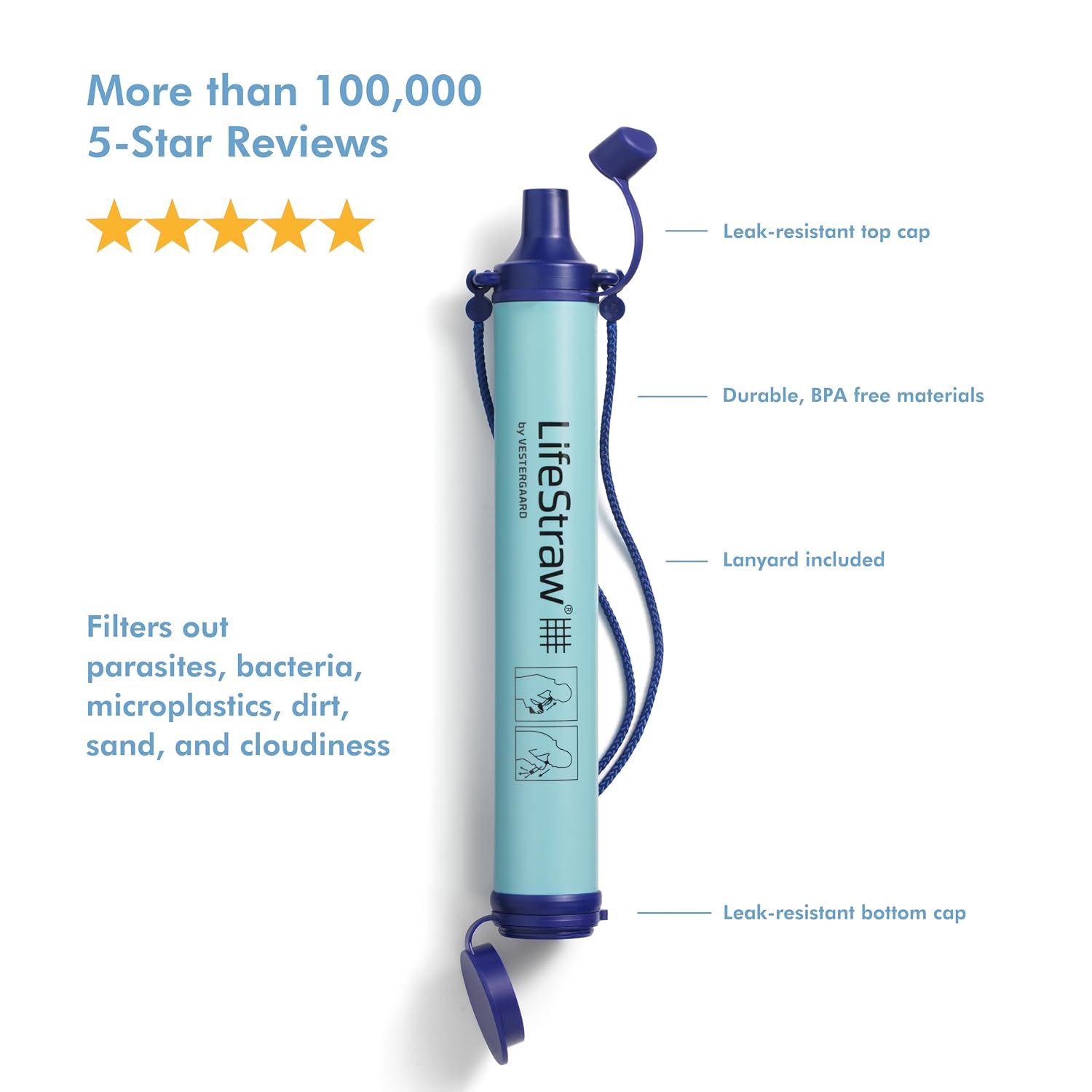


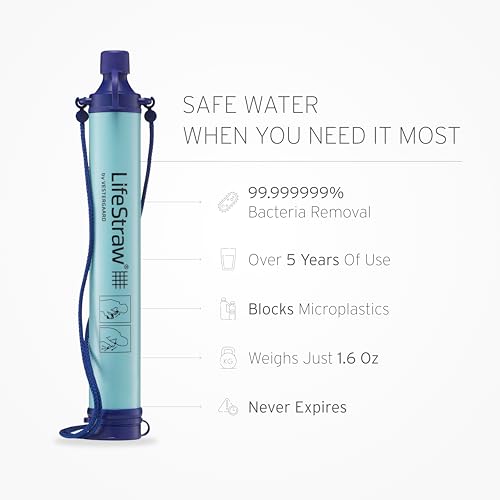
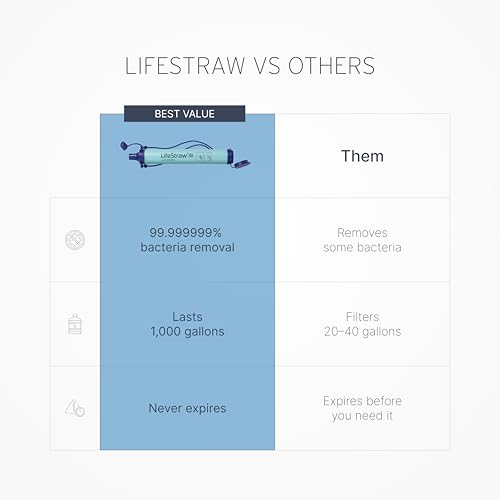
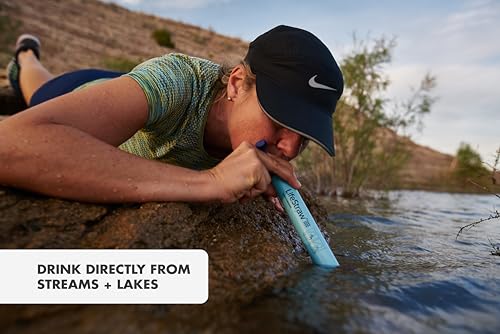
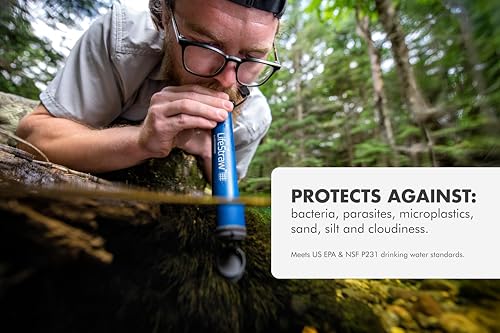

As an Amazon Associate we earn from qualifying purchases. Product prices and availability are accurate as of the date/time indicated.

Sawyer Products SP129 Squeeze Water Filtration



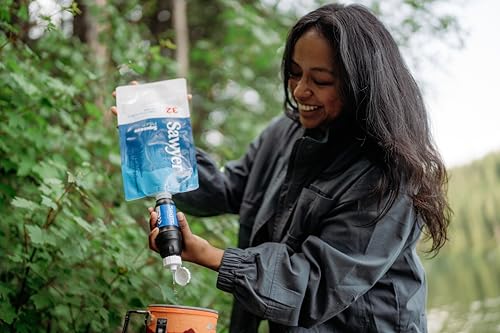

As an Amazon Associate we earn from qualifying purchases. Product prices and availability are accurate as of the date/time indicated.
Side-by-Side Specs
| Spec | LifeStraw Personal Water Filter Straw | Sawyer Squeeze (SP129) |
|---|---|---|
| Pore size | 0.2 micron | 0.1 micron absolute |
| Bacteria removal (maker claim) | 99.999999% | 99.99999% |
| Parasite / protozoa removal (maker claim) | 99.999% | 99.9999% |
| Microplastics | 99.999% | 100% |
| Rated capacity | 1,000 gal (4,000 L) | Page gives no cap; Sawyer says fibers can be backwashed and reused |
| Weight (maker) | 1.6 oz | About 3 oz (filter alone) |
| Format | Drink-through straw | Filter with two collapsible pouches; threads onto 28 mm bottles |
| Virus claim | None stated | None stated |
| Warranty | Not stated on page | Lifetime limited |
| Standards cited by maker | US EPA and NSF P231 for bacteria and parasites, per LifeStraw | Independent laboratory microbiological report (Hydreion), per Sawyer |
What the CDC Says
The CDC says a portable filter needs an absolute pore size of 1 micron or smaller to remove parasites such as Giardia and Cryptosporidium, and 0.3 micron or smaller for bacteria. Sawyer rates the Squeeze at 0.1 micron absolute; LifeStraw lists a 0.2 micron pore size without saying whether it is absolute. The CDC also says portable filters “will not remove viruses,” and advises adding a disinfectant such as iodine, chlorine, or chlorine dioxide after filtering. Boiling is the other route: a rolling boil for 1 minute, or 3 minutes above 6,500 feet. We research and compare; we do not run our own product trials. See how to purify water in an emergency.
Four Differences That Matter
1. How you fill a container
The LifeStraw Personal is built to drink through. A household that wants to fill a stockpot or a 5 gallon bucket from a creek or rain barrel is better served by the Squeeze, which includes pouches and screws onto standard 28 mm bottles. LifeStraw sells other formats, such as its Peak Series gravity systems, but those are different products.
2. How long it lasts, with a calculation
Take a planning figure of 1 gallon of drinking water per person per day (an assumption, see how much water to store). LifeStraw’s 1,000 gal rating = 1,000 / 1 gal per day = 1,000 person-days. For a family of 4, that is 1,000 / 4 = 250 days of drinking water. Sawyer gives no capacity on the Squeeze page, so there is nothing to divide by; its FAQ says its fibers should last indefinitely with proper backwashing, which is the maker’s claim, not a measured figure.
3. Cleaning
Sawyer includes a cleaning plunger and coupling, and its FAQ says to backwash before first use, when flow drops, and before storage. With clear water that may be every 1,000 gallons, and with muddy water as often as every 10 gallons. The LifeStraw Personal page lists no cleaning accessory; its FAQ says to disinfect it with a bleach solution, rinse, soak in saline, and store it cool and dry. With either filter, pre-strain cloudy water through a clean cloth or coffee filter, the step the CDC gives before boiling or disinfecting.
4. Freezing
Sawyer says its filters withstand 32 to 140°F, and that you should replace one you suspect has frozen, since damage is not visible. LifeStraw’s help center gives a range of 33 to 140°F and says ice in the membrane can damage the filter, which then must be replaced. Keep either filter inside the house, not in an unheated car or garage.
Choose Which, in Order
Choose the LifeStraw Personal if
- You want one lightweight drinking straw per person in a go-bag kept indoors.
- You will drink directly from the source and do not need to fill containers.
- You value the maker-cited EPA and NSF P231 standards.
Best for: One-person go-bags.
Avoid if: You need to treat water for a whole household from a bucket.
Choose the Sawyer Squeeze if
- You need to fill jugs or pots from a creek, rain barrel, or tub.
- You can backflush the filter and want a lifetime limited warranty.
- You will store it indoors above freezing.
Best for: Family kits and home water storage refills.
Avoid if: You will not carry a disinfectant for viruses.
Most households should keep one of each plus a disinfectant, then read our emergency water filter guide for scored options and how we choose.
FAQ
Do LifeStraw or Sawyer remove viruses?
Neither maker lists a virus claim on the pages we read. The CDC says portable filters will not remove viruses, so add a disinfectant after filtering.
Can I filter floodwater or chemical-contaminated water?
Not with these. Sawyer says its filters take out pathogens but dissolved items such as chlorine, salts, and flavorings pass through. Follow your local health department notices.
Which fits a 72 hour kit better?
The LifeStraw is lighter at 1.6 oz, per LifeStraw, against about 3 oz for the Squeeze. For a shared kit, the Squeeze pouches are more useful.
Changelog: November 2026: first published.









