Choose the Weber Spirit E-325 if you want a proven mid-size grill with a 10 year limited warranty on its cookbox, lid and burner tubes; choose the Napoleon Prestige 500 RSIB if you want more main grate, a rear infrared burner and a rotisserie. Neither wins on every count, so start with how you cook.

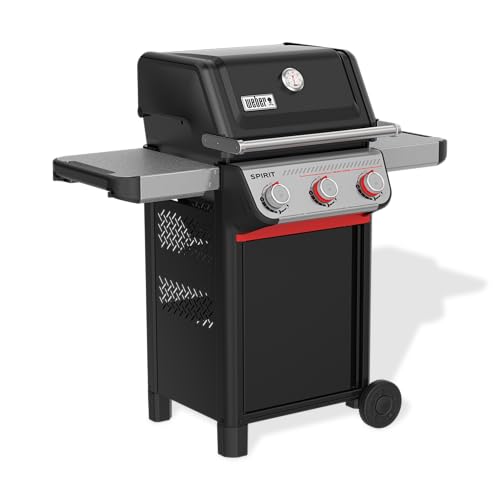
Weber® Spirit® E-325 Gas Grill, Outdoor Cooking



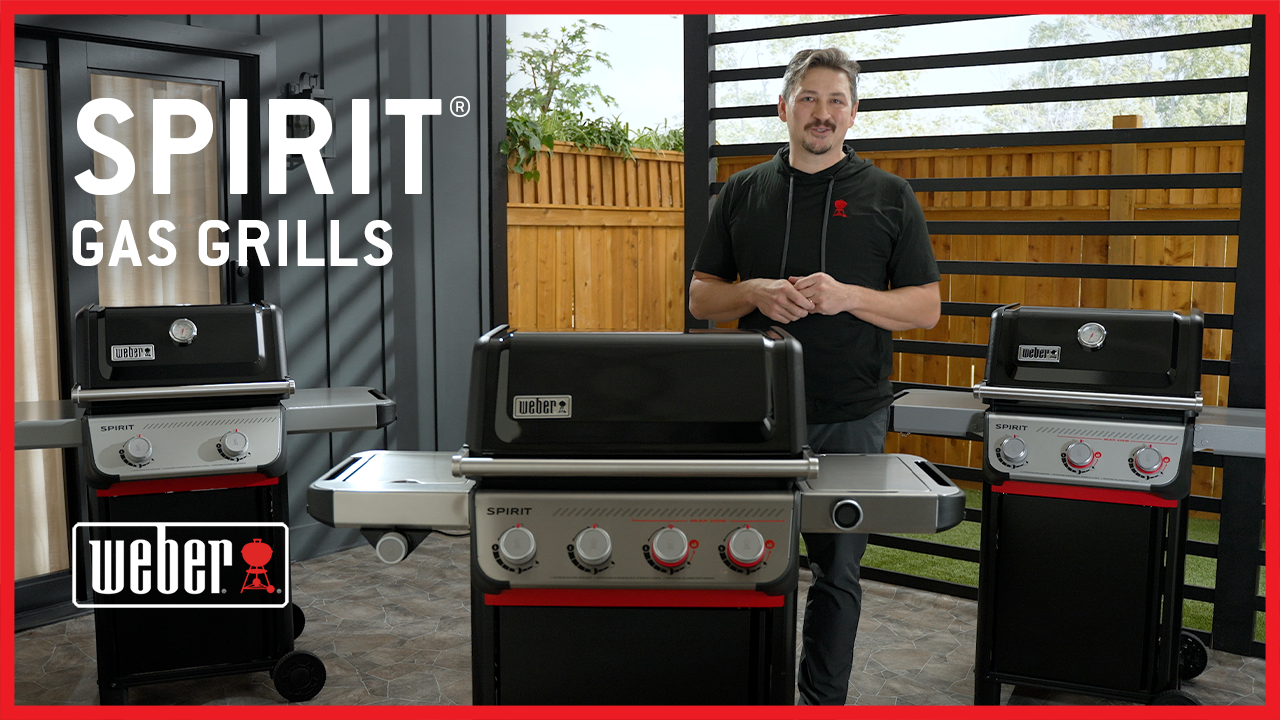
As an Amazon Associate we earn from qualifying purchases. Product prices and availability are accurate as of the date/time indicated.

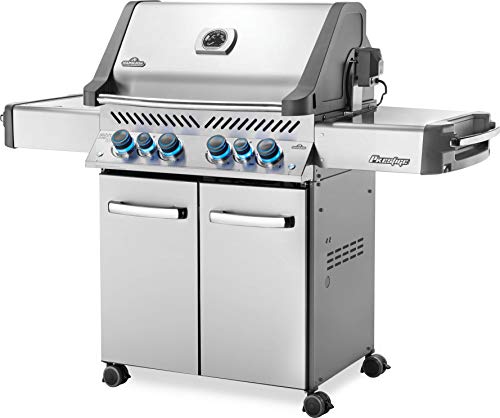
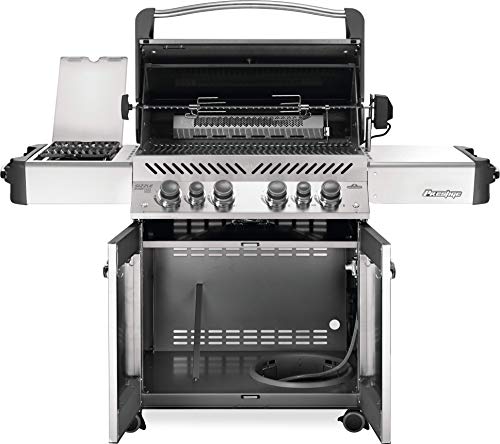
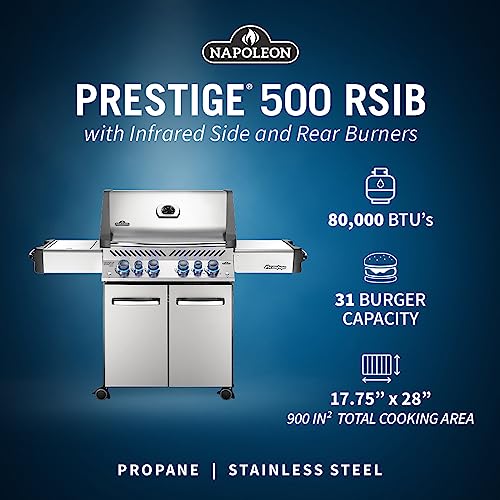
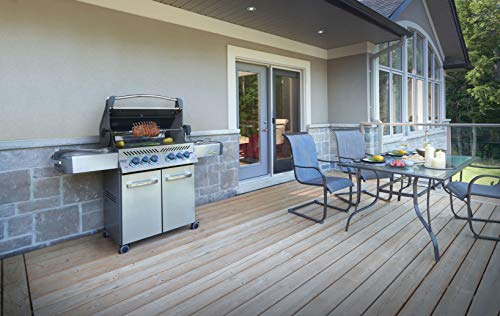
Prime Napoleon P500RSIBPSS-3 Prestige 500 RSIB Propane



As an Amazon Associate we earn from qualifying purchases. Product prices and availability are accurate as of the date/time indicated.
Specs Side by Side
| Spec | Weber Spirit E-325 | Napoleon Prestige 500 RSIB |
|---|---|---|
| Main burner input | 31,000 Btu/h (Weber) | 48,000 Btu/h (Amazon listing) |
| Main cooking area | 360 sq in | 500 sq in (listing) |
| Warming rack | 90 sq in (450 total) | 260 sq in (listing) |
| Extras | Boost Burners, Snap-Jet ignition | Infrared side and rear burners, rotisserie kit, JETFIRE ignition (listing) |
| Weight | Not compared | 196.7 lb (listing) |
| Warranty | 10 year limited (cookbox, lid, burner tubes); 2 years on remaining parts | Varies by listing; confirm with the seller |
Sources: amer.weber.com for the E-325 (Weber 1500789) and its warranty page. Napoleon’s own pages blocked our fetch, so the Napoleon column is Amazon listing data, matched against retailer listings of the same model; confirm it on napoleon.com before buying. We research and compare; we do not use or review the products ourselves.
Heat per square inch
Main burner Btu divided by main grate area: Weber 31,000 ÷ 360 = about 86 Btu per sq in; Napoleon 48,000 ÷ 500 = about 96 on the listing figure. Weber itself says Btu “should be of no concern” when choosing, because it is only fuel used per hour (see what is a grill Btu rating). Read the gap as appetite for fuel, not proof of better searing.
Propane use
Using the planning figures of 91,452 Btu per gallon (EIA) and 4.2 lb per gallon, one pound holds about 21,800 Btu. At full burn the Weber uses 31,000 ÷ 21,800 = about 1.4 lb an hour and the Napoleon 48,000 ÷ 21,800 = about 2.2 lb an hour. A 20 lb cylinder then lasts roughly 14 and 9 hours with every main burner on high. Real cooking runs lower.
Cooking area
The listing claims 31 burgers on 500 sq in. Scaling the same ratio, 360 sq in holds about 22 (360 ÷ 500 × 31 = 22.3). Both feed a family of four plus guests; the Napoleon adds room for a second zone.
Searing and rotisserie
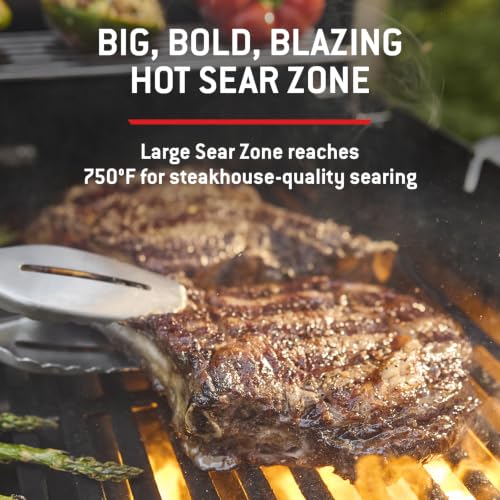
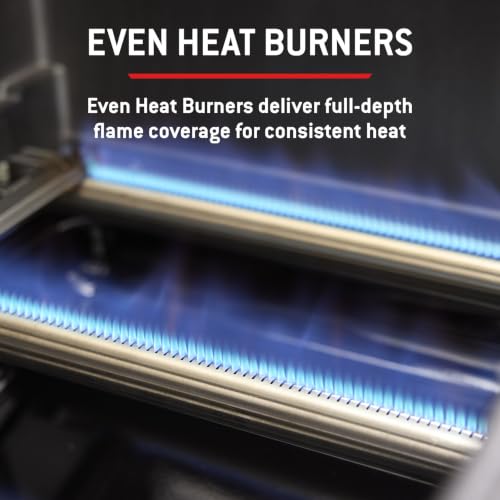
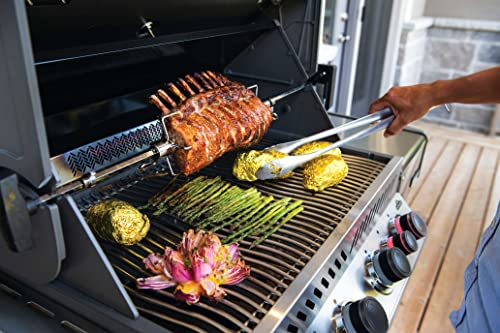
Napoleon pairs the main burners with infrared side and rear burners and includes a rotisserie kit, per the listing. Weber’s answer is Boost Burners, which it says give 40% more power in the Sear Zone, with no Btu figure. For gas burner differences, see infrared vs traditional gas burners.
Choose Weber If / Choose Napoleon If
- Choose Weber if you cook for two to five people, want a 10 year limited warranty on the cookbox, lid and burner tubes (2 years on remaining parts), and would rather spend less on fuel. Avoid if you regularly cook for ten or more.
- Choose Napoleon if you cook for crowds, want rotisserie and infrared burners in one cart, and have room for a grill nearly 197 lb by the listing. Avoid if you have a small patio or tight budget.
Not sure either fits? Our best gas grills list compares more models, and how we choose explains the scoring.
FAQ
Is Napoleon better than Weber?
Napoleon lists more cooking area and burners; Weber documents a simpler grill with a 10 year limited warranty on the cookbox, lid and burner tubes. Better depends on crowd size and budget.
Do these grills run on natural gas?
The listing shows propane and natural gas versions for Napoleon; Weber sells the E-325 as liquid propane. Do not convert a grill yourself; see propane vs natural gas grills.
Where can I set it up?
Use any gas grill outdoors only. The CPSC says: “Never use a grill indoors or in a garage, breezeway, carport, porch or under a surface that will burn.” Brush soapy water on every gas connection with the cylinder valve open; bubbles mean a leak (how to check a propane grill for leaks). Keep the grill well away from the house, deck rails, eaves and branches (NFPA). If you smell gas, turn off the valve, keep flames away and call your gas supplier or 911.
Changelog: November 2026: first published.