


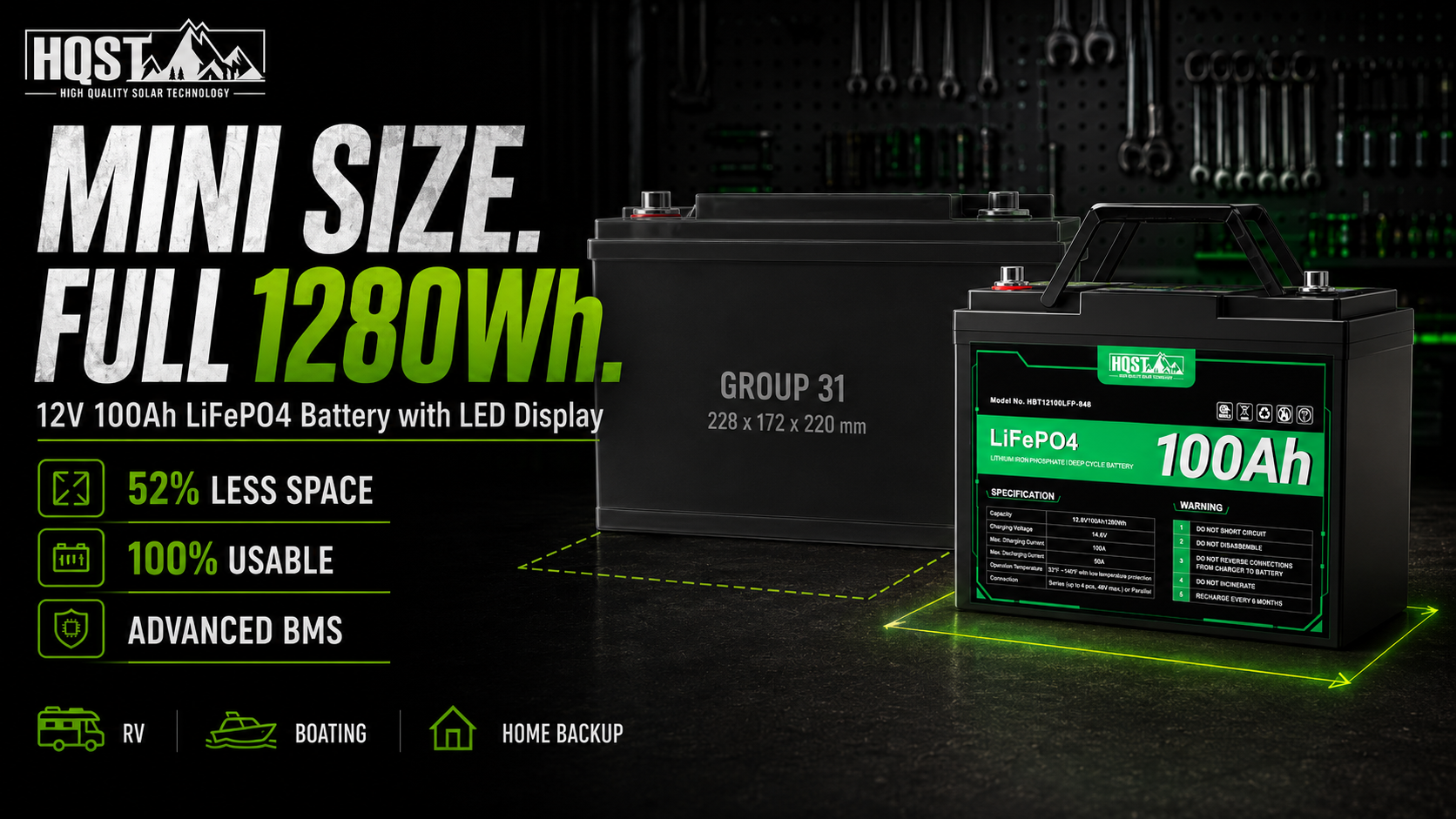
For a battery that cycles daily, LiFePO4 wins on working energy and weight: a 100 Ah LiFePO4 stores 1,280 Wh per its listing, while a 100 Ah AGM gives about 600 Wh at the 50% depth lead-acid is normally kept to. AGM still makes sense when the battery mostly sits on a charger.

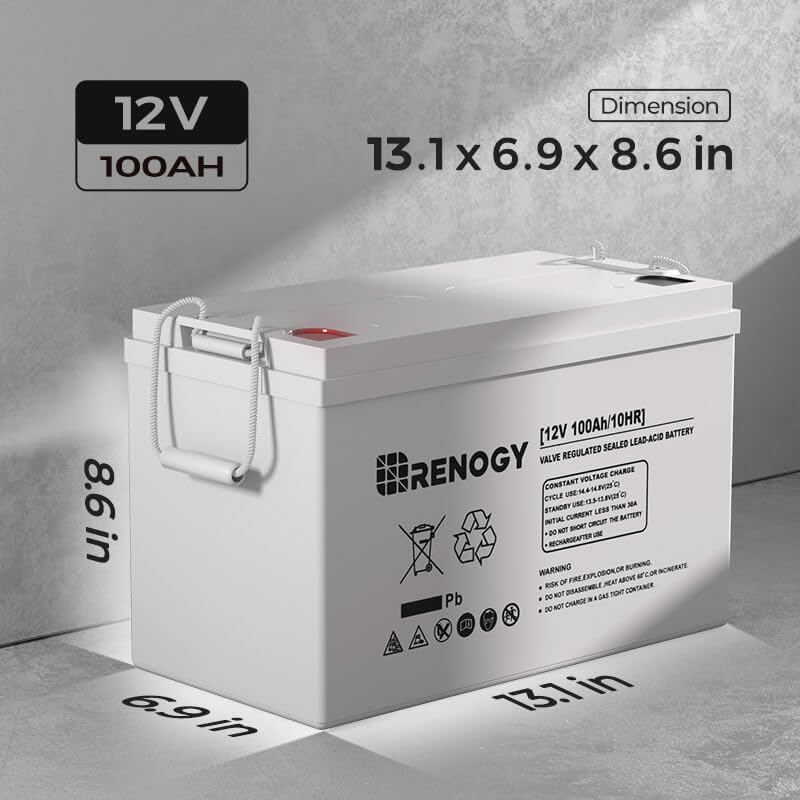
Prime Renogy 12 Volt 100Ah Deep Cycle AGM Battery




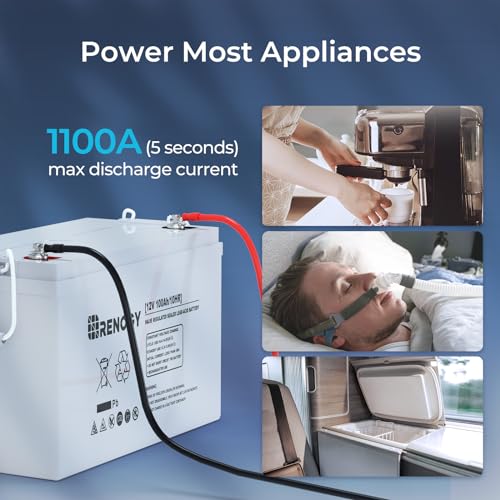
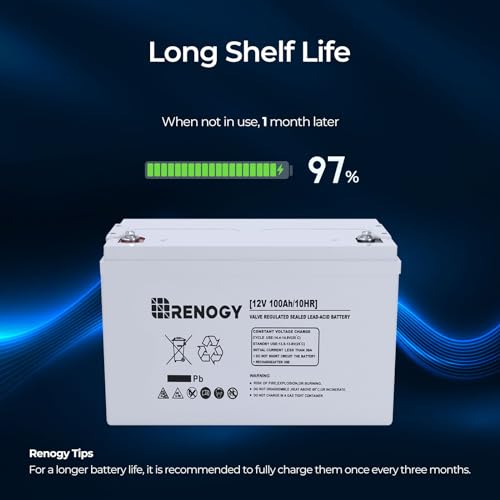
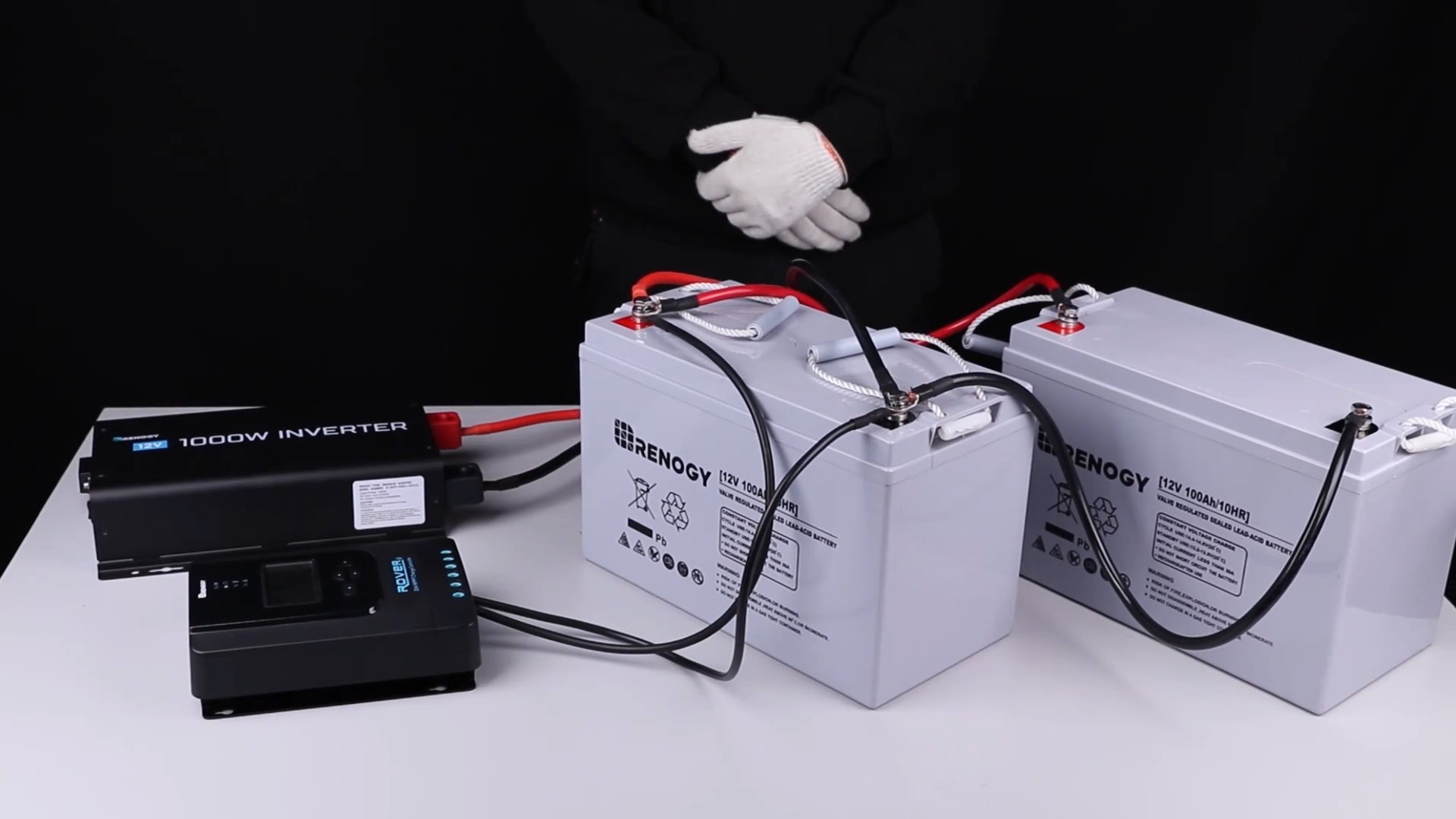
As an Amazon Associate we earn from qualifying purchases. Product prices and availability are accurate as of the date/time indicated.

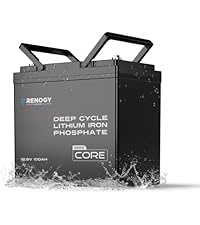
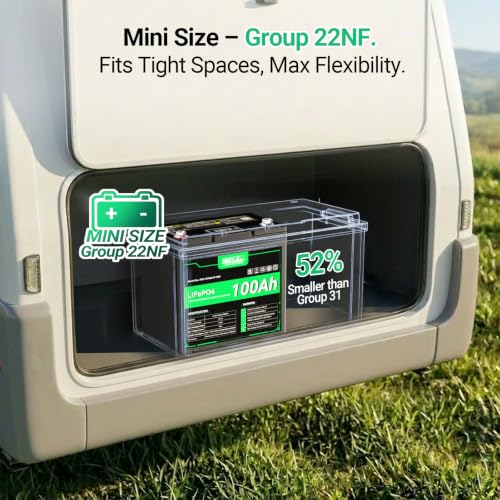
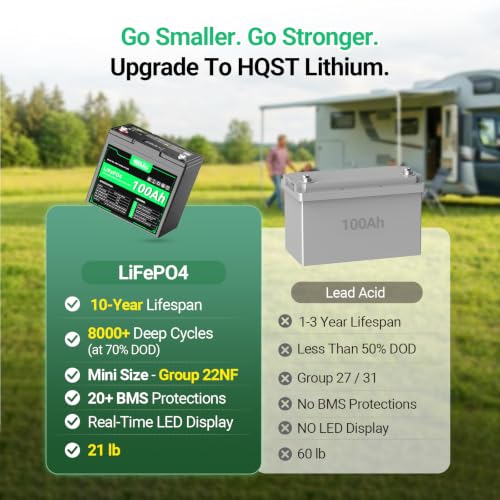
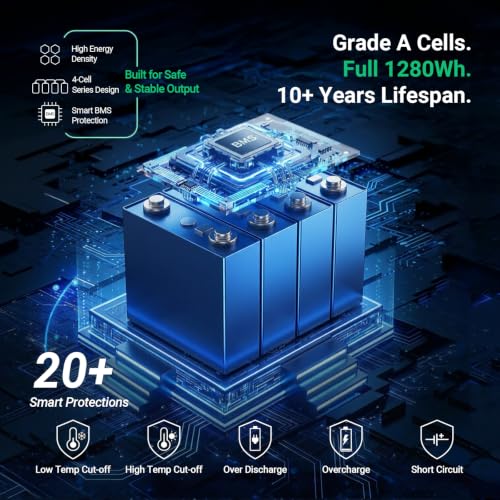
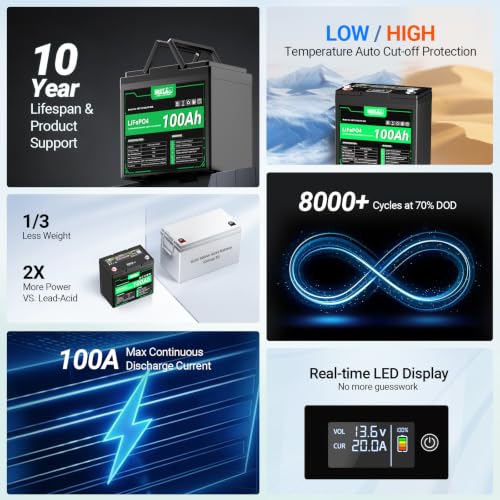
Prime HQST 12V 100Ah LiFePO4 Battery, Group 22NF Mini


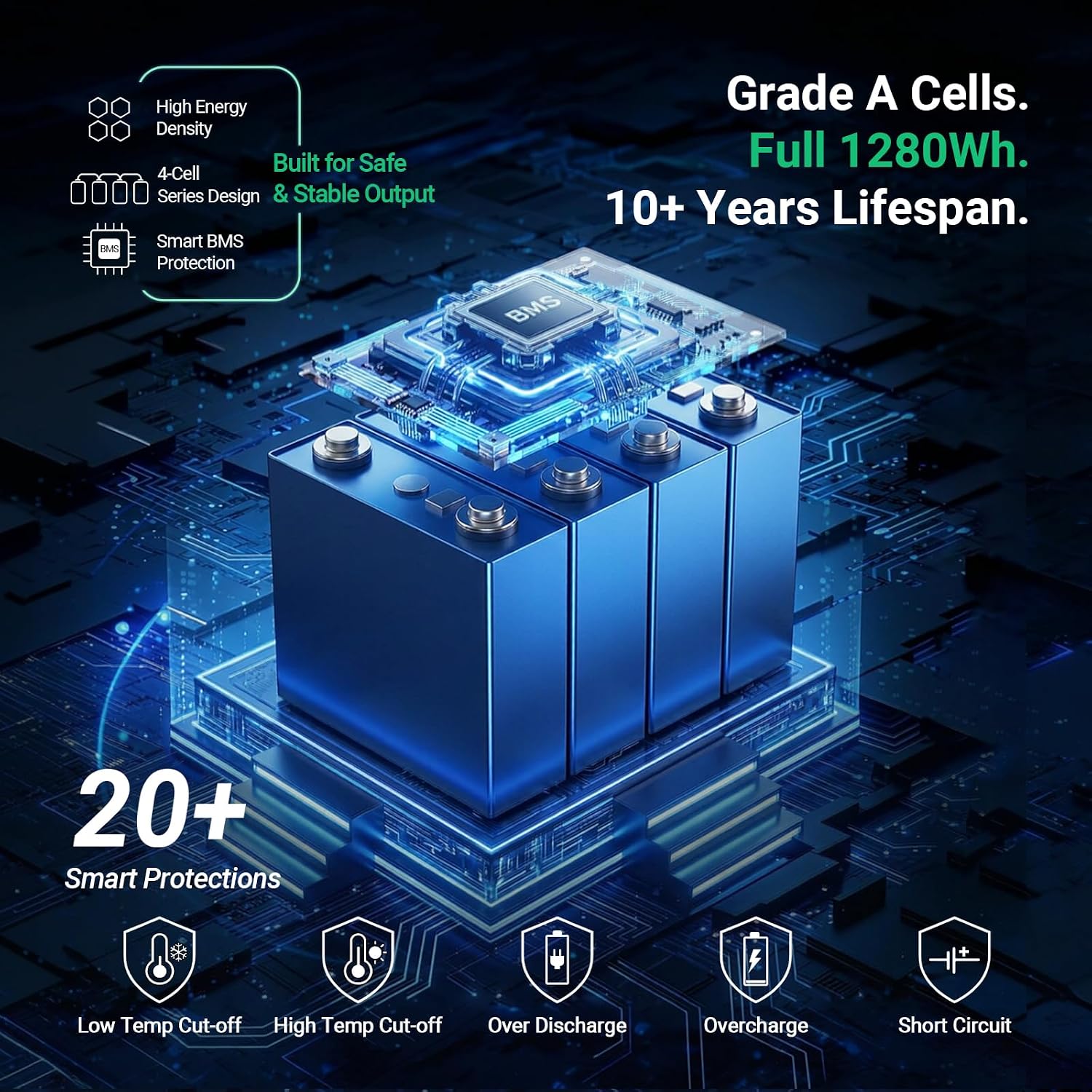


As an Amazon Associate we earn from qualifying purchases. Product prices and availability are accurate as of the date/time indicated.
Specs Side by Side
Both are 12 V, 100 Ah batteries sold for RV, solar and off-grid use. Every cell below is from the Amazon listing or its specification table unless a source is named.
| Spec | Renogy 100Ah AGM | HQST 100Ah LiFePO4 |
|---|---|---|
| Nominal energy | 1,200 Wh (12 V x 100 Ah) | 1,280 Wh (listing) |
| Working energy | About 600 Wh at 50% depth | Most of 1,280 Wh; the listing gives no depth limit |
| Weight | 63.9 lb | 21 lb |
| Cycle life | Not on the listing | 4,000+ (listing) |
| Warranty | 2-year prorated | “10-year commitment” (listing) |
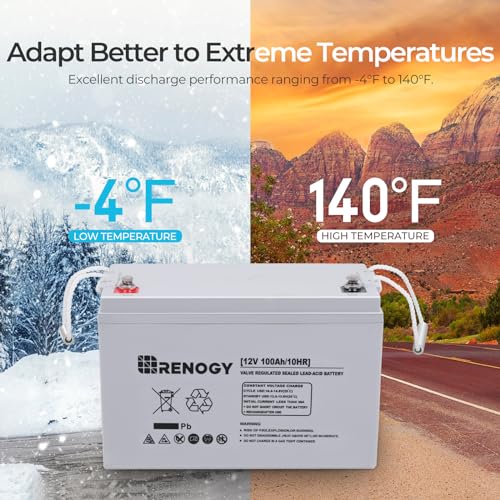
| Temperature | Discharge from -4 to 140°F | Charging suspended below 23°F or above 140°F; discharge stops below 5°F |
| Self-discharge | Below 3% a month at 77°F | Not on the listing |
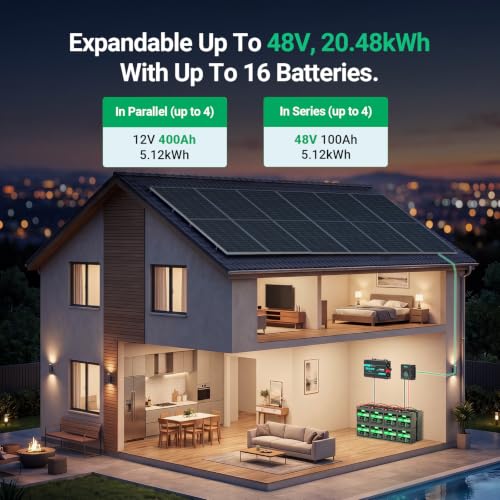
| Paralleling | Up to 4 in parallel | Up to 16 in series and parallel |
Discover Battery advises not using any lead-acid battery past 50% depth of discharge, which is where the 600 Wh figure comes from. The listings give no cycle rating for the Renogy, so the best published comparison is Victron’s 110 Ah AGM datasheet: 600 cycles at 50% and 400 at 80%. The lifetime-energy math is already worked in LiFePO4 vs lead-acid, so this page looks at sizing and placement instead.
What Changes in Real Setups
Sizing a bank for 1,000 Wh a day
AGM: 1,000 Wh / (12 V x 0.5) = 167 Ah, so two 100 Ah batteries, about 2 x 63.9 = 127.8 lb. LiFePO4: 1,000 / 1,280 = 0.78 of one battery, so one unit at 21 lb. The math ignores inverter losses and reserve for cloudy days, which add to both banks. Plan for the same multiplier on each.
Cold garages and sheds
The HQST listing says charging pauses below 23°F. The Renogy listing quotes discharge temperatures only, so read its manual for charging limits. In an unheated shed in a cold climate, a battery that cannot accept solar charge on a freezing morning matters more than any cycle rating. See what a battery management system does.
Charger and controller settings
Battle Born’s manual for its LiFePO4 battery gives absorption at 14.2 to 14.6 V and float at 13.4 to 13.8 V. Use a charger or controller with a lithium profile, or one you can set to the maker’s numbers. Our LiFePO4 charger picks and the regular-charger question cover this.
Sitting idle
At the listing’s 3% a month, a 100 Ah AGM loses at most about 3 Ah a month, and Victron rates its AGM below 2%. That is a small trickle for a charger to replace, which is why a UPS or backup pump rarely needs lithium.
Choose AGM If
- The battery floats on a charger and discharges only in an outage.
- Your equipment’s manual names a lead-acid battery and charger.
- Skip it if you need more than half the rated amp-hours every day or weight matters.
Choose LiFePO4 If
- You cycle it most days from solar, an RV or a cabin.
- Weight and space limit how many batteries you can fit.
- Skip it if the battery lives where it must charge below freezing, or your charger has no lithium mode.
More options are in our 12V LiFePO4 guide and the deep cycle battery guide. We research and compare published specs; we do not use or review the products ourselves. See how we choose.
FAQ
Can I replace an AGM with LiFePO4 in the same spot?
Only if the charger and the equipment support lithium. Check the manual, and use a licensed electrician for any wiring change.
Is a 100 Ah AGM really 100 Ah of use?
Rated capacity is not working capacity. Keeping lead-acid near 50% leaves about 50 Ah, which is why the sizing example above doubles the AGM count.
Does the cycle count tell me how many years I get?
Divide cycles by how often you cycle it. Daily use burns through 365 cycles a year, so 600 cycles lasts under two years while 4,000 lasts about 11, if the listing figure holds.
Changelog: November 2026: first published.









