


For most households the best outage setup is two parts: an Energizer plug-in light that switches on by itself, plus one rechargeable handheld per adult. The Energizer light is rated for 3 hours per charge at 40 lumens, which is enough to get from a bedroom to the hall; the handhelds and headlamps below do the real work after that.
Lumen numbers on flashlight listings are the least reliable part of the page, so this guide ranks lights on when they turn on, how long they run, and how well the claims survive a quick physics check. For lanterns, see our lantern guide.


Quick Comparison
| Model | Type | Stated output | Stated runtime | Source of figures | Best for |
|---|---|---|---|---|---|
| Energizer WeatheReady Compact Rechargeable LED Light (auto-on) | Plug-in handheld | 40 lumens, 30 m beam | About 3 h per charge | Maker page | First light when the power drops |
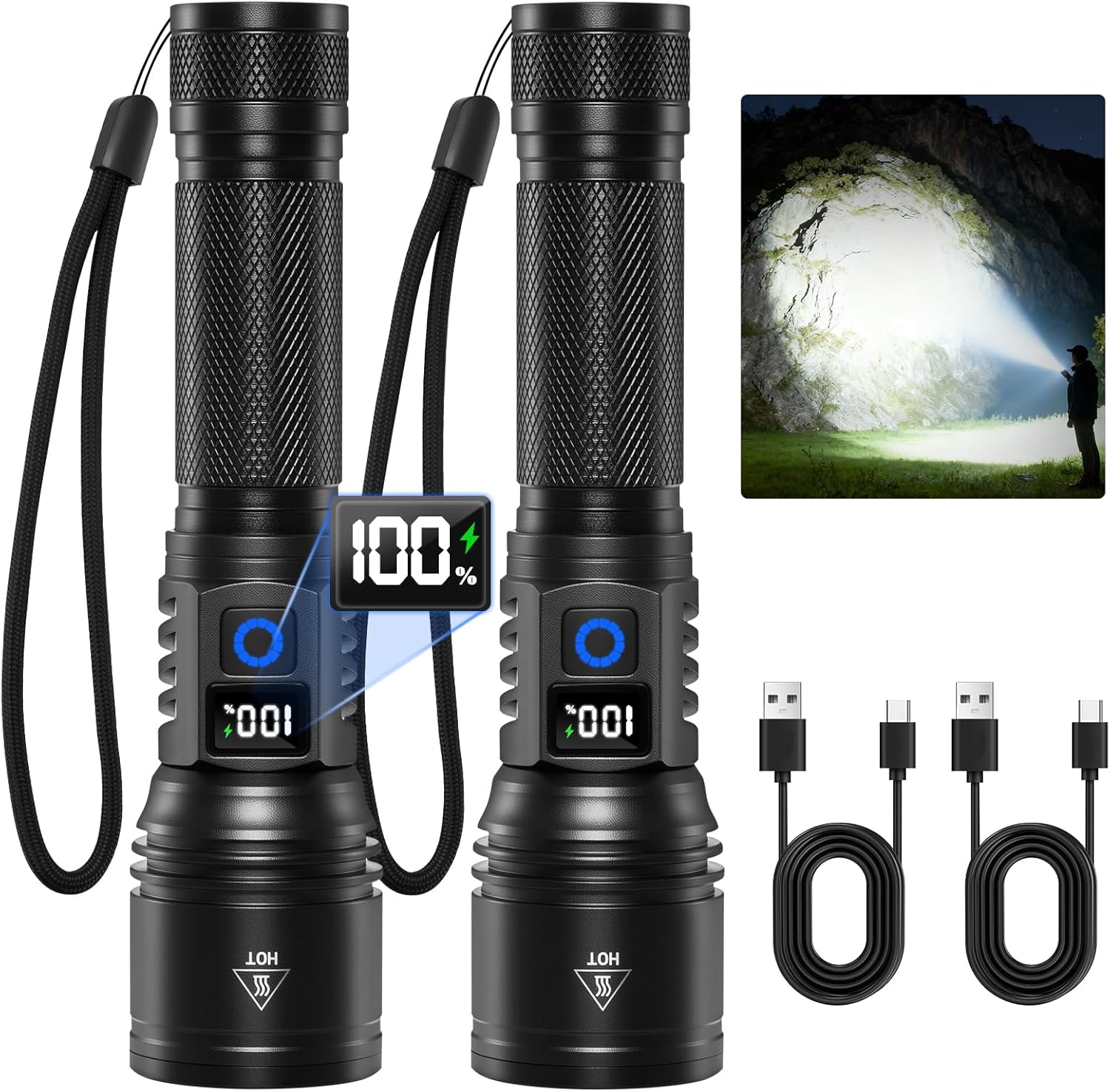
| Ruboliy FL9000 2-pack | Handheld, zoom | 700 lumens (listing) | 12 h (listing) | Listing | Two lights for a household |
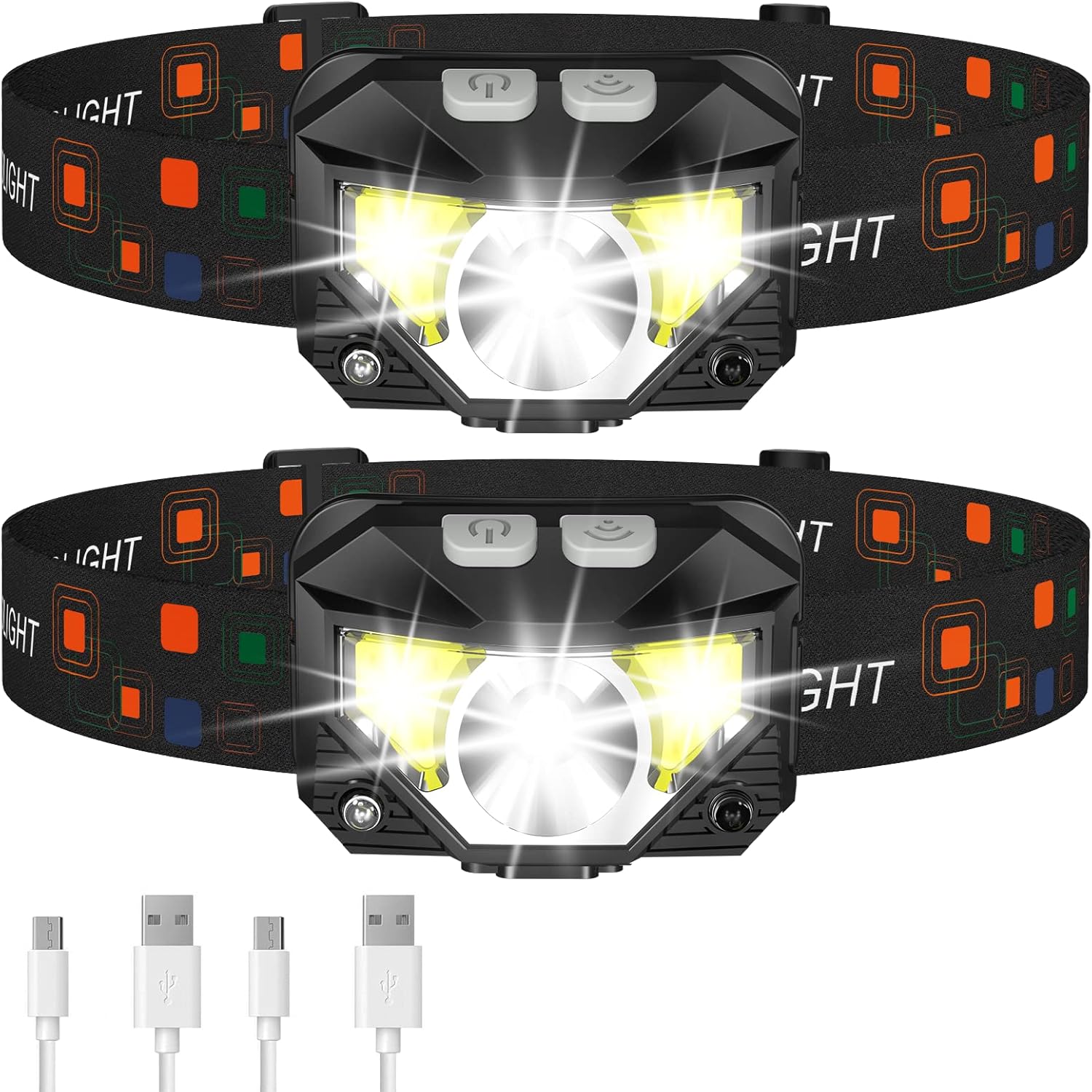
| LHKNL TG-T069 headlamp 2-pack | Headlamp, white and red | 1,200 lumens (listing) | 4 to 10 h (listing) | Listing | Hands-free chores and stairs |
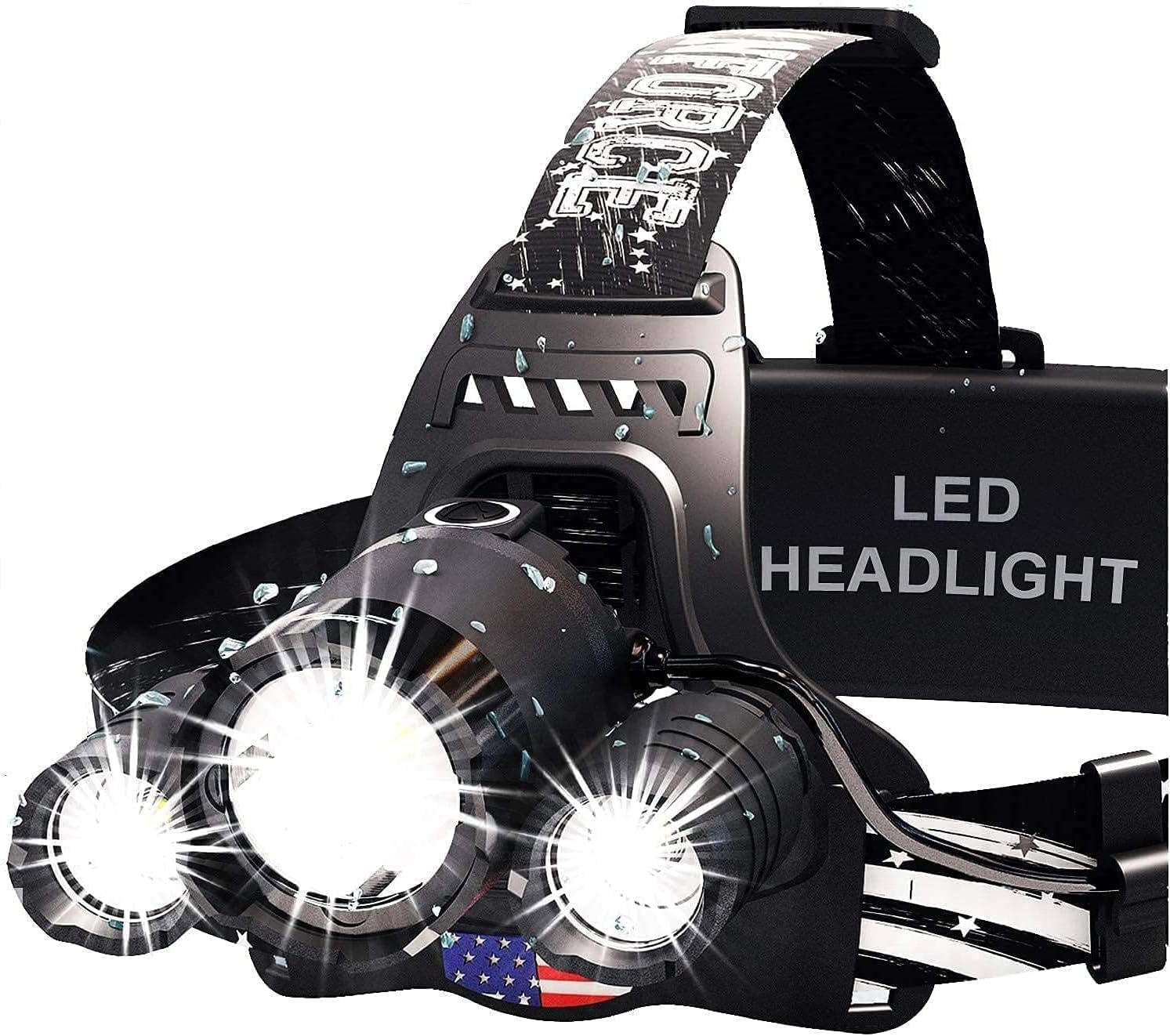
| DanForce Bold-S headlamp | Headlamp, zoom, red | 1,080 lumens (listing) | Not published | Listing | Garage and basement work |
| BEYSTE L2218 | Handheld, zoom, power bank | “100000” lumens (listing) | 15 h on low (listing) | Listing | A backup that can charge a phone |
How We Chose
We looked at the maker page where one exists, the listing where it does not, public owner reviews, and the Yard & Grid Score from verified buyer ratings. We research and compare; we do not run our own product trials. See How We Choose. The CDC advises battery-powered lights instead of candles in an outage, so no fuel or flame lights are included.
Only the Energizer has a maker page with figures. The other four are sold under brands with little published documentation, so every number for them below is “listing says.” Only one Energizer offering is picked, since its pack sizes share the same product. An Energizer listing in our data with no ratings was dropped; the single light with verified ratings stands in for it.
1. Energizer WeatheReady Compact Rechargeable LED Light
- It sits in an outlet charging, then turns on when the power fails. Energizer’s page says it turns on automatically when the power goes out and gives 40 lumens, a 30 meter beam, and about 3 hours per charge. Retailer instructions add that the slide switch must sit in ON while it charges.
- A full recharge takes about 12 hours per Energizer, so a long outage means taking turns.
- The Amazon listing for this family shows much higher lumens than the maker page; trust the maker figure.
Best for: Hallways, stairs, and the bedroom floor where you step first. Avoid if: You want one light to work a whole evening; 40 lumens is a guide light, not a work light.
2. Ruboliy FL9000 2-Pack Rechargeable Flashlights
- The listing says 700 lumens, 12 hours of runtime, a non-removable lithium-ion battery, USB-C charging, and a screen that shows the remaining charge. A battery readout is useful because it tells you when to stop using a light.
- Two lights per pack covers two adults without a second purchase. The head stretches to switch between flood and spot.
- The listing gives a one-year warranty and no battery capacity, so we cannot check the 12 hours against the battery.
Best for: A two-adult household that wants a handheld each. Avoid if: You want a replaceable cell you can swap for a spare.
3. LHKNL TG-T069 Rechargeable Headlamp (2-Pack)
- A headlamp frees both hands for the breaker panel, a sump pump, or a child. The listing says 1.87 ounces, a red light for night vision, and a 1,500 mAh built-in battery.
- The listing quotes 4 to 10 hours and 1,200 lumens. Those cannot both hold at once: see the check below.
- The listing gives a two-year warranty, the longest of the five, and a wave sensor to switch on with dirty hands.
Best for: Hands-free work and kids’ bedtime reading by red light. Avoid if: You want a beam that reaches far across a yard; this is a close-work light.
4. DanForce Bold-S Rechargeable Headlamp
- The listing says 1,080 lumens, a zoomable beam, a secondary red light, a rear safety light, and a water-resistant aluminum body at 8.8 ounces.
- No runtime or battery capacity is published, which makes planning impossible beyond “charge it first.”
- The listing gives a 90-day warranty, the shortest here.
Best for: Garage or basement jobs where a rear light helps others see you. Avoid if: You plan runtime to the hour, or want a longer warranty.
5. BEYSTE L2218 Rechargeable Flashlight
- The listing says 15 hours on low, IPX7, a battery readout, and a USB-A port that can top up a phone. The battery is sealed and cannot be replaced.
- The title claims “100000” lumens against a 30 W rating. At the best LED efficacy the Department of Energy reports, that wattage cannot produce anything near that number.
- It has the fewest verified ratings of the five and a one-year warranty.
Best for: A spare that doubles as a small power bank. Avoid if: Brightness claims drive your choice.
Checking the Lumen and Runtime Claims
A 2017 Department of Energy fact sheet puts the best LED devices at 160 to 170 lumens per watt and good LED fixtures at 125 to 135. BEYSTE: 30 W x 170 = 5,100 lumens at most, about one twentieth of “100,000.” Put the other way, 100,000 lumens at 170 lumens per watt would take 100,000 / 170 = 588 W, about 20 times the listed 30 W, from a light that weighs under 6 ounces. LHKNL: 1,500 mAh x 3.7 V = 5.55 Wh. At 1,200 lumens and a generous 135 lumens per watt, the draw is 1,200 / 135 = 8.9 W, so a full battery lasts 5.55 / 8.9 = 0.6 hours, about 37 minutes. The 4 to 10 hours must refer to the low modes.
The fix is to look for the FL1 labeling. The ANSI/PLATO FL1 standard defines runtime as the time until output falls to 10 percent of the reading taken 30 seconds after switch-on, and beam distance as where light drops to 0.25 lux. None of the listings above states FL1 figures, so we treat every runtime as approximate.
Cost of Ownership
These lights have built-in batteries, so there is nothing to replace but also nothing to swap in mid-outage. Lithium cells slowly self-discharge, so top each one up on a regular schedule and before any forecast storm. A small USB power bank or a power station can recharge handhelds and headlamps; our emergency kit checklist shows where lights fit. Warranties from the listings run from 90 days to two years, and Energizer’s maker page lists none.
How to Choose
- How many lights? One handheld per adult, one headlamp for whoever handles chores, one auto-on light per stair or hall.
- How long without a recharge? Walking-light hours = people x hours per night x nights. For 4 people x 1.5 hours x 2 nights = 12 hours; at 3 hours per Energizer charge that is 12 / 3 = 4 charges, so plan on recharging or carry spare lights.
- Hands free? Pick a headlamp for anything involving tools.
- Gear fit: Pair lights with a radio and a lantern for the main room. If a flashlight or lantern is the question, read flashlight vs lantern, and see emergency lights for plug-in options.
FAQ
How many lumens do I need for a power outage?
We found no agency figure for how many lumens an outage calls for. The check above shows a 1,200 lumen setting can empty a small headlamp battery in under an hour, so a low or medium mode you can run for hours matters more than the top number.
Should I use candles as a backup?
The CDC recommends flashlights or other battery-powered lights instead of candles, and notes fire trucks may have trouble reaching your home in an emergency. Keep an extra light rather than a candle.
Where do I keep outage flashlights?
Keep one beside each bed and one near the main exit, charged. Plug-in auto-on lights belong at the stairs. Fuel-burning gear makes carbon monoxide, so lights are the safer indoor choice; see our carbon monoxide safety guide.
Changelog: November 2026: first published.









