


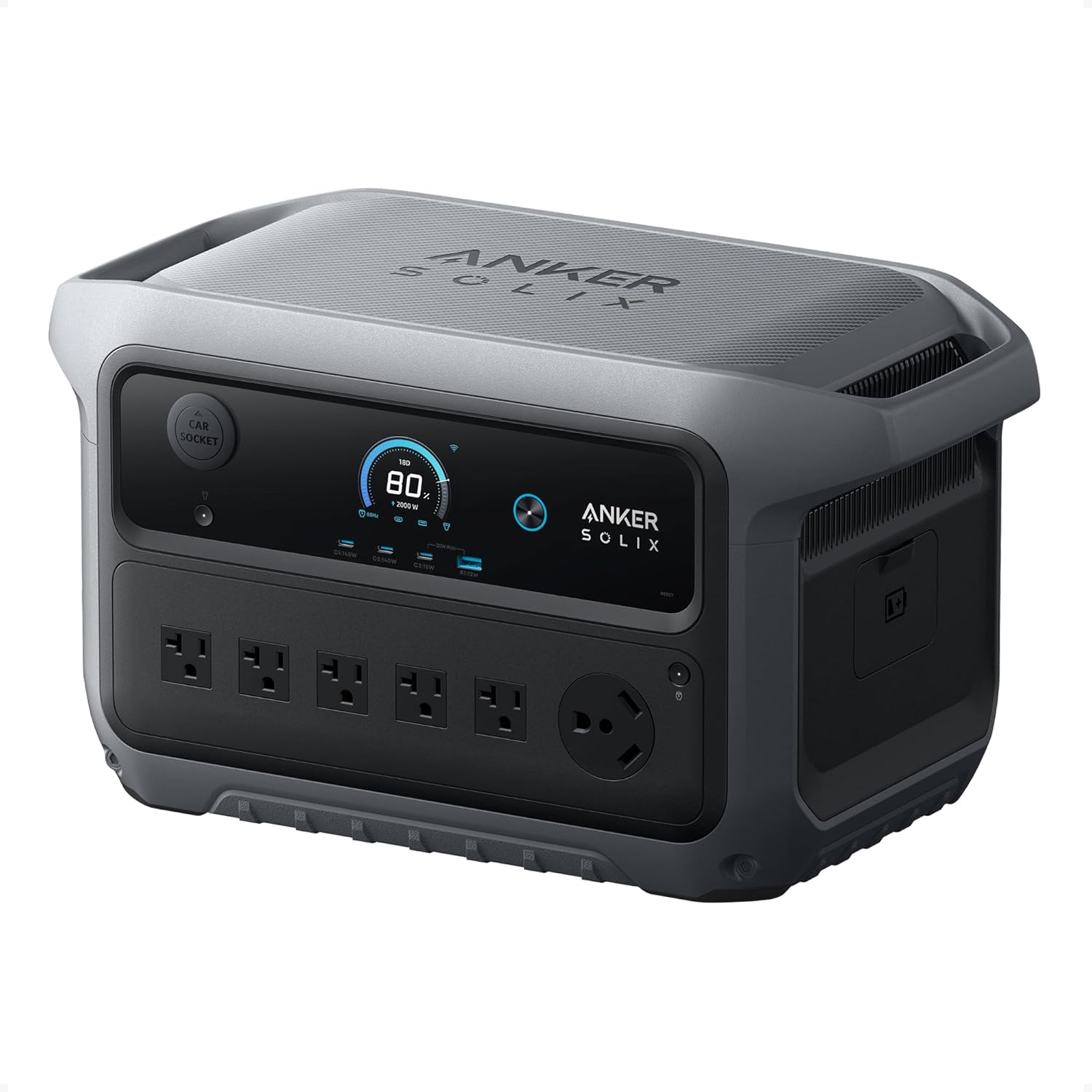
A gas furnace blower is a few hundred running watts, so a power station with 2,000 Wh and at least 1,500 W of output can carry one through a winter night. With an assumed 500 W blower running 40 percent of the time: 2,048 Wh x 0.85 inverter efficiency / (500 W blower x 0.4 duty cycle) = about 8 hours. The Anker SOLIX C2000 Gen 2 is the one we put first, because it keeps that runtime and can grow to 4 kWh with an expansion battery.
Size is the easy part. Getting power into a furnace that is wired to the house is the part that needs a licensed electrician, and that is where many plans for furnace backup stall.


Quick Comparison
| Model | Type | Capacity or fuel | Output (running / surge) | Weight | Best for |
|---|---|---|---|---|---|
| Anker SOLIX C2000 Gen 2 | Power station | 2,048 Wh LFP | 2,400 W / 4,000 W | 41.7 lb | One night plus room to expand |
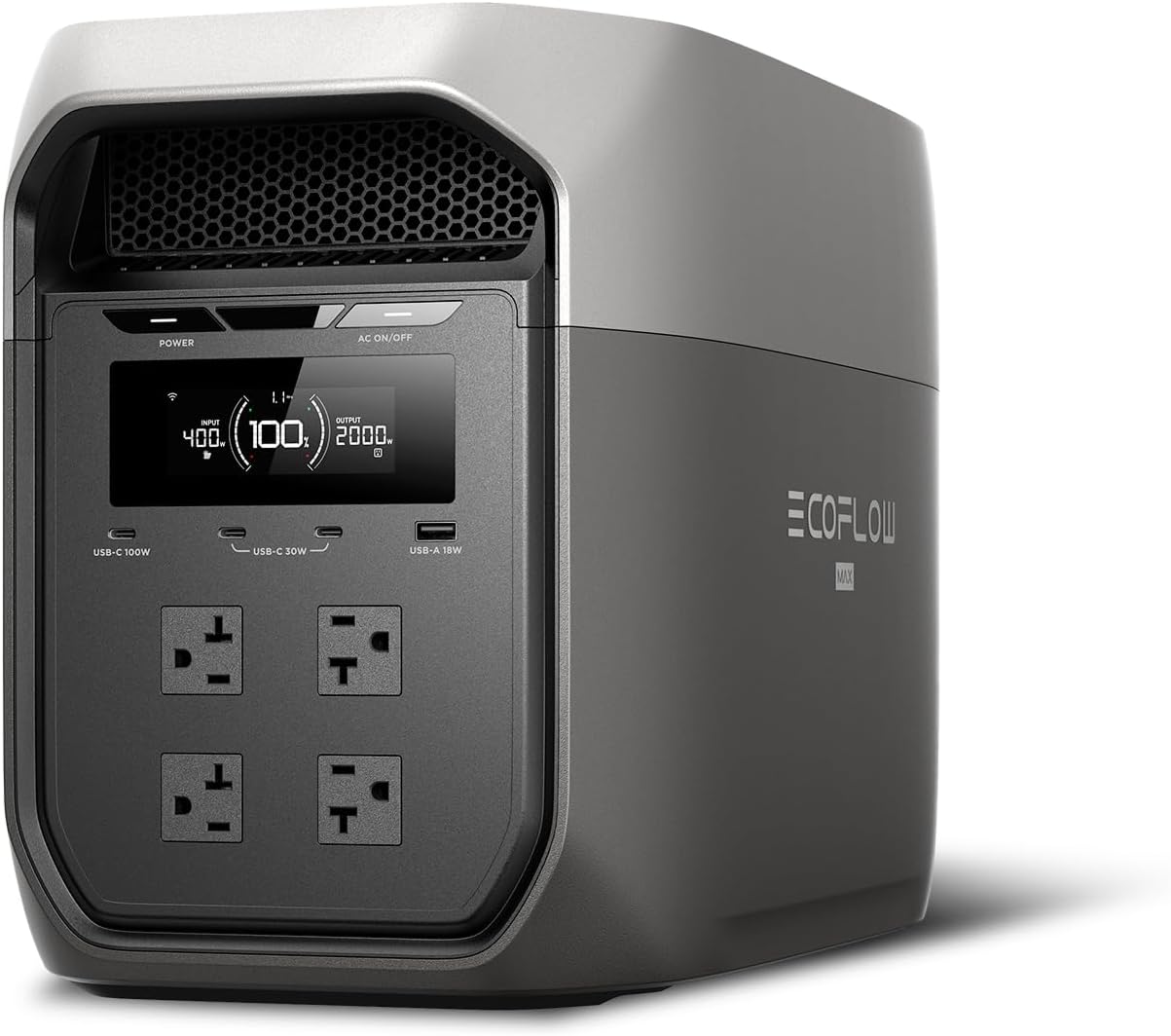
| EcoFlow DELTA 3 Max | Power station | 2,048 Wh LFP | 2,400 W / 4,800 W | about 44.8 lb | Large surge headroom |
| Jackery Explorer 2000 v2 | Power station | 2,042 Wh LFP | 2,200 W / 4,400 W | 39.5 lb | Simple, non-expandable |
| Jackery Explorer 1000 v2 | Power station | 1,070 Wh LFP | 1,500 W / 3,000 W | 23.8 lb | Short outages, efficient blowers |
| Champion 201050 | Inverter generator | Gas or propane | 3,000 W gas / 2,700 W propane running | 51.8 lb | Multi-day outages |
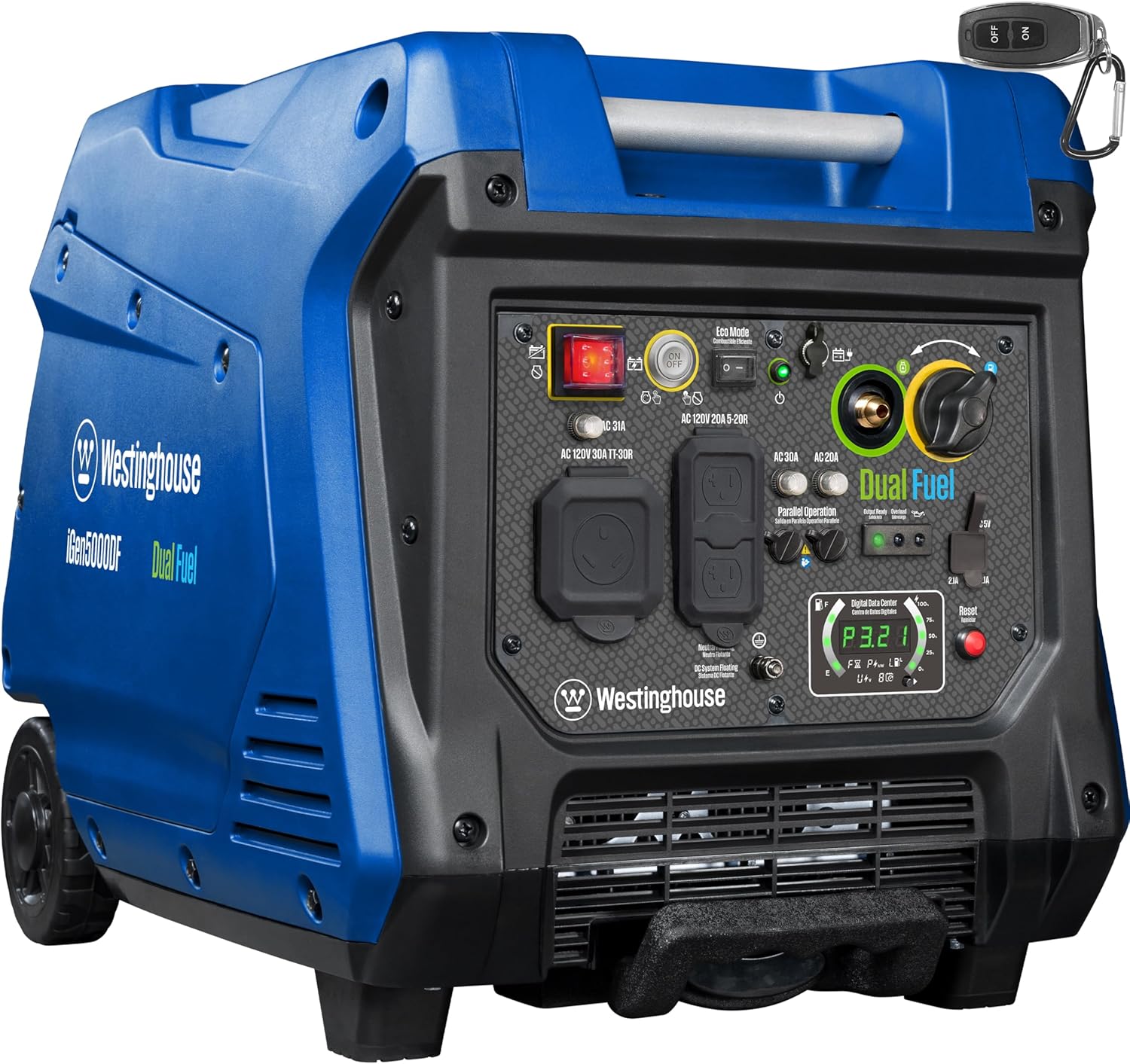
| Westinghouse iGen5000DF | Inverter generator | Gas or propane | 3,900 W gas / 3,500 W propane running | 104.7 lb | Furnace plus fridge and more |
How We Chose
We began with the furnace, not the product. Champion’s wattage chart puts a 1/2 HP furnace fan at 300 to 800 W running with 800 to 1,600 W of extra starting power; the EWEB utility chart lists a 1/3 HP fan at 700 W plus 1,400 W. Both charts list starting watts as an addition to running watts, not a total. A furnace data label gives your real figure.
Then we filtered for three things: output of at least 1,500 W with a surge rating that clears the start, a published waveform or distortion rating where the maker gives one, and a spec sheet or manual we could read. We research and compare published specs; we do not run our own product trials. The how we choose page explains the Yard & Grid Score.
Why Furnaces Are Fussier Than a Fridge
A furnace is a blower motor plus a control board, and the board decides when gas flows. Samlex, an inverter maker, says modified sine wave output causes extra heating in motors. Inverter generators from Champion state under 3% total harmonic distortion (THD), and Generac says its inverter line is at 3% THD or less. We did not find a furnace maker statement that sets a waveform requirement, so check your furnace manual or ask the manufacturer before you buy. Our pure sine wave explainer covers the term.
Of the power stations here, Jackery’s Explorer 1000 v2 listing describes pure sine wave AC ports; for the others, confirm the waveform on the maker’s spec sheet.
The Math: What a Blower Draws and How Long a Battery Lasts
Nameplate amps give an upper bound. A Comfort-Aire gas furnace spec sheet lists a 1/2 HP blower at 8 full-load amps on 115 V, which is 8 A x 115 V = 920 VA, and a 1 HP blower at 14 A, or 14 A x 115 V = 1,610 VA. Real draw is lower, and newer variable-speed (ECM or BPM) motors draw much less. A U.S. Department of Energy case study found brushless replacement motors cut fan-only power by 442 W (87 percent) and heating-mode power by 126 W (23 percent).
The burner cycles, so the blower does not run all night. A 40 percent duty cycle is an illustrative assumption; a very cold night can push it higher.
Runtime = battery Wh x 0.85 inverter efficiency / (blower W x duty cycle). The table rounds down.
| Blower running draw | 1,070 Wh at 40% duty | 2,048 Wh at 40% duty | 2,048 Wh at 100% duty |
|---|---|---|---|
| 300 W | about 7 hours | about 14 hours | about 5 hours |
| 500 W | about 4 hours | about 8 hours | about 3 hours |
| 800 W | about 2 hours | about 5 hours | about 2 hours |
Starting surge: the worst case from Champion’s chart is 800 W running plus 1,600 W extra, which is 800 + 1,600 = 2,400 W at the instant the motor starts. Every unit in the list clears that on its surge rating. Add the fridge, lights, and router and the runtimes shorten; our furnace wattage guide works through the stack.
Getting Power Into the Furnace
Gas furnaces are often wired directly to a dedicated circuit, so a cord from a generator or power station does not simply plug in. Do not plug a generator into a wall outlet to feed the house; CPSC calls this backfeeding extremely dangerous, with electrocution risk to utility workers and neighbors.
The accepted routes are a transfer switch or a generator inlet arrangement, both installed by a licensed electrician to local code. Our explainers on transfer switch basics and the generator inlet box describe the concepts. Ask the electrician which circuits the furnace shares and whether your power station or generator suits that setup. This guide does not cover wiring.
Our Picks
Anker SOLIX C2000 Gen 2
- 2,048 Wh LFP, 2,400 W rated, 4,000 W peak, 41.7 lb, with 4,000 cycles to 80 percent per Anker.
- Expands to about 4 kWh with one BP2000 Gen 2 battery (2,048 Wh each), which doubles the furnace runtime above.
- UPS switchover is 10 ms and idle draw is about 9 W; the warranty is five years on Anker’s policy table.
Best for: a household that wants roughly 8 hours of furnace blower at a 500 W average and may want more later.
Avoid if: you expect to plug the furnace straight into the unit; most furnaces cannot be connected that way.
EcoFlow DELTA 3 Max
- 2,048 Wh, 2,400 W with 4,800 W surge, and a 10 ms UPS switchover. EcoFlow states 3 years plus 2 with app registration.
- The Max is not expandable; larger expansion is on the Max Plus model.
- It weighs about 44.8 lb (20.3 kg).
Best for: a furnace blower with a large starting surge, or one that shares a circuit with a fridge.
Avoid if: you may want to add batteries later and do not want to move to the Max Plus.
Jackery Explorer 2000 v2
- 2,042 Wh LiFePO4, 2,200 W with 4,400 W surge, 39.5 lb, UPS under 20 ms, and 3 plus 2 years of warranty.
- It is not expandable, which keeps the setup simple.
- Jackery says its power stations are not recommended for medical devices or life-support equipment.
Best for: a home with a modest blower and a one-night plan.
Avoid if: a household member relies on electrically powered medical equipment; use a plan your doctor and the equipment maker approve.
Jackery Explorer 1000 v2
- 1,070 Wh LiFePO4, 1,500 W rated, 3,000 W surge, 23.8 lb, 4,000 cycles to 70 percent.
- Discharge range is 14 to 113°F and charging range is 32 to 113°F, so check how cold a garage or utility closet gets before you keep it there.
Best for: a furnace with an efficient ECM blower near 300 W, for about 7 hours at a 40 percent duty cycle.
Avoid if: your blower is 1/2 HP or larger with an older motor type; the 800 W row above gives about 2 hours.
Champion 201050
- 3,000 W running and 4,000 W starting on gasoline, 2,700 W running on propane; up to 10 hours at 25% load on 1.54 gal, or 25 hours on a 20 lb propane tank.
- Under 3% THD per Champion, CO Shield, 51.8 lb, 64 dBA at 23 ft. The listing has no reviews yet, so we judged it on its spec sheet.
Best for: multi-day outages where a battery would run out and you can store propane.
Avoid if: you have no outdoor spot at least 20 feet from the house and far from windows, doors, and vents.
Westinghouse iGen5000DF
- 3,900 W running and 5,000 W starting on gasoline; 3,500 W on propane; 18 hours at 25% load from 3.4 gal; 52 dBA; 104.7 lb. This version has no CO sensor.
Best for: furnace, fridge, sump pump, and lights together over several days.
Avoid if: you cannot move 104.7 lb on your own or need a built-in CO shutoff on this exact model.
Carbon Monoxide Warning
Gas, propane, and dual fuel generators make carbon monoxide (CO). CPSC says to run a portable generator outdoors only, at least 20 feet from the home, far from windows, doors, and vents, with the exhaust pointed away, and never in a garage, basement, or shed. Put CO alarms on every level and outside sleeping areas. Your gas furnace is also a CO source, so CPSC advises clearing snow from furnace vents; if an alarm sounds, get outside and call 911.
Cost of Ownership
- Power stations: no fuel cost, but plan for recharging; expect about 1.6 to 1.75 hours on AC for the Jackery units, per Jackery.
- Generators: propane stores well, while gasoline can degrade within weeks according to Honda’s fuel guidance, so rotate it.
- Electrician time: the inlet or transfer switch arrangement is often the biggest cost and is separate from the product.
- Warranty: three to five years across this list.
How to Choose
- How long is a typical outage where you live? One night points to a 2,000 Wh station; several days points to a generator.
- What does the furnace data label say? Multiply amps by 115 V to bound the draw.
- What else shares the circuit? Add fridge and lights; the furnace wattage guide shows how.
- Where will it sit? Generators outdoors; power stations have no exhaust but have temperature limits.
- Compare the two approaches in generator vs power station.
FAQ
Can a portable generator run a gas furnace?
Yes for the blower and controls, if it is sized for the start surge and connected through an electrician-installed inlet or transfer arrangement. Never backfeed through a wall outlet.
Can a power station run a furnace?
Yes, when the output and surge rating clear the blower and the connection is done properly. Runtime depends on the blower size and duty cycle, as the table shows.
Do I need a pure sine wave?
Samlex links modified sine wave to extra motor heating, and Champion (under 3%) and Generac (3% or less) state low THD for their inverters. Choose a unit that states its waveform or distortion and confirm with the furnace maker.
Is a CO alarm still needed?
Yes. Both a generator and the furnace itself can produce CO. The CPSC recommends battery or battery-backup CO alarms on every level and outside sleeping areas.
Changelog: October 2026: first published.









