


If your gutters sit around 17 to 18 ft up, the POOPLE 16 ft telescopic hose wand is the only one of the three that the reach math supports. For a one-story eave, the Canvcle 13 ft brush-and-rake pole scoops out wet clumps that a hose will not move. Either way, the goal is the same: get the job done with your feet on the ground.


Quick Comparison
| Pick | Type | Length | Material | Best for |
|---|---|---|---|---|
| POOPLE TG-05 | Hose wand, 4-pattern nozzle | Up to 16 ft | Aluminum | Two-story flushing of loose debris |
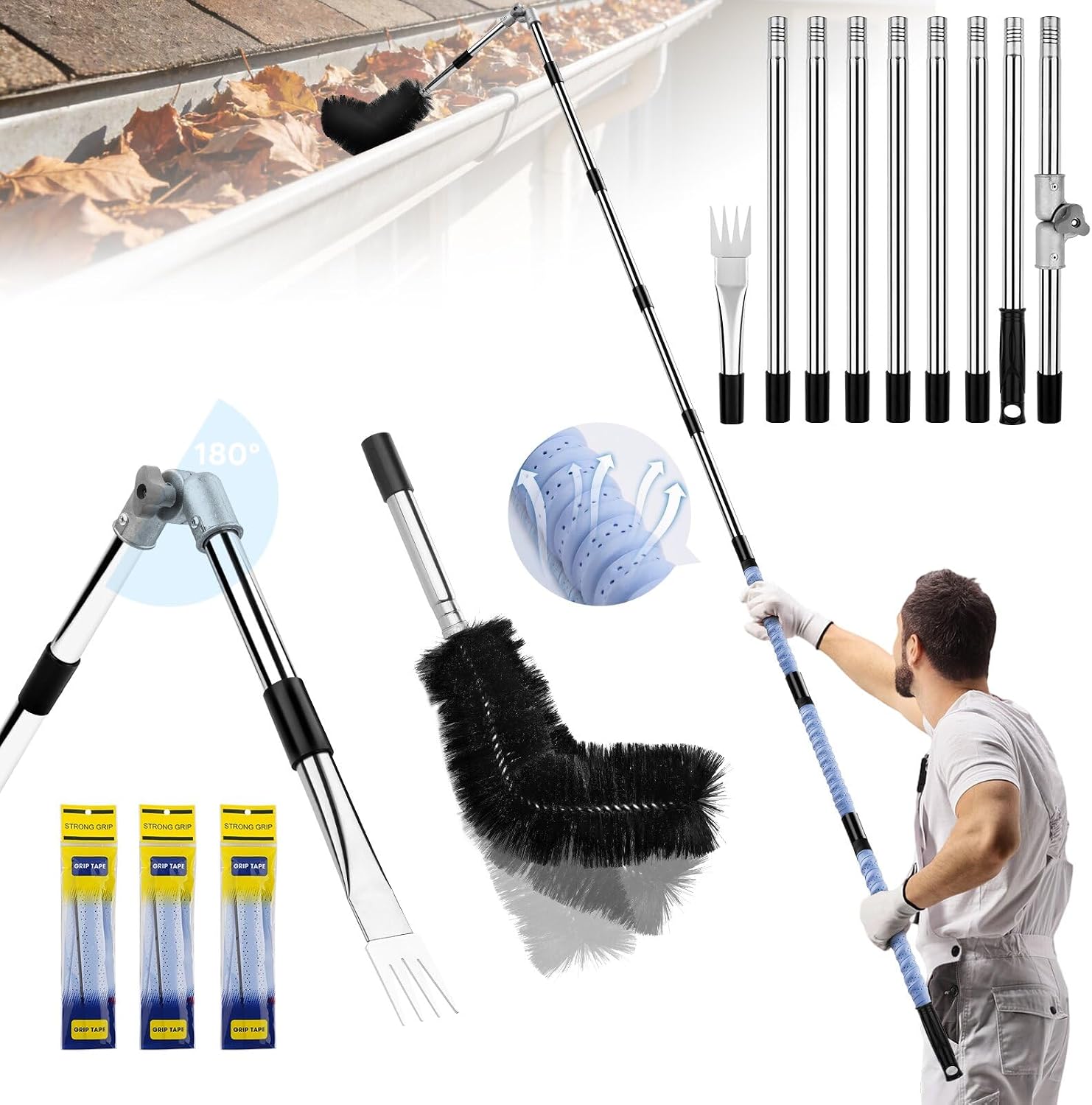
| Canvcle 13 ft | Pole with brush and rake, 180 degree head | 13 ft | Stainless steel | Scooping wet leaves from one-story eaves |
| Younqiook 10.5 ft | Pole with two bendable brushes | 10.5 ft (11.3 ft working height per listing) | Stainless steel, 2.3 lb | Dry leaves and pine needles |
How We Chose
We compared reach, how each tool moves debris, material, and weight, using listings and maker text. This product group is thin and new. The POOPLE wand is rated 4.9 across 46 reviews, a small sample. The other two picks fall below our usual 4.2 rating bar (4.0 from 2 reviews and 3.8 from 57). Read all three as shortlist options with limited owner feedback. We research and compare; we do not use or review the products ourselves. See how we choose.
1. POOPLE 16 ft Telescopic Gutter Wand (TG-05)
- Aluminum wand with a 3/4 in American-thread hose connection, a shut-off valve, a flow control, and a rotating nozzle with four spray patterns.
- The title says “24 ft reach”; the feature list says it extends to 16 ft. Use 16 ft in your math.
- Water moves loose leaves and grit. Packed, wet sludge usually needs a scoop.
Best for: a taller house with loose seasonal debris. Avoid if: your outdoor spigot is already shut off for winter or your gutters are packed with moss and seedlings.
2. Canvcle 13 ft Gutter Cleaning Kit
- Eight stainless poles, a brush, a rake, and grip tape; the head adjusts from 0 to 180 degrees and locks.
- 2.73 lb with a 1-year warranty on the listing.
- The rake pulls out wet clumps and pine cones, which a hose only pushes along.
Best for: single-story eaves and porch roofs with matted debris. Avoid if: you need to reach a second-story gutter.
3. Younqiook 10.5 ft Gutter Pole
- Eight screw-together stainless sections and two hand-bendable nylon brush heads.
- 2.3 lb; the sections come apart to 15.6 in for storage.
- The listing says it is for dry, loose debris and to scoop wet or compacted material out first. The warranty is listed as not applicable.
Best for: dry pine needles and leaves on a low roofline, and cobwebs. Avoid if: you want a warranty or have wet debris.
Ladder and Power Line Safety
These tools exist so you can stay off the ladder, and that matters. OSHA’s ladder rules of thumb are a 4-to-1 angle (1 ft out for every 4 ft up), three points of contact, watching for electrical hazards, extending the ladder 3 ft above the landing, and not overreaching. If you must climb, follow them.
All three tools here are metal poles. The CPSC warns in “Ladders and Electricity Don’t Mix” that many overhead power lines are not insulated. Find where the service line meets your house and the lines along the street before you raise any pole. If a line is within reach of the pole, do not do the job yourself; call a pro or your utility. Do not work on gutters in rain, wind, or when ice is present. A hose wand adds water to the mix, so keep it and your hands away from wires and meters.
Reach Math Before You Buy
Height gained = pole length x sin(angle), plus the height of your hands. Example with assumed values: you hold the pole at 70 degrees (sin = 0.94) and your hands sit about 4 ft off the ground.
- 10.5 ft pole: 10.5 x 0.94 + 4 = about 13.9 ft
- 13 ft pole: 13 x 0.94 + 4 = about 16.2 ft
- 16 ft wand: 16 x 0.94 + 4 = about 19.0 ft
Measure your own eave height, add a foot of margin, and compare. A steeper angle gets you more height but less leverage on the debris. A listing’s reach figure is the best case, so a two-story house gets you only the 16 ft wand, and a house taller than that calls for a professional.
Ownership Costs
There are no batteries or fuel. The wand needs a working hose and spigot, so use it before the first hard freeze and drain the hose afterward; see how to winterize outdoor faucets. Brush heads wear out, and Canvcle lists its brush and rake as replaceable.
How to Choose
- How high is the eave? Run the reach math above.
- Is the debris loose or matted? Hose for loose, rake for matted.
- What is overhead? Wires or branches near the gutter mean skip the DIY.
Why it matters before winter: clogged gutters feed ice dams, which NWS says to avoid by keeping gutters and downspouts clear. See how to clean gutters before winter and how to prevent ice dams.
FAQ
Can I clean gutters with a leaf blower instead?
Dry leaves, yes, if you stay on the ground. This guide covers pole and wand tools only.
How often should gutters be cleaned?
At least once before winter, and again after heavy leaf drop. Trees overhead mean more often.
Should a roof rake double as a gutter tool?
No. Roof rakes are for snow, as covered in best roof rakes for snow.
Changelog: November 2026: first published.









