


Four loud beeps, a pause, then four more is the carbon monoxide alarm, and the response is to get everyone outside into fresh air and call 911 from there. A single short chirp every 30 or 60 seconds, or five chirps a minute, is a maintenance signal such as low battery or end of life. The CPSC says to get outside to fresh air immediately and then call 911 if you suspect CO poisoning. If you cannot tell which signal you are hearing, treat it as an alarm.
What Each Pattern Means
Patterns differ by brand and model, so your manual outranks this table. The two below are from the Kidde and First Alert support pages for their battery CO alarms.
| Signal | Kidde says | First Alert says |
|---|---|---|
| CO alarm | 4 short beeps, 5 seconds of silence, 4 short beeps; may be CO or a nuisance alarm | 4 beeps and a pause; CO detected, move to fresh air and call 911 |
| Low battery | 1 chirp every 60 seconds | 1 beep every minute |
| End of life | 1 chirp every 30 seconds; the alarm can no longer detect CO (a 30 second chirp can also mean a malfunction) | 5 beeps every minute; replace the alarm |
| Other | Possible malfunction, error code, or one long squeal; see manual or Kidde support | Refer to your model’s manual |
Kidde’s page puts its 30 second end-of-life chirp at seven years after power-up, which matches Kidde alarms made before 2013; Kidde says its CO alarms made since 2013 have a 10-year life, with a few listed exceptions. Sealed models can use a different signal, which our guide on how long CO detectors last covers.
If It Is the Alarm: Leave First
- Get everyone out, including pets, and go into fresh air.
- Call 911 from outside. First Alert says to keep everyone out until the fire department arrives, and the CPSC says not to go back in until responders give permission.
- Know the symptoms. The CPSC lists headache, dizziness, weakness, nausea, vomiting, sleepiness, and confusion. They can look like the flu, which is why the alarm is the warning.
- Do not silence it and carry on. A nuisance alarm is possible, but let responders make that call.
Running a generator, grill, or fuel heater inside or near a window is a common source during outages. The CPSC says to run a portable generator outside, at least 20 ft from the home, far from windows, doors, and vents, with the exhaust pointed away from the home. See carbon monoxide safety during power outages.
If It Is a Chirp: Match It to the Manual
Count the chirps and the gap between them for a few minutes. Then use this order.
- Low battery: replace the batteries. On plug-in alarms with backup, replace those too. A battery that dies in about a month on a plug-in model is usually a sign the alarm is not getting AC power, per Kidde.
- End of life: replace the whole alarm. Kidde says a new battery will not stop the end-of-life chirp, and the alarm cannot detect CO in that state. Replace it the same day.
- Error or malfunction: read the display and manual, or call the maker. Kidde points owners to its product support line.
- Random chirps: Kidde says chirping with no regular pattern can have several causes; work through its troubleshooting steps and your manual.
Find the date on the back of the alarm. Replacement date = manufacture or activation date + rated life. An alarm made in 2016 with a 10 year life is due in 2026. If you cannot read the date, replace it.
Replacing It
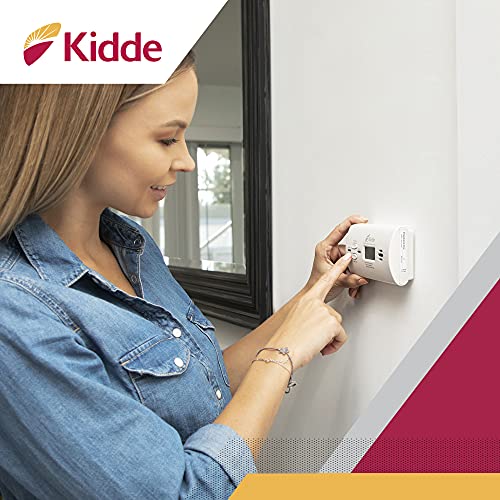
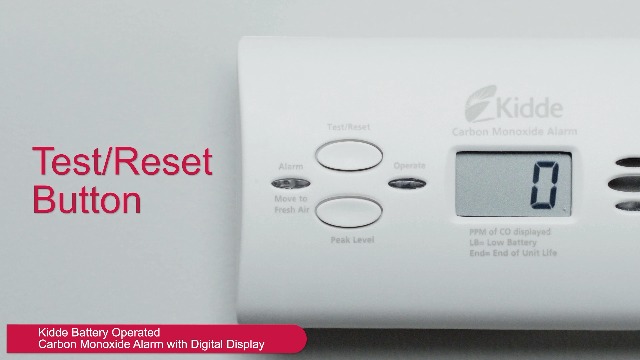
The CPSC recommends a CO alarm on every level of the home and outside sleeping areas, and says interconnected alarms all sound when one does. A battery model like the Kidde AA battery CO alarm below suits a hallway outside bedrooms; check its manual for its replacement date. Compare features in our best carbon monoxide detectors, or see how it differs from a smoke alarm in CO detector vs smoke detector.

Prime Kidde Carbon Monoxide Detector


As an Amazon Associate we earn from qualifying purchases. Product prices and availability are accurate as of the date/time indicated.
We research and compare; we do not run our own product trials. See how we choose.
Changelog: November 2026: first published.









