


Pick BLUETTI if the job is keeping a refrigerator cold and you want a battery bank that grows to 8 kWh; pick EcoFlow if you want higher surge ratings and a mature set of app backup modes. At about 1 kWh the two are near equals, and the real split is at 2 kWh, where BLUETTI sells a fridge-first design that expands and EcoFlow sells a higher-output, fixed unit.
Both brands use several model names, so this page pairs them by size. At about 1 kWh: BLUETTI AC180 (1,152 Wh) against EcoFlow DELTA 3 Classic (1,024 Wh). At about 2 kWh: BLUETTI FridgePower (2,016 Wh) against EcoFlow DELTA 3 Max (2,048 Wh).

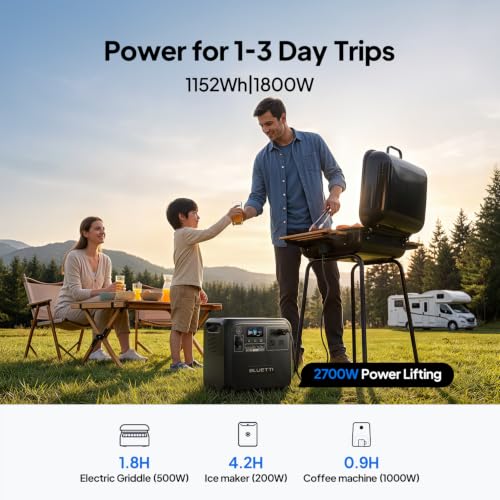
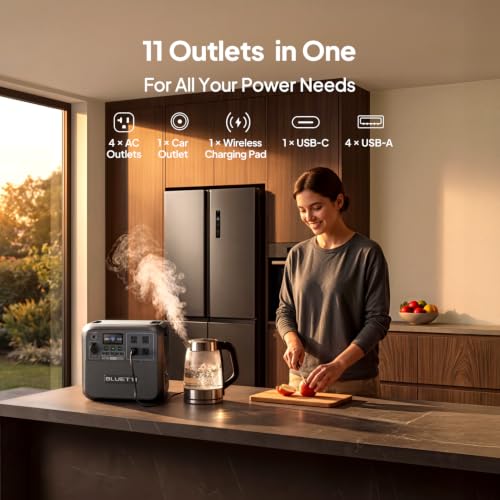
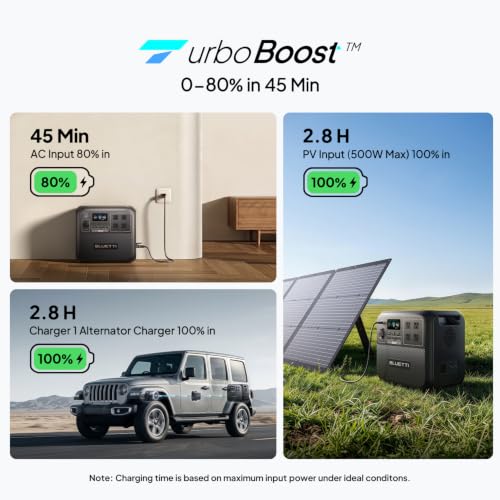
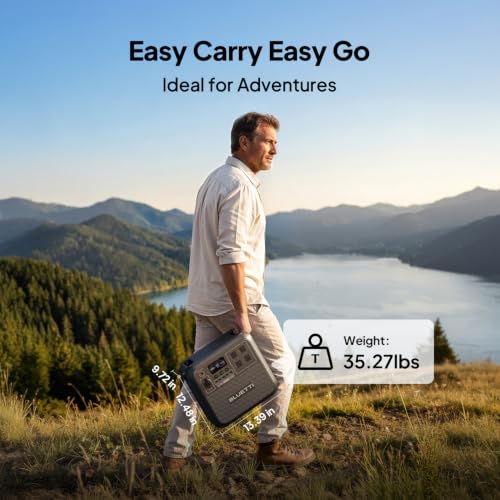
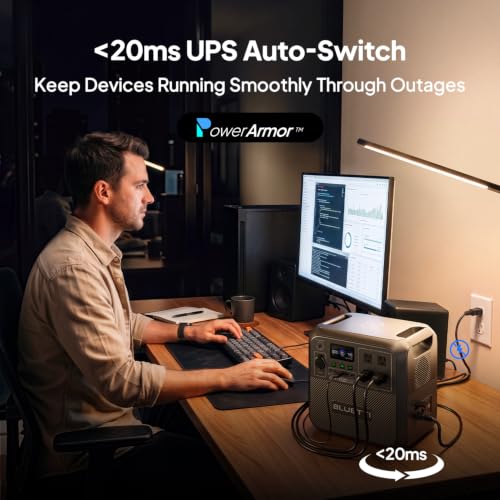
BLUETTI Portable Power Station AC180



As an Amazon Associate we earn from qualifying purchases. Product prices and availability are accurate as of the date/time indicated.

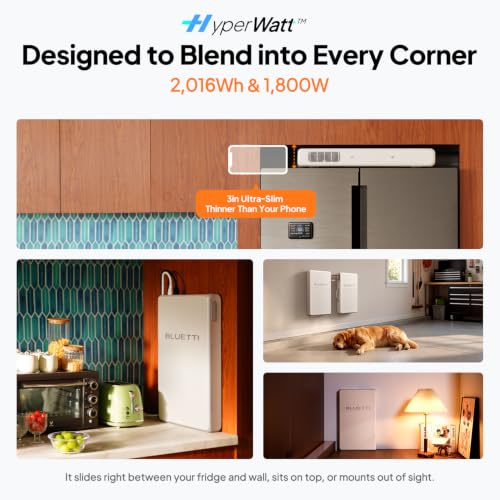
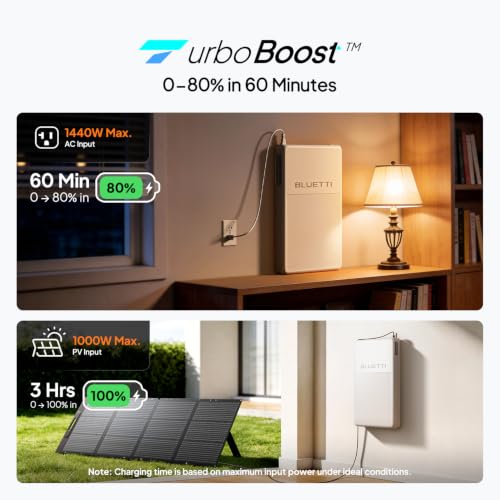
BLUETTI FridgePower Portable Power Station



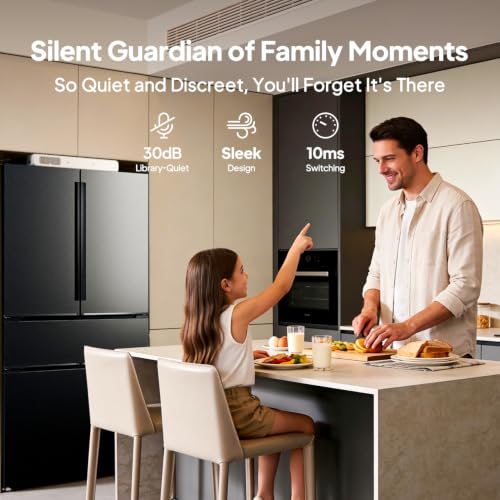

As an Amazon Associate we earn from qualifying purchases. Product prices and availability are accurate as of the date/time indicated.

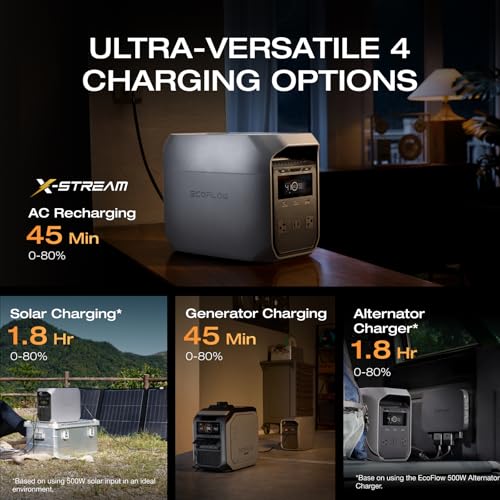
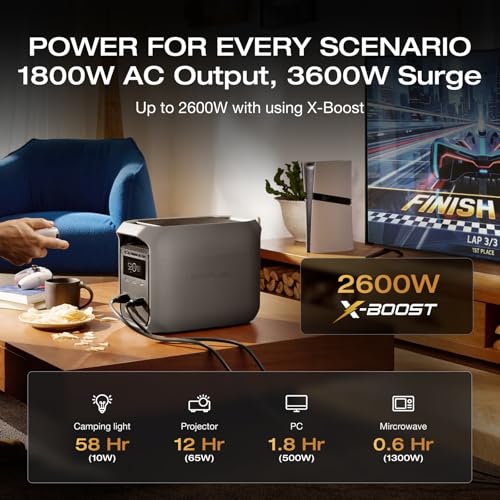
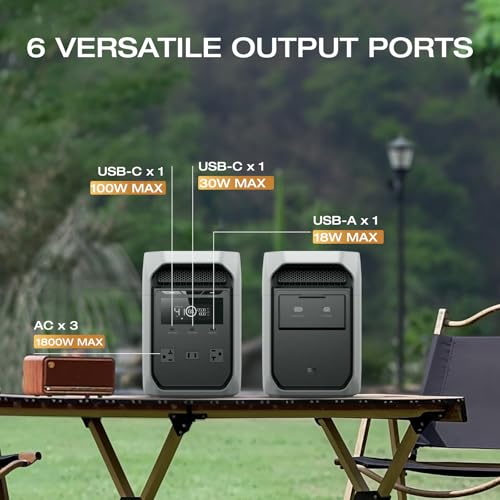
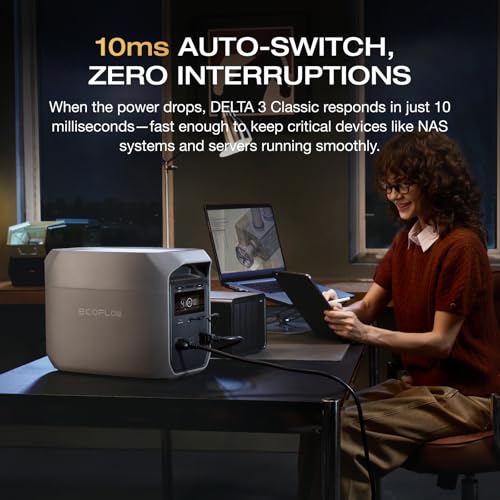
EF ECOFLOW Portable Power Station Delta 3 Classic
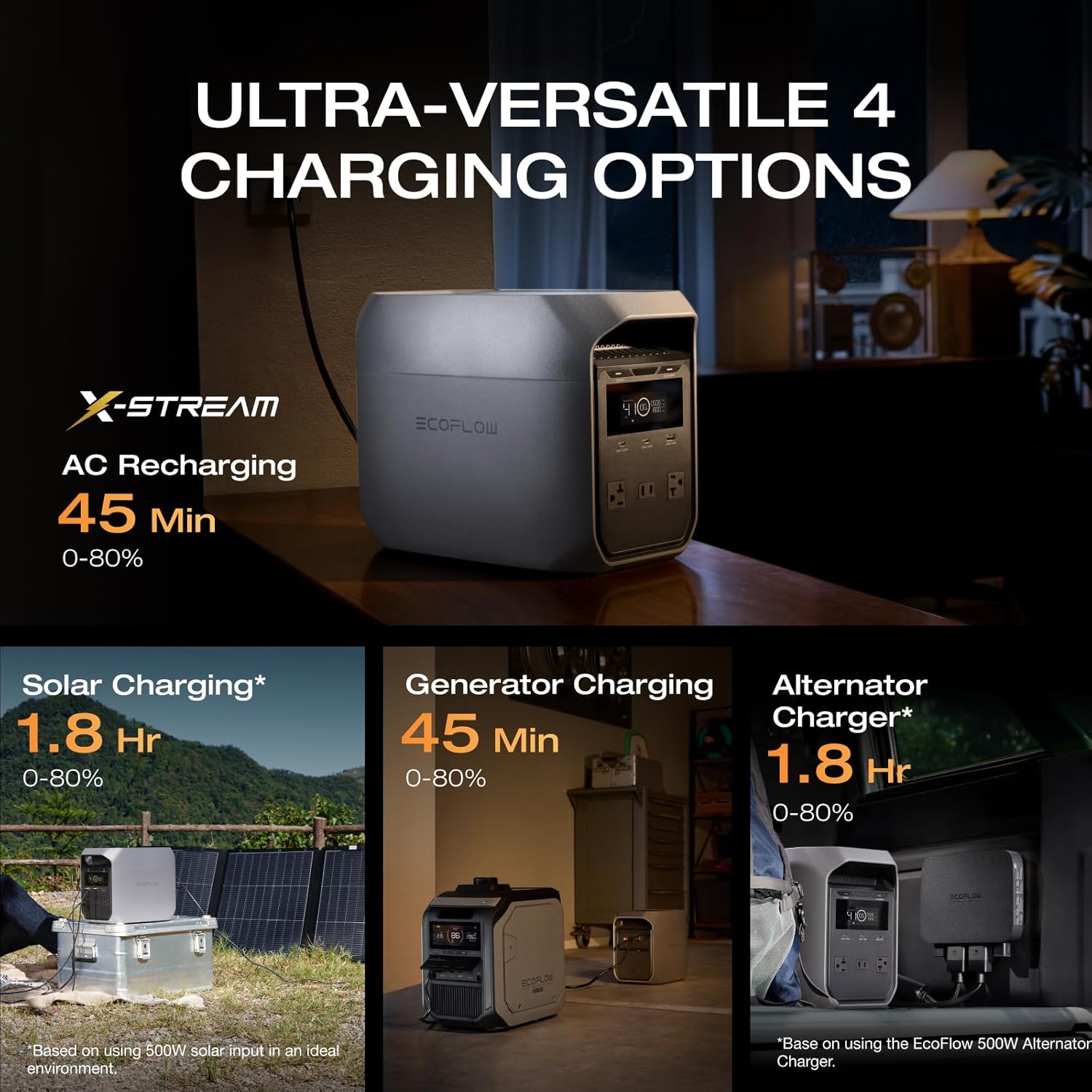
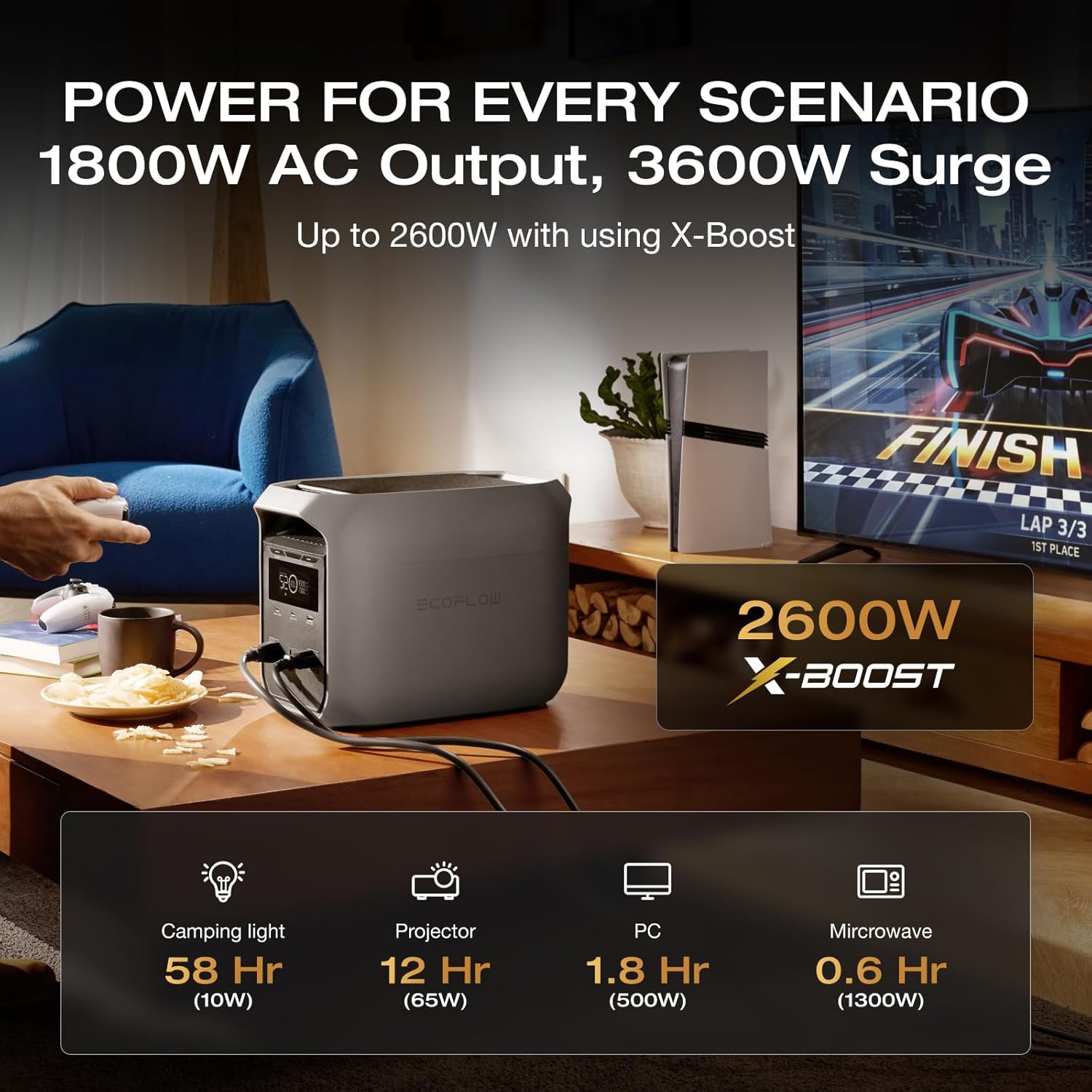
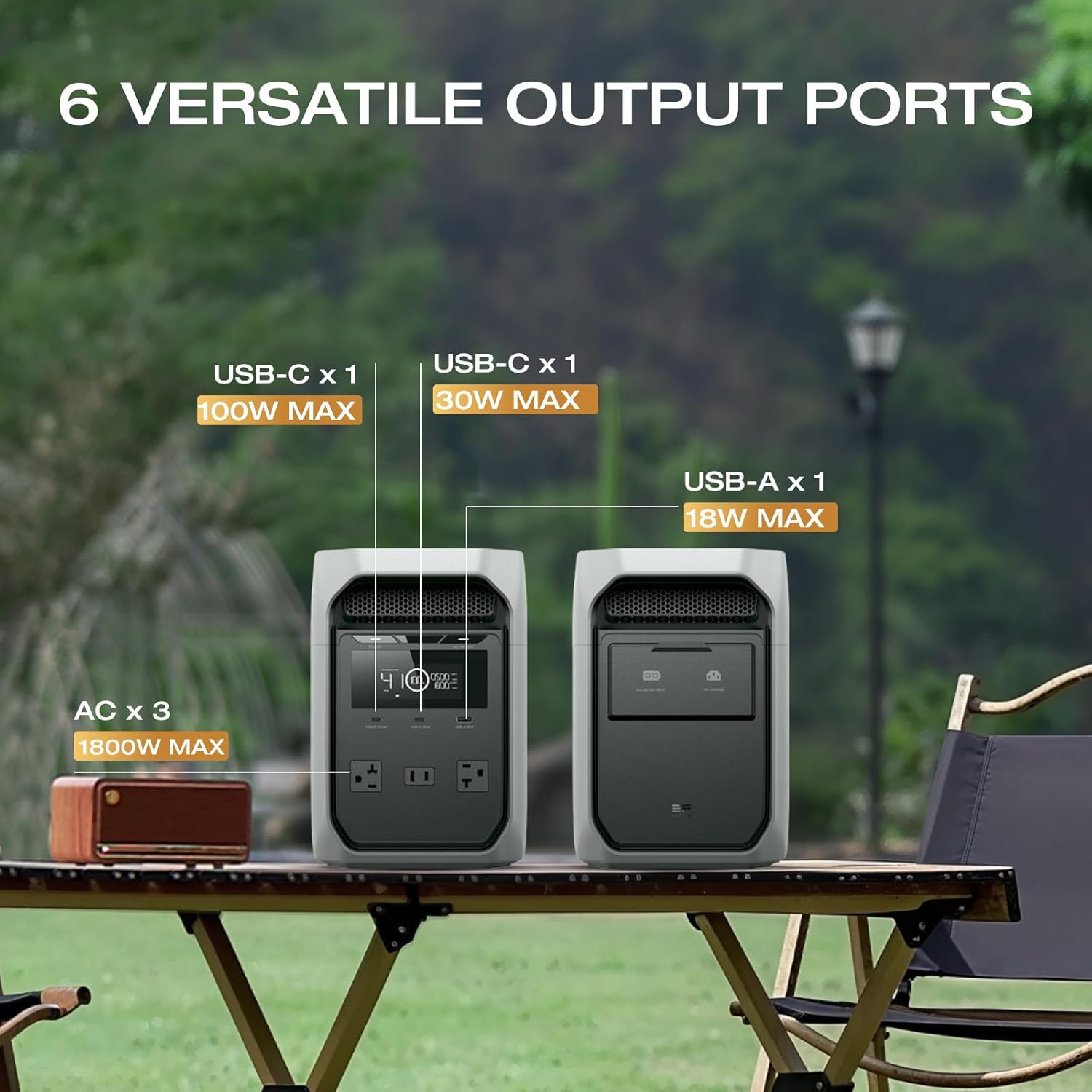


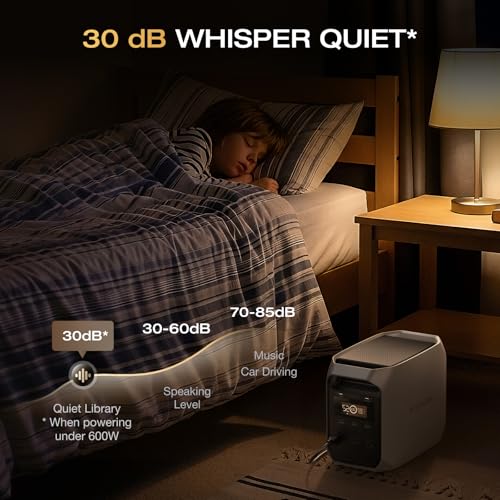
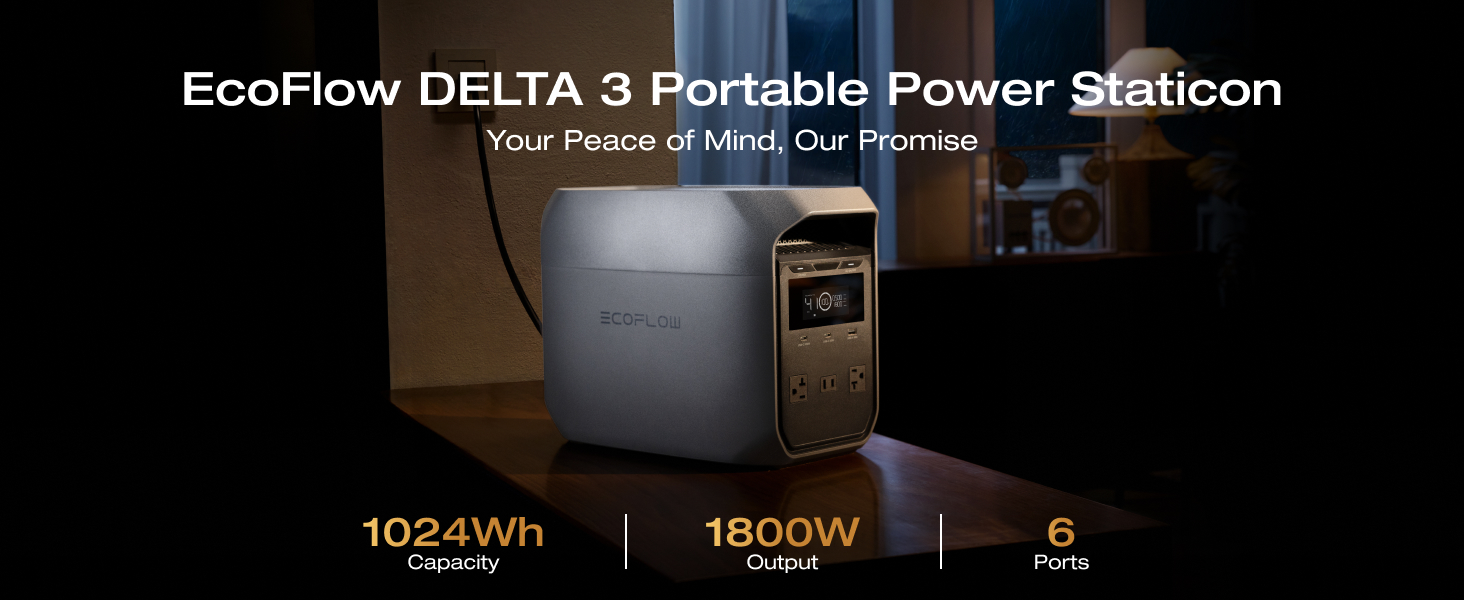
As an Amazon Associate we earn from qualifying purchases. Product prices and availability are accurate as of the date/time indicated.
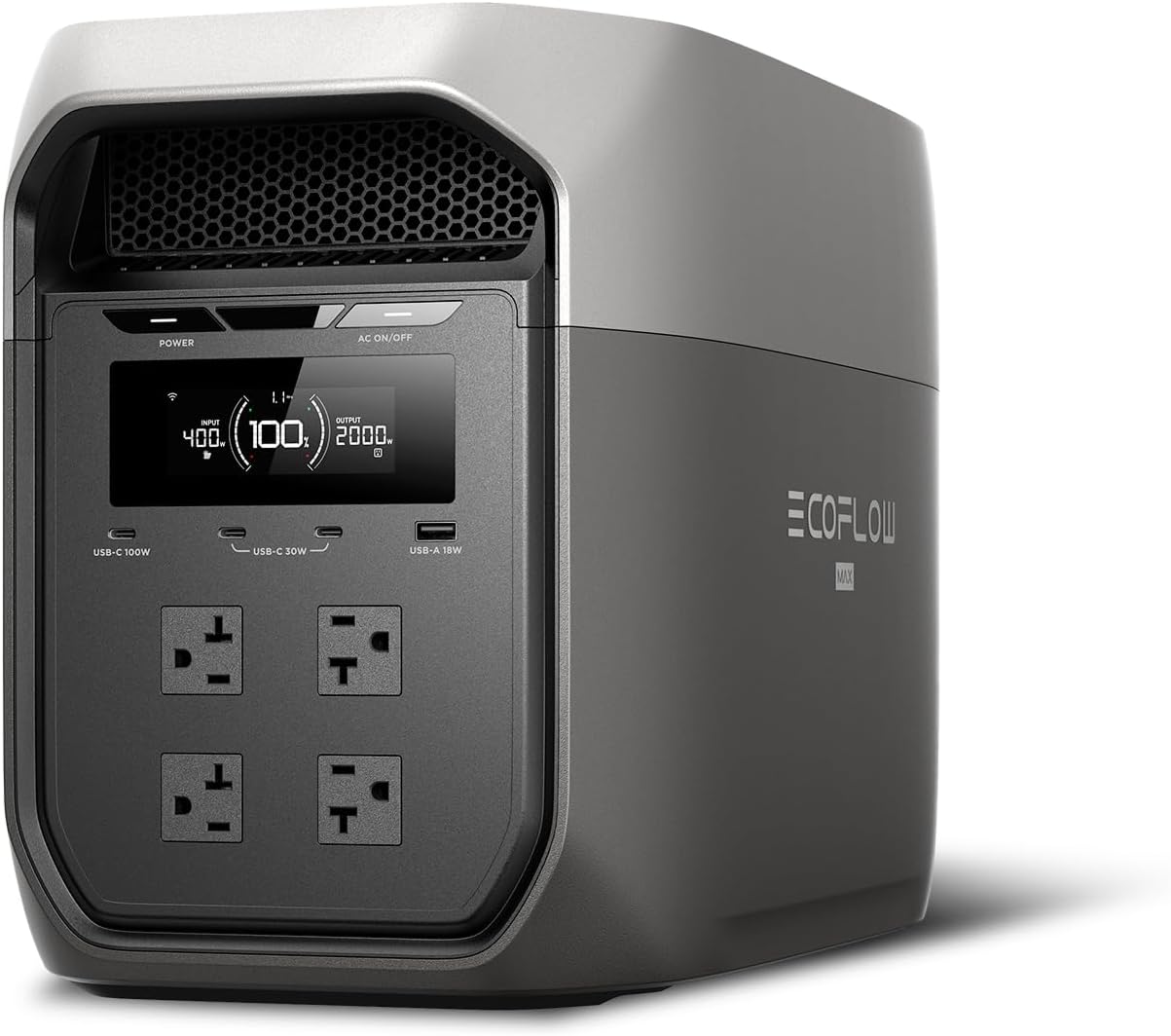
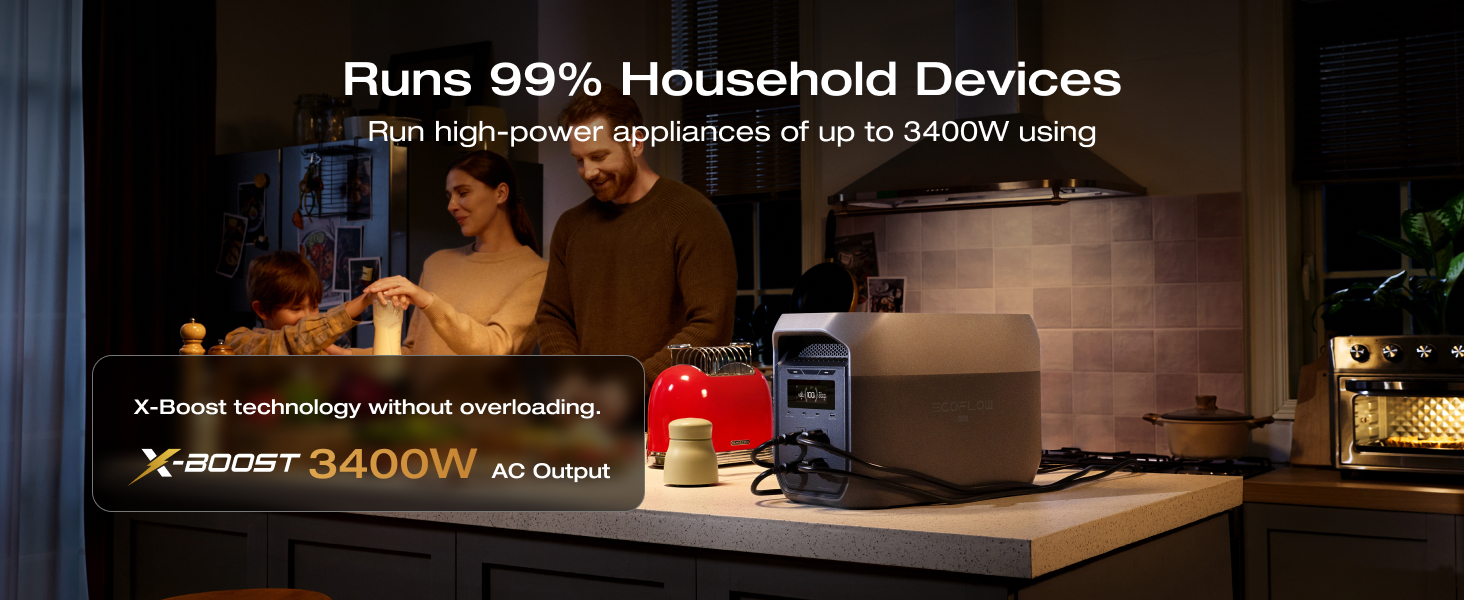
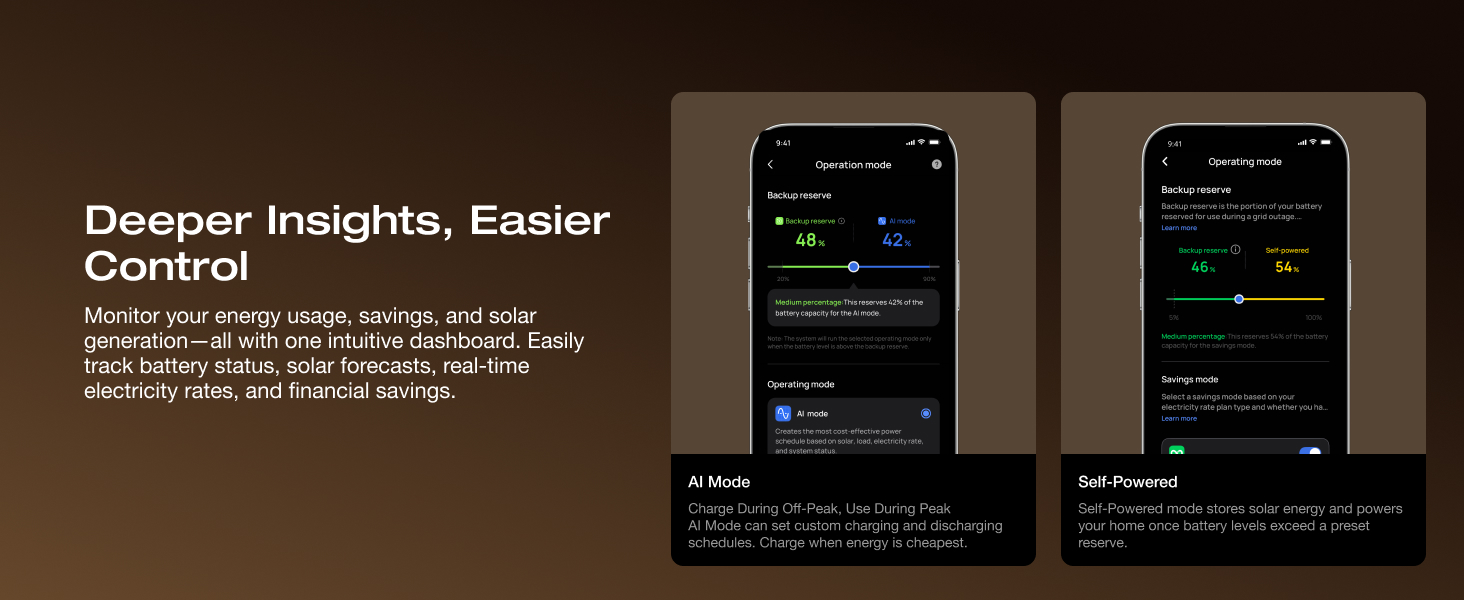
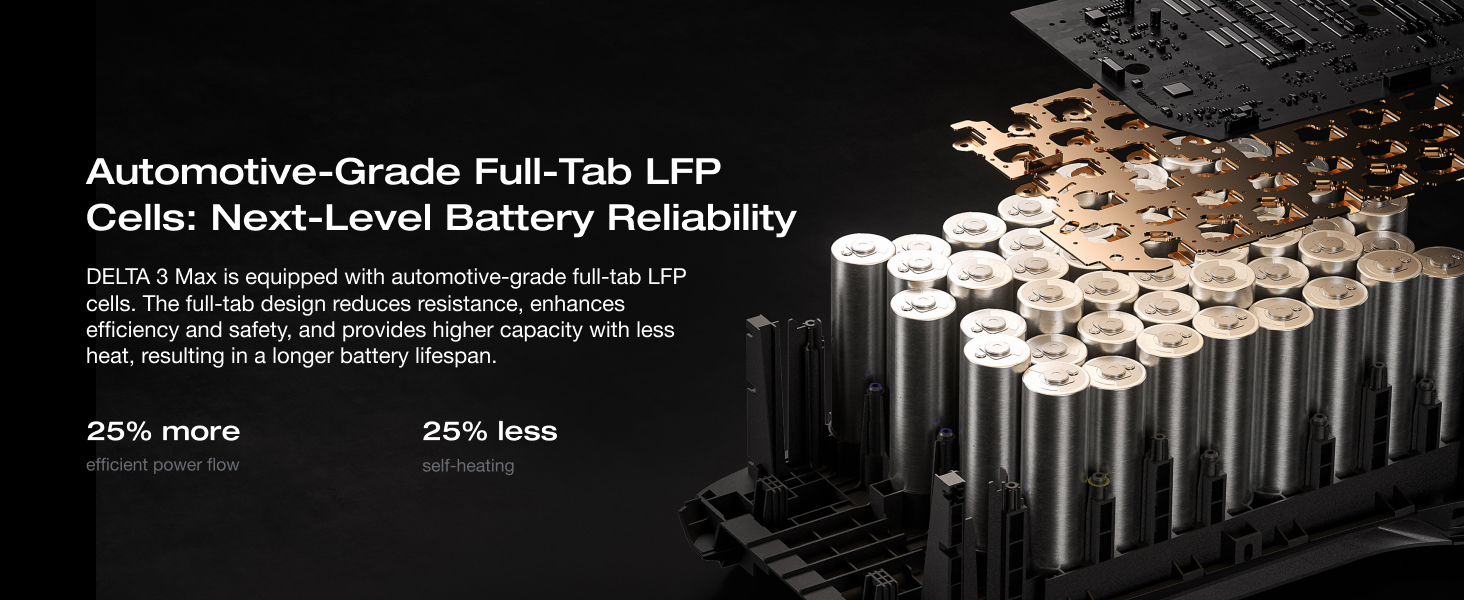
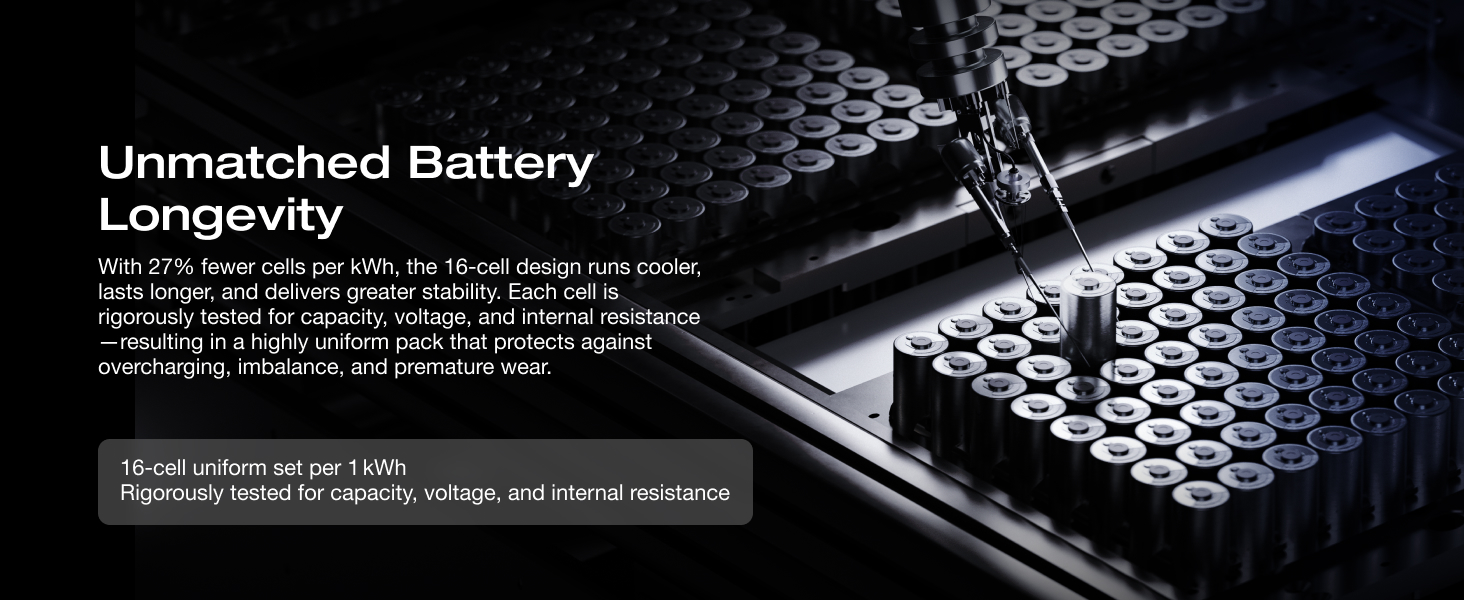
Prime EF ECOFLOW DELTA 3 Max Portable Power Station










As an Amazon Associate we earn from qualifying purchases. Product prices and availability are accurate as of the date/time indicated.
The FridgePower card rests on a smaller review base than the other three, so read its score with that in mind.
Specs Side by Side
Figures come from BLUETTI and EcoFlow US product pages, the AC180 manual, and BLUETTI’s FridgePower page. Watt-hours (Wh) are the size of the tank; watts (W) are how fast you can pour from it.
| Spec | BLUETTI AC180 | EcoFlow DELTA 3 Classic | BLUETTI FridgePower | EcoFlow DELTA 3 Max |
|---|---|---|---|---|
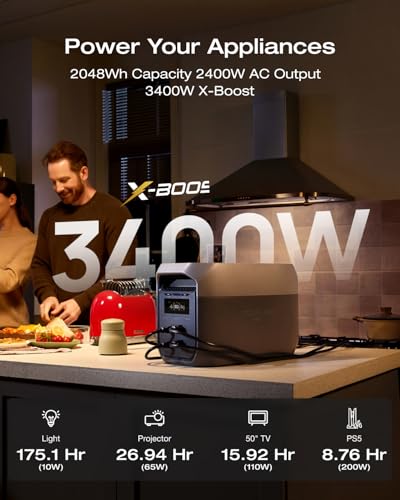
| Capacity | 1,152 Wh LiFePO4 | 1,024 Wh LiFePO4 | 2,016 Wh LiFePO4 | 2,048 Wh LFP |
| Continuous / peak | 1,800 W / 2,700 W surge | 1,800 W / 3,600 W | 1,800 W / 3,600 W | 2,400 W / 4,800 W |
| Expansion | Not expandable per BLUETTI FAQ (battery packs only charge it) | No | Up to 8,064 Wh with BlueCell 200 batteries | No (Max Plus expands) |
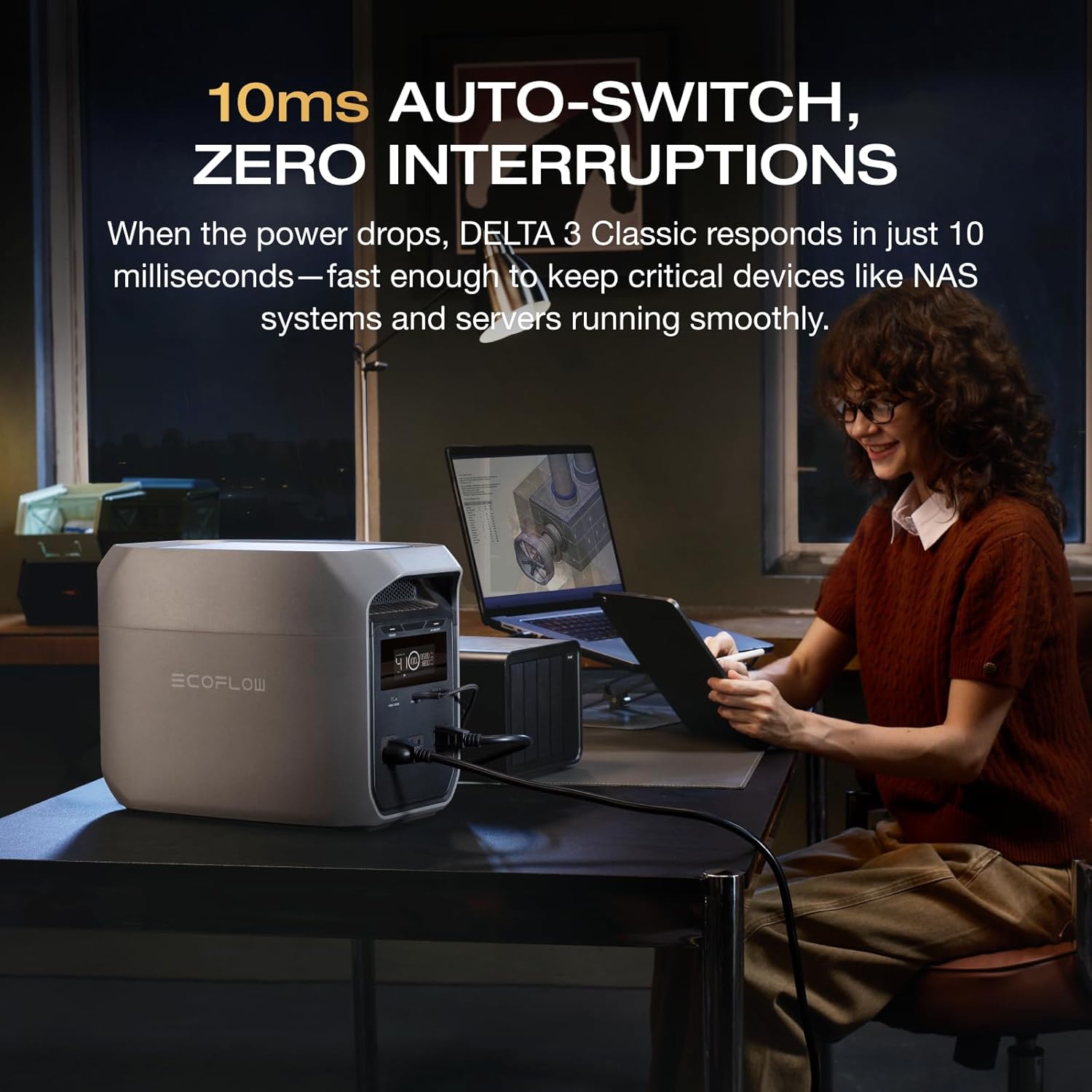
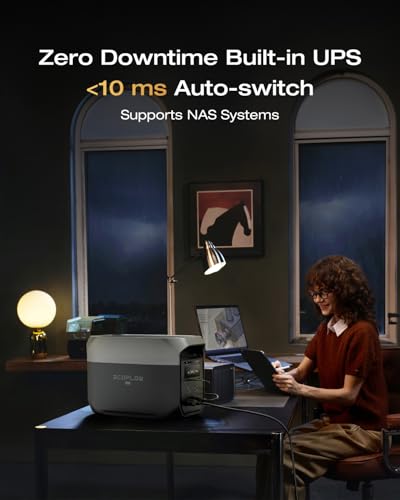
| UPS switchover | 20 ms or less (manual) | 10 ms | 10 ms or less | 10 ms |
| Idle draw | Not stated | Not stated | 4 W | Not stated |
| Rated cycles | 3,500 or more | Not stated | 4,000 to 80% | Not stated |
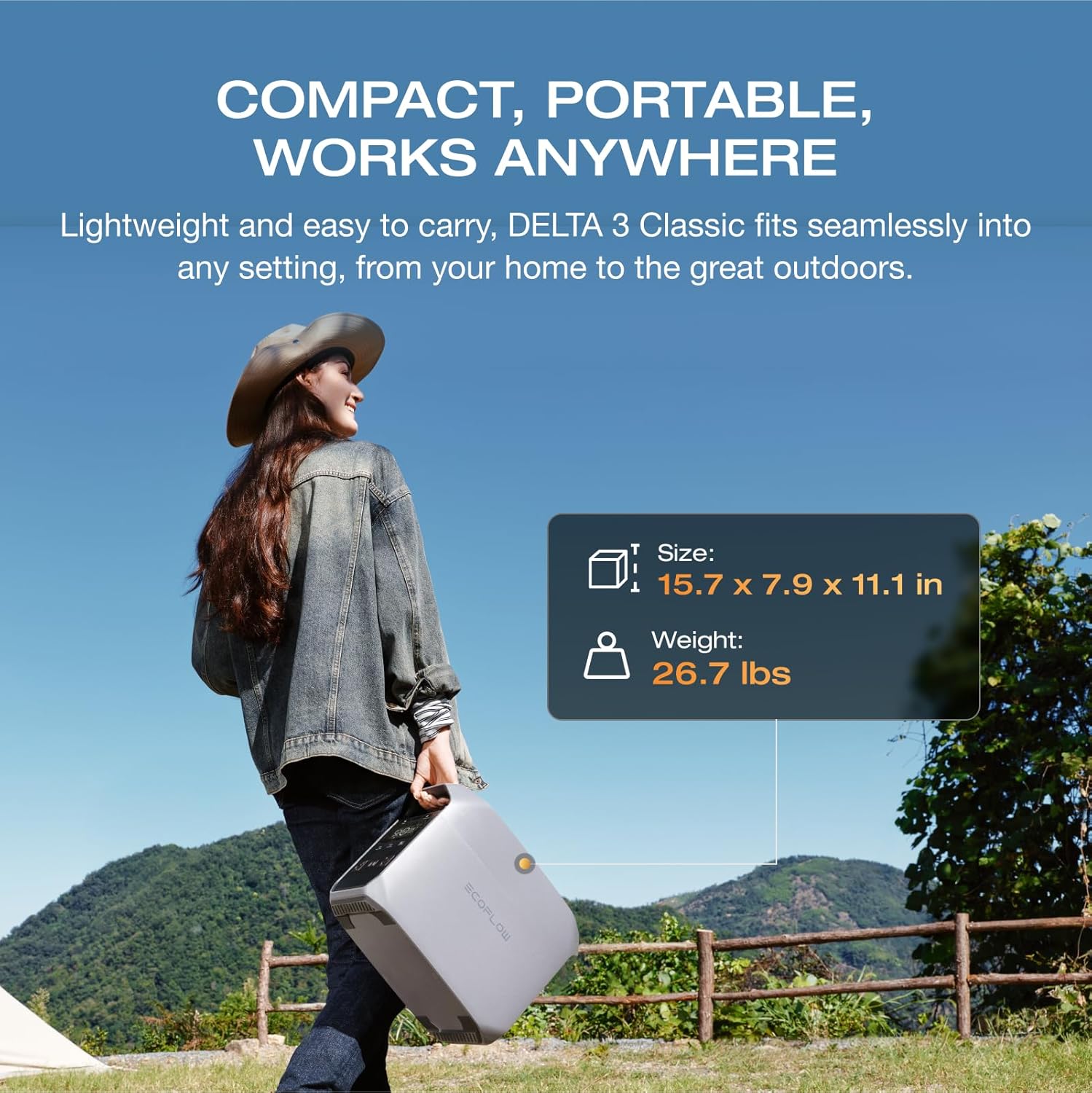
| Weight | 35.3 lb (page) | 26.7 lb | About 43.4 lb | About 44.8 lb |
| Warranty | 5 years | 3 years, plus 2 with app registration | 5 years | 3 years, plus 2 with app registration |
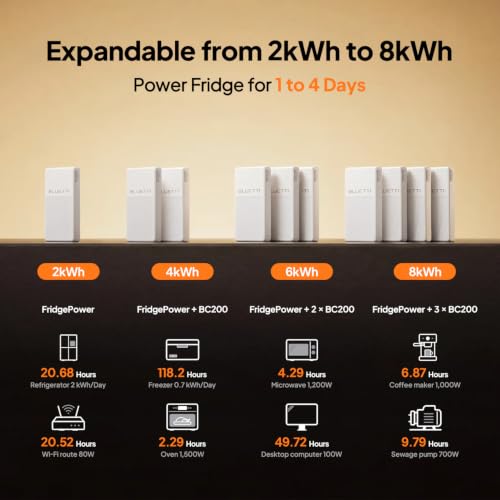
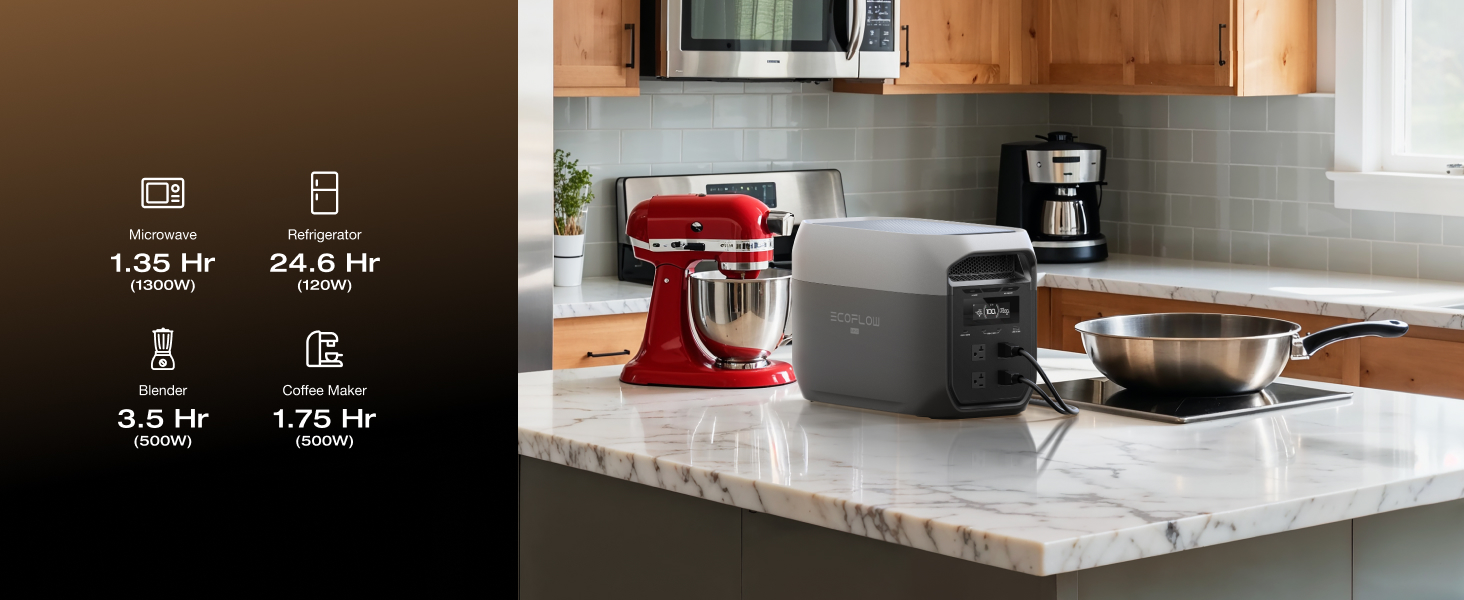
Runtime at the outlet with a 150 W average fridge and 0.85 for inverter loss (a common planning figure): AC180: 1,152 x 0.85 / 150 = about 6.5 hours. Classic: 1,024 x 0.85 / 150 = about 5.8 hours. FridgePower: 2,016 x 0.85 / 150 = about 11.4 hours. DELTA 3 Max: 2,048 x 0.85 / 150 = about 11.6 hours.
The Four Differences That Matter
1. A Fridge-First Design Against a General One
BLUETTI builds the FridgePower around one job, a wall-mountable battery for a refrigerator, with a 4 W idle draw. EcoFlow’s DELTA 3 Max is a general station with a higher 2,400 W continuous rating. The idle draw matters because a station that stays plugged in as a UPS burns its own energy: 4 W x 24 h = 96 Wh a day, or 96 / 2,016 = about 5 percent of the tank. EcoFlow does not state an idle figure on the pages we reviewed, so we cannot compare it.
Take a 600 kWh a year fridge, which averages 600,000 Wh / 8,760 h = about 68.5 W. Both 2 kWh units carry it for roughly 2,016 x 0.85 / 68.5 = about 25 hours, before idle draw. Our refrigerator power station picks goes deeper on this.
2. Expansion Path
BLUETTI lists the FridgePower at up to 8,064 Wh, built from the base unit plus up to three BlueCell 200 add-on batteries; 8,064 / 2,016 = 4, so the bank is four 2,016 Wh blocks. At 150 W average, 8,064 x 0.85 / 150 = about 46 hours of fridge. EcoFlow’s expansion sits in other models: the DELTA 3 Plus is listed at 1 to 5 kWh and the DELTA 3 Max Plus at up to 10 kWh. The Max and Classic are fixed.
Be careful with BLUETTI’s AC180. BLUETTI’s page copy mentions charging it from B80, B230, and B300 batteries, but its FAQ says the AC180 does not support capacity expansion with them, so size it as a fixed 1,152 Wh. The expansion battery explainer covers what to ask.
3. Surge, Switchover, and Warranty at 1 kWh
The AC180 offers 1,800 W continuous and lists 2,700 W surge power; BLUETTI describes its Power Lifting mode as running heating devices up to 2,700 W and does not say how the AC180 handles a compressor start. The Classic rates 3,600 W surge, which is the number that decides whether a fridge compressor starts beside a microwave. With a 1,500 W microwave and a 2,000 W French-door startup (Anker’s published upper estimate), 1,500 + 2,000 = 3,500 W: inside the Classic’s 3,600 W, and above both the AC180’s 1,800 W continuous rating and its 2,700 W surge rating.
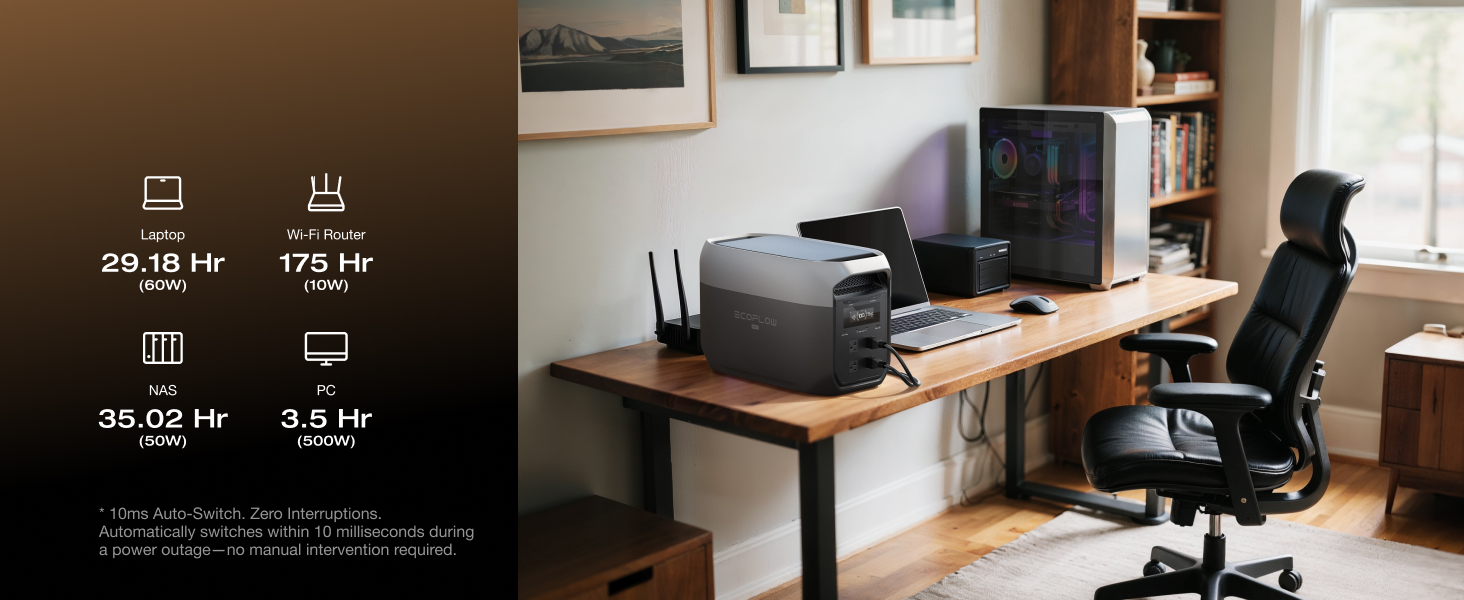
BLUETTI’s manual lists a switchover of 20 ms or less; EcoFlow lists 10 ms. BLUETTI gives a flat 5 years; EcoFlow gives 3 plus 2 with app registration. Weight favors EcoFlow: 1,024 / 26.7 = about 38 Wh per lb against 1,152 / 35.3 = about 33 for the AC180. For the Anker side of this matchup, see AC180 against C1000 Gen 2.
4. Solar and App Ecosystem
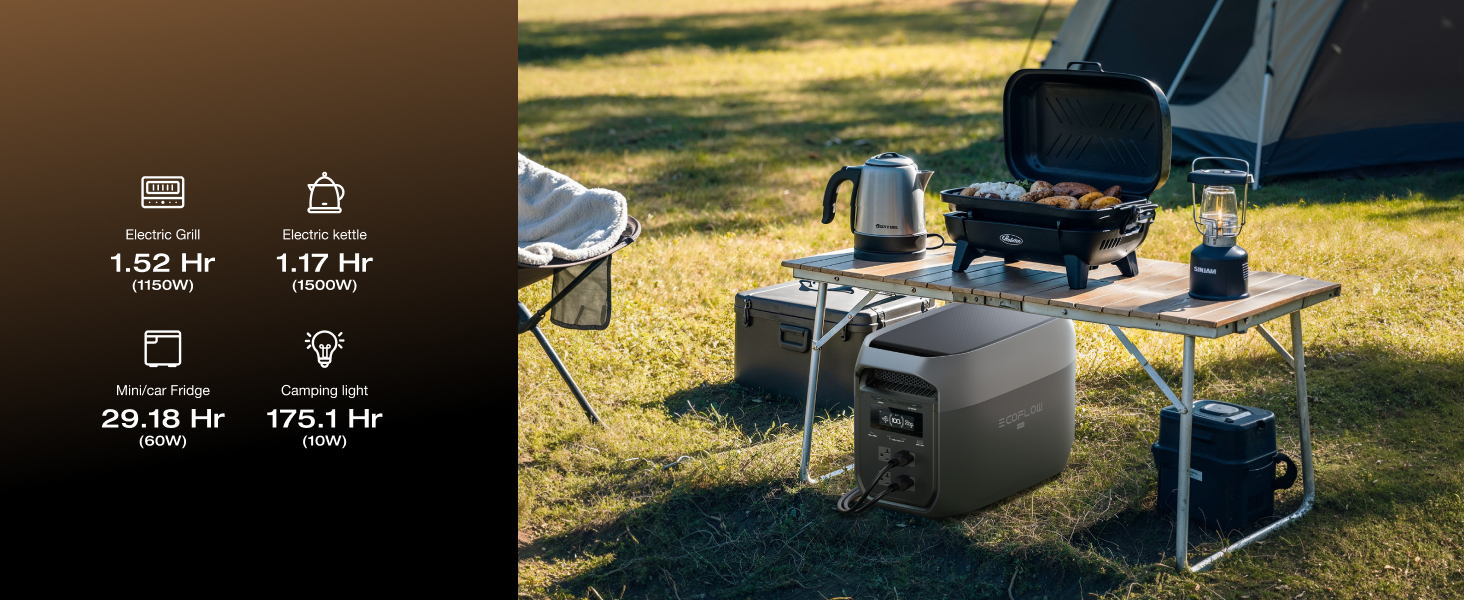
Both 1 kWh units list 500 W of solar input; the AC180 manual specifies 12 to 60 V at 10 A. Matching a panel to the amp limit matters: two 200 W Renogy portable panels in series (18.8 V and 10.6 A each, per Renogy) give 37.6 V at 10.6 A, which a 10 A cap trims to 10 x 37.6 = about 376 W. See the panel selection guide.
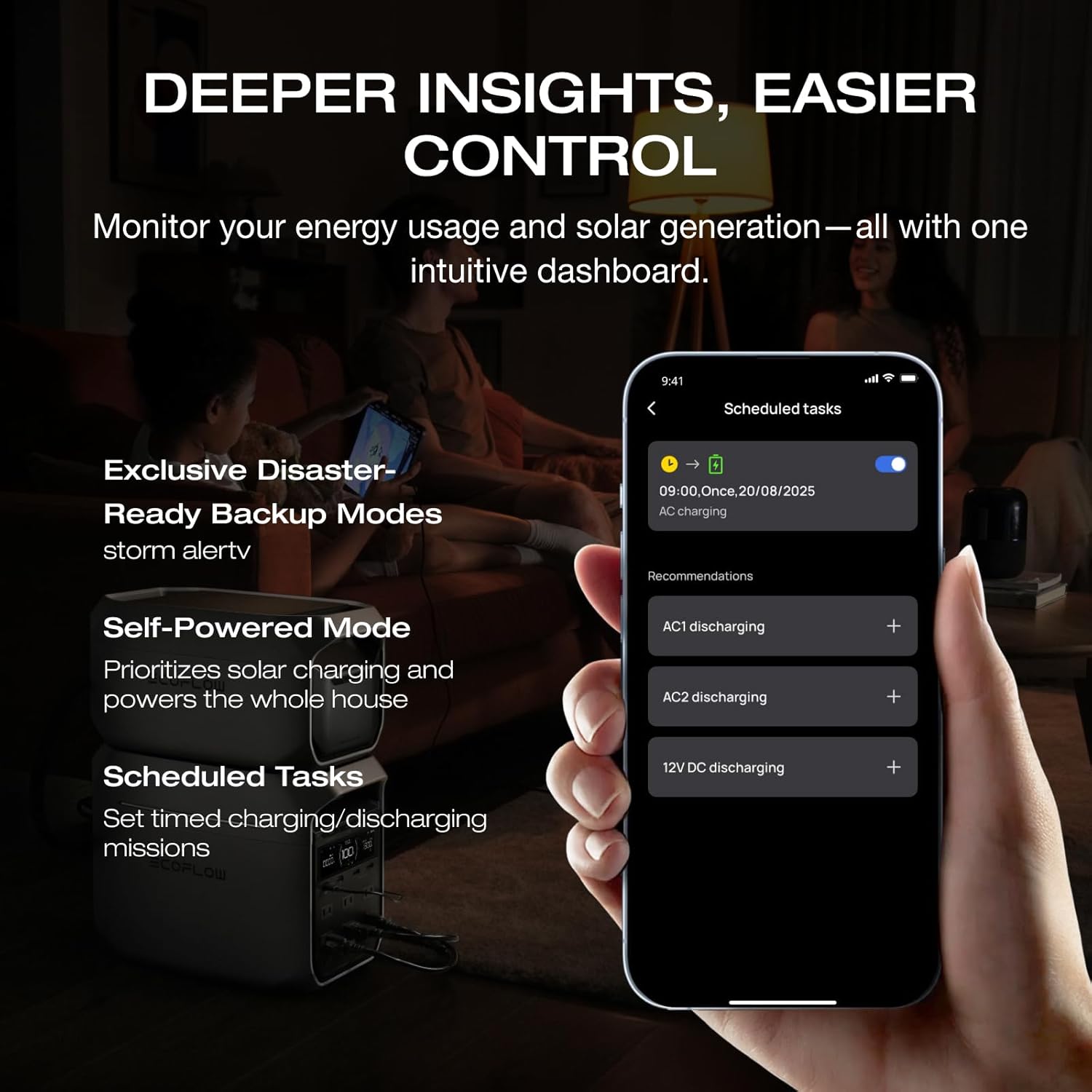
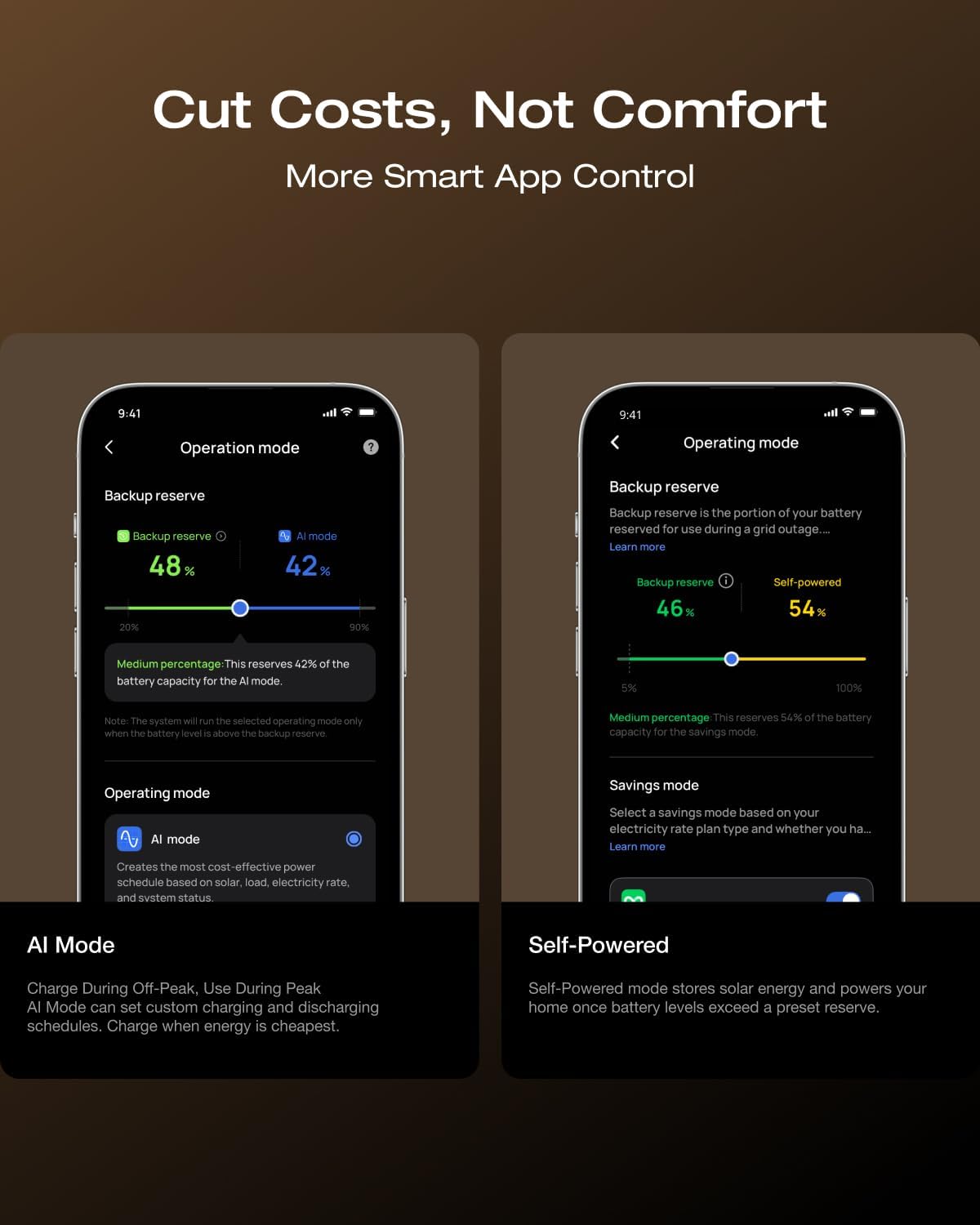
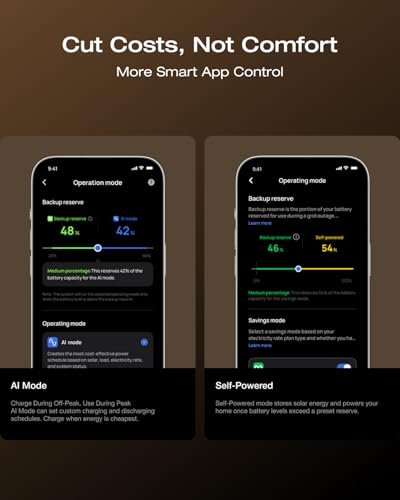
Both brands run a phone app. EcoFlow’s Classic page names Storm Guard and Self-Powered modes. BLUETTI’s FridgePower page lists Alexa, Google Home, and Home Assistant support, along with alerts. EcoFlow also sells a home panel for whole-home use; see what the EcoFlow Smart Home Panel does. Wiring any panel to a house is work for a licensed electrician.
What Is the Same
Both use lithium iron phosphate chemistry on these models, 120 V AC output, and an app for monitoring. Neither pair here outputs 240 V. If you plan a well pump or a central air conditioner, you need a larger system than any of these four.
Choose BLUETTI If
- You are building a fridge-backup bank that can grow to 8,064 Wh.
- You want a 4 W idle draw for a station that stays plugged in.
- You want a flat 5-year warranty on the AC180 or FridgePower.
Best for: a household whose main goal is a fridge and freezer through a multi-day outage, with room to add batteries.
Avoid if: you need more surge headroom than the AC180’s 2,700 W or the FridgePower’s 3,600 W, or you want a 2 kWh unit with a larger review base.
Choose EcoFlow If
- You start motors or compressors and want 3,600 W or 4,800 W surge headroom.
- You want a lighter 1 kWh unit.
- You will register in the app for the full 5 years.
Best for: kitchens where a fridge, microwave, and coffee maker share one station.
Avoid if: you buy the Max or Classic and then want more capacity; neither expands.
We research and compare; we do not run our own product trials. The score on each card reflects verified buyer ratings, as explained on how we choose. For wider options, see our EcoFlow guide and the home backup power station guide.
FAQ
Is BLUETTI or EcoFlow better?
Neither wins on every spec. BLUETTI’s FridgePower leads on expansion and idle draw; EcoFlow leads on surge rating and weight at 1 kWh. Start from your load using the sizing guide.
Can I add a battery to the BLUETTI AC180?
BLUETTI’s FAQ says no: the AC180 does not support capacity expansion, and B80, B230, and B300 batteries can only charge it in Power Bank Mode. We size the AC180 as a fixed 1,152 Wh.
Which is better for a refrigerator?
At 2 kWh the two carry a fridge for about the same time: 2,016 x 0.85 / 150 = about 11.4 hours against 2,048 x 0.85 / 150 = about 11.6 hours for a 150 W fridge. BLUETTI’s expansion makes the long-outage case; see the fridge runtime guide.
How do both compare with Jackery?
Our EcoFlow against Jackery comparison covers the other major rival.
Changelog: November 2026: first published.









